


Max first went camping on Fraser Island in 2010 with a group of friends and a 4WD rented in Hervey Bay; Oksana saw the island the same year on her first solo trip to Australia. When we came back together in October 2014, we camped for at least two nights at Dundubara, just south of Indian Head, and saw dingoes on 75 Mile Beach. Camping on Fraser Island, now officially called K’gari, is the best way to see the world’s largest sand island, and this guide covers how to get permits, what they cost, the best campsites, 4WD and dingo tips, and when to go.
Key Takeaways
- Fraser Island has been officially named K’gari since 2023, the Butchulla name meaning “paradise”.
- Book both permits before you arrive: a vehicle access permit (A$61.80 for a month) and a camping permit (A$7.75 per person per night in 2026–27).
- You need a high-clearance 4WD and a tide chart; 75 Mile Beach is the main road and can only be driven around low tide.
- Dingo-fenced campgrounds like Central Station, Dundubara and Waddy Point are the easiest for first-timers and families.
- Central Station and Waddy Point have upgrade works planned from April to November 2026, so check availability.

K’gari (Fraser Island) at a Glance
| Official name | K’gari (since 2023); still widely called Fraser Island |
| Location | Off the coast of Hervey Bay, Queensland |
| Size | About 123 km (76 mi) long, the world’s largest sand island |
| Getting there | Vehicle barges from Inskip Point (Rainbow Beach) or River Heads (Hervey Bay) |
| Vehicle permit | A$61.80 for up to a month (2026) |
| Camping permit | A$7.75 per person per night, or A$31 per family (from 1 July 2026) |
| Campgrounds | 45 camping areas and beach zones |
| Best months | April to October |
K’gari is part of Great Sandy National Park and a World Heritage Site, a 123 km (76 mi) island made almost entirely of sand, with rainforest growing out of the dunes, more than 100 freshwater lakes, and 75 Mile Beach down its eastern side. The Butchulla people have lived here for thousands of years, and in 2023 Queensland officially restored their name for the island, K’gari, meaning “paradise”. You’ll see both names on signs and maps, and they mean the same place.

K’gari was listed as a World Heritage Site in 1992 for its rainforests growing on sand, its perched dune lakes and its huge, still-moving sand dunes. In 2014, the Federal Court recognised the Butchulla people’s native title over the island, and Butchulla rangers and elders now help manage it. As a camper you’re a guest on Butchulla Country: stay on marked tracks, leave middens, artefacts and scarred trees untouched, and don’t take sand, shells or plants home. Signs at the main sites explain the stories behind places like Lake Wabby and the coloured sands, and they’re worth stopping to read.
Fraser Island Camping Permits and Costs
Every vehicle needs a vehicle access permit, and every camper needs a camping permit, both from Queensland Parks and Wildlife. Rangers can’t issue permits on the island, so book online before you cross, and print or save them: the camping tag must be displayed at your site.
| Item | Cost (2026–27) | Notes |
|---|---|---|
| Vehicle access permit | A$61.80 | Up to one month; a combined K’gari and Cooloola permit is cheaper if you’re visiting both |
| Camping permit | A$7.75 per person per night | Or A$31 per family per night; under-5s free |
| Vehicle barge | About A$100–200 return | Depends on the operator and route |
| 4WD hire | From about A$250 a day | Book island-ready vehicles in Hervey Bay or Rainbow Beach |
To book, create an account on the Queensland parks booking site, buy the vehicle permit, then book each night by campground or beach zone. The fenced campgrounds sell out in school holidays and on long weekends, so book those months ahead.
Getting to K’gari
Two vehicle barges run to the island. From Inskip Point near Rainbow Beach, the Manta Ray barge crosses to Hook Point at the southern tip in about 10 minutes, with a beach drive north from there. From River Heads near Hervey Bay, barges cross to Wanggoolba Creek or Kingfisher Bay on the western side in about 40 minutes. There’s also a passenger ferry to Kingfisher Bay Resort if you’re not taking a car. Book the barge ahead in school holidays, and check the timetable against the tides: from Hook Point you drive the beach north, so a crossing near high tide can mean a long wait on the sand before it’s safe to go. Coming from the south via Rainbow Beach, the drive onto Inskip Point is itself soft sand, so lower your tyres before you reach the barge queue. Hervey Bay is about 3.5 hours north of Brisbane, a classic stop on the Brisbane to Cairns drive.
You need a high-clearance 4WD; the island has no sealed roads. Most people hire one in Hervey Bay or Rainbow Beach from a company that allows island driving. Max hired his 4WD in Hervey Bay in 2010. Rainbow Beach 4×4 Hire and Safari 4X4 Hire in Hervey Bay are both well rated, and if you’d rather not drive the sand yourself, Fraser Dingo 4WD Adventures runs guided tag-along trips.
Compares rental companies at Brisbane, Hervey Bay and Sunshine Coast airports for the drive up to the barge, before you swap to an island-ready 4WD.
Free cancellation on most bookings · 4WD and SUV options
Coming from Brisbane without a car? Bookaway lists buses and shuttles to Hervey Bay and Rainbow Beach.
Where to Camp on Fraser Island
K’gari has three kinds of camping: dingo-fenced Queensland Parks campgrounds with facilities, unfenced beach camping zones behind the dunes, and a few private campgrounds with more comforts. Where you camp should depend on what you want to see and how much you’re willing to rough it; with limited time, focus on the south-central lakes and the east coast.
| Campsite | Coast | Fenced? | Facilities | Best for |
|---|---|---|---|---|
| Dundubara | East | Yes | Toilets, hot showers (coin), fire rings | Indian Head, Champagne Pools, the Maheno |
| Central Station | Inland | Yes | Toilets, hot showers (coin) | Lake McKenzie, rainforest walks |
| Waddy Point | East (north) | Yes | Toilets, hot showers (coin), fire rings | Champagne Pools, a quieter north |
| Lake Boomanjin | Inland (south) | Yes | Toilets, no cars in the camp | A lakeside, walk-in feel |
| Eastern Beach zones | East | No | None | Beach camping, freedom |
| Dilli Village | East (south) | Yes | Showers, kitchen, powered sites | Private campground near the barge |
| Cathedrals on Fraser | East | Yes | Hot showers, store, fuel, cafe | Private campground with comforts |
Dundubara
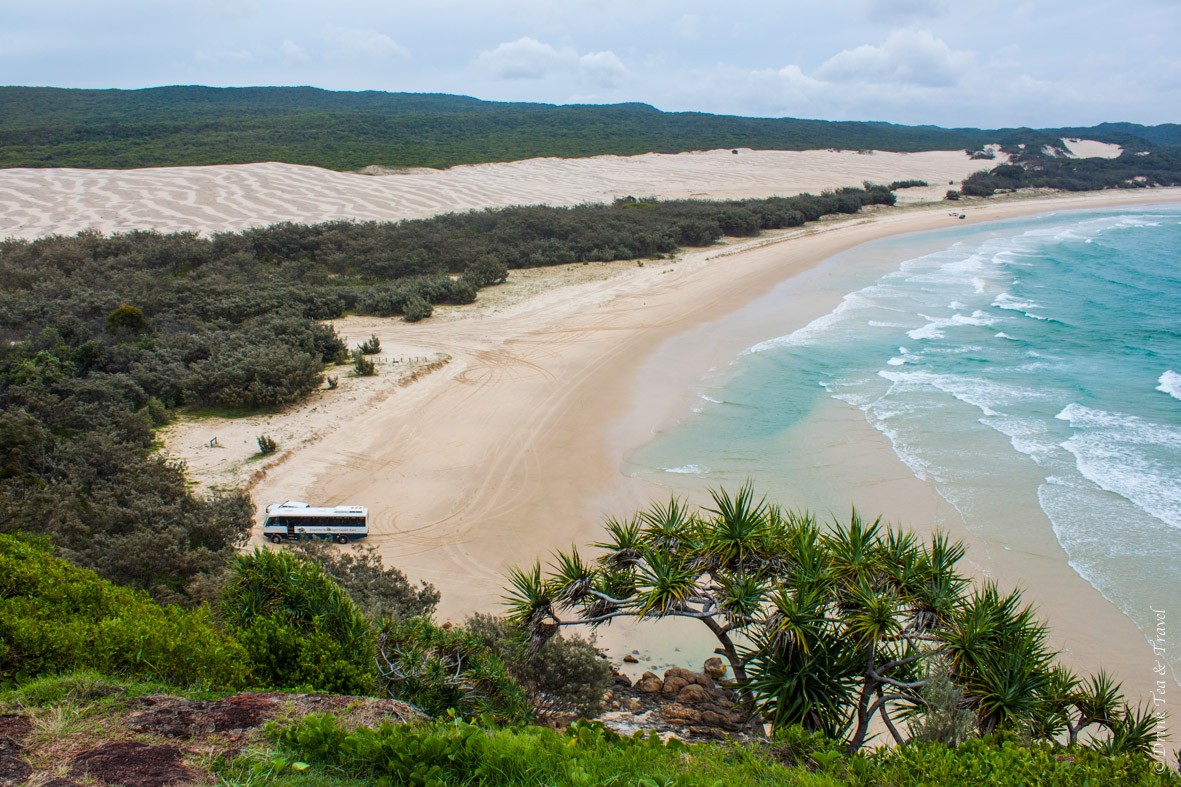
Dundubara, where we camped for at least two nights in 2014, sits in coastal forest just behind the beach, about 19 km (12 mi) south of Indian Head, with the Maheno shipwreck, Eli Creek and the Red Canyon all a short drive away. It’s dingo-fenced, with coin-operated hot showers, toilets and communal fire rings, one of the few places on the island where fires are allowed.
Central Station
Central Station, the site of an old forestry station in the rainforest, is the island’s most popular fenced campground, close to Lake McKenzie, Wanggoolba Creek and the best walking tracks. It has about 40 tent sites and 15 trailer sites. Infrastructure upgrades are planned here from April to November 2026, so check availability before you plan around it.


Waddy Point
Waddy Point, 5 km (3 mi) north of Indian Head near the Champagne Pools, has two sections: one in the coastal forest and one right on a protected bay. It’s quieter than the southern camps, and it’s also due for upgrades between April and November 2026.
Beach Camping Zones
The rest of the eastern beach is divided into camping zones where you can pitch a tent in the dunes behind the high-tide line, with no facilities and no fence. It’s the most adventurous way to camp, and you’ll need to carry water, a portable toilet and all your rubbish. The remote west coast and northern tip campsites, including Sandy Cape, are for experienced 4WD campers only.
Fraser Island Great Walk Camps
If you’d rather walk than drive, the K’gari (Fraser Island) Great Walk runs about 90 km (56 mi) from Dilli Village to Happy Valley, past Lake Boomanjin, Central Station, Lake McKenzie and Lake Wabby. Walkers camp at dedicated, dingo-fenced walkers’ camps, which you book in the same way as any other camping permit, and you don’t need a vehicle access permit. Most people take six to eight days, though you can walk shorter sections and get picked up by a tour or a water taxi.
Camping on K’gari with Kids
Families should stick to the fenced campgrounds, where kids can move around more freely and there are toilets and hot showers. Central Station, with its short boardwalk along Wanggoolba Creek, and Dundubara, close to Eli Creek, are the easiest bases. Keep children within arm’s reach outside the fence, especially on the beach and around the lakes, where dingoes are most often seen, and plan short drives, because hours on bumpy sand tracks wear young kids out fast.
4WD and Tide Tips
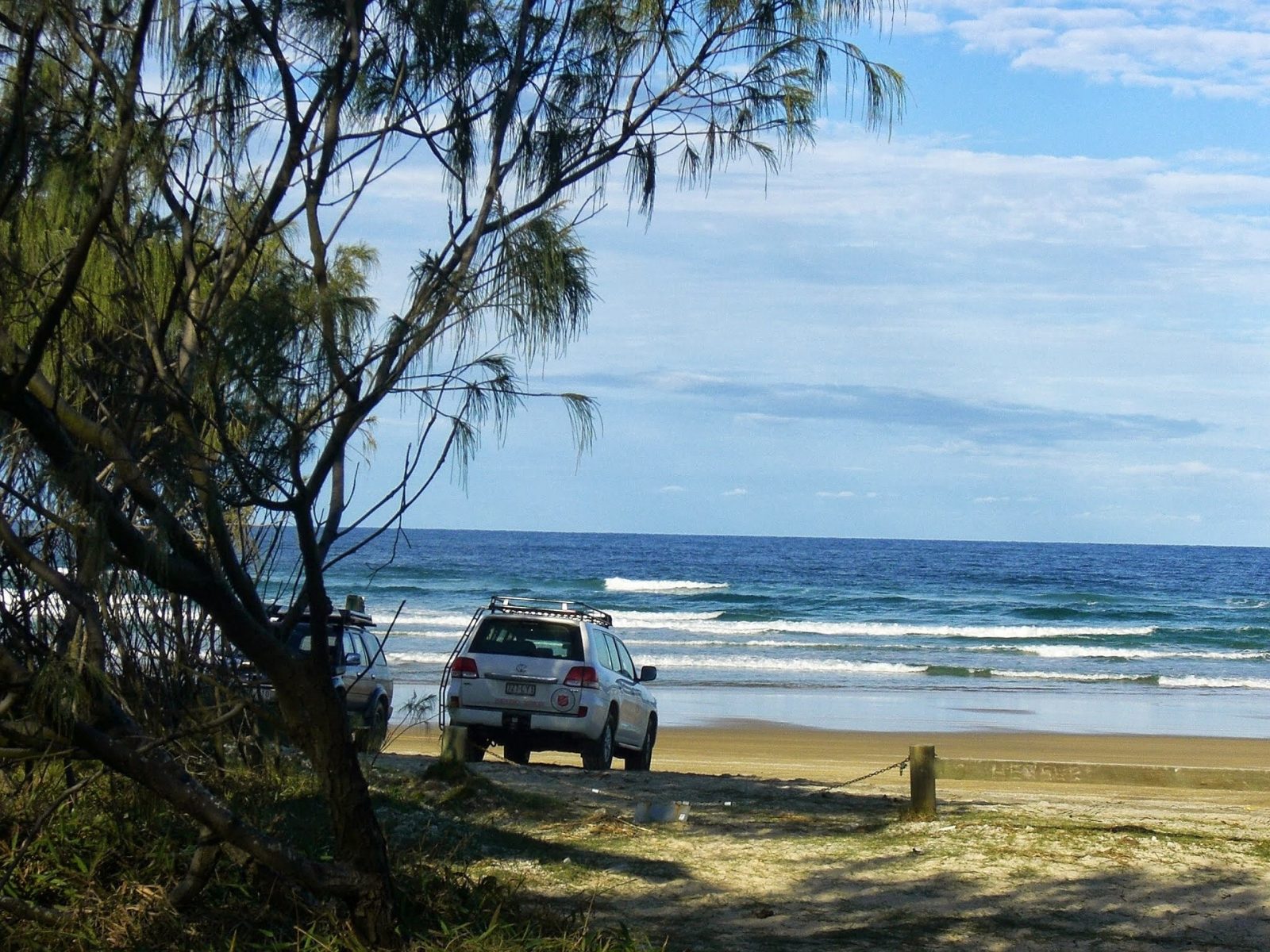
75 Mile Beach is a gazetted highway with a speed limit, and the sand tracks inland are deep and bumpy. Drive the beach either side of low tide, when the sand is firm, and never at high tide. Lower your tyre pressure before you hit the sand, carry a snatch strap, shovel and recovery boards, and watch for washouts at creek crossings like Eli Creek and for planes landing on the beach. Getting bogged happens to almost everyone, so allow extra time.
Dingo Safety on K’gari
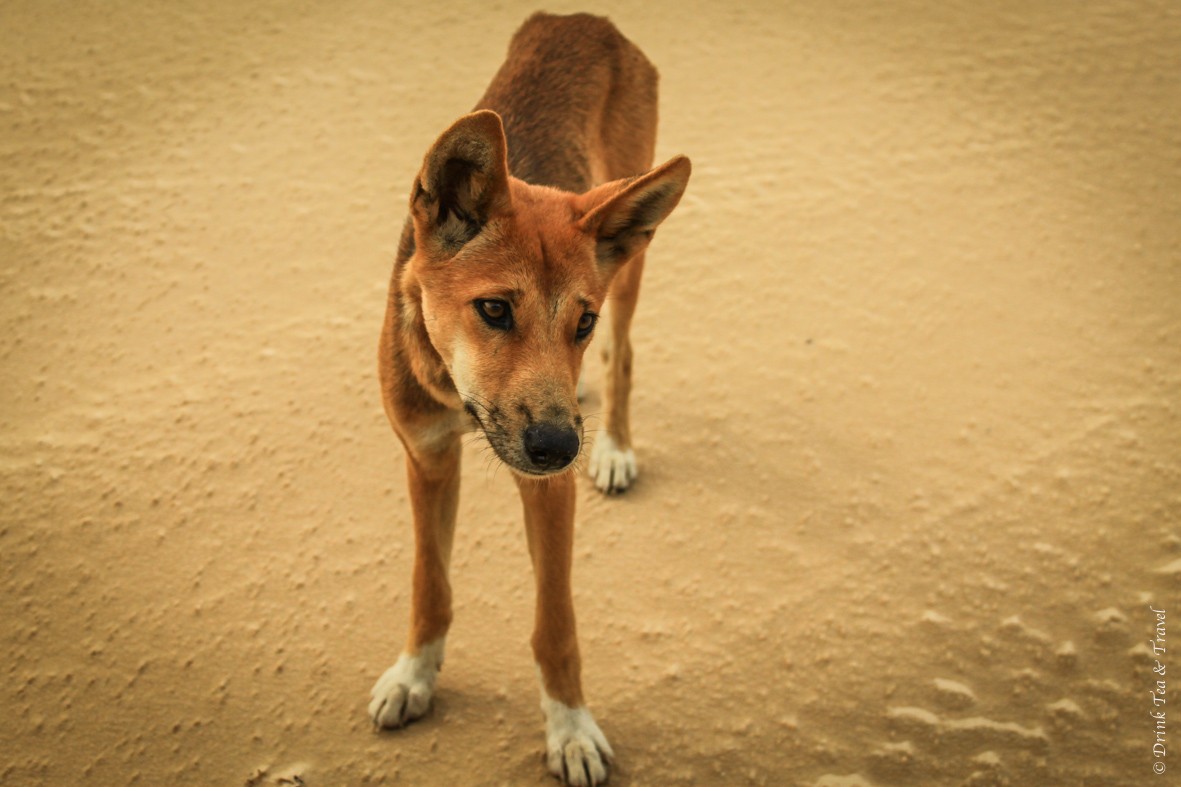
K’gari’s dingoes are wild, and they can be dangerous, especially to children. You’re almost certain to see them; we saw them on the beach in 2014. Never feed them, keep all food and rubbish locked away in your car or a secure box (not your tent), camp inside the fenced areas if you’re travelling with kids, walk in groups, and carry a stick on beach walks. Don’t run from a dingo; stand tall, face it and back away slowly.


Camping Rules on K’gari
Camp only in designated areas, with your permit tag displayed. Fires are allowed only in the communal fire rings at a few campgrounds, like Dundubara and Waddy Point, with your own milled firewood; collecting wood is banned, so bring a gas stove. Quiet hours run from 9 pm to 9 am, including generators. No domestic animals are allowed on the island. Take all your rubbish to the waste transfer stations. Stay on marked tracks to protect the dunes and vegetation.
Best Swimming Spots on K’gari
Don’t swim in the ocean along 75 Mile Beach: the currents are dangerous and there are sharks. The island’s freshwater lakes and creeks are where you swim.
Lake McKenzie
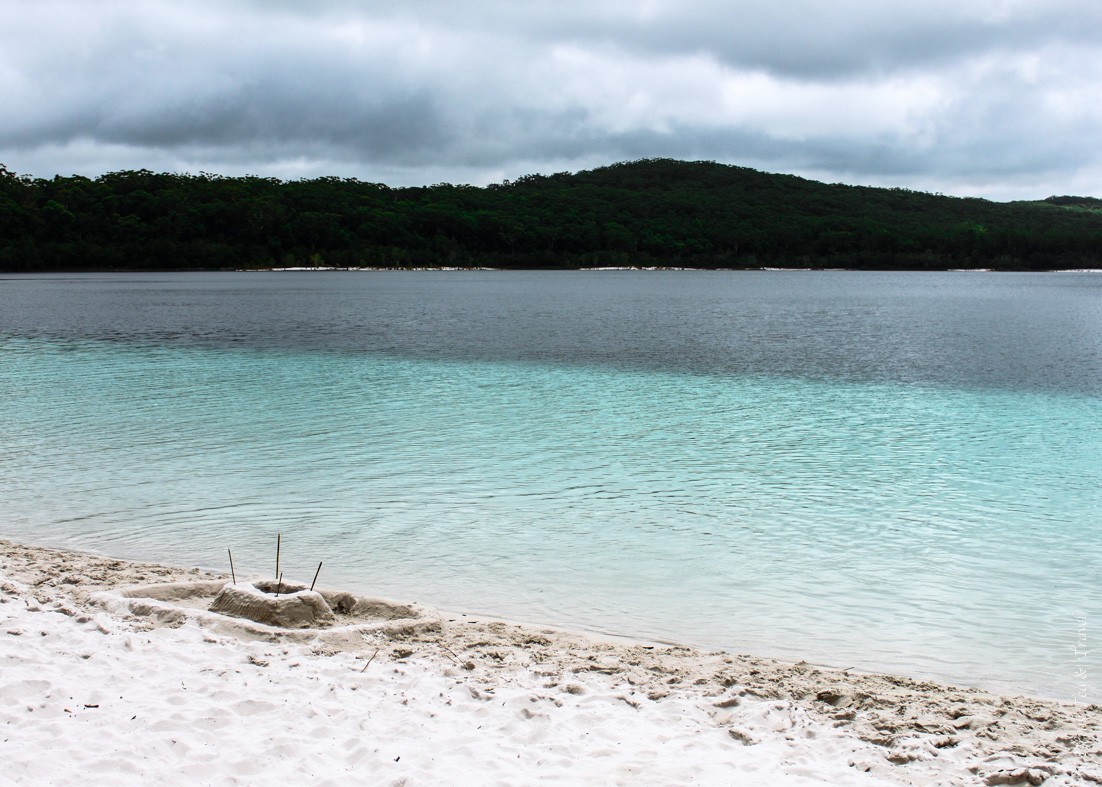
Lake McKenzie (Boorangoora) is the island’s most famous spot, a perched lake with white silica sand and water so clear it looks blue-green in the sun. It’s our favourite place on the island, and it gets busy from mid-morning, so go early. Don’t take food onto the beach: it’s a dingo hotspot.
Lake Wabby
Lake Wabby, the island’s deepest lake, is being slowly swallowed by the Hammerstone Sandblow, a huge dune you walk across to reach it. The emerald water against the sand is striking.


Lake Boomanjin and Lake Birrabeen
Lake Boomanjin, in the south near the fenced campground of the same name, is one of the largest perched lakes in the world, its water stained a tea colour by the tannins of the surrounding paperbarks and tea trees. Lake Birrabeen, a short drive south of Central Station, has the same white sand and clear water as Lake McKenzie with a fraction of the visitors, which makes it the better choice on a busy school-holiday afternoon.
Eli Creek
Eli Creek, on the east coast, is a clear freshwater creek you float down on your back from a boardwalk to the beach; it pours about four million litres (a million gallons) an hour into the sea.
Champagne Pools
The Champagne Pools, north of Indian Head, are rock pools where waves spill over the rocks and fizz like champagne, the one safe place to swim in seawater on the east coast.

Things to See While You Camp
From Dundubara, the island’s best-known sights are a short drive away. The SS Maheno is a rusting shipwreck lying on the beach, blown ashore by a cyclone in 1935. The Red Canyon and the coloured sand cliffs of the Pinnacles show more than 70 shades of sand. And from the top of Indian Head, a short climb, you can often spot sharks, rays, turtles and, in season, whales in the clear water below.


Best Time to Camp on Fraser Island
April to October is the best time: mild days, cooler nights for sleeping, fewer mosquitoes and calmer seas, with humpback whales passing from July to October. Summer (December to February) is hot, humid and wetter, and the island is busiest in the Queensland school holidays.
A 3-Day Fraser Island Camping Itinerary
Day 1: Take an early barge from River Heads to Wanggoolba Creek, set up at Central Station, and walk the Wanggoolba Creek boardwalk through the rainforest. Spend the afternoon swimming at Lake McKenzie, when the crowds from the morning tours have thinned.
Day 2: Drive across to the east coast and head north on 75 Mile Beach at low tide, stopping at Eli Creek, the Maheno and the Pinnacles coloured sands. Move camp to Dundubara, then climb Indian Head in the late afternoon to look for turtles, rays and sharks in the water below.
Day 3: Swim at the Champagne Pools in the morning, then drive back south along the beach, stopping at Lake Wabby on the way. Catch an afternoon barge from Hook Point to Inskip Point, or return to River Heads by the inland tracks.
Plan every beach leg around the tide chart, and swap days 1 and 2 if the tides suit a northbound drive better on your arrival day.
How Many Days Do You Need?
Allow at least three days and two nights; the drive times on sand are slow, and you’ll want time at the lakes. With four or five days you can add the quieter north around Waddy Point, the western beaches, and time to just sit by Lake McKenzie.
Food, Fuel and Supplies on the Island
Small general stores at Eurong, Happy Valley, Kingfisher Bay and Cathedrals on Fraser sell basics, ice and fuel, but prices are well above the mainland, so do a full shop in Hervey Bay or Rainbow Beach before the barge. Fill your tank on the mainland too, and carry extra water. Mobile coverage is patchy away from the resorts and the east coast settlements, so download your permits, the tide chart and offline maps before you cross. Take every bag of rubbish to the waste transfer stations along the main tracks, and never leave food scraps at camp.
What to Pack for Camping on K’gari
Everything: there’s little on the island, and shop prices are high. Pack a tent with sand pegs, a gas stove, all your food and plenty of water (the camp taps are untreated), a lockable food box for dingo safety, a first-aid kit, insect repellent, sun protection, 4WD recovery gear, a portable toilet for beach zones, and bags for all your rubbish. Our road trip checklist and campervan camping hacks cover the rest.
Not Camping? Where to Stay on K’gari
If camping isn’t for you, the island has two resorts, and Oksana spent a night at one of them on her 2010 trip.
| Hotel | Area | Price | Best For |
|---|---|---|---|
| K’gari Beach Resort | East coast (Eurong) | $$ | On 75 Mile Beach, the overnight stop on many tours |
| Kingfisher Bay Resort | West coast | $$$ | Eco-resort, pools, ranger walks |
K’gari Beach Resort
K’gari Beach Resort (formerly Eurong Beach Resort) is right on 75 Mile Beach, with a pool, a restaurant and a general store, and it’s the overnight stop on many two-day tours.
Kingfisher Bay Resort
Kingfisher Bay Resort is an eco-resort on the calm western side, with pools, three restaurants, ranger-guided walks and its own passenger ferry from Hervey Bay.


For something in between, Cathedrals on Fraser has cabins and permanent tents as well as campsites. Without your own 4WD, a guided tour is the easiest way to see the island in a day.
Lake McKenzie, 75 Mile Beach, the Maheno and the rainforest with a local guide, with transport and lunch included.
9 hours · transport and lunch included · rated 4.6/5 from 2,600+ reviews
Frequently Asked Questions
Is K’gari the same as Fraser Island?
Yes. The island’s official name became K’gari, the Butchulla people’s name meaning “paradise”, in 2023.
Can you camp anywhere on Fraser Island?
No. Camping is only allowed in the designated camping areas and beach zones, with a QPWS permit booked in advance.
How much does camping on Fraser Island cost?
A camping permit costs A$7.75 per person per night or A$31 per family (from 1 July 2026), plus a vehicle access permit of A$61.80 for up to a month.
Do you have to book camping on Fraser Island?
Yes. Camping permits must be booked online before you arrive; rangers can’t issue them on the island, and the fenced campgrounds sell out in school holidays.
Can you have a campfire on Fraser Island?
Only in the communal fire rings at a few campgrounds such as Dundubara and Waddy Point, with your own milled firewood; elsewhere use a gas stove.
Are dogs allowed on Fraser Island?
No. Domestic animals aren’t allowed on K’gari, partly to protect its dingoes.
Do you need a 4WD for Fraser Island?
Yes, a high-clearance 4WD is required for the sand tracks and beaches; without one, join a tour or stay at a resort with transfers.
Is Fraser Island camping good for a family with young kids who’ve never camped on sand?
Yes, at a dingo-fenced campground such as Central Station or Dundubara, which have toilets and hot showers.
What is the best campsite on Fraser Island?
For first-timers, Dundubara or Central Station: both are dingo-fenced with hot showers, and they’re close to Indian Head and Lake McKenzie respectively.
When is the best time to go camping on Fraser Island?
April to October, when days are mild, nights are cool and humpback whales pass the island from July.
Is camping on Fraser Island safe?
Yes, if you follow the dingo rules, drive to the tides and don’t swim in the ocean along 75 Mile Beach.
Final Thoughts
Camping is the best way to experience K’gari: waking up to the sound of the surf, driving an empty beach at low tide, and swimming in Lake McKenzie before the day-trippers arrive. Between Max’s trip with friends, Oksana’s solo trip and our nights at Dundubara together, it’s a place we keep coming back to. Book your permits early, learn the tides and respect the dingoes. If you’re continuing north, see our Daintree guide; heading back south, Noosa and its national park are next, and our Brisbane guide and day trips from Brisbane cover the city. Our Australia travel tips and sustainable travel guide will help you plan. Which campsite would you choose?


Leave a Reply