


The best things to do in St John’s Newfoundland cluster into three easy groups: the hills and headlands around the harbour, the colour and food of the downtown streets, and the day trips south along the coast for puffins, whales and icebergs. The city is small enough to walk and the day trips are close enough to do on a whim, which is the argument for basing yourself here for three or four days rather than two.
Key Takeaways
- Signal Hill and Cape Spear are the two unmissable ones. Both are short drives, both are free to walk, and both are better in bad weather than you expect.
- The colour is real. Jellybean Row is not a tourist invention, and downtown is genuinely one of the most photogenic streets in Canada.
- The wildlife is seasonal. Puffins and whales overlap in early summer, icebergs come earlier, and the boats only run part of the year.
- Give it three days minimum. Two is enough for the city, and the day trips are the reason to come.

St John’s at a Glance
| How long to stay | Three to four days, including day trips |
| Getting there | Direct flights to YYT from Toronto, Halifax and Montreal |
| Getting around | Walkable downtown; a car for Cape Spear and the southern shore |
| Best months | June to September, with icebergs earlier and whales peaking in July |
| Free highlights | Signal Hill trails, Cape Spear headland, Jellybean Row, the harbour walk |
| Weather | Changeable by the hour, foggy, and much colder on the headlands |
| Where we stayed | The Sheraton, a short walk uphill from downtown |
The Best Things to Do in St John’s Newfoundland
Here are all twenty side by side, with roughly how long each takes and what it costs, so you can split the city days from the drives.
| Activity | Time needed | Cost | Best for |
|---|---|---|---|
| 1. Signal Hill | 2 hours | Free (Cabot Tower ticketed in season) | Views, the North Head Trail |
| 2. Cape Spear | 1 to 2 hours | Free | Sunrise, whales |
| 3. Jellybean Row | 1 hour | Free | Photos |
| 4. Quidi Vidi village | 2 hours | Pay as you go | Beer, lunch |
| 5. George Street | An evening | Pay as you go | Nightlife |
| 6. Bannerman Brewing | 1 to 2 hours | Pay as you go | Coffee, beer |
| 7. Farmers’ Market | 1 hour | Pay as you go | Cheap eats |
| 8. The Rooms | Half day | Ticket | History, art |
| 9. The harbour and downtown | 1 to 2 hours | Free | Walking |
| 10. Johnson Geo Centre | 2 hours | Ticket | Rainy days |
| 11. The Basilica and churches | 1 hour | Free | Architecture |
| 12. The Battery | 1 hour | Free | Walking, photos |
| 13. Water Street | 1 to 2 hours | Free to browse | Shopping |
| 14. Quidi Vidi Lake | 1 hour | Free | Walking, running |
| 15. Bowring Park | 1 hour | Free | Families |
| 16. The capelin roll | An evening | Free | Late June to July, if you are lucky |
| 17. Petty Harbour | Half day | Small aquarium fee | An outport village |
| 18. Witless Bay puffins and whales | Half day | Boat ticket | Wildlife |
| 19. The Irish Loop and Ferryland | Full day | Small site fees | Road trips |
| 20. Cape St Mary’s | Full day | Small fee | Gannets |
The list below runs roughly in the order we would do them on a first visit, with the city first and the day trips after. Everything in the first group is within a fifteen-minute drive of the harbour.
The map traces the city sights and the closest headlands, from downtown up Signal Hill, out to Quidi Vidi and south to Cape Spear and Petty Harbour.
One thing worth saying before you plan the things to do in St John’s Newfoundland around a schedule. St John’s rewards a loose plan more than most cities, because the fog decides what is possible on any given morning and it can be thick on Signal Hill and clear at Cape Spear twenty minutes away. Keep the indoor options in reserve and reshuffle rather than cancelling.
1. Walk up Signal Hill
Signal Hill is the headland above the harbour narrows, and Marconi received the first transatlantic wireless signal here in 1901. Most visitors drive to the top for Cabot Tower and leave. The better version is the North Head Trail, which runs along the cliff edge down to the Battery and takes about an hour one way. We did it in fog both times and could not see the ocean either time, and it was still the best walk of the trip.
In summer the Signal Hill Tattoo performs on the lower grounds, with a re-enactment of nineteenth-century drill by students in period uniform. Check the schedule before you go up, because the road gets busy around performance times and the small car park at the top fills early on clear days.

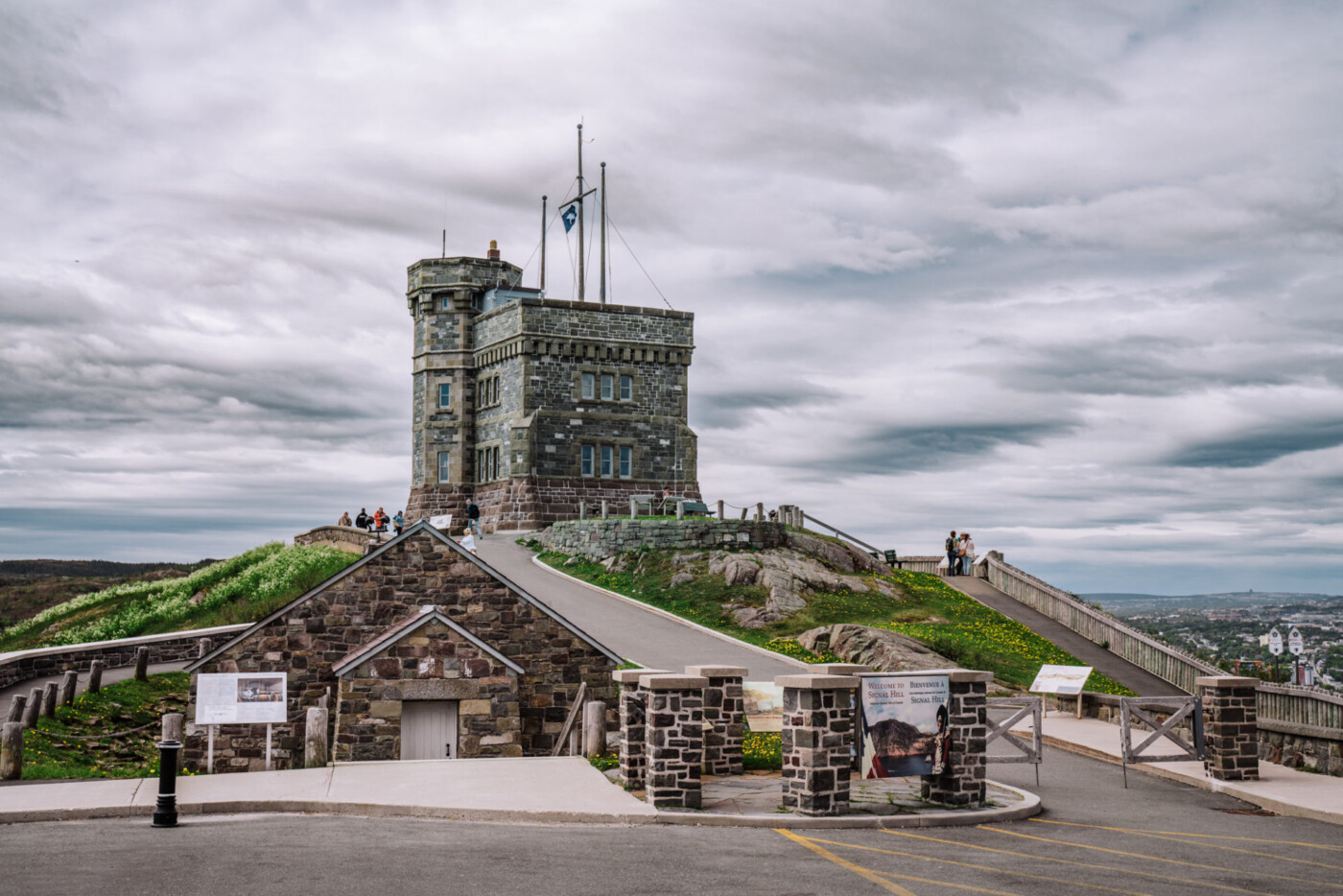


Signal Hill National Historic Site is managed by Parks Canada. The grounds and the trails are free; Cabot Tower itself charges admission in season.
Short on time or without a car? This Cape Spear and St John’s city tour with a local guide covers Signal Hill, Cape Spear and the downtown highlights in one go, and it’s one of the best-reviewed tours in the city.
2. Drive out to Cape Spear
Cape Spear is the easternmost point in North America, about twenty minutes from downtown, and standing on it at sunrise means being the first person on the continent to see the day. The old lighthouse is the oldest surviving one in Newfoundland. The wind is serious and the cliff edges are unfenced in places, so keep back from them.
There are also wartime gun emplacements built into the headland here, left from the coastal defences that protected the convoy route across the Atlantic, and you can walk through the tunnels. Whales pass close to this point through the summer and the headland is one of the better free places in the province to watch for them.

Cape Spear Lighthouse National Historic Site is free to walk at any hour, which is what makes the sunrise trip possible.
3. Photograph Jellybean Row
The painted row houses are spread across several downtown streets rather than concentrated in one, and the best of them are on Gower Street and around Victoria. They were painted this way in the 1970s, and the story that it was to help fishermen find their houses in fog is a good story and not a true one.


4. Eat and drink at Quidi Vidi
Quidi Vidi is a working fishing village inside the city, tucked into a narrow inlet about ten minutes from downtown. Quidi Vidi Brewery sits on the water in the old fish plant and does the Iceberg beer made with water from actual icebergs, which sounds like a gimmick and is a decent lager. We ate there both trips.


5. Drink on George Street
George Street claims more bars per square foot than any street in North America, and it is a two-block stretch that is dead in the afternoon and full by ten. It is loud, it is not especially local any more, and it is still worth one night.


6. Have a session at Bannerman Brewing
Bannerman Brewing is in a converted fire hall on the edge of Bannerman Park, and it is the one we would go back to. Coffee and pastries in the morning, beer and a short food menu later, and a room full of people who live here rather than visit.

7. Browse the St John’s Farmers’ Market
The St John’s Farmers’ Market runs in a converted bus depot on Freshwater Road, with producers, prepared food and a lot of baked goods. It is the easiest place in the city to eat well cheaply.


8. Spend an afternoon at The Rooms
The Rooms is the provincial museum, gallery and archive in one building above the city, and the fourth-floor cafe has the best interior view in St John’s. The Beaumont-Hamel exhibit on Newfoundland’s losses at the Somme is the part people remember.
9. Walk the harbour and downtown
The harbour path runs the length of the working port, which still handles offshore supply vessels and the occasional naval visit. Downtown behind it is compact, steep and full of independent shops.


10. Visit the Johnson Geo Centre
The Johnson Geo Centre is built into the rock of Signal Hill and is mostly underground, which makes it a good rainy-afternoon option. The geology of Newfoundland is genuinely unusual, and this is the place it gets explained properly.


11. Climb to the Basilica and the city’s churches
The Basilica of St John the Baptist sits at the top of the hill and was the largest church in North America when it was finished in 1855, built from Irish limestone and Newfoundland granite. The Anglican cathedral a few streets down is the other one worth stepping into. Both are free and both are a useful excuse to stop climbing for ten minutes.

12. Walk the Battery
The Battery is the cluster of houses wedged between Signal Hill and the water at the entrance to the narrows, and it is the strangest piece of the city. The lanes are barely wide enough for a car and the houses are stacked on the rock. The North Head Trail starts here, so it pairs with Signal Hill.
13. Shop along Water Street
Water Street claims to be the oldest commercial street in North America and is where the independent shops are: knitwear, books, local art and a lot of things made from screech. It is also where to buy a windproof layer if you underestimated the headlands, which most people do.

14. Walk around Quidi Vidi Lake
The lake behind the village has a flat loop of about four kilometres and is where the city walks and runs. It also hosts the Royal St John’s Regatta in early August, the oldest continuously held sporting event in North America, on a date that moves because it depends on the weather and is called on the morning.
15. Spend an hour in Bowring Park
Bowring Park is the big Victorian park on the west side, with a Peter Pan statue cast from the same mould as the one in Kensington Gardens. It is where you go with children, or when the fog has cancelled everything else.
16. Catch the capelin roll at Middle Cove
For a few nights in late June or early July, capelin spawn by beaching themselves in their millions at Middle Cove, fifteen minutes north, and half the city comes out with buckets. The timing is unpredictable and locals track it obsessively. If it happens while you are there, drop everything and go.
17. Detour to Petty Harbour
Petty Harbour is a working fishing village twenty minutes south with a small aquarium that returns its fish to the ocean at the end of each season. It is the easiest way to see the outport version of Newfoundland without committing to a long drive.
Day Trips from St John’s
This is the part most itineraries underplay, and it is the reason to give the city more than two nights. Everything below is within ninety minutes.
18. Puffins and whales at Witless Bay
The Witless Bay Ecological Reserve, forty minutes south, holds the largest Atlantic puffin colony in North America and humpbacks feed off it through the summer. We went out with Gatherall’s Puffin & Whale Watch from Bay Bulls and had both on the same trip, plus a bald eagle working the cliffs.
The boats run out to the islands where the birds nest, close enough that the air above the water is thick with them. It is noisier and smellier than the photographs suggest, and considerably better. Dress for the water rather than the car park: it is many degrees colder out there and the spray gets everywhere.


Timing matters more here than anywhere else on this list. Puffins are ashore roughly May to early September, humpbacks peak in July, and icebergs come through earlier in the spring. Book a morning sailing: the afternoon wind gets up.
19. The Irish Loop and Ferryland
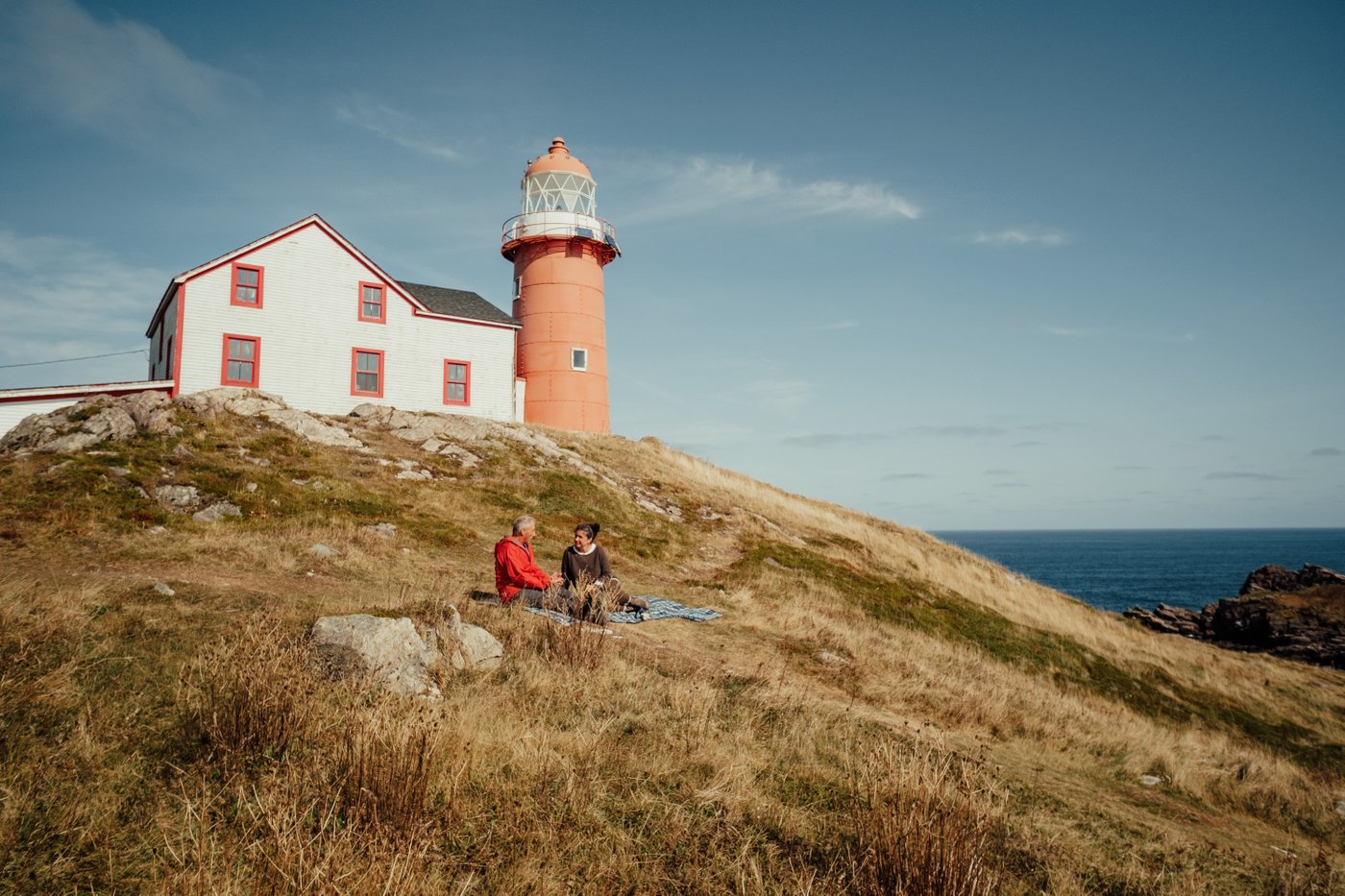
The Irish Loop runs south down the Avalon and Ferryland is its set piece: a colonial archaeological site with a lighthouse on the headland beyond it, where a local operation serves picnic lunches on the grass in summer. It is a two-hour drive from the city to do the top of the loop properly.
The drive itself is the reason to go rather than the individual stops. The road runs along the coast through fishing communities with a strong Irish inheritance, and the accent shifts noticeably the further south you get. Allow a full day and stop wherever looks interesting; nothing on this stretch needs booking.
20. Cape St Mary’s and further afield
If you have a spare day, Cape St Mary’s Ecological Reserve on the far side of the Avalon has a gannet colony you can stand within shouting distance of. It is a long drive and worth it, and it is the point at which a St John’s trip becomes a Newfoundland one.
Cape Spear, Witless Bay, the Irish Loop and Cape St Mary’s all need a car, and St John’s is the easiest place on the island to pick one up.
Compare rental companies at St John’s airport and downtown in one search, and book early for summer.
If Newfoundland is one leg of something longer, it slots naturally onto an East Coast Canada road trip by ferry to Nova Scotia, where Halifax is the obvious next city. Our roundup of the best road trips in Canada has the wider routes.
On the mainland side of that ferry, our guides to the best things to do in Nova Scotia, the Cabot Trail and Prince Edward Island cover the rest of Atlantic Canada.
Beyond St John’s: Fogo Island and Gros Morne
On our second trip we split up for part of the week. Oksana went north to Fogo Island and stayed at the Fogo Island Inn, and Max drove west to hike in Gros Morne National Park. Both are a serious distance from St John’s, Gros Morne especially at around nine hours, so neither is a day trip. If you have ten days on the island rather than four, they are what the extra time is for.


Getting to and Around St John’s
Most visitors fly into St John’s International Airport, about fifteen minutes from downtown, with direct flights from Toronto, Montreal and Halifax. In summer you can also bring a car on the Marine Atlantic ferry from North Sydney in Nova Scotia to Argentia, about ninety minutes’ drive from the city; the longer year-round route lands at Port aux Basques on the far side of the island.
Downtown is walkable but steep, and taxis are the easy answer for the climb back uphill. For Cape Spear, Witless Bay and the Irish Loop you’ll want a car, and Discover Cars compares the airport and downtown agencies.
How Many Days Do You Need in St John’s?
Two days covers the city itself: Signal Hill, the Battery, downtown, Quidi Vidi and The Rooms. Three or four days lets you add the day trips south to Witless Bay, Petty Harbour and the Irish Loop, which are the part of a St John’s trip people remember most. Add a fifth if Cape St Mary’s is on your list, since it’s a long day on its own.
Where to Stay in St John’s
Which part of the city you pick matters more than which hotel, because the hill is steep enough that a ten-minute walk downhill is a twenty-minute climb back. The four areas below cover the realistic choices.
| Area | What it suits | Trade-off |
|---|---|---|
| Downtown / Water Street | First visits, walking everywhere, nightlife on George Street | Noisiest, and parking is difficult |
| The hill above downtown | Harbour views and a short walk in, which is where we stayed | Steep climb back up every time |
| Near Quidi Vidi | Quiet evenings, the lake loop, the brewery on your doorstep | Need a car or a taxi for downtown |
| Airport / Torbay Road | Late arrivals and early flights, cheaper rates | Nowhere near anything you came for |
We stayed at the Sheraton on the hill above downtown, which is a five-minute walk down and a considerably longer one back up. The view over the harbour from that side of the hill is worth the climb.

The alternative worth considering is a room in one of the heritage houses on the residential streets above Water Street, several of which run as small inns. They put you inside the colour rather than looking at it, and they are usually cheaper than the chain hotels in July. Book early for summer either way: the city has a limited number of rooms and festival weekends clear them out.
Best Time to Visit St John’s
| Season | What you get | Worth it? |
|---|---|---|
| Spring (May-June) | Icebergs off the coast, puffins arriving, fewer people | Yes, if icebergs are the draw |
| Summer (July-August) | Whales at their peak, everything open, warmest weather | The safest choice |
| Autumn (September) | Thin crowds, good light, boats winding down | Underrated |
| Winter | Snow, wind, most tours closed | Only for the city itself |
Whatever the month, the weather changes hour to hour and the headlands run far colder than the forecast for downtown. Bring a windproof layer even in July.
Frequently Asked Questions
How many days do you need in St John’s?
Three to four. Two covers the city comfortably, and the extra days are for Witless Bay and the Irish Loop, which are the best of it.
What is St John’s best known for?
Jellybean Row’s painted houses, Signal Hill, being the oldest European-founded city in North America, and George Street’s bars.
Is St John’s walkable?
Downtown is, though it is very steep. Cape Spear, Quidi Vidi and the day trips all need a car or a tour.
When can you see icebergs in Newfoundland?
Roughly late May through June along this coast, though it varies year to year with the ice conditions further north.
When is the best time to see puffins near St John’s?
Puffins are ashore at Witless Bay from about May to early September, with the colony at its busiest in June and July.
Is Cape Spear worth visiting?
Yes, and go at sunrise if you can manage it. It is free, it is twenty minutes from downtown, and it is the easternmost point in North America.
What should you eat in St John’s?
Fish and chips, toutons with molasses for breakfast, cod tongues if you are curious, and a Jiggs dinner on a Sunday.
Do you need a car in St John’s?
Not for the city, but yes for Cape Spear, the Irish Loop and Witless Bay unless you are taking organised tours.
Final Thoughts
We came the first time in the van and the second for a week, and the second trip is the one that changed our mind about the place. Most lists of things to do in St John’s Newfoundland stop at the city limits, and that is the mistake. Four days is when St John’s stops being a colourful harbour town you photograph and starts being somewhere you could imagine staying. Give it the day trips. The puffins and the fog are the point.
Which of these would you add, and did you get icebergs or fog on your trip? We would take either.


Leave a Reply