

We crossed Slovenia in an afternoon once, by accident. We’d meant to spend the day in the Soca Valley, took a wrong turn out of Kobarid, and by dinner we were eating grilled sardines on the Adriatic. That’s the thing nobody tells you before you go: the best things to do in Slovenia are stacked so close together that a single tank of fuel covers alpine passes, karst caves, vineyards and the sea. The whole country is smaller than Wales, and you can drive from the Austrian border to the Croatian one in about three hours.
We spent two weeks driving all eleven of Slovenia’s regions, from the herders’ huts above Kamnik to the salt pans below Piran, and this guide is organised the way we actually travelled it: region by region, so you can pull out the three or four that suit your trip and string them into a route. If you’re still deciding whether the country is worth the detour, it’s the single easiest introduction to Eastern Europe we’ve made.
Key Takeaways
- Slovenia packs alpine lakes, karst caves, wine country and 46 kilometres (29 miles) of Adriatic coast into an area smaller than Wales, with roughly three hours’ driving between the extremes.
- Five to seven days is the sweet spot: enough for Ljubljana, Lake Bled, the Soca Valley and the coast without rushing any of them.
- You need a car for everything beyond Ljubljana and Bled. The Soca Valley, the Vipava Valley and Bela Krajina are all difficult to reach on public transport.
- June and September are the best months. The lakes are warm enough to swim, the Vrsic Pass is open, and Bled is walkable rather than shoulder-to-shoulder.
- Our honest verdict after eleven regions: the famous sights earn their reputation, but the Vipava Valley and Bela Krajina were the days we’d repeat first.

Slovenia at a Glance
Before the regions, the numbers that shape a Slovenia trip. It’s a small, green, expensive-ish country that runs on the euro and rewards a rental car, and almost every planning decision follows from how compact it is.
| Size | 20,271 km² (7,827 sq mi), smaller than Wales |
| Getting around | Rental car. Motorway vignette required, sold at border petrol stations |
| Best months | June and September |
| How long | 5–7 days for the highlights; 10 for the full loop |
| Currency | Euro (€) |
| Language | Slovenian; English widely spoken in tourist areas |
| Forest cover | About 60% of the country, third-highest in Europe |
| Coastline | 46 km (29 mi) on the Adriatic |
| Highest point | Mount Triglav, 2,864 m (9,396 ft) |
The Best Things to Do in Slovenia, Region by Region
Slovenia divides into regions that each feel genuinely different, which is remarkable for a country you can cross in an afternoon. The Julian Alps in the northwest are all glacial lakes and limestone; drop south over the Vrsic Pass and you’re in the Soca Valley, where the river runs an improbable turquoise. Keep going and the landscape turns to karst, then to vineyards, then to a short Adriatic coastline that feels more Italian than Slavic. Grouping the best things to do in Slovenia by region rather than ranking them one to twenty is the only way we’ve found to make that variety usable.
Here’s how the eleven regions compare, with driving times from Ljubljana so you can build a route rather than a wish list. Most travellers pick three or four and loop them.
Places to Visit in Slovenia: All 11 Regions Compared
| Region | Best for | Nights | Drive from Ljubljana |
|---|---|---|---|
| Ljubljana | Riverside old town, castle, Friday food market | 1–2 | — |
| Lake Bled | The island church, Vintgar Gorge, easy hiking | 1–2 | 55 min |
| Lake Bohinj | Swimming, Vogel cable car, Savica Waterfall | 1–2 | 1 hr 20 |
| Triglav & Kranjska Gora | Alpine hiking, Lake Jasna, the Vrsic Pass | 1–2 | 55 min |
| Soca Valley | Kayaking, rafting, WWI history at Kobarid | 2–3 | 1 hr 45 |
| Velika Planina | Herders’ huts, high meadow walking | Day trip | 50 min |
| The Karst | Postojna, Predjama Castle, Skocjan Caves | 1–2 | 50 min |
| Vipava Valley | Small wineries, orange wine, quiet villages | 1–2 | 1 hr 5 |
| Slovenian Istria | Olive oil, hill villages, Istrian food | 1–2 | 1 hr 20 |
| Piran & the coast | Venetian old town, salt pans, seafood | 1–2 | 1 hr 30 |
| Bela Krajina | The Kolpa River, birch forests, folk culture | 1–2 | 1 hr 15 |
If you only have a long weekend, take Ljubljana, Bled and the karst caves. With a week, add the Soca Valley and the coast. With ten days, you can do the loop we did, which is the route mapped in the next section.
Planning a Slovenia Trip
Slovenia is one of the easier European countries to plan, mostly because the distances are so forgiving. We never drove more than two hours in a day and still saw the whole country. The planning questions that actually matter are when to go, how long to stay, and whether you rent a car.
How many days do you need in Slovenia?
We had two weeks and used all of it, but we were photographing as we went. If you’re working with a standard week off, we’d give two nights to the Julian Alps, two to the Soca Valley, one to the karst and two to the coast, and treat Ljubljana as bookends on either side of the airport.
The best time to visit Slovenia
June and September are the two months we’d book without hesitating. The lakes are warm enough to swim by June, the high passes are reliably open, and Bled in September is a genuinely pleasant walk rather than a queue. July and August are hot and busy, particularly on the coast, where Piran’s old town fills with Italian and Austrian holidaymakers. May is beautiful in the valleys but the Vrsic Pass can still be closed by snow, which will cost you the best drive in the country.
| Season | What it’s like | Worth knowing |
|---|---|---|
| Apr–May | Green, quiet, wildflowers in the valleys | Vrsic Pass may still be closed; lakes too cold to swim |
| Jun | Warm, long days, everything open | Our pick. Lakes swimmable, crowds still manageable |
| Jul–Aug | Hot, busy, coast at full capacity | Book Bled and Piran well ahead; cave slots sell out |
| Sep | Warm days, cool nights, grape harvest | Our other pick. Best month for the wine valleys |
| Oct–Nov | Autumn colour, thinning crowds | Some mountain huts and cable cars close from late Oct |
| Dec–Mar | Ski season in the Julian Alps | Vrsic Pass closed; coast is quiet but many places shut |
Getting to Slovenia
Ljubljana’s airport handles most arrivals, but it’s small, and we’ve often found it cheaper to fly into Venice, Trieste, Zagreb or Vienna and drive in. Trieste is under two hours from Ljubljana and about an hour from the Slovenian coast. Zagreb is roughly two hours away, which makes a combined trip easy, and Zagreb itself is worth a night on the way through.
Getting around Slovenia
You need a car. Ljubljana and Bled are perfectly reachable by bus and train, and if those two are your whole trip you can skip the rental. But the Soca Valley, the Vipava Valley, Bela Krajina and the hill villages of Istria are all difficult or slow on public transport, and the Vrsic Pass isn’t served at all. Slovenia’s size means a rental turns the entire country into a series of day trips, and the roads are in excellent condition.
Two practical notes. Motorways require a vignette, which you buy at any petrol station near the border and stick to the windscreen; the fine for skipping it is steep and enforcement is real. And the Vrsic Pass is a 50-hairpin cobbled road that’s fine in a normal car but slow, so budget an hour and a half rather than the 45 minutes your phone predicts.
Slovenia is a self-drive country, and Discover Cars compares the local Slovenian agencies against the international brands at Ljubljana airport, which is where the price gap usually shows up.
Free cancellation up to 48 hours · Ljubljana airport, city and border pickups · Full insurance option covers the gravel roads into the Soca Valley
For data, we used an eSIM rather than roaming, which matters more than you’d think when the navigation is doing the work in mountain valleys. And because Slovenia’s appeal is hiking, kayaking and driving mountain passes, it’s a country where travel insurance genuinely earns its cost.
A 10-day Slovenia road trip route
This is the loop we drove, in order. It starts and ends in Ljubljana, never doubles back, and covers the alps, the Soca Valley, the karst, the coast and the wine country in one continuous line.
If you’re planning this as part of a wider first trip to the continent, our Europe itinerary guide for first-time visitors covers how Slovenia slots in beside Italy, Austria and Croatia.
Ljubljana
Ljubljana is the smallest capital we’ve spent time in that still feels like a proper city, and the centre is closed to cars, so the dominant sound along the Ljubljanica River is conversation. We walked it end to end in a morning and then spent two more days doing it again slowly.
1. Walk the old town and the Triple Bridge
The riverside old town is the reason to come. Plecnik’s Triple Bridge fans out into Preseren Square, the market colonnade runs along the north bank, and the whole thing is compact enough that you’ll orient yourself in twenty minutes. Come back after dark, when the bridges light up and the riverside bars fill.


2. Ride the funicular to Ljubljana Castle
Ljubljana Castle sits on the wooded hill above the old town, and the funicular from Krek Square takes about a minute. Climb the viewing tower for the view in our photo above, which takes in the red roofs of the old town and, on a clear day, the Julian Alps on the horizon. You can walk up in twenty minutes if you’d rather, on a shaded path from the market.

3. Eat at Open Kitchen on a Friday
From March to October, Pogacar Square fills every Friday with Odprta Kuhna, or Open Kitchen, where Slovenian restaurants set up stalls and cook outdoors. It runs from ten in the morning until late, it’s where we ate the best food of our time in the capital, and it’s the single easiest way to taste your way across the country’s regional cooking in one afternoon. Go hungry and bring cash.
4. Cross Dragon Bridge
The dragon is Ljubljana’s civic symbol, and the four copper dragons on the 1901 bridge are the most photographed thing in the city. It’s a two-minute stop rather than a destination, but it’s on the way to the market and worth the detour.
Lake Bled and Vintgar Gorge
Lake Bled is the picture that sells Slovenia, and yes, it’s busy. It’s also genuinely beautiful, and we’d still tell you to go. The trick is timing: we walked the six-kilometre (3.7-mile) shore path at seven in the morning and had long stretches of it to ourselves, then watched the tour buses arrive as we were leaving.


5. Row a pletna to Bled Island
The traditional flat-bottomed pletna boats are rowed by a guild of oarsmen whose families have held the right for generations, and the crossing takes about 25 minutes each way. On the island, you climb 99 steps to the Church of the Assumption and ring the wishing bell. You can also rent a rowing boat and take yourself over, which is cheaper and more fun if there are two of you.

6. Walk the Vintgar Gorge
Vintgar Gorge is four kilometres (2.5 miles) north of Bled, and it’s the best short walk in this part of Slovenia. A wooden boardwalk runs 1.6 kilometres (1 mile) along the Radovna River, pinned to the rock a few metres above water that runs an unreasonable shade of green, and it ends at the Sum waterfall. Entry is timed and slots sell out in July and August, so book online before you drive over. Allow ninety minutes for the round trip.
We’ve written a much deeper guide to the area, with the hikes, the viewpoints and where to eat, in our full guide to things to do at Lake Bled.

Lake Bohinj
Bohinj is what Bled would be without the tour buses: bigger, wilder, and ringed by mountains rather than hotels. It sits inside Triglav National Park, twenty minutes further into the valley, and it’s where Slovenians actually go to swim. We spent an afternoon in the water here and it was the emptiest we found any major sight in the country.


7. Swim in the lake
The water is clear enough to see the bottom well out from shore and cold enough to make you gasp in June. There’s a small beach at Ribcev Laz by the stone bridge, but walk fifteen minutes along the northern shore path and you’ll find flat rocks with nobody on them. Kayak and paddleboard rentals sit by the bridge.
8. Ride the Vogel cable car
The Vogel cable car lifts you from the western end of the lake to 1,535 metres (5,036 feet) in about four minutes, and the view back down over Bohinj with the Julian Alps behind it is the best panorama in the park for the least effort. In winter it’s a ski area; in summer it’s the trailhead for a network of ridge walks.
9. Hike to Savica Waterfall
The Savica Waterfall falls 78 metres (256 feet) in an A-shape into a pool at the head of the valley, and the walk in from the car park is about twenty minutes up a stepped path. It’s short, it’s steep in places, and it’s the source of the Sava River. Go in the morning; the gorge is in shadow by mid-afternoon and the photographs suffer.

The Soca Valley and the Vrsic Pass
The Soca Valley was our favourite part of Slovenia, and it isn’t close. The river runs a turquoise that looks colour-graded in photographs and isn’t, the valley floor is farmland with limestone peaks straight above it, and the whole place has a quietness that Bled has lost. We based ourselves at Kobarid for three nights and could have stayed a week.


10. Drive the Vrsic Pass
The Vrsic Pass is the highest road in Slovenia at 1,611 metres (5,285 feet), and it connects Kranjska Gora to the head of the Soca Valley over 50 numbered hairpin bends, 24 of them cobbled. It was built by Russian prisoners of war in 1915, and the wooden Russian Chapel on the northern side commemorates the men who died in an avalanche during construction. Drive it slowly, stop at the chapel, and pull over at the top for the view south into the Soca. The road normally opens in May and closes with the first heavy snow.

11. Kayak or raft the Soca River
We kayaked the Soca below Kobarid on a grey morning in June and had the river almost to ourselves, which felt like a mistake on everyone else’s part. The water was cold enough that we were glad of the wetsuits the operator provided, and clear enough to watch the riverbed slide past underneath. Bovec is the main hub for rafting and kayaking, with more operators and bigger water; Kobarid is quieter and better for a first time.

12. Visit the Kobarid Museum
Kobarid was the Caporetto of Hemingway’s *A Farewell to Arms*, and the front line of the Isonzo campaign ran straight through this valley. The museum in town is small, unflinching and one of the best First World War museums in Europe, and the Kobarid Historical Trail loops five kilometres (3.1 miles) past trenches, an ossuary and the Kozjak waterfall. It takes about two and a half hours and reframes the whole valley.
13. Swim at the Great Soca Gorge
Between Bovec and Kobarid the river cuts a narrow gorge you can look straight down into from a footbridge, and there are shallow pools upstream where people swim. The water is properly cold, straight off the mountains, so it’s a plunge rather than a swim. Park at the marked pull-in on the road to Bovec.
Triglav National Park and Kranjska Gora
Triglav National Park covers 840 square kilometres (324 square miles) of the Julian Alps, which is about four percent of the country, and it holds both Bohinj and the upper Soca. Mount Triglav itself is 2,864 metres (9,396 feet) and appears on the national flag; Slovenians will tell you that you’re not properly Slovenian until you’ve climbed it.
14. Walk around Lake Jasna
Just south of Kranjska Gora, on the road up to the Vrsic Pass, Lake Jasna is a pair of small artificial lakes with water so still they mirror the mountains completely on a calm morning. There’s a bronze ibex statue on the shore that everyone photographs. It’s a fifteen-minute stroll rather than a hike, and it’s the best-value stop on the drive.
15. Hike in the Vrata Valley
If you want to stand under the north face of Triglav without climbing it, the Vrata Valley is where you go. The road ends at Aljazev Dom, and from there the wall rises 1,200 metres (3,937 feet) straight up. The walk to the Pericnik waterfall from the same valley takes about half an hour and passes behind the falling water, which is worth being slightly soaked for.
Velika Planina
Velika Planina is a high pasture above Kamnik where herders have grazed cattle every summer for centuries, and the settlement of oval wooden huts on the plateau is unlike anything else in the alps. We took the cable car up on a morning when cloud was still sitting in the valley and walked out of it into sunshine at 1,500 metres (4,921 feet).

16. Walk the herders’ settlement
The huts are shingled, low and rounded, built to shed snow, and around fifty of them still stand. Herders occupy them from June to September and some sell sour milk and cheese from the door. It’s a working pasture rather than a museum, so cattle wander through the settlement and the paths are churned in wet weather.

Walking the plateau end to end takes about two hours at a wander, and the far side drops away to a view over the Kamnik Alps that almost nobody bothers to walk out to. The chapel of Our Lady of the Snows sits in the middle of the settlement, rebuilt after the retreating German army burned the huts in 1944.

The cable car runs from Kamniska Bistrica year round, though it’s closed for maintenance for a couple of weeks each autumn. Check before you drive out; it’s fifty minutes from Ljubljana and there’s no other quick way up.
The Karst: Postojna, Predjama and Skocjan
The word karst comes from this landscape, and southwest Slovenia is where the science of caves was effectively invented. Two systems dominate, and they’re different enough that we’d tell you to do both rather than choose. Postojna is the spectacle; Skocjan is the one that made our hands sweat.
17. Ride the train into Postojna Cave
Postojna Cave runs 24 kilometres (15 miles), and you enter on an open electric train that rattles two kilometres into the hill before you get out and walk. It’s theatrical in a way that shouldn’t work and does. The cave is home to the olm, a blind aquatic salamander that lives up to a century and can go years without eating, kept in a tank near the exit. Slots sell out in summer, so book the morning tours ahead.

18. See Predjama Castle in the cliff
Predjama Castle is nine kilometres (5.6 miles) from Postojna and it’s built into the mouth of a cave, halfway up a 123-metre (404-foot) cliff. It’s the largest cave castle in the world, and the story attached to it involves a fifteenth-century robber baron, a year-long siege and a fatally-timed trip to the toilet. Buy the combined ticket with Postojna; it’s cheaper and they’re twenty minutes apart.
If you’d rather not drive the karst yourself, this small-group tour from Ljubljana covers both Postojna and Predjama in half a day, including the cave train and castle entry.
19. Walk the bridge in Skocjan Caves
Skocjan Caves are UNESCO listed and they are, by volume, one of the largest known underground canyons on earth. The Reka River runs through a chamber 146 metres (479 feet) high, and you cross it on a footbridge suspended 45 metres (148 feet) above the water in near darkness with the river roaring underneath. There’s no train and no gift-shop theatre. It’s a guided walk of about three kilometres (1.9 miles) with 500 steps, and it was the more memorable of the two for us.

The Vipava Valley
The Vipava Valley is where we’d send anyone who thinks they’ve done European wine country. It sits between the karst and the Italian border, the Bora wind funnels down it hard enough to shape the trees, and the wineries are small, family-run and largely unbothered about tourism. Nobody was selling us anything. We just kept getting handed glasses.


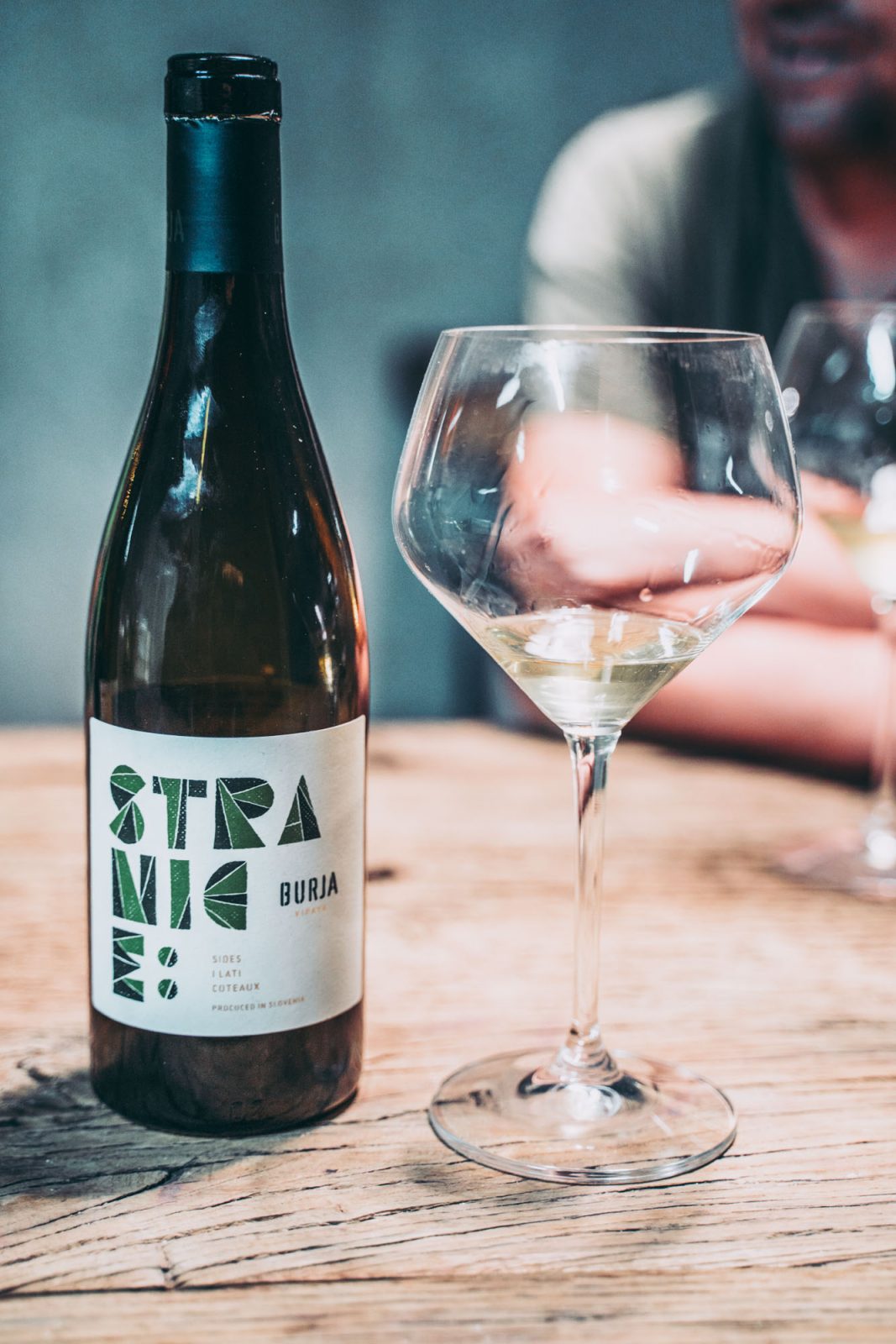
20. Taste orange wine in a cellar
Vipava is a stronghold of skin-contact white wine, which locals call orange wine and which has been made here far longer than it’s been fashionable elsewhere. We tasted at Burja Estate in a cellar cut into the hillside, where the temperature drops ten degrees as you walk down the steps and the amphorae are buried in the floor. Look for the indigenous grapes: Zelen and Pinela grow almost nowhere else.

21. Wander the village of Goce
Goce is a stone village on a terrace above the valley with more wine cellars than houses and a view down the whole Vipava. It takes fifteen minutes to walk, there’s nothing to buy, and it was one of our favourite hours in Slovenia. Our full guide to the Vipava Valley covers the wineries, the villages and where to stay in much more detail.
Slovenian Istria and Stanjel
Slovenia’s slice of the Istrian peninsula is small, and it’s the part of the country that feels most Mediterranean. Olive terraces, stone hill villages, cypress, and food that owes more to Italy than to the alps. Compared with the Croatian side of the same peninsula it’s quieter and far less visited, which is exactly why we liked it.

22. Sample olive oil at a working farm
Istrian olive oil is genuinely world class, and the small producers will pour you three or four to compare if you turn up during the day. We sampled at Gramona Farm near Stanjel, standing in the yard with the press running, and the difference between the first pressing and the supermarket bottle we’d been buying at home was embarrassing. Most farms sell direct and will vacuum-pack for a flight.


23. Explore Stanjel’s terraced gardens
Stanjel is a fortified village on a karst hilltop, shelled heavily in the Second World War and slowly restored since. The Ferrari Garden, laid out by the architect Max Fabiani around a terraced pond, is the reason to come, and the village walls give you the whole Vipava Valley in one direction and Istria in the other. Allow an hour.
Istria continues over the border, and if you’re carrying on south, our guides to places to visit in Croatia and island hopping in Croatia pick up where this one stops.
Piran and the Adriatic Coast
Slovenia’s entire coastline is 46 kilometres (29 miles) long, and Piran is the reason to spend time on it. Venice ran this town for five centuries and it shows in every square: the campanile is a copy of St Mark’s, the streets are too narrow for cars, and the whole peninsula ends in a point where you can swim off the rocks with the Italian Alps visible across the gulf on a clear day.


24. Climb the bell tower for the view
The campanile of St George’s is a steep, creaking wooden climb and the view over the terracotta roofs to the point is the shot everyone comes for, including ours above. Go late in the afternoon when the light is on the roofs. There’s a small entry fee, cash only, and the stairs are not for anyone uneasy with heights.
25. Walk the Secovlje salt pans
The Secovlje Salina Nature Park at the Croatian border has produced salt by hand for over 700 years using the same method: seawater led through channels into shallow evaporation basins, raked by workers who still live on site in season. It’s flat, exposed, strangely beautiful, and it’s a serious birdwatching site with over 300 recorded species. Bring a hat; there’s no shade at all.


One practical warning: cars aren’t allowed into Piran’s old town, and the main garage sits above the town with a shuttle bus down. Budget twenty minutes on arrival and don’t try to drive to your accommodation, because the streets genuinely won’t take a car.
Bela Krajina and the Kolpa River
Bela Krajina sits in the far southeast against the Croatian border, and almost nobody visits. It’s birch forest, folk tradition and the Kolpa, which is the warmest river in Slovenia and the one people actually swim in. This was the region we knew least about before we went and the one we talked about most afterwards.


26. Swim and paddle the Kolpa
The Kolpa forms the border with Croatia for over a hundred kilometres, and in summer it warms to around 25 degrees Celsius (77 Fahrenheit), which makes it a genuine swimming river rather than an alpine plunge. We stayed at Big Berry, a small resort of mobile homes on the riverbank near Primostek, and spent an afternoon drifting downstream on the current and walking back along the path. The setup there is deliberately low-impact, and it fits the sustainable travel thread that runs through most of what Slovenia does well.

27. Look for the birch woods and folk traditions
The name Bela Krajina means White Carniola, and the usual explanation is the birch forests that cover the region. It’s also the heartland of Slovenian folk culture, with painted Easter eggs, linen weaving and a heavy calendar of village festivals through the summer. Metlika and Crnomelj are the two towns worth a stop, and the region’s wine, a light red called Metliska crnina, is worth trying where you find it.
What to Eat in Slovenia
Slovenian food sits at a crossroads and doesn’t pretend otherwise. The alpine north cooks like Austria, the Vipava and Istria cook like Italy, the east cooks like Hungary, and the results are better than that description suggests. We ate consistently well and rarely expensively.


The dish to look for is *struklji*, a rolled dumpling that comes savoury with cottage cheese and tarragon or sweet with walnuts, and which turns up everywhere from bus-station cafes to tasting menus. *Jota* is a thick bean, sauerkraut and potato soup that’s the standard mountain lunch. *Kranjska klobasa*, Carniolan sausage, is protected by EU origin rules and is exactly as good as a very good sausage can be. On the coast, order whatever was landed that morning, usually sea bass or sardines, and the black cuttlefish risotto.
For sweets, *potica* is the national cake: a rolled yeast dough with walnut, tarragon or poppy-seed filling, served at every celebration. And in Bled, *kremsnita* is a vanilla-and-cream slice with a specific 1953 recipe that hotels there guard like a trade secret. We ate one lakeside and understood the fuss.
The breakfast in our photo above arrived at Istrian Houses straight from the farms around it: local cheese, cured ham, olive oil pressed a few kilometres away, tomatoes, and bread still warm. It cost less than a hotel buffet and remains the best meal we ate in the country.
Where to Stay in Slovenia
Slovenia is a country you sleep across rather than base in, and we’d resist the temptation to stay in Ljubljana and day-trip everywhere. The drives are short, but the good part of Bohinj or the Soca Valley is the early morning, and you only get that by waking up there. These are the places we stayed or would book again, one per region.
| Hotel | Style | Best for |
|---|---|---|
| Bed & Breakfast Mozaik | Ljubljana · $$ | A short walk from the old town with parking, which is the hard part in Ljubljana. Good value for a city that has got noticeably more expensive. |
| Hotel Triglav Bled | Lake Bled · $$$ | A restored 1906 hotel on the quieter western side with a pool and full lake views. Worth the splurge if Bled is your one big night. |
| Hotel Gasperin Bohinj | Lake Bohinj · $$ | Family-run, five minutes from the Ribcev Laz shore, and the staff know the trailheads. Our pick for using Bohinj as a hiking base. |
| Kamp Koren Kobarid | Soca Valley · $ | Where we stayed. Wooden cottages and pitches above the Soca, ten minutes from Kobarid, with kayaking arranged on site. |
| Theodosius Forest Village | Vipava Valley · $$$ | Glamping domes in the woods above Vipava, and the highest-rated place we found in the valley. Book well ahead in September. |
| Hotel Zala Piran | Piran · $$ | Right on the seafront in the old town with its own parking and shuttle, which solves Piran’s worst problem. |
Two of our own stays don’t appear on the booking sites at all. Hotel St Daniel in the Vipava Valley is a small family-run place that takes reservations direct, and Big Berry on the Kolpa does the same. Both were genuinely good, and both are the kind of place you find by asking rather than filtering. If sustainability is a deciding factor for you, our guide to the best eco hotels in Slovenia goes further into the certified properties.


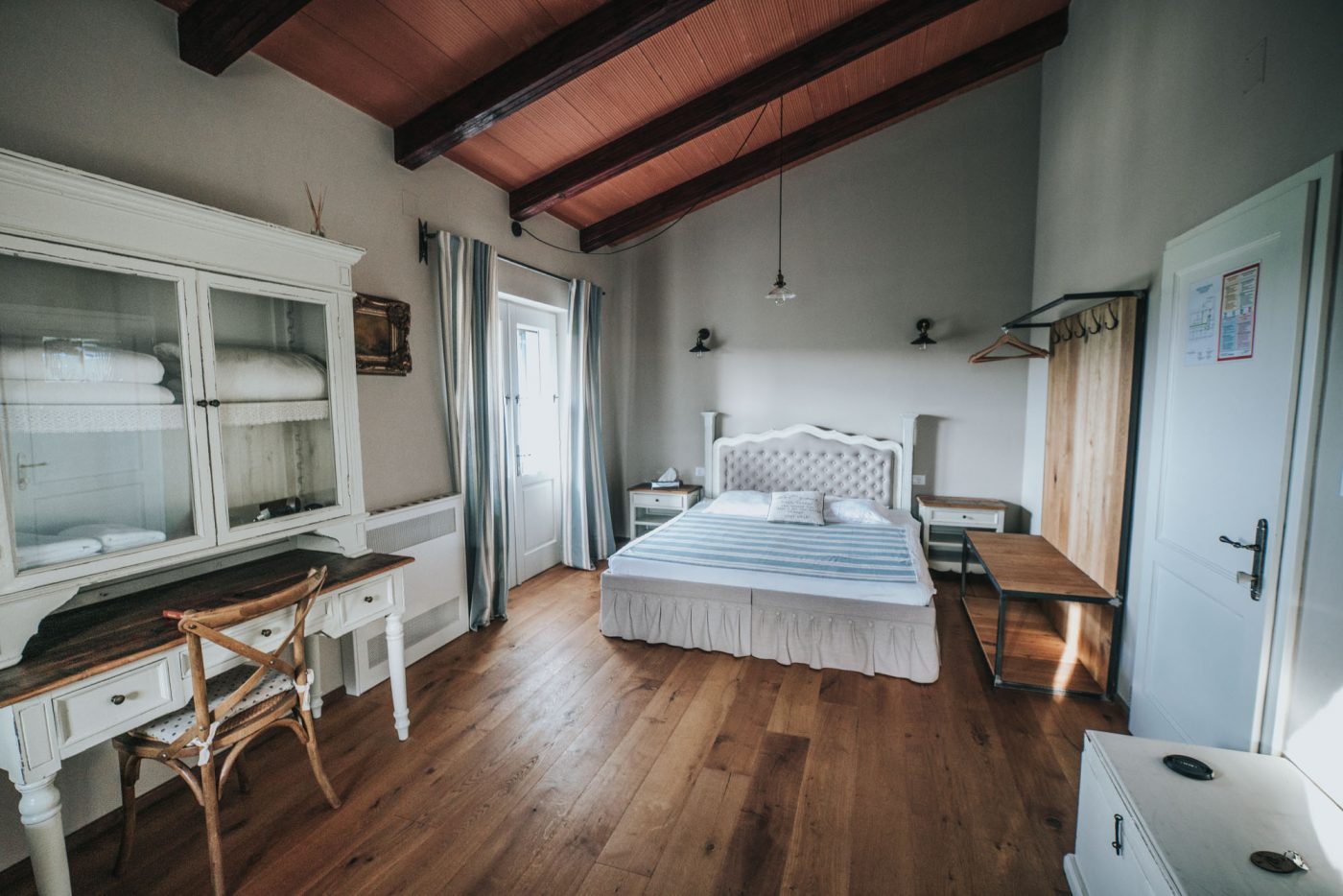


Prices swing hard by season. Expect to pay roughly double at Bled and on the coast in July and August compared with June or late September, and book Bled, Bohinj and Piran at least two months ahead for summer.

Frequently Asked Questions About Slovenia
How many days do you need in Slovenia?
Five to seven days is enough to see Ljubljana, Lake Bled, the Soca Valley and the coast without rushing. With three days, pair Ljubljana with Bled and the Vintgar Gorge. With ten, add the Vipava Valley, Slovenian Istria and Bela Krajina.
What is the best month to visit Slovenia?
June and September are the sweet spots: warm enough for the lakes and the coast, quiet enough that Bled and Vintgar are walkable. July and August are the busiest and the hottest. May is beautiful in the valleys but the high alpine passes may still be closed by snow.
Do you need a car in Slovenia?
For Ljubljana and Bled alone, no. Buses and trains are reliable and frequent. For everything in this guide, yes. The Soca Valley, the Vipava Valley and Bela Krajina are difficult to reach on public transport, and Slovenia is small enough that a rental car turns the whole country into day trips.
Is Slovenia expensive for tourists?
Slovenia sits below Austria and Italy on price and above Croatia’s inland regions. Expect mid-range European costs for accommodation and restaurant meals, with national park entry and cave tickets as the main additional costs. Bled and Piran in August are the two places where prices spike hardest.
Is Slovenia worth visiting?
Yes, particularly if you want alpine scenery, karst caves and a short stretch of Adriatic coast within a three-hour drive of each other. The country’s small size is its defining advantage: you can change landscape completely in an afternoon, which is not true of anywhere else we’ve driven in Europe.
What is Slovenia famous for?
The best-known things to do in Slovenia cluster around Lake Bled and its island church, the Julian Alps and Triglav National Park, the Postojna and Skocjan cave systems, Predjama Castle built into a cliff face, and Ljubljana’s car-free riverside old town. It’s also one of the greenest countries in Europe, with roughly 60 percent forest cover.
Can you visit Slovenia and Croatia on the same trip?
Easily. Zagreb is about two hours from Ljubljana, and the Istrian peninsula is shared between the two countries, so a stop in Slovenian Istria rolls naturally into a Croatian one. Many travellers pair a week in Slovenia with Split and the Dalmatian islands further south.
Is Slovenia a good destination for a first trip to Europe?
It works well as a first trip if you’re comfortable driving. It’s compact, safe, English is widely spoken in tourist areas, and it delivers alpine, coastal and city scenery in one short itinerary without the logistics of a multi-country route.
Final Thoughts
What stayed with us about Slovenia wasn’t Bled, though Bled is lovely. It was how quickly the country changes underneath you. We had breakfast on a farm terrace in Istria and were standing on a cobbled alpine pass by mid-afternoon, and neither felt like a rushed compromise. That compression is the whole argument for going, and it’s why the best things to do in Slovenia are worth planning as a route rather than a checklist.
If we went back tomorrow, we’d skip a night at Bled and give it to the Vipava Valley, and we’d build the trip around the Soca rather than treating it as a stop between the alps and the coast. The famous sights are famous for good reasons and you should see them. But the days we still talk about are the ones in the regions nobody had told us about, drinking Zelen in a cellar in Goce and floating down the Kolpa with the Croatian bank a stone’s throw away.
Which region would you build your Slovenia trip around?


Leave a Reply