

Algonquin Provincial Park is the easiest big wilderness in Ontario to actually reach, and for most people the question is not whether to go but when. The short answer is the last week of September, when the sugar maples along Highway 60 corridor turn and the park has its one genuinely extraordinary week of the year. The longer answer depends on whether you want to see moose, paddle a canoe, stay at a quiet campsite or see the snow landscapes, because Algonquin runs four completely different seasons and rewards each of them differently.
We grew up in Ontario, which means Algonquin has been the default answer to “canoeing in nature” for most of our lives, and we have driven the Highway 60 corridor in our own campervan in autumn with the maples in peak fall colours. This guide covers what a permit costs in 2026, which of the twenty-odd day trails are worth your time, where to camp or sleep under a roof, and the honest answer to whether you can do it in a day from Toronto.
Key Takeaways
- Algonquin is Canada’s oldest provincial park, not a national park. It was established in 1893, covers an area larger than Prince Edward Island, and is run by Ontario Parks rather than Parks Canada.
- Almost everything a first-time visitor wants sits on one road. The Highway 60 corridor cuts across the park’s southern edge and carries the interpretive trails, the campgrounds, the Visitor Centre and the two museums.
- The fall colour window is short and it is the reason most people come. Plan around it if you can, and book well ahead, because the campgrounds sell out for it.
- You do not need backcountry experience to enjoy this park. The day trails run from a twenty-minute boardwalk to a half-day loop, and every one of them starts from a signposted roadside parking lot.
- A day trip from Toronto is possible but it is a long day. Two nights is the point where the park stops feeling like a drive and starts feeling like a trip.

Planning a Visit to Algonquin Provincial Park
Algonquin covers 7,653 square kilometres of lake, bog and hardwood forest between Georgian Bay and the Ottawa River, which makes it roughly the size of a small country and completely impossible to see in one visit. The part almost everyone means when they say “Algonquin” is the Highway 60 corridor, a 55 kilometre stretch of road across the park’s southern edge with 19 interpretive hiking trails, eight campgrounds and the Visitor Centre strung along it. The rest of the park has no roads at all.
| Where | Central Ontario, between Georgian Bay and the Ottawa River |
| Established | 23 May 1893. Canada’s oldest provincial park |
| Size | 7,653 km², with more than 2,400 lakes |
| From Toronto | About 276 km to the West Gate, roughly 3 hours |
| From Ottawa | About 243 km to the East Gate, roughly 2 hours 45 minutes |
| Day-use permit | $21.00 per vehicle including HST (2026 rate) |
| Permit hours | 7:00 am to 10:00 pm on the date of issue |
| Best overall week | The last week of September, for the sugar maples |
| How long to stay | Two to three nights for the Highway 60 corridor |
| Best for | Day hiking, canoeing, autumn colour, first-time wilderness camping |
The park is open year-round, and that matters more here than at most Ontario parks. Winter is not a closed season at Algonquin, the ski trail network is groomed, Mew Lake Campground stays open, and the yurts are heated. What changes is which parts of the park are usable, and the seasonal table further down is the most useful thing on this page if you have not already fixed your dates.
Getting to Algonquin Provincial Park
Driving yourself is the way nearly everyone gets here, and once you are inside the park it is the only practical way to move around. There is no shuttle between the campgrounds and the trailheads, and the distances between them are highway distances rather than walking distances. If you are flying into Ontario for this, pick up a car at the airport. Discover Cars compares the Toronto and Ottawa agencies in one search.
From Toronto the usual route is north on Highway 400, east on 60 through Huntsville, and into the park at the West Gate, which is about 276 kilometres and around three hours without stops. From Ottawa you come west on Highway 17 then south on 60 to the East Gate, roughly 243 kilometres and two hours forty-five. The two gates are 55 kilometres apart along the corridor, which is worth knowing if you are booking a campground: the trails cluster toward the western half, and arriving at the East Gate with a Mew Lake reservation means another forty minutes of driving after you have already stopped to pay.
Going without a car is possible but constrained. Parkbus runs a seasonal service from downtown Toronto that stops at Lake Opeongo, Pog Lake Campground, Lake of Two Rivers, the Portage Store, the West Gate and the Wolf Den Nature Retreat, which covers the useful parts of the corridor. It does not serve Ottawa. Check the current season’s schedule before you plan around it, because the service runs on specific weekends rather than daily.

If you are driving up from the city in a van or an RV, the corridor is genuinely one of the best autumn drives in the province, and the stretch through Muskoka before you even reach the gate is half the reason to go. We have done it in our own van more than once, and if that is your setup, our van life hacks and the Ontario RV trip write-up both cover the practical side of the drive north.
Permits, Fees and Park Hours
There are two ways into Algonquin. A daily vehicle permit covers day use, and a camping permit covers overnight stays and includes park access for the length of your booking, so campers do not pay twice. Buy the day permit at a gate or a park facility on arrival, or in advance online.
Seasonal permits are the better deal if Algonquin is not a one-off. They work at every Ontario provincial park, which means Bruce Peninsula, Killarney, Sandbanks and the rest of the system are covered by the same sticker.
Algonquin Park Day-Use Fees
| Permit | Cost (2026, incl. HST) | Valid |
|---|---|---|
| Daily vehicle permit | $21.00 | One vehicle, 7:00 am to 10:00 pm on the date of issue |
| Summer seasonal permit | $84.75 | 1 April to 30 November, all Ontario provincial parks |
| Winter seasonal permit | $67.80 | 1 December to 31 March, all Ontario provincial parks |
| Annual permit | $111.87 | 1 January to 31 December, all Ontario provincial parks |
Those rates come from the Friends of Algonquin Park day-use fee page and the seasonal permit page, and Ontario Parks adjusts them from time to time, so check before you travel. Ontario seniors and holders of an accessibility permit get a reduction, and Canadian Armed Forces members and veterans resident in Ontario enter free on weekdays. If you are visiting more than about five times a year, the annual permit pays for itself and works at Bruce Peninsula, Killarney and everywhere else in the system.
Camping is booked separately through the Ontario Parks reservation system, and the booking window opens five months ahead. Check-in is from 2:00 pm. For a summer weekend or anything inside the fall colour window, five months ahead is not an exaggeration, those dates go on the day they open.
Best Time to Visit Algonquin Provincial Park
The last week of September is the answer for most people. The average peak for sugar maple colour along the western Highway 60 corridor is 27 September, and the Friends of Algonquin have been tracking it long enough to know the spread: the earliest recorded peak was 15 September in 1982, the latest 9 October in 1996, and in 2025 it arrived on 25 September after a dry summer. If you want the version of Algonquin that ends up on postcards, that is the week, and the Fall Colour Report tracks it live through the season.
Algonquin Through the Year
| Season | What it is like | Best for | Worth knowing |
|---|---|---|---|
| Spring (April to early June) | Cold nights, high water, quiet trails | Moose on the roadside, trout fishing | Blackflies arrive mid-May and are genuinely unpleasant through June |
| Summer (late June to August) | Warm, busy, everything open | Canoeing, swimming, first-time camping | Weekends are the busiest time of year; book months ahead |
| Fall (September to mid-October) | Cool, bright, colour | Hiking, photography, the maples | Peak week is a genuine crowd event on the corridor |
| Winter (November to March) | Snow, silence, short days | Cross-country skiing, snowshoeing, yurts | Most trails are not suitable for hiking; ski trails are groomed |
A few things the table cannot carry. Blackfly season is the one genuine reason to avoid a stretch of the calendar, from about the middle of May through the end of June the flies along the wetter trails are bad enough to end a walk early, and a head net costs almost nothing. Late May and June are also the best weeks of the year for seeing moose, so it is a real trade. And if you want the park to yourself, the first half of November is the sleeper: the colour has gone, the crowds have gone with it, and the forest is more open than at any other time of year.

Things to Do in Algonquin Park
Hiking is what most people come to do, and Algonquin makes it unusually easy: the interpretive trails along Highway 60 are signposted from the road, each has its own parking lot, and each comes with a trail guide booklet keyed to numbered posts. They range from a twenty-minute boardwalk to a half-day loop, and none of them requires navigation skills. Backcountry hikers have well over a hundred kilometres of interior trail to work with, but that is a different kind of trip and needs real preparation.
Algonquin Day Trails on the Highway 60 Corridor
| Trail | Distance | Time | Difficulty | Best for |
|---|---|---|---|---|
| Spruce Bog Boardwalk | 1.5 km | 30 min | Easy | Wildlife, mobility-friendly, a first stop with kids |
| Algonquin Logging Museum Trail | 1.3 km | 45 min | Easy | History, the reconstructed camp and steam engine |
| Lookout Trail | 1.9 km | 1 hr | Moderate | The view, and the reason it is always busy |
| Beaver Pond Trail | 2 km | 1 to 2 hrs | Easy | Beaver dams and lodges you can actually see |
| Booth’s Rock Trail | 5.1 km | 2 to 3 hrs | Moderate | A cliff-top view and an old railway bed |
| Track & Tower Trail | 7.5 km | 3 to 4 hrs | Difficult | A lookout, an abandoned rail line, fewer people |
| Centennial Ridges Trail | 10 km | 4 to 6 hrs | Difficult | The hardest day hike on the corridor, and the best |
| Mizzy Lake Trail | 11 km | 4 to 5 hrs | Moderate | Wildlife, ponds, bogs and the best moose odds |
The trails worth planning around
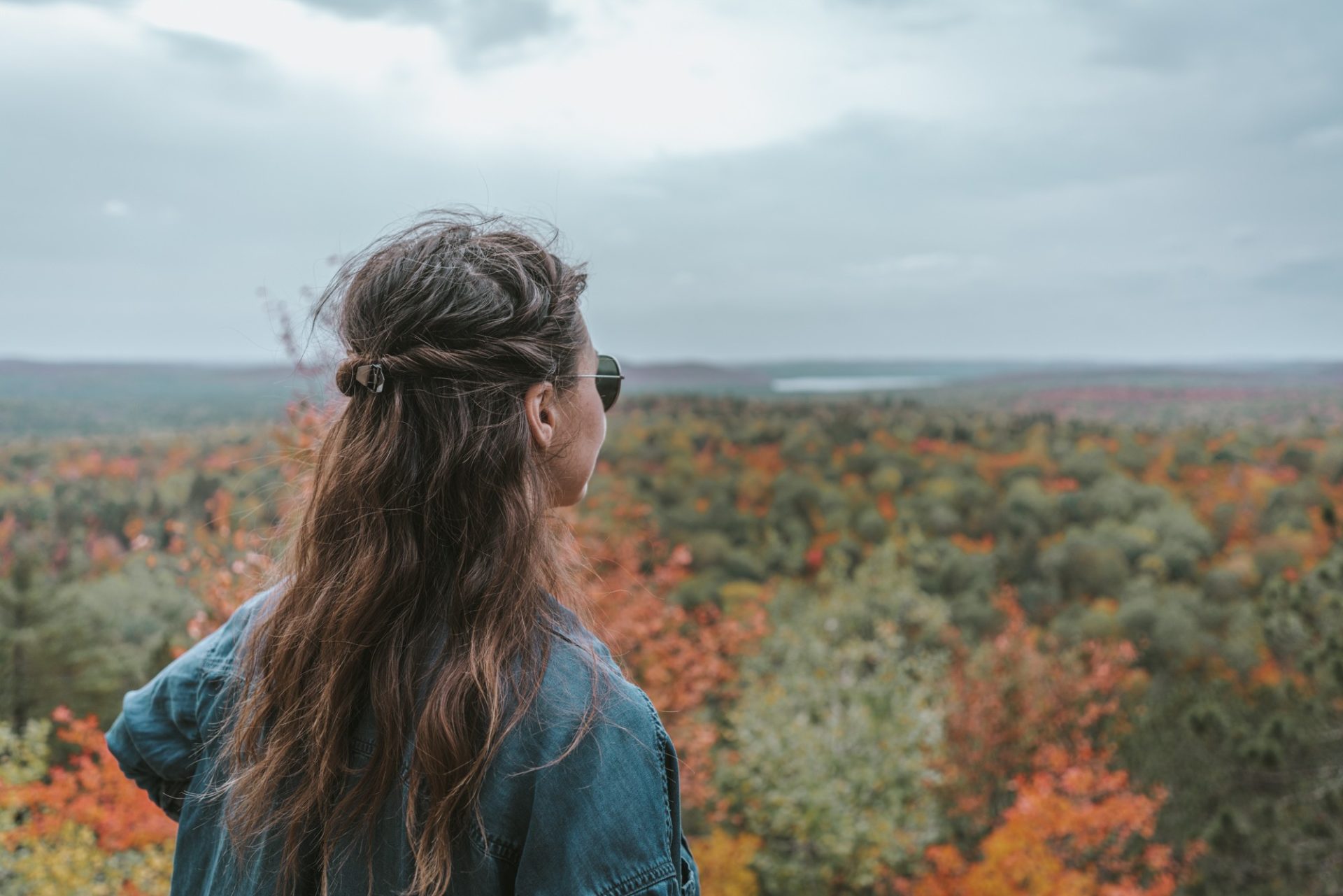
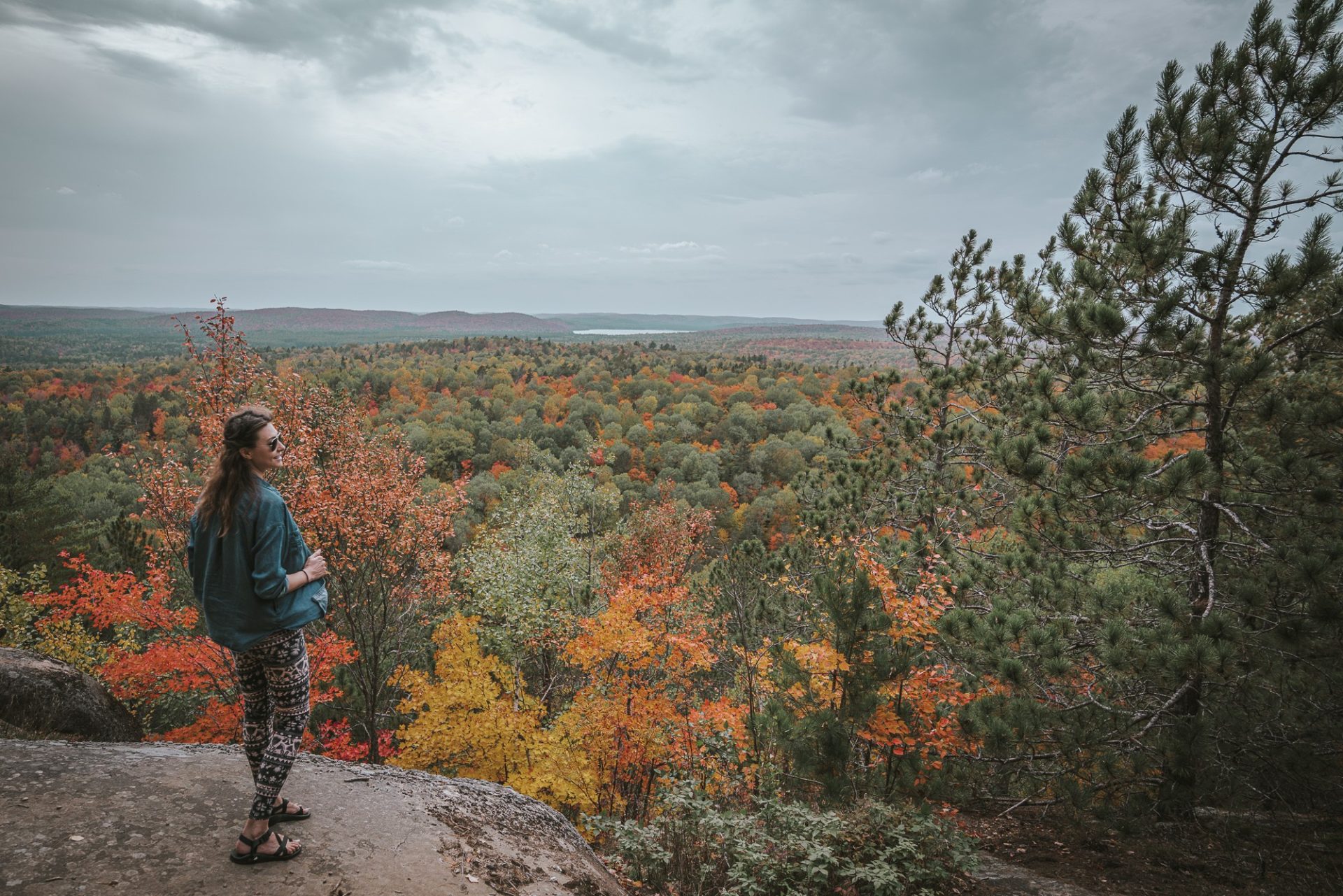
The Lookout Trail is the one everybody does, and it earns it, a short steep climb to a cliff edge with the hardwood forest running out to the horizon below you. It is also one of the busiest stretches of trail in the park. Go on a weekday, or go early, or accept that you will be sharing the viewpoint. In the fall colour window the parking lot fills by mid-morning.
The Beaver Pond Trail is the one we send people to instead when the Lookout is heaving. It loops around two ponds with active dams and lodges, the walking is easy, and the odds of actually seeing the animals that built the place are far better than anywhere else on the corridor. The Spruce Bog Boardwalk is shorter still, mostly raised boardwalk over a black spruce bog, and it is hard to beat for anyone with limited mobility or small children, it is also quietly one of the best for wildlife.
At the other end, Centennial Ridges is the hardest day hike on the corridor and the one that rewards the effort most: two long ridge climbs with viewpoints along both. Mizzy Lake takes you furthest from the road and has the best moose odds of any marked trail, though it is flat, boggy and best left for the dry months. Track & Tower runs past an abandoned railway and a lookout over Cache Lake, and Booth’s Rock has both a cliff-top view and a stretch of old rail bed on the way back.
Canoeing and paddling
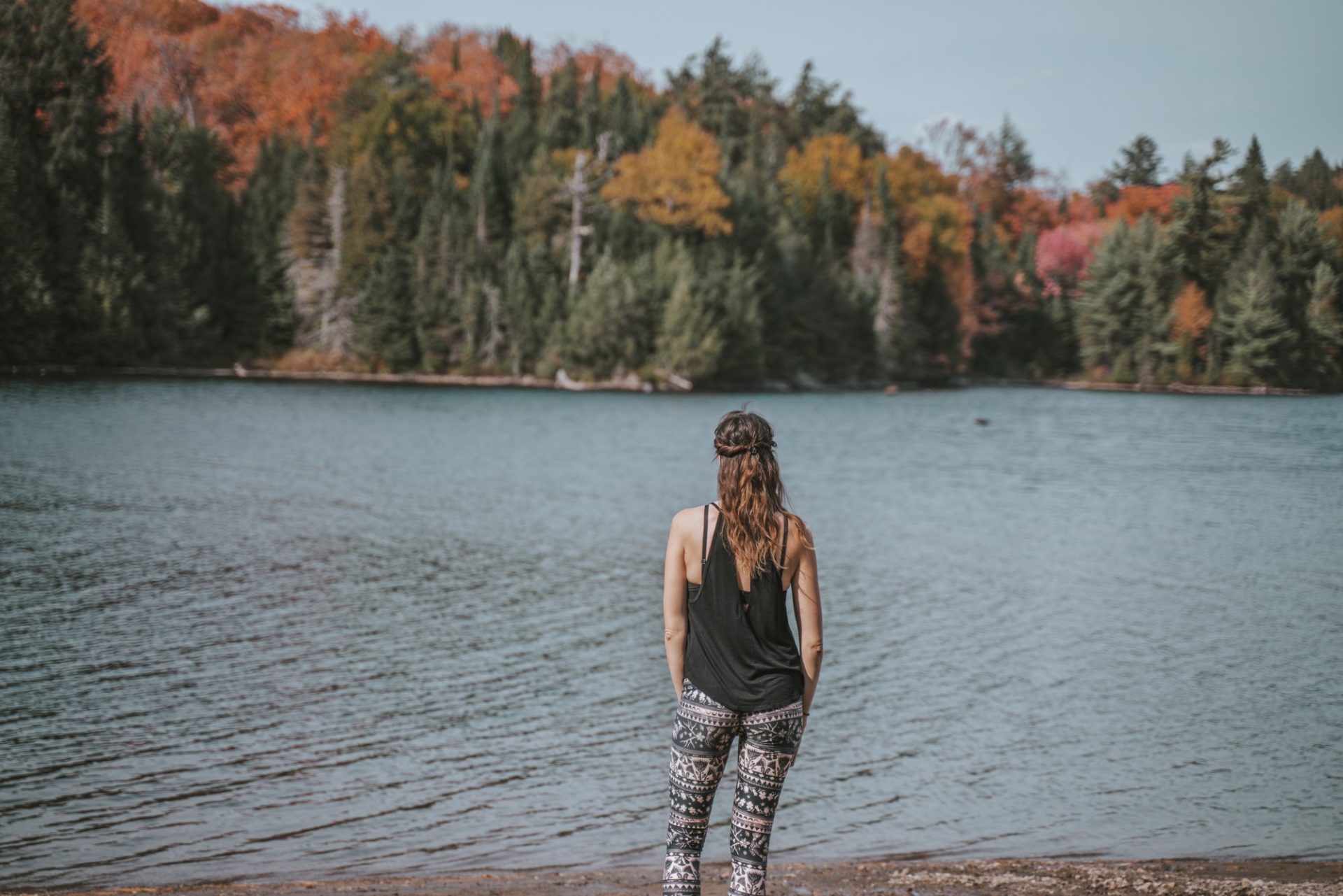
Algonquin is a canoeing park before it is a hiking park. There are more than 2,400 lakes inside the boundary and something in the order of 2,100 kilometres of canoe routes, and the portage network is the reason people come from other countries to paddle here. You do not need to commit to a multi-day trip to get the point, a rented canoe on Canoe Lake or Lake of Two Rivers for an afternoon gives you the version of Algonquin that the road cannot.
Rentals and outfitting are straightforward. The Portage Store at Canoe Lake and the Opeongo Store and Canoe Centre both rent by the day and run water taxis for people heading into the interior, and Algonquin Outfitters at Oxtongue Lake just outside the West Gate is the other established option. Unlimited-horsepower boats are restricted to Galeairy and Opeongo lakes; most of the park is limited to small motors or paddle only, which is why it stays quiet.

Biking
The Old Railway Bike Trail is the one to do. 16 kilometres of flat, well-surfaced former rail bed running between Mew Lake and Rock Lake, passing a string of lakes on the way, and suitable for any level. The Minnesing Mountain Bike Trail offers loops from 4.7 to 23.4 kilometres through hardwood forest with boardwalk sections and is genuinely moderate. Byers Lake Mountain Bike Trail, on the park’s southern access road, is a 13 kilometre loop with steep ascents and a tendency to get muddy. Bikes can be rented at the Lake of Two Rivers store.
Fishing
Algonquin holds some of the best brook trout and lake trout water in Ontario, in hundreds of lakes across the park. Spring is the season for trout, when the fish are shallow and accessible; summer suits smallmouth bass better. You need an Ontario fishing licence as well as your park permit, and live baitfish are not permitted anywhere inside the park.

Winter: skiing and snowshoeing
The marked hiking trails are not generally suitable for winter walking, but Algonquin runs three groomed cross-country ski networks instead. Fen Lake in the west has four loops of 1.25, 5.2, 11.4 and 13 kilometres at varying difficulty. Leaf Lake at the eastern end is the biggest network, with tracks from 5 to 51 kilometres and cabins and toilets along the way. The Minnesing Trail is ungroomed but well maintained and is the one locals point snowshoers toward. If a winter trip in Ontario appeals more with a roof and a sauna at the end of it, the winter wellness retreat we did is the opposite end of the same season.
The Visitor Centre and the museums
The Algonquin Park Visitor Centre at kilometre 43 is worth an hour whatever the weather. The exhibits cover the park’s natural and human history properly rather than decoratively, there is a film, and the deck on the back of the building gives you a 180-degree view over the park that is a genuine alternative to the Lookout Trail for anyone who cannot manage the climb. Staff there will also tell you what has been seen and where, which is more useful than any guidebook.
The Algonquin Logging Museum at the eastern end has a 1.3 kilometre interpretive loop past a reconstructed camboose camp and a steam-powered amphibious tug, and it explains the industry that shaped this forest far better than a plaque could. The Algonquin Art Centre at kilometre 20 is the one most visitors drive past and should not, it shows work by artists connected to the park, including the Group of Seven lineage that made these lakes famous in the first place.


Wildlife in Algonquin: Moose, Beavers and the Wolf Howl
Algonquin is one of the few places in southern Ontario where you have a genuine chance of seeing large animals without trying very hard. The park supports moose, black bear, eastern wolf, beaver, otter and more than 270 recorded bird species, and the Highway 60 corridor cuts through enough different habitat that a slow drive at the right time of day does a lot of the work.
Moose, by month
Moose are most reliably seen from the roadside in late May and June, when they come to the salt-laced ditches left over from winter road treatment, and again during the autumn rut in late September and early October, when the bulls are moving and far less cautious. Drive the corridor slowly at dawn or dusk, look at the wet ground rather than the trees, and be genuinely careful, a moose on the road at night is a serious hazard. Mizzy Lake Trail and the Spruce Bog Boardwalk are the two trails with the best odds on foot.
Beavers and the ponds they build
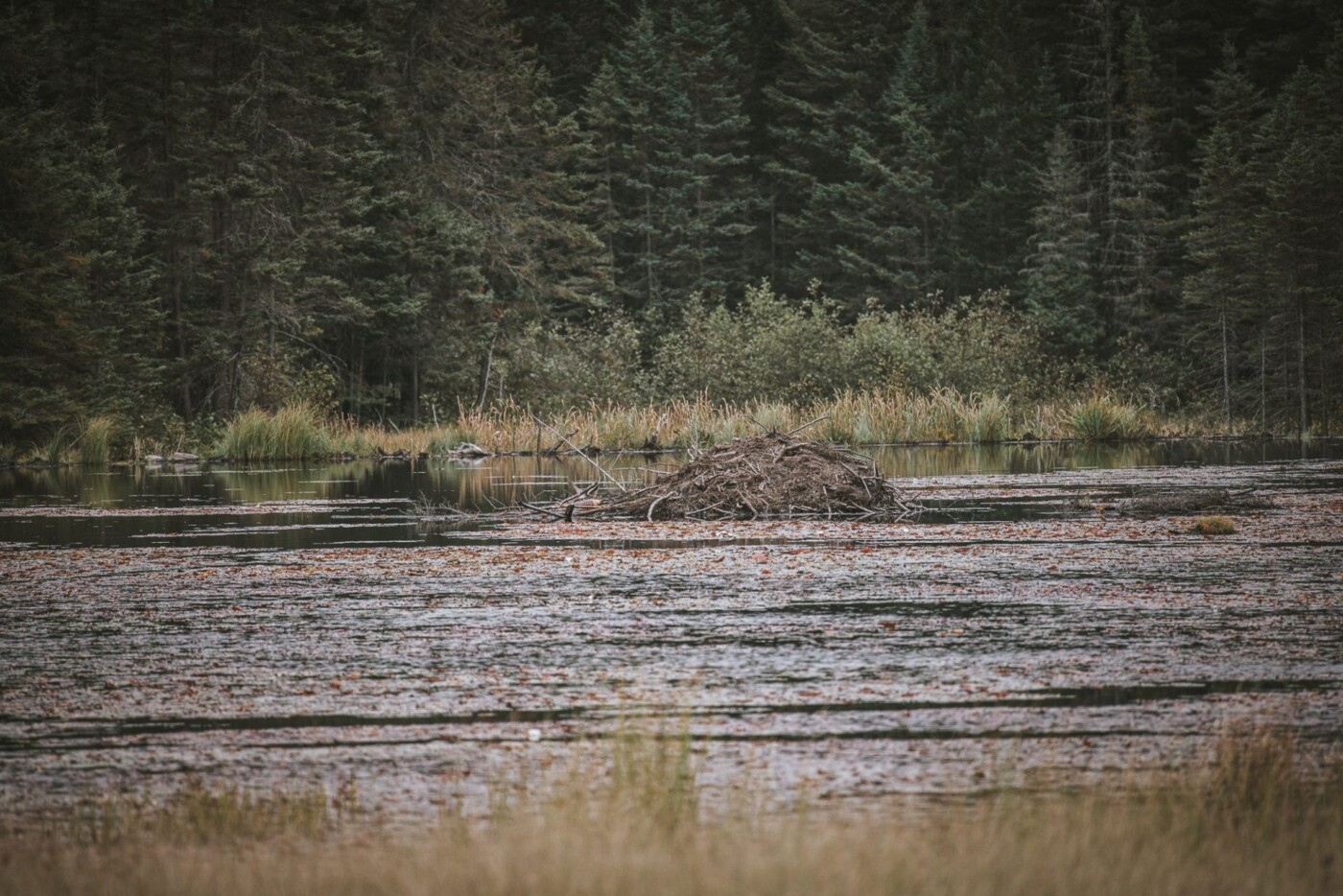
The Beaver Pond Trail is named for exactly what you think, and the dams there are the easiest place in the park to understand what a beaver colony actually does to a landscape, the flooded flats, the drowned standing timber, the lodge out in the middle of the water. Dusk is the hour. Beavers are not shy so much as scheduled.




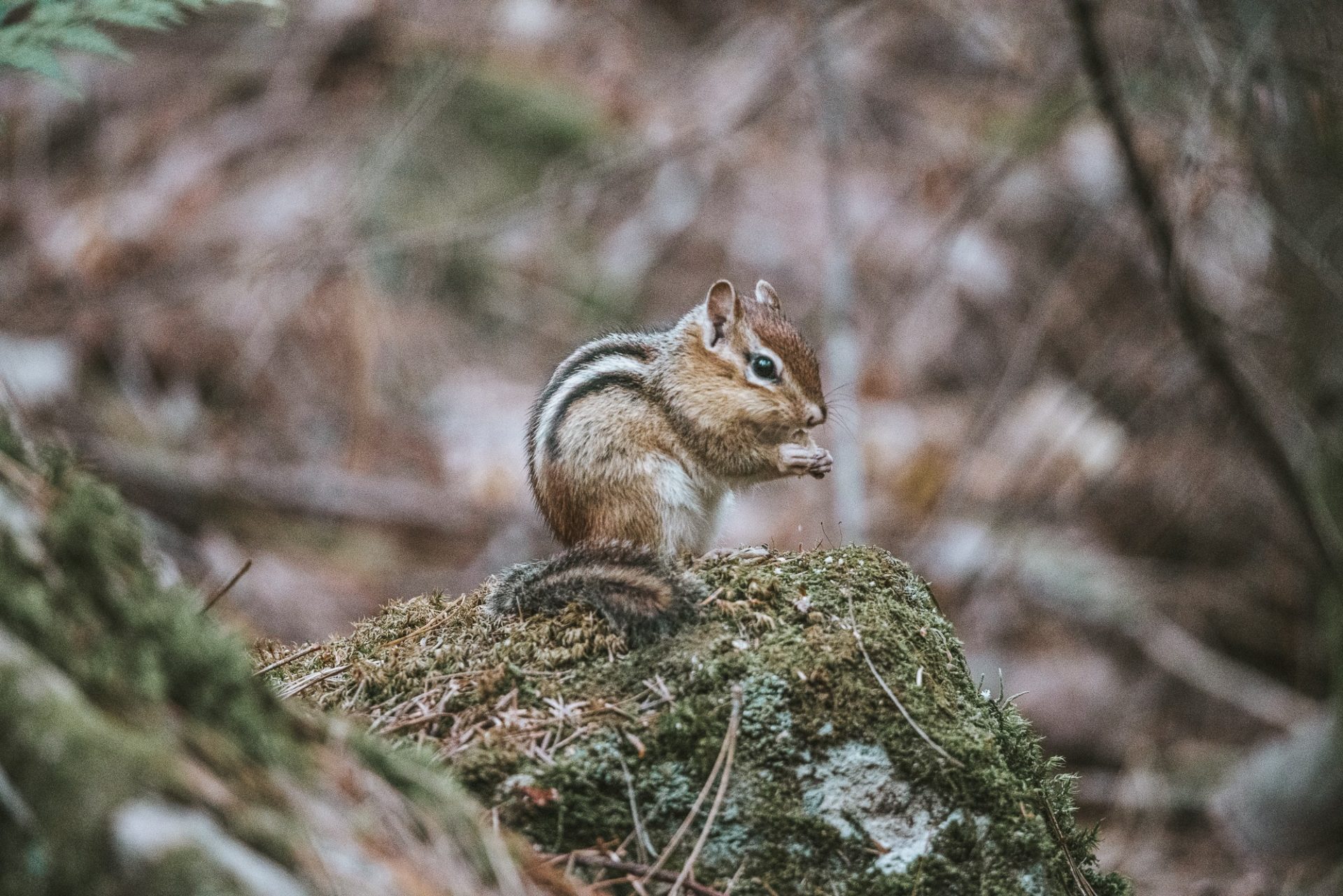
Smaller wildlife is everywhere and mostly unbothered by people. Chipmunks and red squirrels will approach you at any trailhead, which is charming for about four minutes and is also why you should not feed them.
The Public Wolf Howl
Algonquin’s best-known visitor event is the Public Wolf Howl, which runs on Thursday evenings in August and sometimes into the first week of September. Park naturalists spend the day locating a pack; if they find one and the weather holds, a convoy of visitors drives out along Highway 60 after dark, stops, and the naturalists howl. Sometimes the wolves answer. It only runs when the conditions are right, so watch the park’s announcements rather than planning a trip around it, and expect a crowd when it does go ahead.
Birds
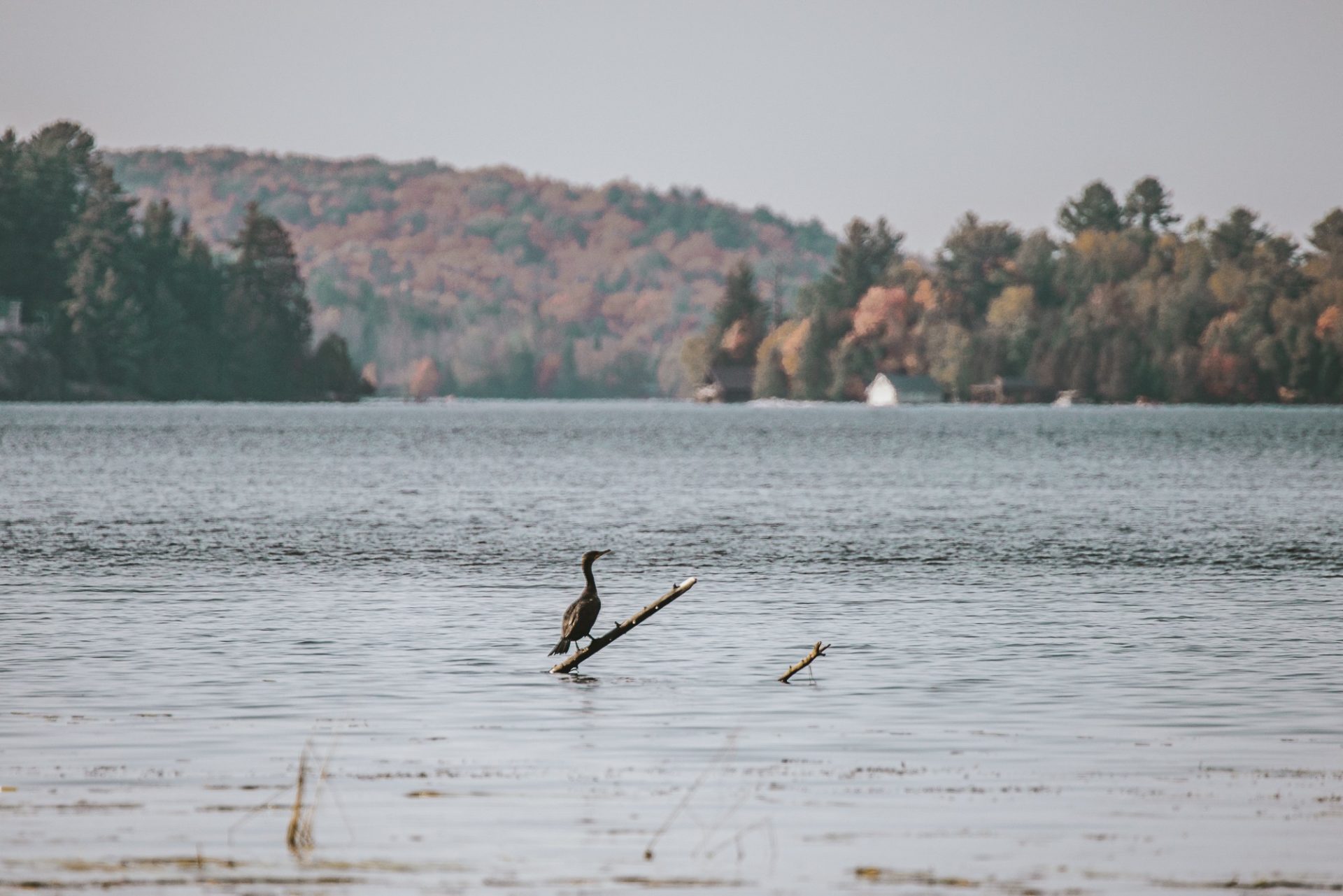
More than 270 species have been recorded here, and a good number breed in the park or stop over on migration. The common loon is on most of the lakes and is the sound people remember. Gray jays, blue jays, black-backed woodpeckers and spruce grouse are the other Canadian classics, and the spruce bogs are where the specialists go looking. The Friends of Algonquin run a Wild Bird Cam through parts of the year as part of their monitoring programme.
Can You Visit Algonquin as a Day Trip from Toronto?
Yes, but it is a long day and you should know that going in. The West Gate is about 276 kilometres from downtown Toronto, roughly three hours each way without traffic, which means six hours of driving around whatever you actually do in the park. It is doable and plenty of people do it. It is also the reason two nights feels like a different trip rather than a longer one.
If you are doing it in a day, leave by 8:00 am, stay in the western half of the corridor, and pick two short trails rather than one long one. A workable shape: arrive at the West Gate around 11:00, do the Lookout Trail before the parking lot fills, eat at Lake of Two Rivers, walk the Spruce Bog Boardwalk or the Beaver Pond Trail in the afternoon, stop at the Visitor Centre on the way back, and be driving west by 5:00 pm. Skip Centennial Ridges and Mizzy Lake entirely, both will eat the day.
Two things make the day trip worse than it needs to be: arriving during the fall colour peak on a Saturday, when the corridor parking lots fill early and the drive home is slow, and underestimating the last hour. If the timing is flexible at all, a midweek visit changes the experience completely. For other trips out of the city at a more forgiving distance, we keep a running list of weekend getaways from Toronto.

Where to Stay in Algonquin Park
Accommodation inside Algonquin falls into three groups: Ontario Parks campgrounds and roofed sites you book through the provincial system, a handful of privately run lodges that have been in the park for decades, and everything in the gateway towns just outside the gates. The Highway 60 corridor holds most of it, which puts you within reach of the trails, the Visitor Centre and the Logging Museum.
Campgrounds
Mew Lake Campground is the one to pick if you are unsure. It has 131 powered and unpowered sites, lake access, a beach, showers and laundry, it connects directly to several trails, and it is the only Highway 60 campground open year-round. Lake of Two Rivers is the biggest at 241 sites with a beach and a volleyball court, and it sits beside the store and cafe. Pog Lake has 286 sites laid out to maximise waterfront and privacy and runs from the May long weekend through to Labour Day.

All three are booked through the Ontario Parks reservation system five months in advance, and all three sell out for summer weekends and the fall colour period. Check facility status when you book, showers and comfort stations open and close seasonally.
Yurts and ranger cabins
If you want a roof without a hotel, Algonquin has eight yurts, seven at Mew Lake and one at Achray on the east side. Each sleeps up to six, has bunks, electric heat and lighting, and you bring your own bedding and cooking gear. They are the reason Mew Lake works as a winter base. There are also five drive-in ranger cabins and a larger number reachable only from the backcountry. Most are genuinely basic: bunks, a washbasin, some form of toilet, and in most cases no electricity or running water.
Lodges inside the park
Three private lodges have operated inside Algonquin for generations and they are a completely different proposition from a campsite. Arowhon Pines sits on Little Joe Lake and runs as an all-inclusive with no televisions and no bar service, open from early June to mid-October. Bartlett Lodge on Cache Lake is reached by boat and has been running since 1917. Killarney Lodge sits on Lake of Two Rivers with individual log cabins on the water. We have not stayed at any of the three, these are the facts rather than a recommendation, and all three book direct rather than through the usual booking sites.
Roofed Accommodation In and Around the Park
| Lodge | Where | Style | Best for |
|---|---|---|---|
| Arowhon Pines | Little Joe Lake | All-inclusive, no TVs | Unplugging completely, early June to mid-October |
| Bartlett Lodge | Cache Lake | Boat access only, operating since 1917 | The most secluded of the three |
| Killarney Lodge | Lake of Two Rivers | Individual waterfront log cabins | Corridor access with a private cabin |
| Wolf Den Nature Retreat | Oxtongue Lake, outside the West Gate | Hostel and cabins | Budget travellers and the car-free, and a Parkbus stop |
Gateway towns
For most visitors the realistic answer is a town outside the gate. Huntsville is the largest and sits about 45 minutes west of the West Gate with the widest choice of hotels, restaurants and supermarkets. Dwight is much closer to the gate and much smaller. Whitney sits just outside the East Gate and is the practical base if you are coming from Ottawa. If a campsite is not what you had in mind at all, the Ontario spa resorts in the surrounding Muskoka lakes are a very different way to spend the same weekend.
The campgrounds and the three in-park lodges book direct through Ontario Parks or the lodges themselves. Everything else is in the gateway towns, and Huntsville has by far the most choice, with Dwight closer to the West Gate and Whitney just outside the East Gate.
Book well ahead for any summer weekend and for the whole of the fall colour window, the towns fill along with the park.
Where to eat
Food inside Algonquin is limited and you should plan for that. The Lake of Two Rivers Store and Cafe at kilometre 31 is the main option on the corridor, with a grill, groceries, firewood and bike rental in one building. The Portage Store at Canoe Lake has a restaurant upstairs with a view over the lake and is the better sit-down meal of the two. Beyond those, you are cooking at your campsite or driving to Huntsville or Whitney. Bring more food than you think you need, and buy it before you reach the gate.
What to Know Before You Go
Cell service along Highway 60 is patchy and disappears entirely on most trails and every lake. Download your maps before you arrive and tell someone your plan if you are heading anywhere longer than the interpretive trails. The Visitor Centre and the gates have landlines.
Blackflies run from roughly mid-May through the end of June and mosquitoes carry on through the summer, worst near the bogs and at dusk. A head net weighs nothing and is the difference between finishing a walk and turning back. Ticks are present and increasing in central Ontario, check yourself after any walk through long grass.
Dogs are welcome in the park and on most trails, on a leash no longer than two metres, but not on Mizzy Lake Trail, which is closed to pets to protect wildlife. Black bears live here and are rarely seen, which is mostly a function of people storing food properly, use the bear-proof storage where it exists and never leave food or cookware out at a campsite.
Layers matter more than gear. The park sits high enough that a bright September afternoon can turn genuinely cold by five o’clock, and the temperature difference between a sunny lakeshore and a shaded ridge trail is considerable. Pack rain gear regardless of the forecast.
A head net between mid-May and the end of June, waterproof boots for the boggier trails, a headlamp for a campsite after dark and a tick remover are the four things that come out of the bag on nearly every Ontario park trip.
None of it is expensive and all of it fits in a daypack. The head net is the one people skip and regret.
One last thing, and it is the reason the park still looks the way it does. Pack out everything you carry in, stay on the marked trails, and do not build anything. Algonquin takes something like a million visitors a year, and it holds up because most of them leave nothing behind.

Frequently Asked Questions
Is Algonquin Provincial Park worth visiting?
Yes, particularly in late September and early October when the sugar maples along the Highway 60 corridor turn. Algonquin is Canada’s oldest provincial park, covering 7,653 square kilometres with more than 2,400 lakes, and the corridor alone holds 19 interpretive hiking trails you can walk without any backcountry experience.
How many days do you need in Algonquin Park?
Two to three days is the sweet spot for the Highway 60 corridor: one day for the Lookout and Beaver Pond trails and the Visitor Centre, a second for a longer hike such as Track and Tower or Centennial Ridges, and a third for a paddle. A single day works if you arrive early and accept that you will only scratch the surface.
When do the fall colours peak in Algonquin Park?
The sugar maple canopy along the western Highway 60 corridor peaks on 27 September on average. The earliest recorded peak was 15 September and the latest 9 October, and in 2025 it fell on 25 September. The Friends of Algonquin Park publish a live Fall Colour Report through the season.
How much does it cost to enter Algonquin Park?
A daily vehicle permit along Highway 60 is $21.00 including 13% HST, covering one vehicle and its occupants, valid from 7:00 am to 10:00 pm on the date of issue. Seasonal permits cost $84.75 for summer, $67.80 for winter and $111.87 for the full year, and are valid at every Ontario provincial park. These are 2026 rates.
Can you day trip to Algonquin Park from Toronto?
Yes, but it makes for a long day. The West Gate is roughly 276 kilometres and three hours from downtown Toronto, so a day trip means about six hours of driving. Leave by 8:00 am, stay in the western half of the corridor, and pick two short trails rather than one long one.
Where is the best place to see moose in Algonquin Park?
Moose are most reliably seen from the Highway 60 roadside in late May and June, when they come to the salt-laced ditches left from winter road treatment, and again during the autumn rut in late September and early October. Mizzy Lake Trail and the Spruce Bog Boardwalk are the two trails with the best odds on foot.
Do you need to book Algonquin Park camping in advance?
Yes. Campsites can be reserved five months ahead through the Ontario Parks reservation system, and the Highway 60 campgrounds sell out for summer weekends and the entire fall colour period. Check-in is from 2:00 pm.
What is the Public Wolf Howl?
It is Algonquin’s best-known visitor event. On Thursday evenings in August, and sometimes into the first week of September, park naturalists locate a wolf pack during the day and then lead a convoy of visitors out along Highway 60 after dark to howl and listen for a reply. It runs only when staff have found a pack and the weather cooperates.
Final Thoughts
Algonquin does not trade on drama and it does not try to. What it has is scale, water and a kind of ordinary northern beauty that rewards slowing down, a bog boardwalk at seven in the morning, a loon on a flat lake, a beaver dam that has rearranged an entire valley. It is also genuinely accessible in a way that most Canadian wilderness is not, which is why it has been the province’s default escape for over a century.
If you have one weekend, go in late September and book it in April. If you have one day, go on a weekday and keep it simple. And if Algonquin gives you the taste for it, Ontario has more of this than people expect, the Bruce Peninsula and the Grotto on Georgian Bay, Pukaskwa on the north shore of Superior, the beaches along the Great Lakes, and a whole string of Canadian road trips that run through all of it. Closer to home there is Prince Edward County, Manitoulin Island, North Bay and Sudbury, and if you are starting from the city, our Toronto city guide covers the other end of the drive.
Practical bookends: Discover Cars for the drive up if you are flying in, Ontario Parks for the campsite five months out, and a guided Algonquin day trip from Toronto if you would rather not drive it yourself.

Leave a Reply