

Carnaval de Santiago de Cuba is one of the oldest and largest carnivals in the Caribbean: a week-long fiesta every July in Santiago de Cuba, on the island’s eastern coast, with Afro-Cuban music, comparsa parades, conga lines, floats, street food and rum. We only found out about it by chance in 2016 and caught the last night after a 10-hour colectivo ride. Here’s that story, plus what you need to know for 2026: when it is, why it’s celebrated, what you’ll see and where to stay.
Key Takeaways
- It runs the last week of July. The biggest nights are July 25 (the feast of Santiago Apostol) and July 26 (the national holiday).
- It’s a celebration of Afro-Cuban culture. Neighbourhood comparsas, conga drums and the corneta china lead the parades every night.
- Book transport early. In 2016 the Viazul buses were sold out for days and we took a 10-hour colectivo; in 2026 fuel shortages make it harder.
- Go with realistic expectations. Cuba in 2026 means blackouts and shortages; bring cash in small bills and a power bank.
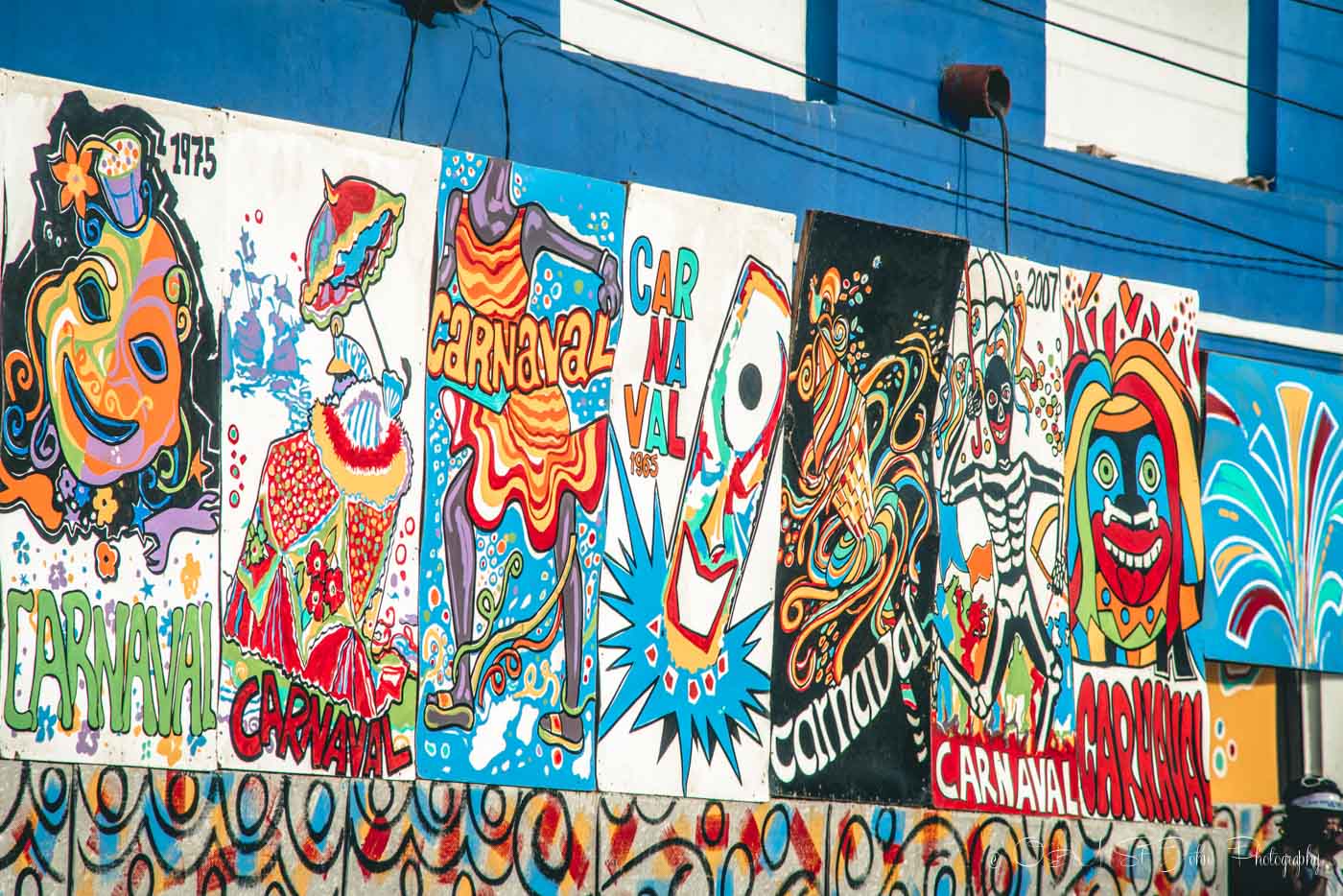
Carnaval de Santiago de Cuba at a Glance
The short version, before the story and the detail.
Carnaval Santiago de Cuba at a Glance
| What it is | One of the oldest and largest carnivals in the Caribbean |
| Where | Santiago de Cuba, eastern Cuba (Oriente province) |
| When | The last week of July each year; expected 2026 dates: approximately July 21 to 27 |
| Key festival days | July 25 (Dia de Santiago Apostol) and July 26 (Dia de la Rebeldia Nacional) |
| How long | About one week of street parades, music, and processions |
| Origins | Afro-Cuban traditions brought by enslaved sugar workers + Catholic feast day of Santiago Apostol + colonial-era end-of-harvest festivities (17th century onwards) |
| Cost to attend | Free to watch the street parades; food/drinks vendor pricing; modest entry for some stadium events |
| Best for | Music and dance travellers, Afro-Cuban culture interest, anyone wanting the most distinctly Cuban festival on the calendar |
Before you plan, a word on Cuba today.
Should you still go? Yes, with realistic expectations. The carnaval has continued through the turmoil, casa particulares are still operating, and tourism is directly supporting Cuban families. But plan for a more challenging logistics environment than DTT’s 2016-era articles describe. Bring a power bank, extra cash in Euros or USD, book inter-city travel ahead, and stay flexible with the schedule. See our Cuba travel tips and Cuba internet guide for the practical detail. We saw the country at its 2016 peak; visitors in 2026 should expect a different on-the-ground reality.
Why Is Carnaval de Santiago de Cuba Celebrated?
The Carnaval de Santiago de Cuba sits at the intersection of three traditions that converged in Cuba’s eastern Oriente province across more than three centuries:
1. The Catholic feast of Santiago Apostol. Santiago de Cuba is named after St. James (Santiago in Spanish), the city’s patron saint, whose feast day is July 25. Colonial-era processions, masses, and religious festivities formed the original calendar anchor for what became today’s carnaval.
2. Afro-Cuban religious and musical traditions. Santiago de Cuba’s history is bound to the trans-Atlantic slave trade. Enslaved people brought from West and Central Africa to work the sugar plantations of Oriente province brought with them the religious traditions, drumming patterns, and dance forms that became the conga, the rumba, the son cubano, and the comparsas (neighbourhood music-and-dance groups) that define Carnaval today.
3. End-of-sugar-harvest festivities. Carnaval traditionally marked the end of the sugar harvest season. The dates around July 25 to 26 fell at the practical break in the agricultural year when sugar workers, both enslaved and later wage-paid, had time to celebrate. The “mamarrachos” and street processions of the colonial period are direct cultural ancestors of today’s comparsa parades.
In 1959, July 26 became Cuba’s Dia de la Rebeldia Nacional after Fidel Castro’s 1953 attack on the Moncada Barracks, which happened in Santiago de Cuba. The state added that political layer to the festival’s calendar, and today the carnaval’s peak nights span both the religious feast (July 25) and the national day (July 26). The blend is uniquely Cuban: a religious feast day, a slave-emancipation cultural inheritance, and a revolutionary national holiday rolled into one week of street parades.
The exact dates shift a little each year, so plan around July 25 and 26 and give yourself a few nights either side.

History of Carnaval de Santiago de Cuba
The earliest documented street processions in Santiago de Cuba date to the 17th century, with formal carnaval celebrations recorded from the early 1700s. The festival evolved through several stages:
Colonial era (1600s–1898): “Mamarrachos”, masked processions, often satirical of the colonial authorities, were the first carnavales. Originally separate Spanish, Creole, and Afro-Cuban traditions, the celebrations gradually merged over the colonial centuries.
Republican period (1898–1959): Carnaval was professionalised: official organising committees, scheduled comparsa competitions, and the formalisation of the modern parade route through downtown Santiago.
Revolutionary period (1959–present): the Cuban state under Fidel Castro adopted Carnaval as a national cultural event, layering the July 26 Dia de la Rebeldia Nacional onto the festival calendar. The Casa del Caribe research institute in Santiago de Cuba became the cultural body coordinating the festival from the 1980s onwards.
Today’s carnaval is recognised by Cuba as part of the country’s intangible cultural heritage and is one of the most distinctly Afro-Cuban festivals in the Americas.
Comparsas: The Heart of Santiago’s Carnaval

The defining cultural unit of Carnaval Santiago de Cuba is the comparsa: a neighbourhood music-and-dance group that rehearses year-round and performs in the carnaval parades. Each comparsa has its own membership (often hundreds of dancers, drummers, and choreographers from a specific Santiago neighbourhood), its own colours and costumes, its own choreography, and its own song catalogue. The comparsas compete during the carnaval week for prizes and for the considerable bragging rights that come with winning.
The corneta china, a traditional Cuban shawm with origins in the Chinese-Cuban community of the late 1800s, is the signature instrumental sound of Santiago’s carnaval. You can hear it across half the city when a comparsa is on the move. Combined with the conga drums, the bell patterns, and the brass section, the result is the distinct conga santiaguera sound that no other carnival in the Caribbean has.
Visitors do not join the comparsas (membership is local, by neighbourhood), but the comparsas come to you, through downtown Santiago each night of the festival, in a parade route that changes year to year but always anchors on the Avenida de los Libertadores and the central streets around Plaza de Marte. Ask your casa particular host the morning of each carnaval day for the night’s route, the schedule is community knowledge passed through word of mouth.
Our Experience at Carnaval Santiago de Cuba (2016)
We learned about the Carnaval de Santiago de Cuba while waiting for the bus to Cienfuegos out of Havana. We started chatting with a German couple in the line, sharing our plans to spend a few nights in Cienfuegos and a couple of days in Trinidad, and then make our way south to Santiago de Cuba.
“Oh wow, you are going all the way south,” they said. “Will you get there in time for the carnival?” Carnival? What carnival?
We vaguely remembered reading about a festival before we left, but we hadn’t paid much attention. A few days later, after finding internet access in Cienfuegos, we saw what the fuss was about: “If you are visiting Cuba in July, don’t miss the biggest carnival in the Caribbean, taking place in Santiago de Cuba between July 21 and 28,” the guides read. We knew immediately that we had to go.
We cut a few days from Trinidad to make it. Getting to Santiago during carnaval was harder than we expected: the Viazul buses (then the only intercity network for foreigners) were sold out for days, so our only option was a colectivo taxi. It took 10 painful hours, but we made it to Santiago just in time for the final night of the week-long celebration.
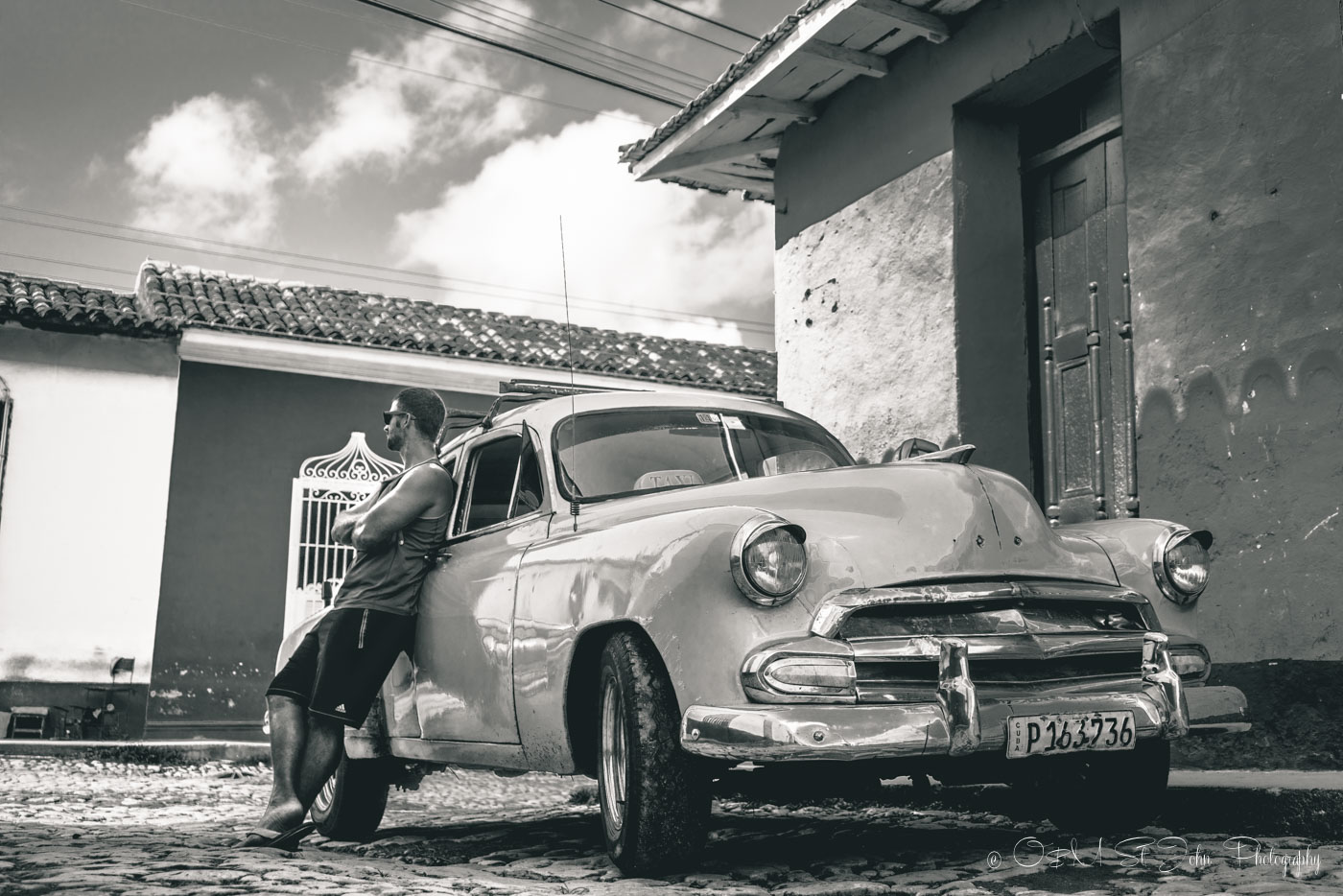
We arrived at Avenida Jesus Menendez early, got front-row seats well before the procession was due to start, and spent the hours before it exploring the stalls along the avenue. It was the last day of the carnaval, and everyone was waiting for the winners of each parade category to be announced.
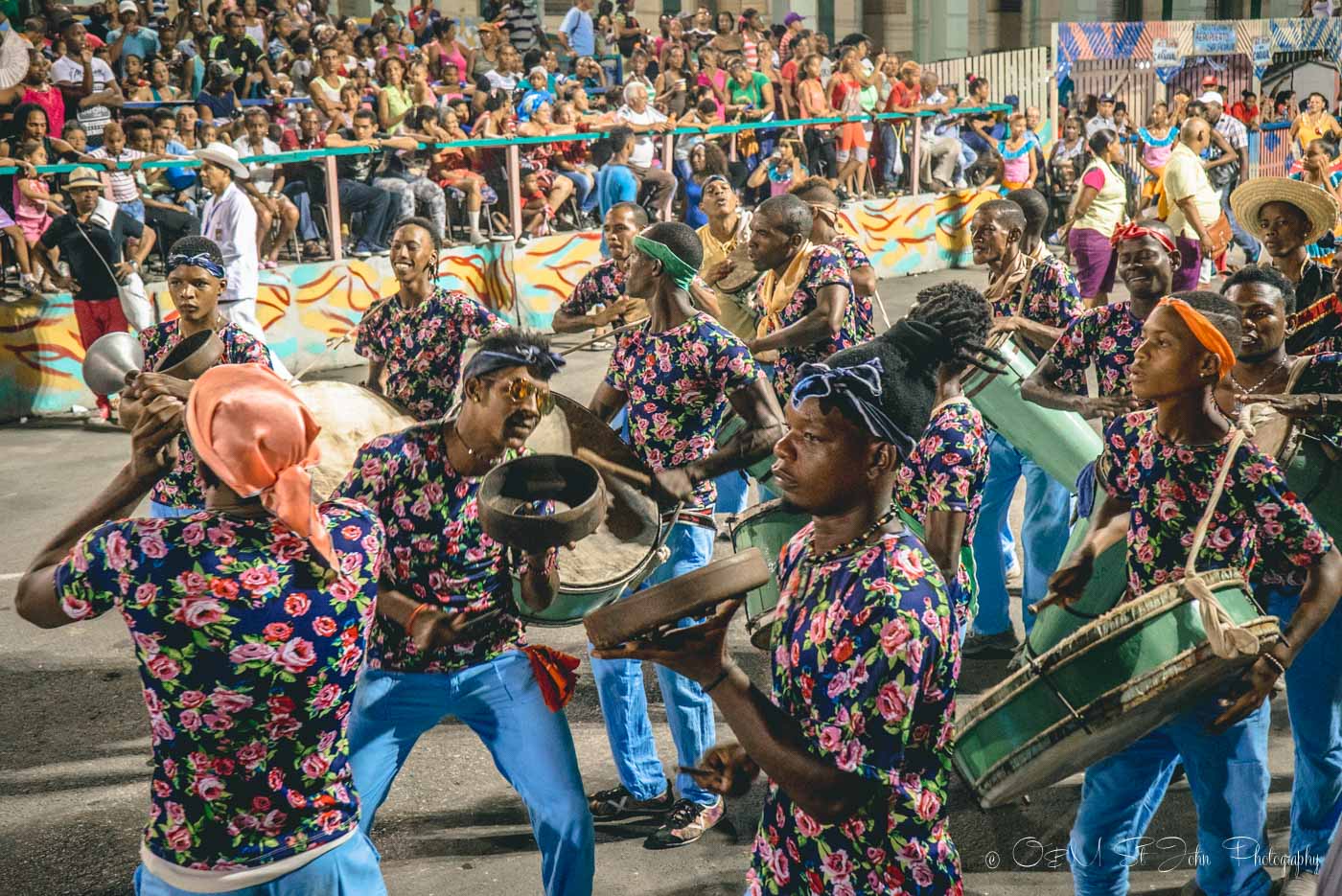
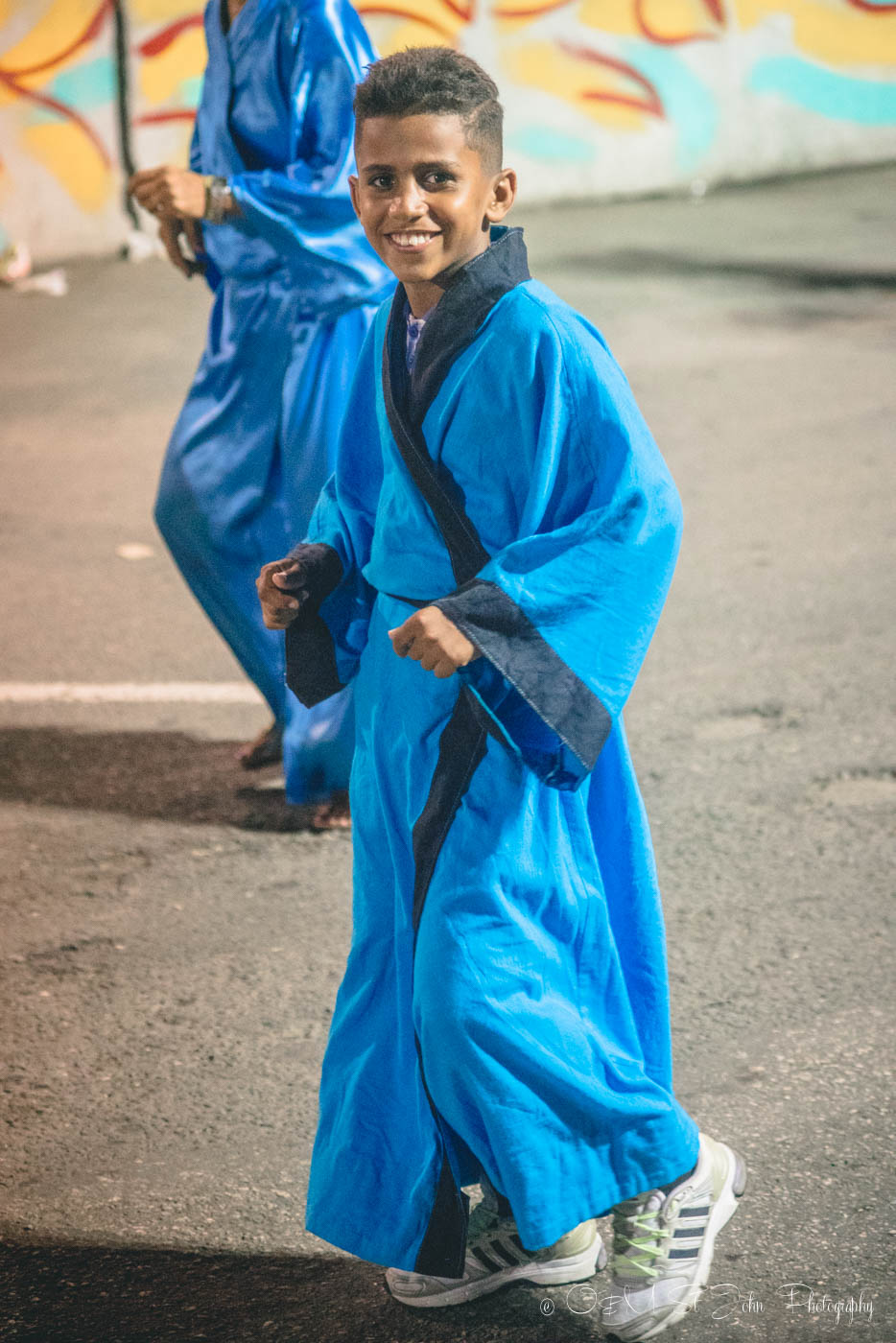
Then the music started, and one by one the performers made their way along the avenue. The processions had two parts: conga lines of dancers and walkers in traditional costume, performing choreographed routines that showed off their skill as much as their costumes, and floats decorated with dancers that lit up the street as they passed.
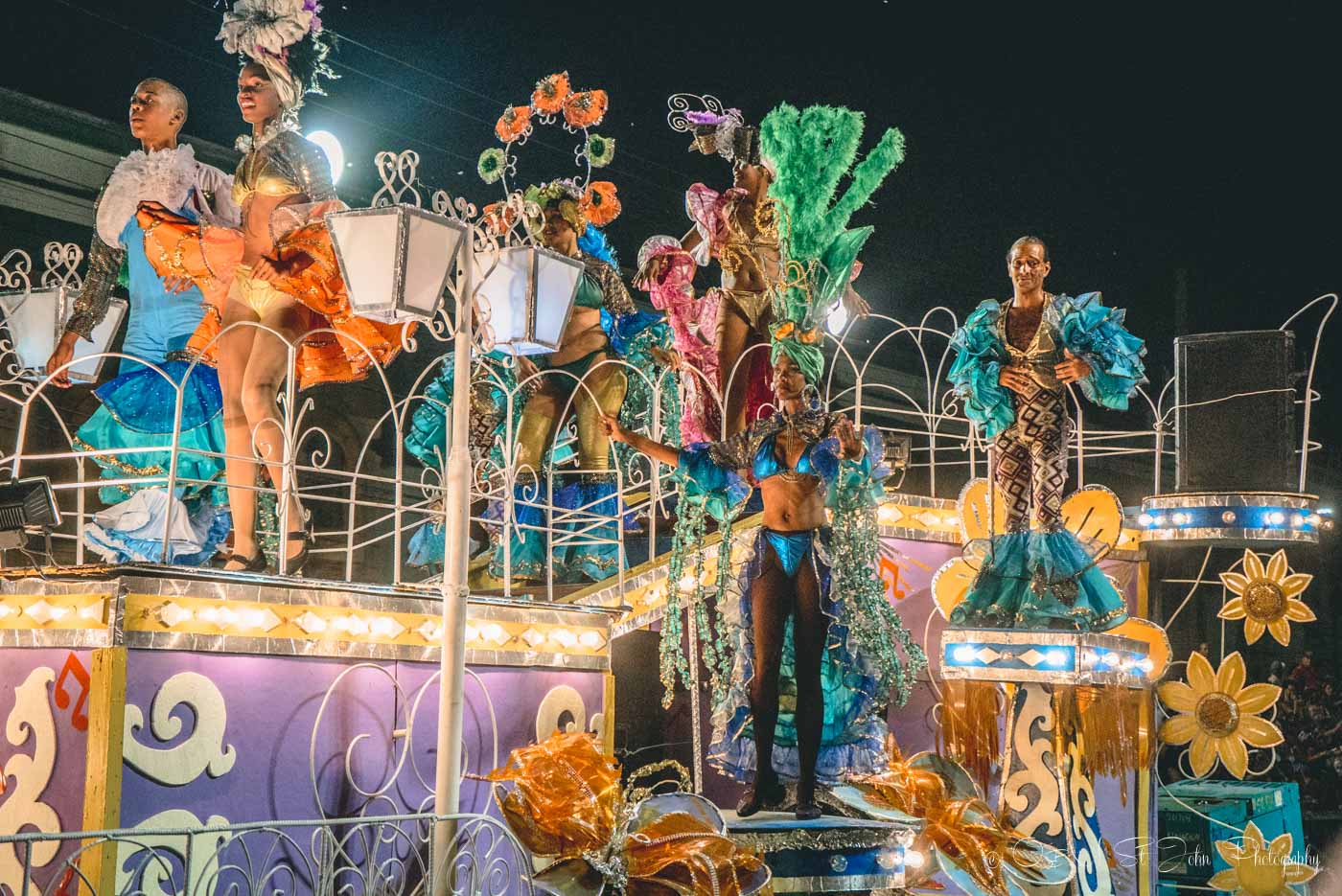
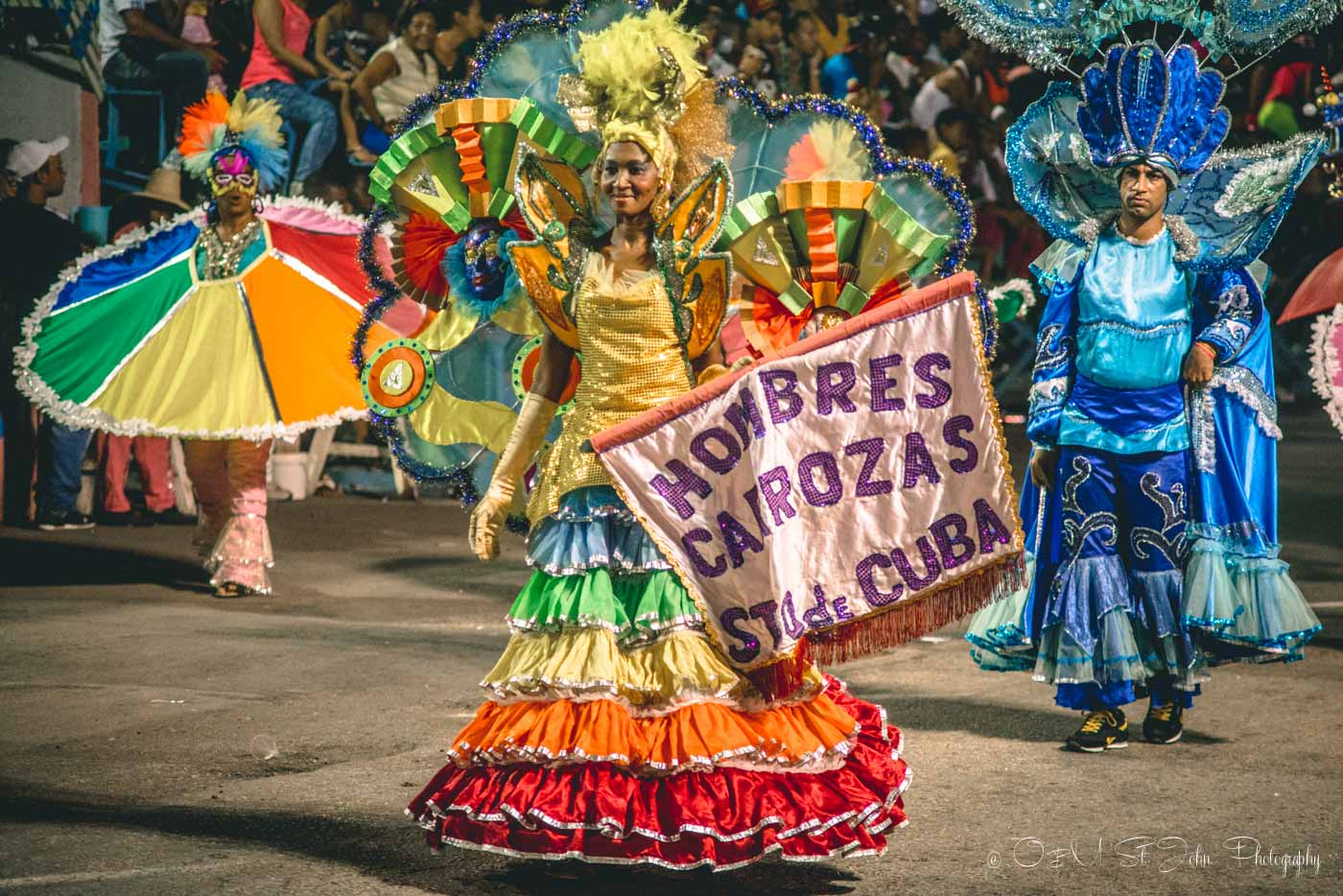
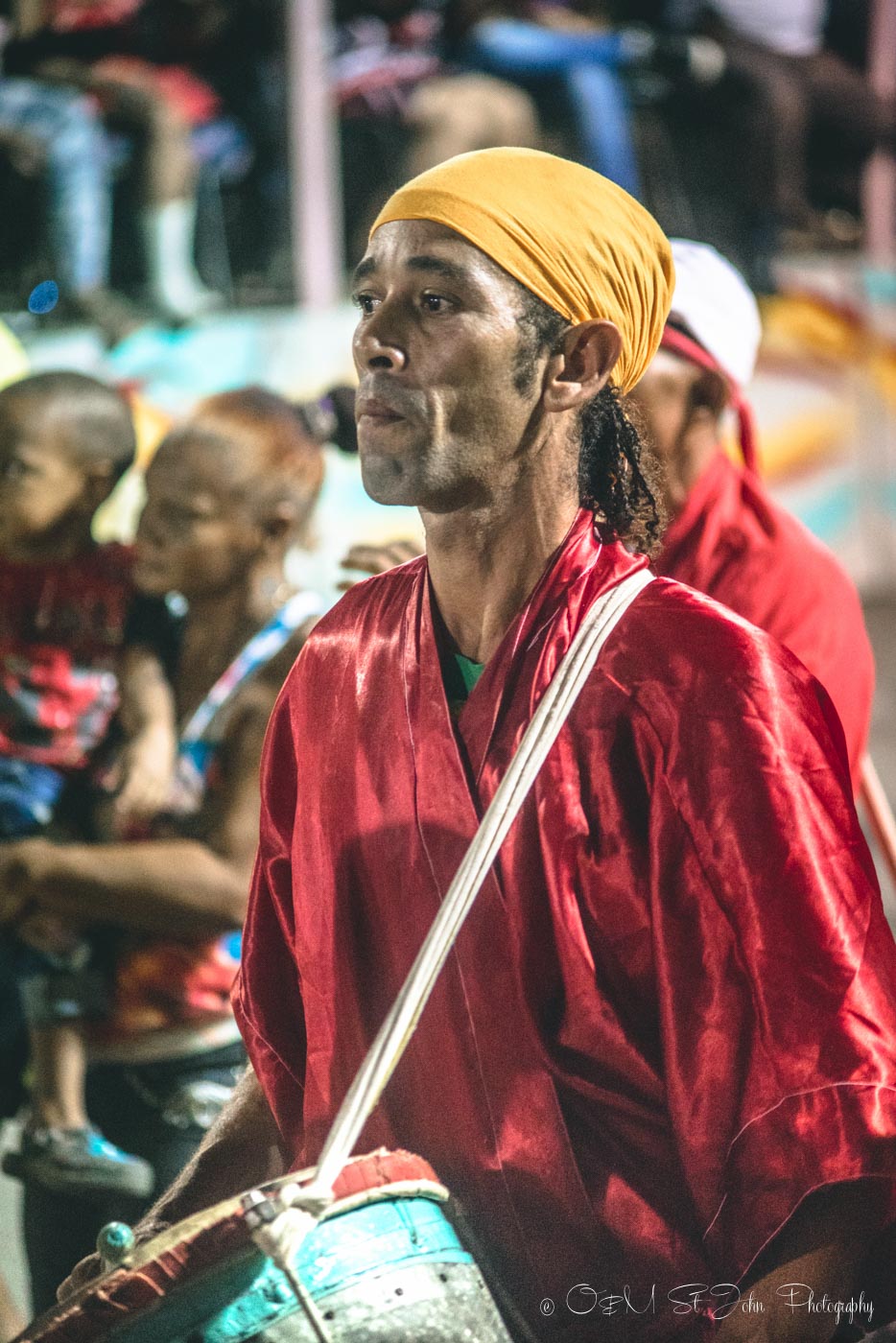
The official programme carried on into the small hours. When the last float had passed, the crowd spilled out into the streets and the celebration simply kept going.
What Stood Out
The rhythm. The carnaval week is built around the conga drums and the corneta china. You hear the parade before you see it: starting blocks away, slowly getting louder, until the lead drummers come around the corner and the street fills with five hundred dancers in matching costume. The acoustic and the dance are inseparable.
The locality. Unlike Trinidad and Tobago’s carnival or Rio’s, which are built around international visitors, Carnaval de Santiago de Cuba is overwhelmingly Cuban. In 2016 one side of the stands was set aside for foreigners; everywhere else it was families, neighbourhoods and their comparsas.
The drinks and food. In the foreigners’ stands a waiter takes your drink orders and brings beer and mojitos to your seat, so you never miss a float. Down at street level, food stalls and local keg-beer stands are the cheap and cheerful way to mingle with the crowd. Bring cash in small bills.
Watch Our Carnaval Video
Feel the rhythm of the festival without leaving home: here are our highlights from the night.
Look past the bright lights and the rhythm and the costumes, dances and performances tell the story of Santiago’s Afro-Cuban culture.

We covered the trip in our wider Cuba content: Havana, Trinidad, Vinales, Baracoa, and the full Cuba itineraries guide.
Cuba’s Wider Carnaval Tradition
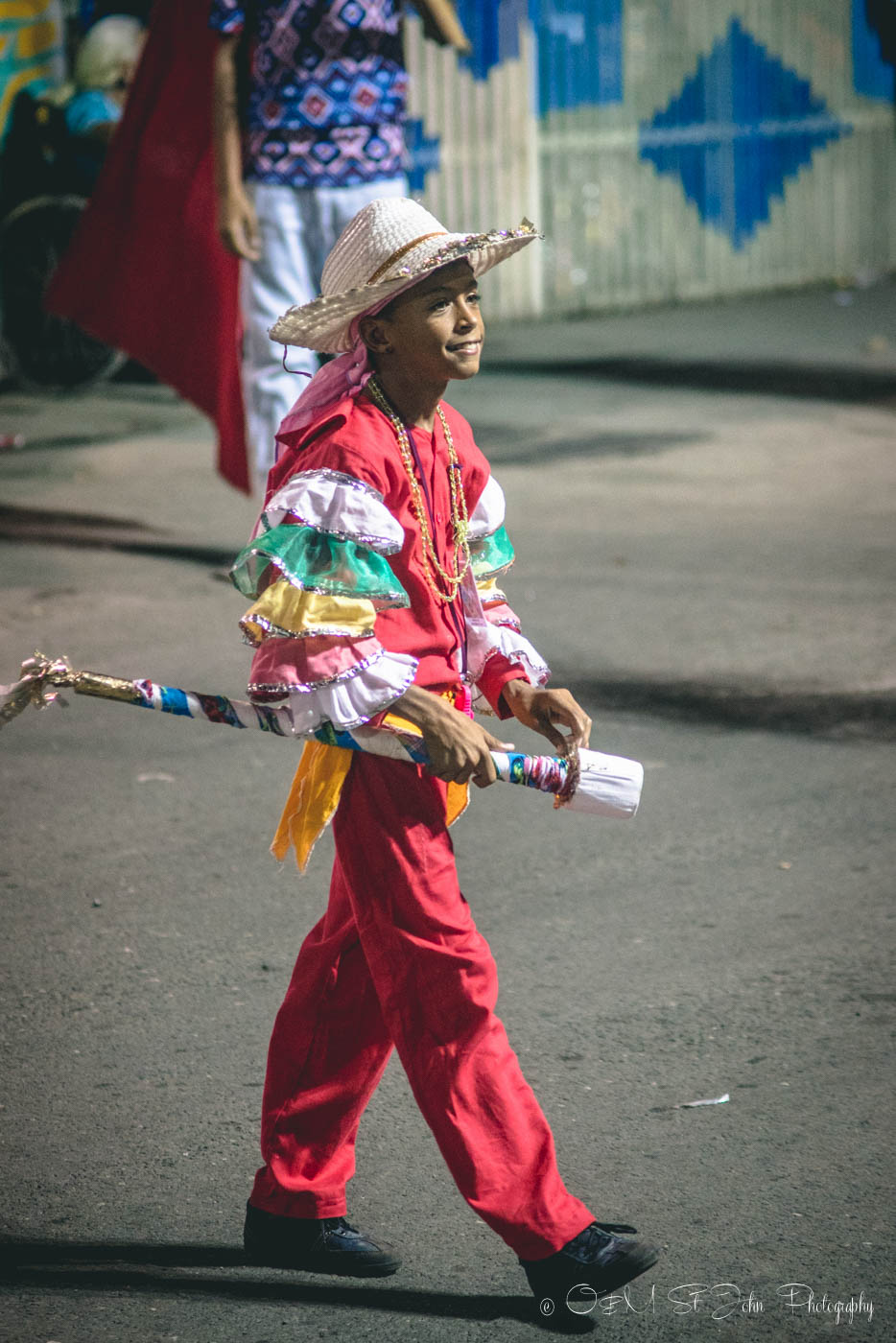
Santiago’s carnaval is the most famous, but Cuba has a network of regional carnavales across the country, each with distinct local traditions:
| Carnaval | City / Region | When | What Makes It Distinctive |
|---|---|---|---|
| Carnaval de Santiago de Cuba | Santiago de Cuba (eastern Cuba) | Late July | One of the oldest and largest; conga santiaguera; corneta china; Afro-Cuban heritage |
| Carnaval de La Habana | Havana | August | Suspended in years and revived; smaller; more international tourist exposure |
| Parrandas de Remedios | Remedios (central Cuba) | Christmas Eve | Fireworks-and-floats neighbourhood competition; UNESCO-listed; mid-1800s origin |
| Carnaval de Camajuani | Camajuani (central Cuba) | March / Easter | Two-neighbourhood competition between Chivos and Sapos factions; small but intense |
| Carnaval de Las Tunas | Las Tunas (Oriente) | Late July | Smaller regional version; often overlaps with Santiago dates |
The picture is: Cuban carnaval is plural, not singular. Santiago’s is the headline, but the country’s carnaval tradition stretches from December (Remedios) to August (Havana). If your trip can flex around the calendar, the Remedios Parrandas (December 24) are the second-most-visited Cuban festival after Santiago.
Music, Parades, and What You Will See

The week is divided into daytime and nighttime programming:
Daytime: children’s parades (the “carnaval infantil”), regional comparsa demonstrations, traditional dance performances at the Plaza de Marte and other smaller squares, the official carnaval kiosks (casetas) selling food and drinks. The daytime is gentler and family-oriented.
Nighttime (8pm onwards): the main comparsa parade route activates. Each comparsa takes a slot of the evening, parading along the Avenida Garzon and adjacent streets between Plaza de Marte and the harbour. The night peaks 11pm to 2am with the biggest comparsas. Crowds line the entire route; you can stand or grab a spot at a casa-particular balcony if your host has one.
The Dia de Santiago Apostol (July 25): religious procession around the Cathedral of Santiago de Cuba and the Plaza de Marte; the carnaval shifts cultural gears for a day to honour the patron saint before returning to full street-parade mode for July 26.
The Dia de la Rebeldia Nacional (July 26): national holiday; political speeches at the Moncada Barracks site; full carnaval programming continuing in parallel. The combination of state-political event and folk festival on the same day is uniquely Cuban.
Best Seats and Views
Foreigners can buy seats in the stands from the attendant on the day; in 2016 they cost 5 to 10 CUC. The CUC has since been abolished, so expect to pay in pesos or US dollars. Processions are due to start at 8pm, which in Cuba often means 9 or 10pm, and run for two to three hours. Arrive by around 6pm for the best seats.
Getting Around Santiago
Central Santiago is easy to walk. Stay in the centre and you’ll be within walking distance of the parade route, which saves relying on taxis during fuel shortages.
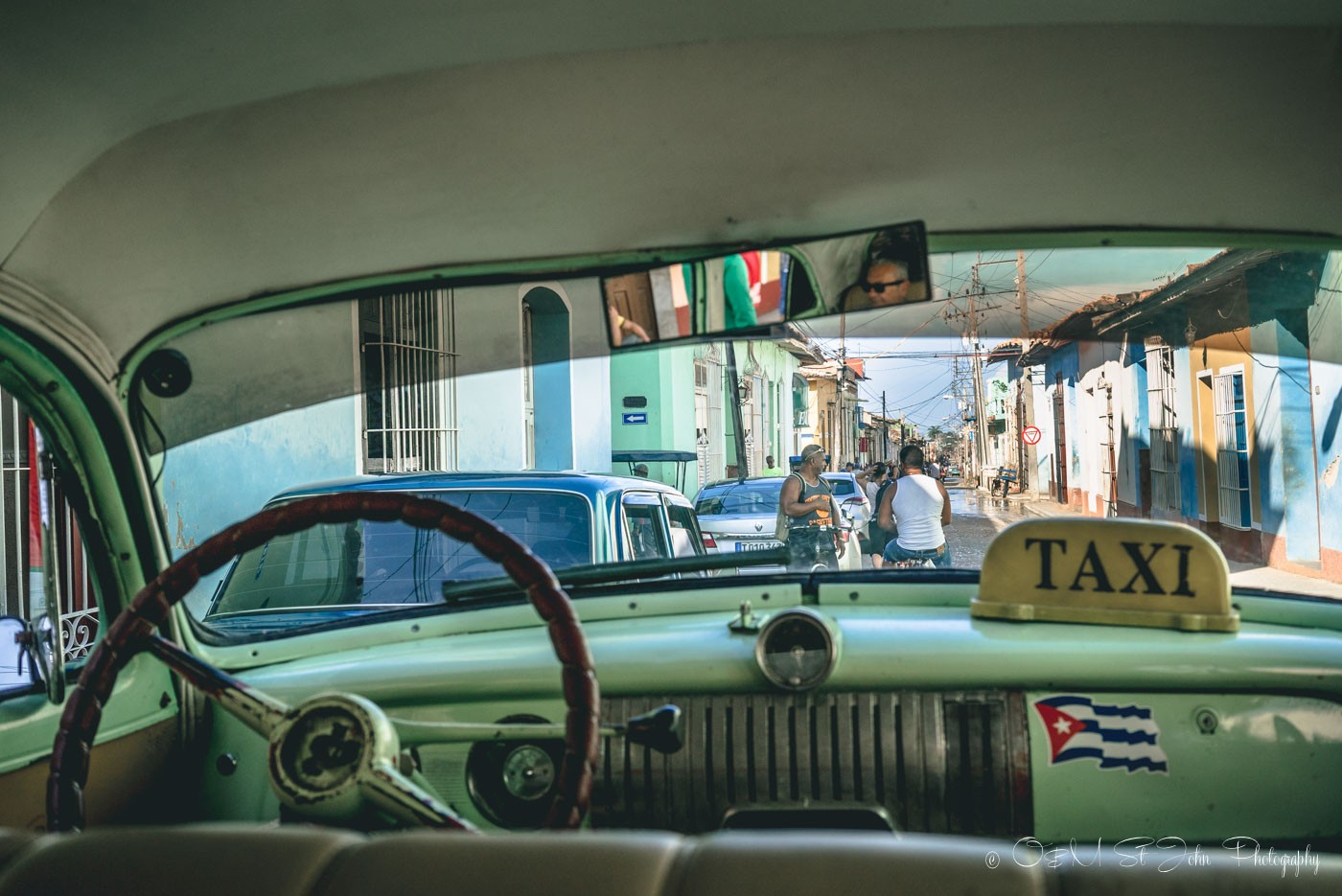
Getting to Santiago de Cuba for Carnaval
Santiago de Cuba is on Cuba’s eastern coast, about 870 km (540 miles) southeast of Havana. Three practical routes in:
By Air
Antonio Maceo International Airport (SCU) serves Santiago de Cuba with a small number of international flights (most international visitors connect through Havana). Most visitors do the Havana-Santiago leg internally:
By Domestic Flight (Havana–Santiago)
Cubana de Aviacion and Aerogaviota run Havana–Santiago de Cuba flights; the flight is about 1 hour 40 minutes. Schedules have become less reliable through the fuel-supply situation; book ahead and have a backup plan.
By Long-Distance Bus (Viazul)
Viazul, Cuba’s tourist long-distance bus operator, runs daily Havana–Santiago de Cuba services. The journey is approximately 16 hours overnight. Book ahead during carnaval week, buses fill up. Tickets are typically booked at Viazul terminals or through some online aggregators; Bookaway lists Viazul long-distance routes when available.
By Rental Car
Renting a car in Cuba is logistically challenging in 2026 (fuel availability is the main constraint). If you do, the Carretera Central or the Autopista Nacional cross-country drive is approximately 13 to 16 hours from Havana. Most visitors do not self-drive Cuba; flying or busing is the practical option.
Where to Stay in Santiago de Cuba for Carnaval
Three practical accommodation paths in Santiago de Cuba, in order of how the experience is structured:
| Type | Style | Best For | Price |
|---|---|---|---|
| Casa particular | Family-run room rentals in private homes | Anyone wanting authentic Cuba experience | € |
| Hotel Casa Granda | Historic central hotel on Parque Cespedes | Mid-luxury comfort + central location | €€€ |
| Hotel E San Basilio | Small historic hotel in the old centre | History lovers near the museums | €€ |
| Hotel Versalles | Mid-range hotel; quieter location | Mid-range without going luxury | €€ |
Casa Particular (our pick)
The casa particular system. Cuban families licensed by the government to rent rooms, is the defining Cuba accommodation experience. Rooms typically run US$20 to $50 a night, depending on amenities and location. For carnaval week, book ahead; the city fills up. Casas particulares are how most Cuban tourism revenue actually reaches Cuban families.
Hotel Casa Granda
Hotel Casa Granda is the historic central hotel on Parque Cespedes, the city’s main square. Built in 1914, it has a rooftop bar with one of the best sunset views in central Santiago, and it’s within walking distance of the cathedral, the parade route and the main sights. It’s the most central comfortable option, rated 4.8 on Google.
Hotel E San Basilio
Hotel E San Basilio is a small hotel in a restored colonial house in the old centre, close to the museums, with much of its original interior intact. It suits travellers who want character and a walkable base for the carnaval.
Hotel Versalles
Hotel Versalles is a mid-range option in the quieter Alturas de Versalles area near the airport, with gardens and a pool. It suits travellers who want a calmer base and don’t mind a taxi ride into the carnaval.
Booking.com and most US-based booking sites don’t sell rooms in Cuba, so for casas particulares book directly with the host or through your casa in another city: Cuban hosts recommend each other, and it’s how we found rooms across the country.
What Else to See in Santiago de Cuba
If your trip is longer than the carnaval week, Santiago de Cuba is the second city of Cuba and the cultural capital of the Oriente region, there is plenty to fill several days outside the festival programming:
| Sight | What It Is | Why Visit |
|---|---|---|
| Parque Cespedes | Central square named after Cuba’s 19th-century independence figure | City’s social heart; afternoon walk; people-watching |
| Castillo del Morro | 17th-century clifftop fortress, UNESCO World Heritage | One of the best sunset views in Santiago; harbour overlook |
| Santa Ifigenia Cemetery | Resting place of Jose Marti, Fidel Castro, and other Cuban national figures | Cuban national memorial; changing of the guard ceremony |
| Casa de la Trova | Live traditional Cuban music venue | Some of the best live son cubano in eastern Cuba |
| Moncada Barracks | Site of Castro’s 1953 attack; now a museum | Revolutionary history; gateway to the July 26 holiday |
| Cathedral of Our Lady of the Assumption | 19th-century cathedral on Parque Cespedes | Architectural anchor of the main square |
Carnaval Santiago de Cuba for Different Travellers
| You Are | Why Carnaval Works | What to Plan |
|---|---|---|
| Music and dance travellers | Conga santiaguera, son cubano, corneta china: the Afro-Cuban music week of the year | Casa de la Trova in the day; comparsa parade by night |
| Couples | Cultural depth + rhythm + casa particular romance | Casa Granda balcony room; sunset Castillo del Morro |
| Solo travellers | Big crowds + welcoming Santiago hospitality + safe by Cuba’s standards | Casa particular for built-in social structure |
| Families with older kids | Daytime children’s parades; nighttime parade-watching from a balcony | Late-evening start; daytime cultural programming |
| Cultural / educational travellers | Afro-Cuban heritage; UNESCO Castillo; revolutionary history | Casa del Caribe research centre; Moncada Barracks visit |
| Photographers | Night parade lighting + colonial-era streetscape + costume detail | Balcony perch; long lens for parade route |
Frequently Asked Questions
Why is Carnaval de Santiago de Cuba celebrated?
The festival blends three traditions: the Catholic feast day of Santiago Apostol (July 25, the city’s patron saint), Afro-Cuban religious and musical traditions brought by enslaved people who worked Oriente province’s sugar plantations, and the colonial-era practice of marking the end of the sugar harvest with street processions. July 26 added a revolutionary-period national-day layer after 1959. It is the largest and oldest carnival in the Caribbean.
When is Carnaval Santiago de Cuba 2026?
The festival is held in the last week of July each year, peaking around July 25 (Dia de Santiago Apostol) and July 26 (Dia de la Rebeldia Nacional). Expected 2026 dates are approximately July 21 to 27, the exact daily schedule is confirmed by the Casa del Caribe cultural body closer to the event.
How long does the Carnival of Santiago de Cuba last?
About one week of street parades, comparsa processions, religious observances, and music. The most intense nights are around July 25 and July 26.
What is the festival in Santiago Cuba in July?
The Carnaval de Santiago de Cuba, often called the biggest carnival in the Caribbean and also known as the Santiago carnival.
Is Santiago de Cuba safe for tourists during Carnaval?
Yes, generally. Carnaval is heavily attended with significant police presence. Standard urban precautions apply (watch your wallet in big crowds, don’t display valuables). Cuba’s overall low violent-crime rate continues to hold during the festival. The current 2026 economic situation has not materially changed Cuba’s safety profile for tourists, though common sense remains the rule.
What should you wear to Carnaval Santiago de Cuba?
Comfortable, breathable clothing. Late July in Santiago is hot and humid (daytime highs 32°C+ / 90°F+, with high humidity). Closed-toe shoes for the parade route. No need for formal carnival dress; you are watching not dancing-in-comparsa.
Can you book a Carnaval Santiago de Cuba tour?
Yes. Multiple Cuba-specialist tour operators run carnaval-timed packages (typically combined with Havana, Trinidad, and other stops on a 10 to 14 day Cuba trip). You can also book independently via the casa particular system and attend the festival without a tour. We did the trip independently in 2016.
How does Santiago’s Carnaval compare to other Caribbean carnivals?
Santiago’s is one of the oldest documented carnivals in the Caribbean (17th-century roots) and among the largest by attendance. The Trinidad and Tobago Carnival (February) is more internationally famous but smaller and more tourism-oriented. Santiago’s is more distinctly Afro-Cuban, more locally-attended, and culturally closer to the African and colonial-era origins that all Caribbean carnavales share.
Final Thoughts
Carnaval de Santiago de Cuba is the most distinctly Cuban thing we have attended in over a decade of travel. The conga santiaguera, the corneta china, the conga lines and floats passing our front-row seats on the last night, the crowd pouring into the streets afterwards: none of it translates to a description. You have to be there.
Going in 2026 will be different from going in 2016. The country is in a harder place. But the carnaval has continued through it. The Casa del Caribe still organises the comparsa schedule; the corneta china still wakes you at noon; the rhythm has not changed. If you go with realistic expectations about Cuba’s current logistics, a power bank in your bag, and cash in small bills, the festival is still worth the trip, and there are plenty of other reasons to visit Cuba while you are there.
If you are planning the wider Cuba route, see our Cuba itineraries guide for 1- to 4-week itinerary structures, our Cuba travel tips for the practical detail, our Havana city guide, Trinidad guide, Vinales guide, and Baracoa guide for the other major stops. The Cuba internet guide covers the wifi-and-data situation, and 20 interesting facts about Cuba adds the cultural context.
Travel essentials: Airalo doesn’t cover Cuba. GigSky‘s eSIM roams onto Cubacel and works in the main cities, though coverage thins around Santiago, so a local CubacelTur SIM is the backup. Travel insurance with medical cover is required for entry; check your policy covers Cuba, as many (SafetyWing included) exclude it.
Have you been to a carnival in Cuba, or is Santiago on your list? Tell us in the comments.


Leave a Reply