

The best things to do in Tofino are its surf beaches, bear and whale watching, the rainforest trails of Pacific Rim National Park Reserve, and the boat trip to Hot Springs Cove. Which ones you get depends on the season: summer is for beaches and wildlife, winter is for storm watching and empty sand.
We first drove into Tofino in November 2020, in a van called Benji, at the start of what turned into a two-month stay on Vancouver Island. November is not when anyone tells you to come. It rained most days, the beaches were empty, and the Pacific threw itself at the sand with a violence that people apparently pay to watch. We came back the following summer and did it again in the sun.
Those two versions of the same town are the useful thing we can tell you. In November the boardwalks through the rainforest are running with water and you can have Long Beach to yourself in a squall. In July the same sand holds a thousand people and the sun does not go down until ten. The best things to do in Tofino are genuinely different depending on which half of the year you arrive in.
This is the road that ends. Highway 4 crosses Vancouver Island, narrows, winds through old-growth forest for an hour longer than you expect, and then simply stops at the ocean. What is out there next is Japan.
Key Takeaways
- It is a long way and worth it. Four hours from Nanaimo across the island on a road that gets slower as it gets prettier.
- There are two seasons and both are good. Summer for beaches and wildlife, winter for storms and empty sand.
- Give it three days minimum. One for the beaches, one for the water, one for the forest.
- The wildlife is the thing people underestimate. Black bears on the shoreline, gray whales offshore, sea otters and eagles as a matter of routine.
- Book accommodation embarrassingly early. Tofino is small, expensive and full most of the summer.
Tofino at a Glance
| Where | The west coast of Vancouver Island, British Columbia |
| Getting there | About 4 hours from Nanaimo, 5 from Victoria, on Highway 4. Seasonal flights from Vancouver |
| How long to stay | Three days minimum; a week if you are surfing |
| Summer | July and August for the warmest, driest weather and the biggest crowds |
| Winter | November to February for storm watching, low prices and empty beaches |
| Do you need a car | Yes, effectively. The beaches are spread along 15 km of highway |
| Water temperature | Cold all year. Full wetsuit whatever the season |
| Territory | Tla-o-qui-aht and Ahousaht First Nations territory |
One thing worth saying at the top, because it shapes how you should treat the place: Tofino sits within the traditional territory of the Tla-o-qui-aht First Nation, part of the wider Nuu-chah-nulth peoples, who have lived on this coast for thousands of years. The old-growth forest you will walk through at Meares Island exists because of a Tla-o-qui-aht blockade in 1984. That is not background colour, it is why the trees are there.
Best Things to Do in Tofino: The Beaches
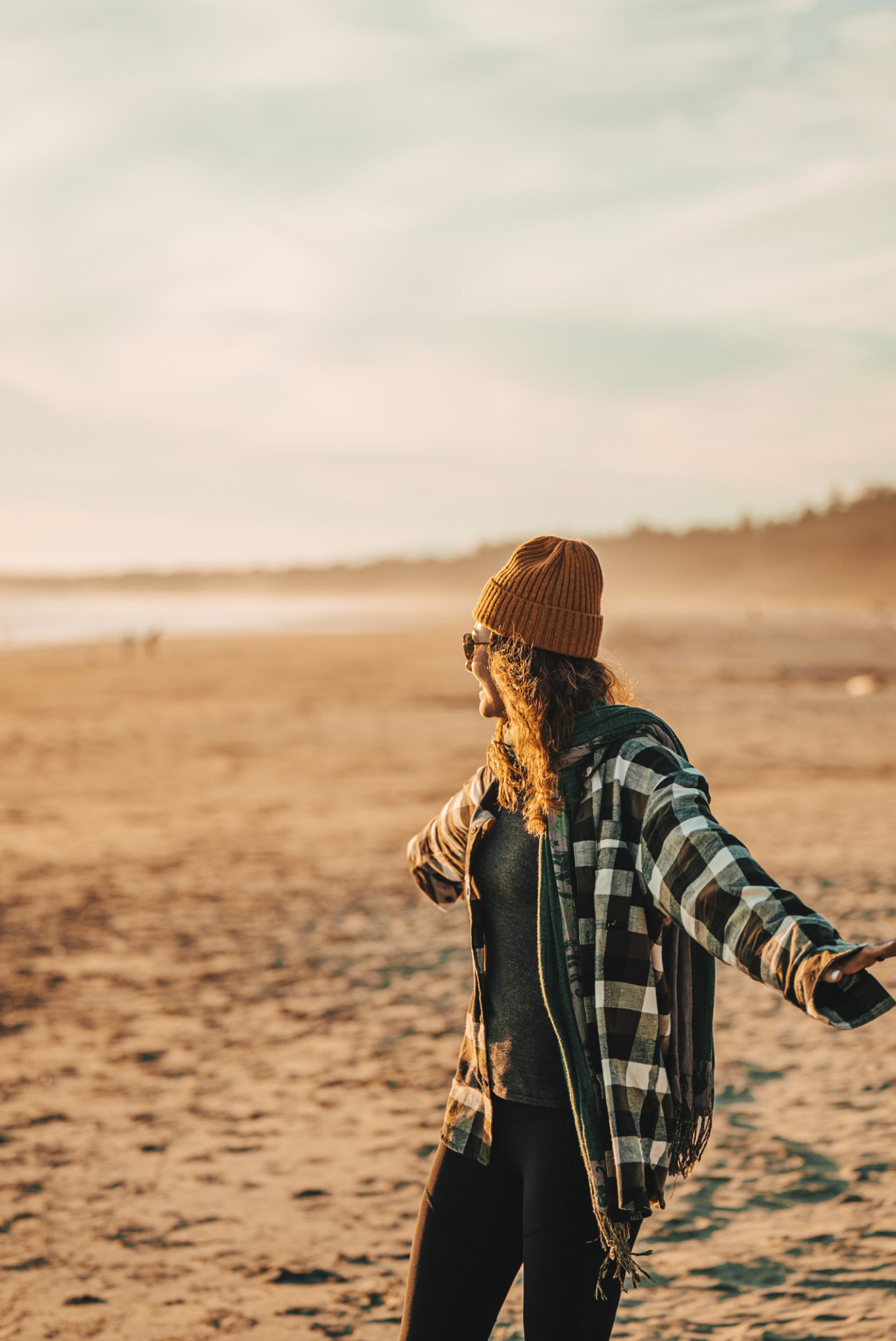
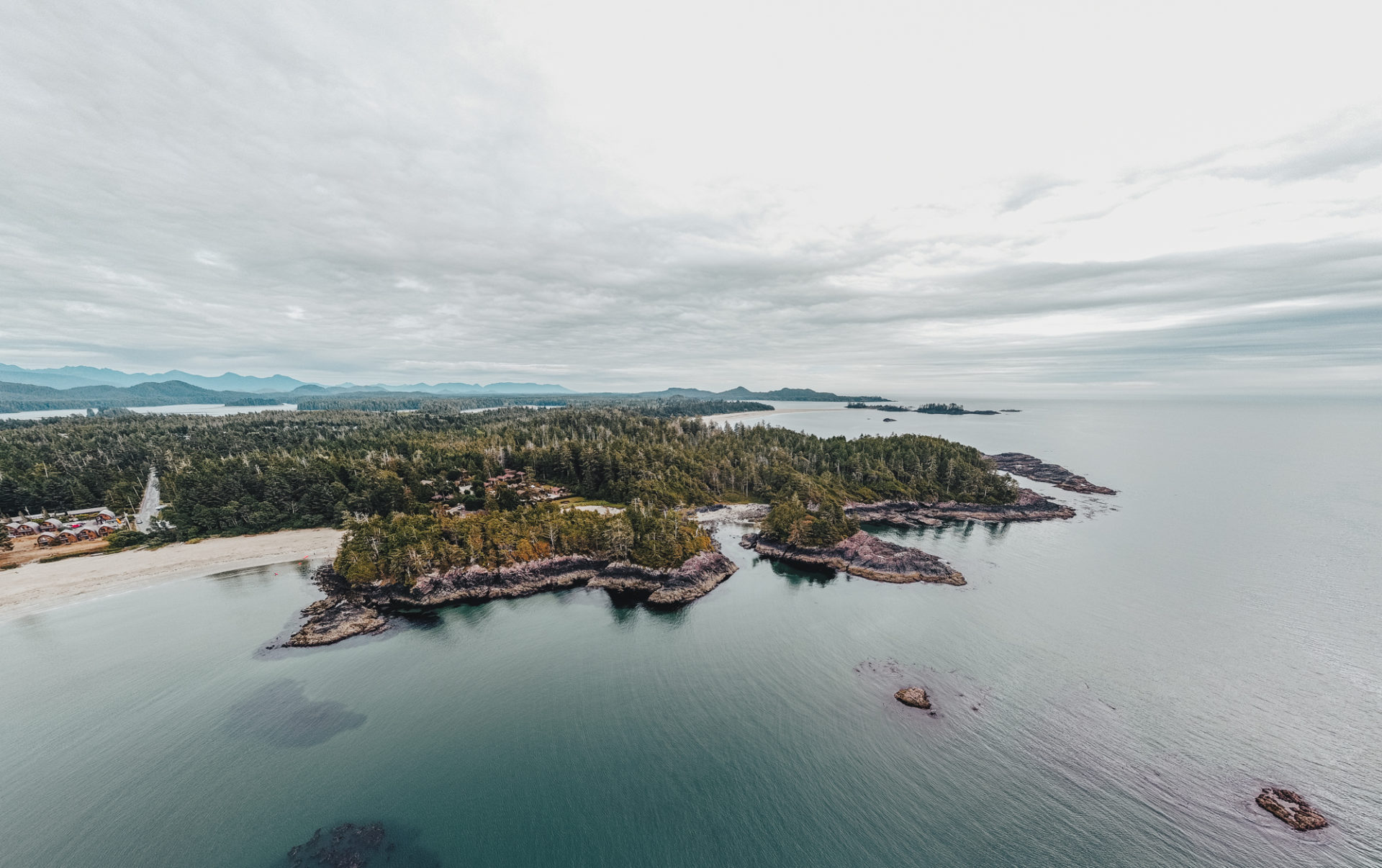
Of all the things to do in Tofino, the beaches are what most people come for, and they are better than the photographs manage. Sixteen kilometres of sand strung along the highway south of town, backed by rainforest, with surf breaking the whole length of it. This is the section we would read first.
| Beach | Best for | Surf | Access |
|---|---|---|---|
| Long Beach | The classic, and the biggest | Consistent, all levels | Pacific Rim NP, paid parking |
| Chesterman Beach | The local favourite, tide pools | Good, gentler | Free street parking, short walk |
| Cox Bay | Surfers and sunsets | Biggest swell, surf schools | Resort parking, easy |
| MacKenzie Beach | Families, calm water | Sheltered, small | Right off the highway |
| Tonquin Beach | A walk from town, quieter | Not really | Forest trail from Tofino |
| Crystal Cove | Sheltered, pretty, low key | Minimal | Via the resort road |
Long Beach is the one people mean. It runs for kilometres inside Pacific Rim National Park Reserve, and at low tide it is wide enough that people on the far side are dots. Come at either end of the day and it empties out.
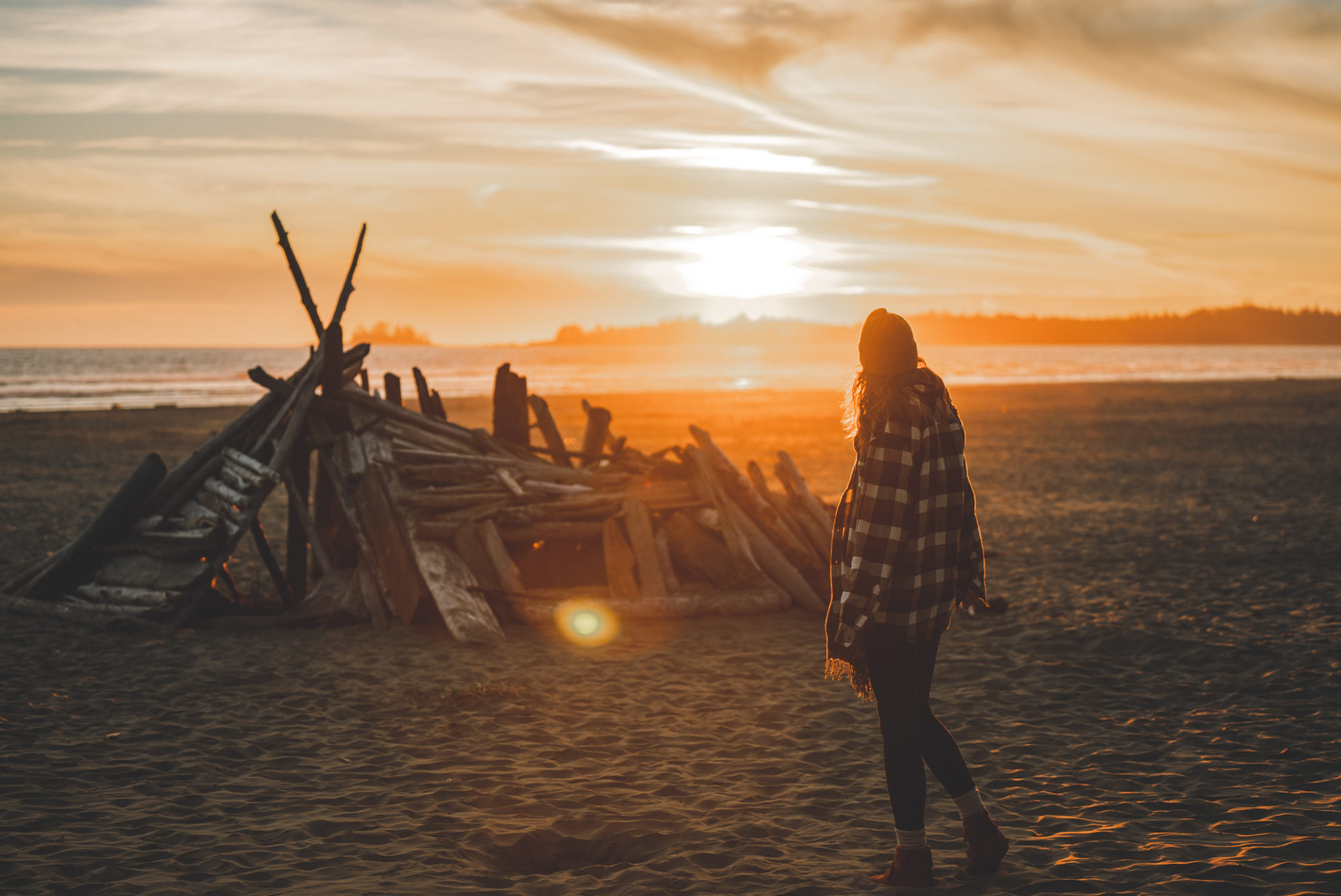
Chesterman Beach is where locals go. It is split into North and South by a sandbar that connects to Frank Island at low tide, and the tide pools at the southern end are worth timing a low tide around. Cox Bay catches the most swell, which is why the surf schools cluster there and why it gets the best sunsets. Tonquin is a twenty-minute walk through forest from town and is the one to pick if you want a beach to yourself. Whichever you end up on, take out more than you brought in: the Pacific delivers a steady supply of plastic onto this coast and the beaches only stay like this because people pick it up.
Surfing in Tofino
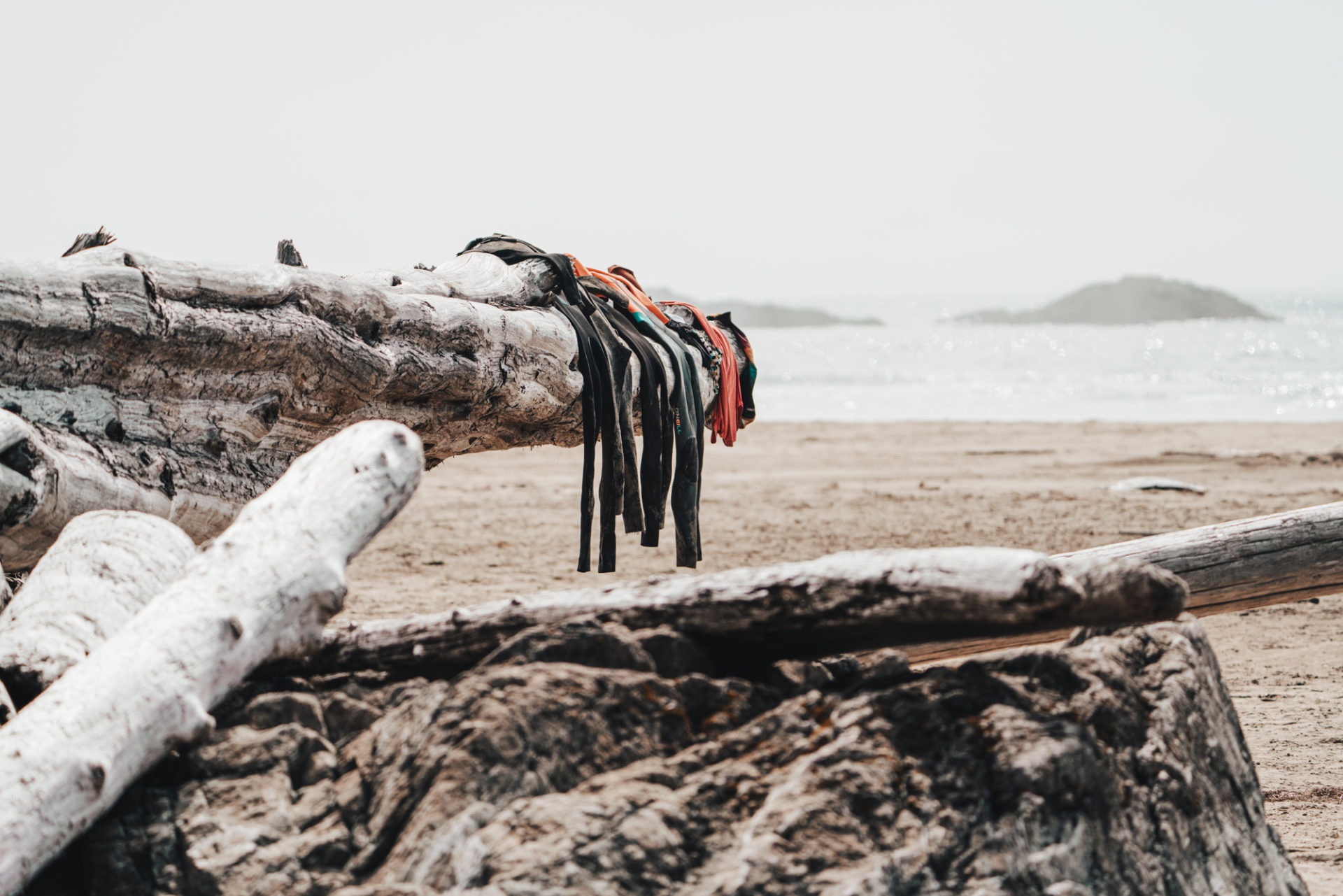
Surfing is the thing to do in Tofino that the town is built around, and it is the surf capital of Canada, which sounds like a low bar until you are out there. The swell is consistent, the beach breaks are forgiving, and the water is cold enough year-round that you will be in a 4/3 wetsuit with boots in winter. Nobody surfs here without rubber.
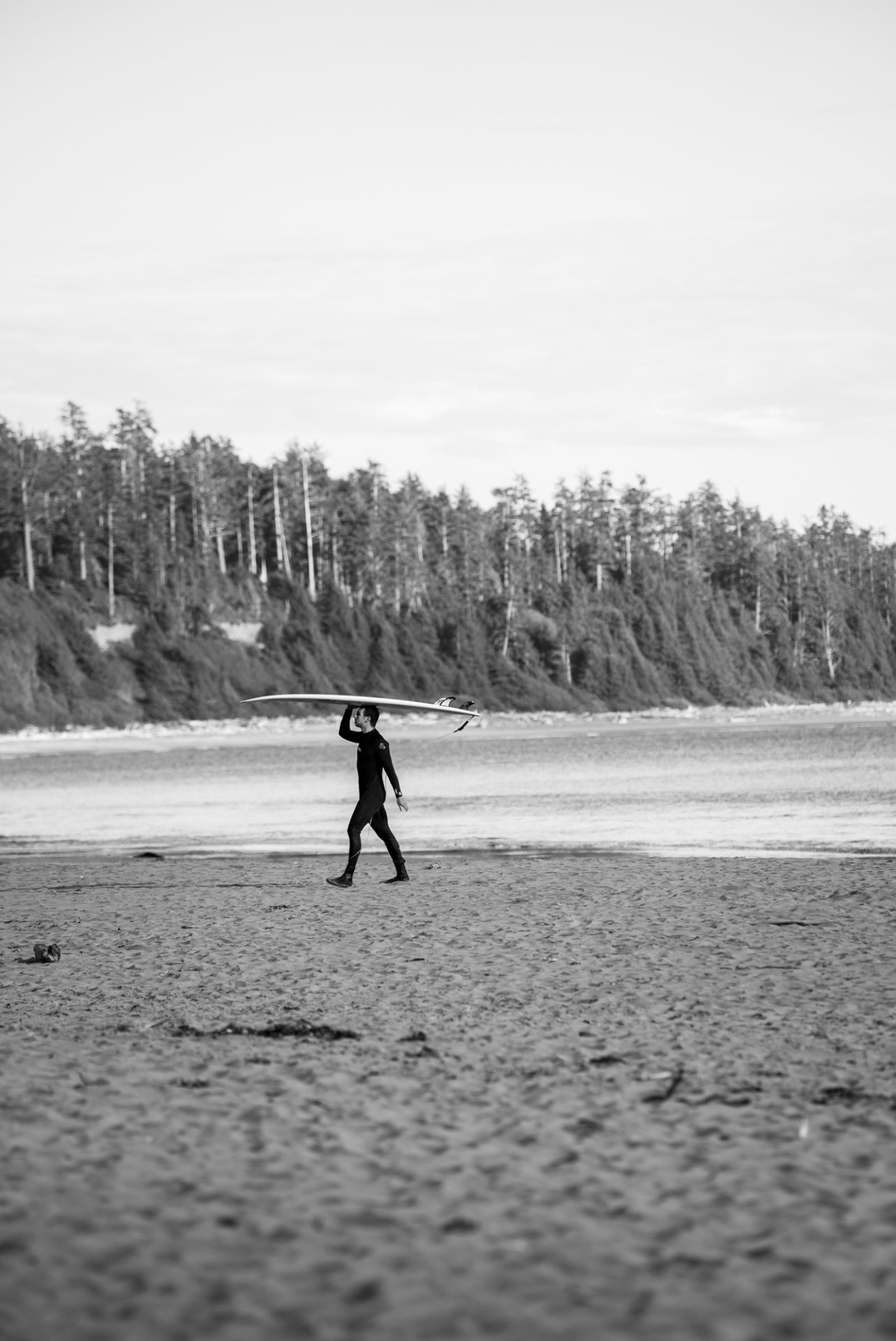
For beginners, Cox Bay and Chesterman are where the schools operate, and a first lesson here is a genuinely good experience: sand bottom, waves that reform close in, and instructors who spend most of the year teaching people exactly like you. Rentals are easy to find in town and most places will sort you a board and a full suit together.
For everyone else, the swell picks up considerably from autumn through winter, which is when the surf gets serious and the crowds disappear. Cox Bay holds the biggest waves. Long Beach spreads people out. The trade-off is obvious once you are standing in it: the best surf and the worst weather arrive together.
Bear Watching and Wildlife Tours
Of all the things to do in Tofino this is the one we would not skip, and the part that surprised us most.
Black bears come down onto the shoreline of Clayoquot Sound at low tide to turn over rocks and eat crabs. Boats leave Tofino harbour timed to the tide, cut the engine, and drift while a bear works its way along a beach fifteen metres away, entirely unbothered. It is not a zoo and it is not guaranteed, but sightings are common through spring and summer.


We went out with Remote Passages and would recommend them without hesitation, which is not a sentence we write often about tour operators. They run bear watching, whale watching and kayaking, the guiding was genuinely knowledgeable, and they keep a respectful distance from the animals in a way that is not universal here. They are still operating.
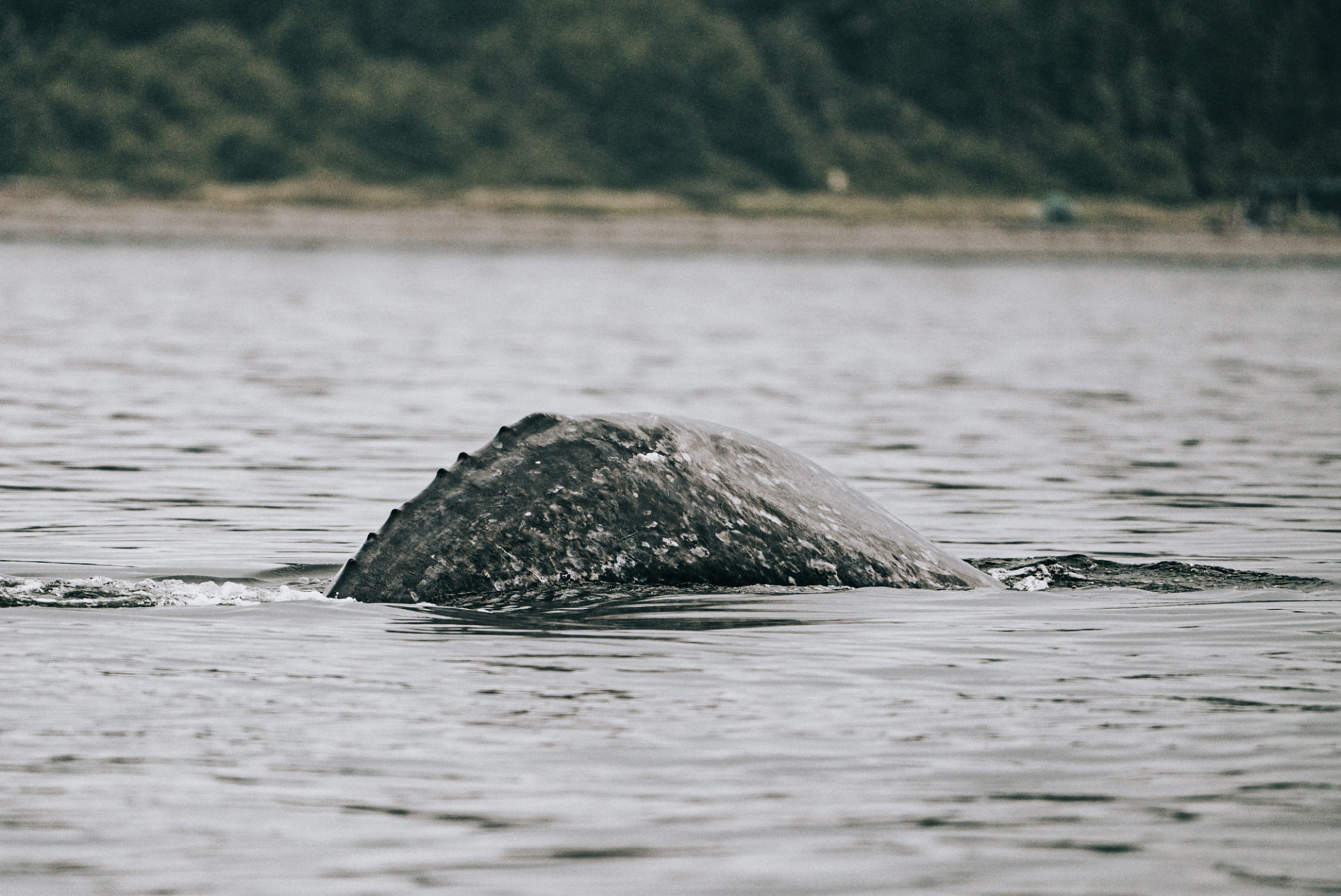
Gray whales pass on migration in spring and a resident group stays through the summer. Sea otters raft up in the sound and are close to guaranteed on a boat trip. Bald eagles are so common you stop pointing them out by about day two.


If you pick a different operator, our guide to choosing a sustainable tour operator is worth two minutes first. On a coast where the wildlife is the product, how close a boat pushes matters, and the good operators cut the engine and drift rather than chasing. It is the clearest signal of whether a company is thinking beyond today’s booking, and it is the approach we set out in our sustainable travel commitment.

Pacific Rim National Park Reserve
The park is the reason the landscape here still looks like this. It protects the beaches, the rainforest behind them and the shoreline in between, and it is where you should spend at least one full day.
The Rainforest Trail is two short boardwalk loops through old-growth cedar and hemlock, and it is the fastest way to understand what this coast looked like before logging. The South Beach Trail from Wickaninnish leads to a pocket cove where the waves come in hard against cobble. The Nuu-chah-nulth Trail runs between Florencia Bay and Wickaninnish with interpretive panels on Indigenous history along the way.


You need a Parks Canada day pass, available at the machines in the car parks, and it covers all the beaches inside the park boundary. Stay on the boardwalks while you are in there: the root systems either side of them are what hold the old growth up, and they are shallower than they look.
Hot Springs Cove
The other full-day trip, and the one people most often run out of time for. Hot Springs Cove is roughly 40 km north of Tofino and reachable only by boat or float plane. You land, walk thirty minutes through rainforest on a boardwalk, and arrive at a set of geothermal pools that cascade down to the sea. The bottom pool gets hit by waves at high tide.
Most operators run it as a full day, often combined with wildlife watching on the way. Go early, take water shoes for the rocks, and be aware that on a busy summer day you will be sharing the pools.
Ucluelet and the Wild Pacific Trail
Forty minutes south, Ucluelet is Tofino’s less-polished neighbour and worth a day. The Wild Pacific Trail runs along the headland in a series of loops with the ocean crashing below, and the Lighthouse Loop in particular is one of the best short coastal walks in British Columbia. It is also the best storm-watching vantage point on this coast.


The harbour at Ucluelet is a working one, there are good places to eat, and it is noticeably cheaper to stay in than Tofino. If Tofino is full, this is your answer.
Three Days of Things to Do in Tofino: An Itinerary
Three days is the sweet spot for working through the best things to do in Tofino. Here is how we would spend them.
Day 1: beaches and town
Arrive, get a park pass, and spend the afternoon walking Long Beach and Chesterman. Watch the sunset from Cox Bay. Eat in town, and if the weather is doing anything dramatic, go and stand in it.
Day 2: on the water
A bear-watching or whale-watching trip in the morning, when the light is best and the water calmest. Kayak Clayoquot Sound in the afternoon, or drive down to Ucluelet for the Wild Pacific Trail. This is the day to book ahead.
Day 3: forest and hot springs
Either the full-day Hot Springs Cove trip, or a slower day doing the Rainforest Trail, the South Beach Trail and a surf lesson. Finish with the tide pools at Chesterman if the timing works.
With a fourth day, add Meares Island and the Big Tree Trail. With a week, learn to surf properly.
Where to Eat in Tofino
For a town of two thousand people, Tofino eats extremely well.
| Restaurant | Style | Known for |
|---|---|---|
| Tacofino | Food truck, original site | The best cheap lunch in town, and the original of the chain |
| Wolf in the Fog | Sit-down, west coast | The restaurant most visitors book; seafood and cocktails |
| Tofino Coffee Roasting Company | Cafe and roaster | The town’s coffee, and a dry place to wait out rain |
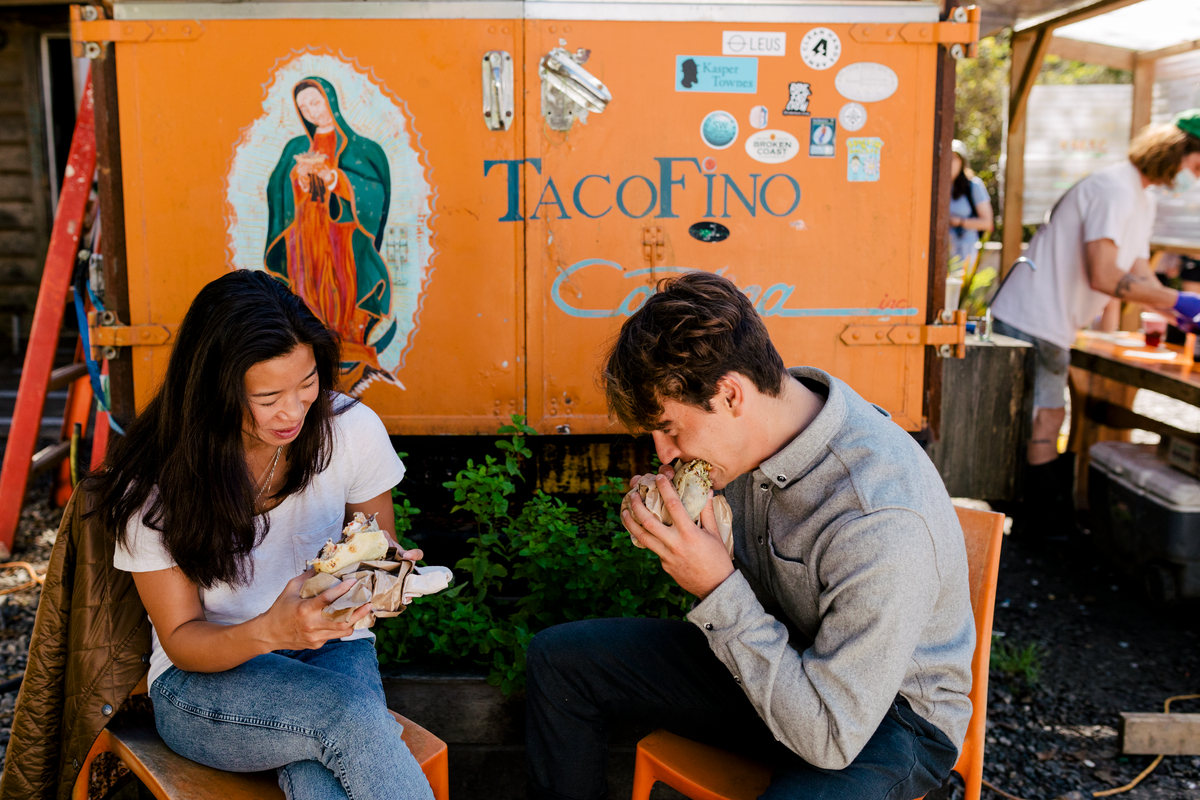
Tacofino started as an orange food truck in a surf shop car park and has since become a small chain across BC, but the original is still parked where it started and still the best cheap lunch in town. Wolf in the Fog is the other end of the scale and the restaurant most visitors book, with a genuinely good kitchen doing west-coast seafood.

Beyond those two, the town has a bakery scene out of proportion to its size and several good coffee roasters. Nothing here is cheap.
Where to Stay in Tofino
Accommodation is the hardest part of a Tofino trip. There is not much of it, it is expensive, and in summer it books out months ahead. Book before you book anything else.
| Hotel | Style | Best for |
|---|---|---|
| Long Beach Lodge Resort | Beachfront on Cox Bay | Surfers and the best beach access |
| Himwitsa Lodge | Indigenous-owned, on the harbour | A stay that puts money into the local First Nation |
| Hotel Zed Tofino | Retro, playful, mid-range | Families and anyone who finds resorts dull |
| Best Western Plus Tin Wis Resort | Beachfront at MacKenzie | Reliable, family-friendly, on the sand |
| Tofino Motel Harbourview | Simple, in town, good value | Keeping the cost down |
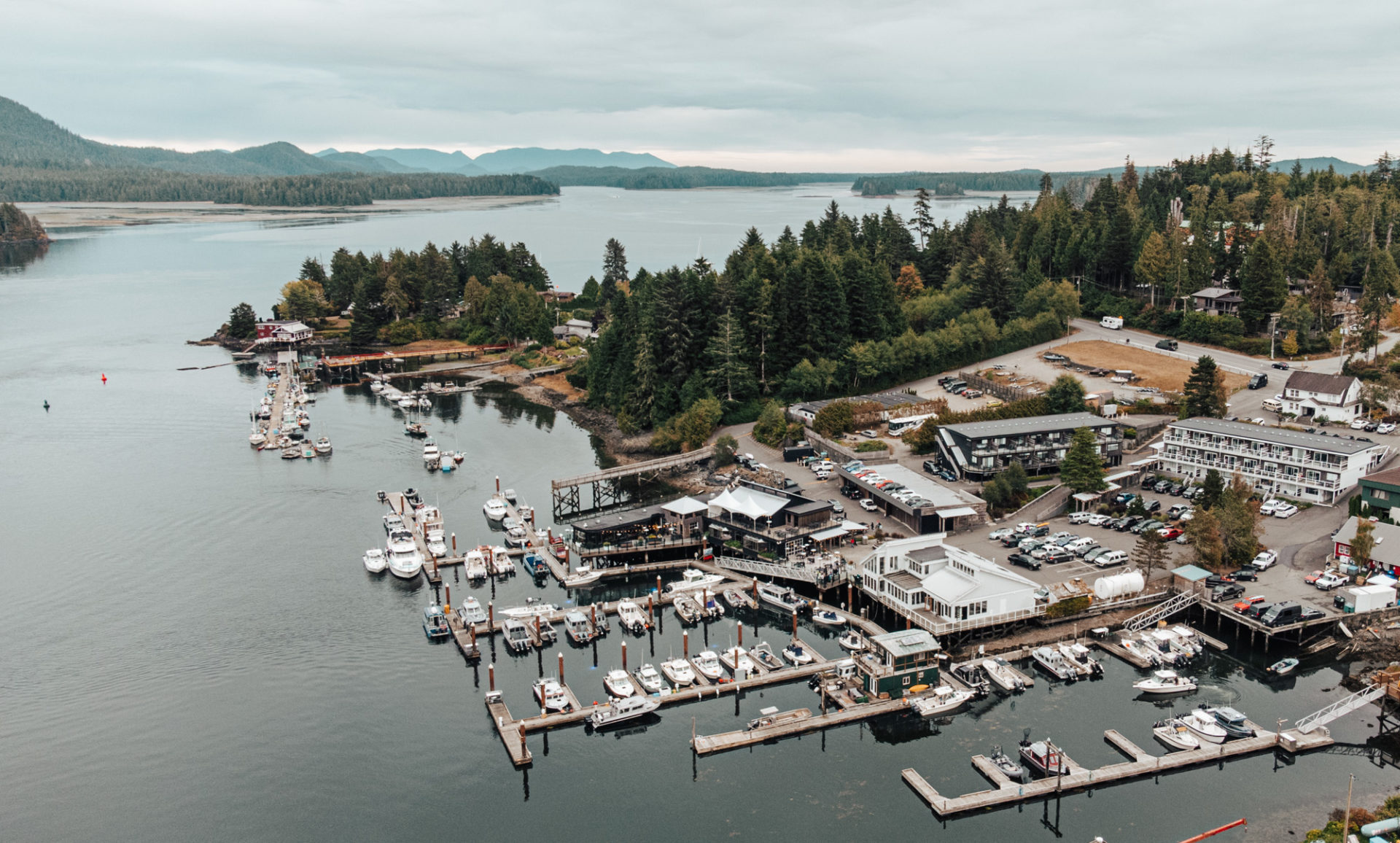
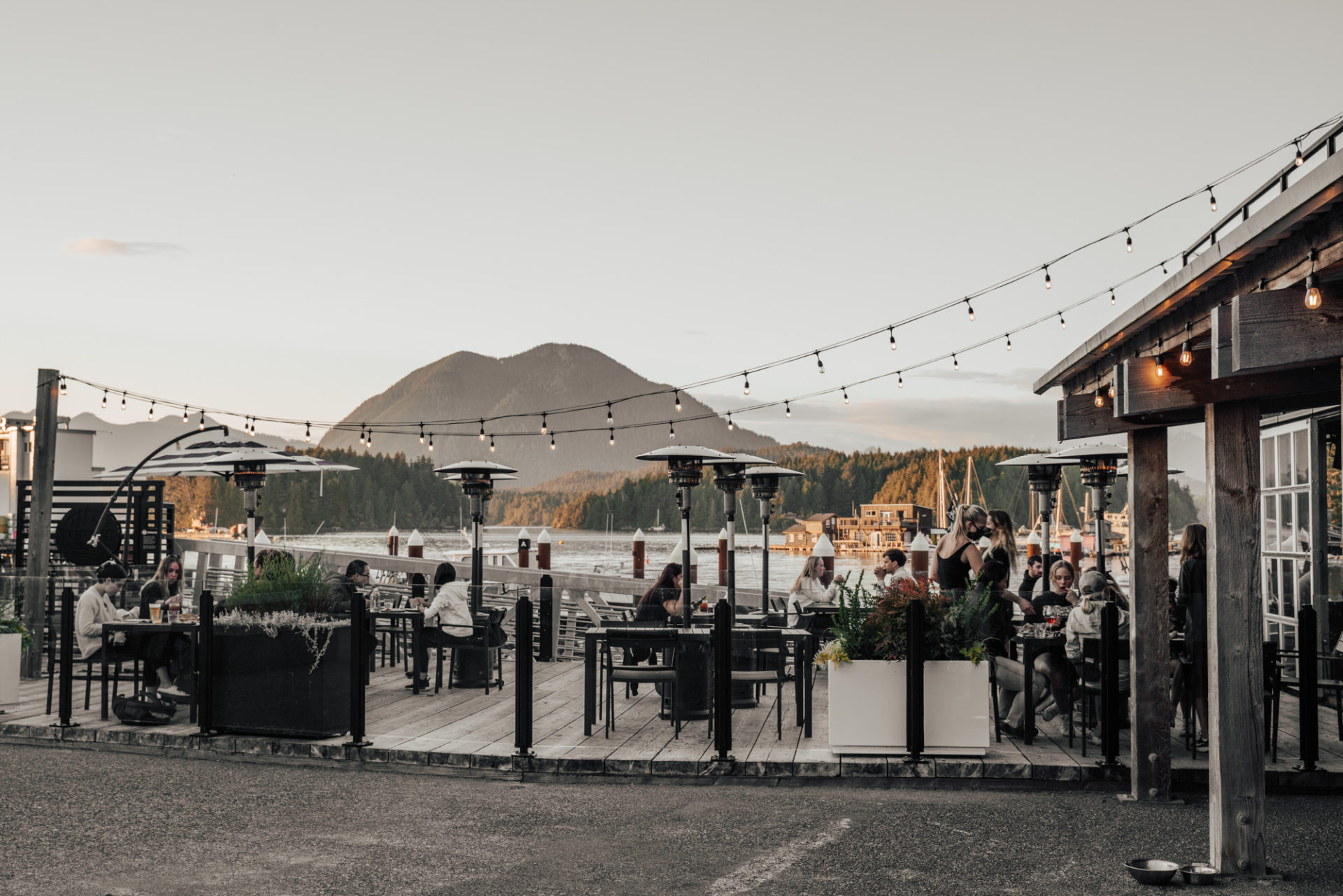
Himwitsa Lodge is worth calling out separately: it is owned by a Tla-o-qui-aht family, sits on the harbour, and is the one option here where your room rate goes directly to the Nation whose territory you are visiting. We stayed at Tofino Resort + Marina, which sits on the harbour in town with the boats leaving from its own dock, which is convenient if you are doing wildlife trips. That stay was hosted, and there is a disclosure at the bottom of this article. Pacific Sands Beach Resort at Cox Bay is the other well-known option and puts you directly on the surf beach.

Best Time to Visit Tofino
Tofino has two genuine seasons and the choice between them is the biggest decision you will make about this trip.
July and August are the warmest and driest, with long evenings and every business open. They are also the busiest and most expensive by a wide margin, and accommodation books out months ahead. May, June and September are the sweet spot for most people: decent weather, fewer people, lower prices.
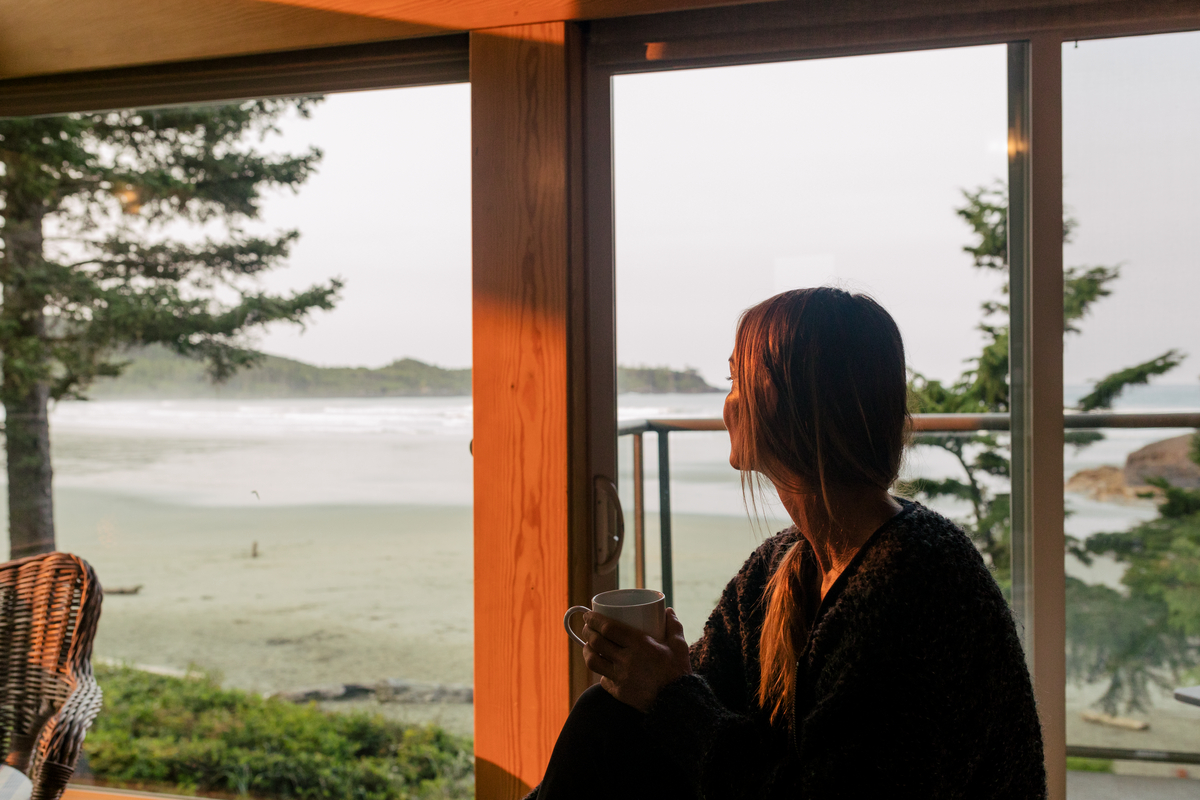
November through February is storm-watching season, and it is a real reason to come rather than a consolation prize. Pacific storms hit this coast hard, the waves get enormous, and the town leans into it with storm packages and rooms facing the weather. It rains a great deal. Our first visit was in November and it is genuinely the version of Tofino we remember most clearly.

We drove up in Benji in November 2020 and stayed on the island for about two months, then came back the following summer and did the north of the island as well, eventually putting the van on the ferry to Bella Coola and driving back across the country to Ontario. If you are travelling by van, our van life guide and van life essentials cover the setup. Check the Environment Canada forecast before committing to winter dates.
How to Get to Tofino
There is no direct road from the mainland. You take a BC Ferries sailing to Vancouver Island, then drive.
There is no road to Tofino that does not involve a ferry or a flight to Vancouver Island first, and once you are there the beaches are spread along fifteen kilometres of highway. A car is not optional.
Book the vehicle before the summer rush, and check BC Ferries reservations separately.
From Nanaimo is the shortest run at about four hours on Highway 4, and the ferry from Horseshoe Bay or Tsawwassen gets you there. Our Nanaimo guide covers the town if you break the journey. From Victoria is roughly five hours, and Victoria is worth a couple of days in its own right.
The road itself is the part people underestimate. Highway 4 past Port Alberni narrows, climbs and twists through Sutton Pass, and there is regular construction. It is beautiful, it is slower than the map suggests, and it ends right in downtown Tofino. Do not plan to arrive after dark on your first visit.
Flying is possible, with seasonal services from Vancouver to Tofino taking about an hour, but you will want a car at the other end regardless.

What to Pack for Tofino
Rain gear, whatever month you are coming. A waterproof jacket is the single most useful thing in your bag here, and locals wear them in August. Layers, because it is cooler than the rest of BC and the wind off the Pacific has nothing between it and you.
Beyond that: water shoes for the tide pools and Hot Springs Cove, a dry bag if you are kayaking, binoculars if you care about the wildlife, and shoes you do not mind soaking. Wetsuits come with the surf rental, so do not bring one.
Frequently Asked Questions
What is Tofino known for?
Tofino is known for surfing, storm watching and old-growth rainforest, on the exposed west coast of Vancouver Island. It sits beside Pacific Rim National Park Reserve, has some of Canada’s best sand beaches, and is one of the few places in the country where you can surf year-round.
How many days do you need in Tofino?
Three days is the sweet spot: one for the beaches and the national park, one for a wildlife or hot springs trip, and one to surf or slow down. Two works if you are tight, but the drive across the island is long enough that a single night is not worth it.
What is the best beach in Tofino?
Long Beach is the largest and the one most people mean, running for kilometres inside Pacific Rim National Park Reserve. Chesterman Beach is the local favourite and better for tide pools, while Cox Bay gets the biggest swell and the surf schools.
How do you get to Tofino from Vancouver?
There is no direct road. Take a BC Ferries sailing to Vancouver Island, then drive roughly four hours from Nanaimo or five from Victoria across the island on Highway 4. Seasonal flights from Vancouver take about an hour.
Can you surf in Tofino as a beginner?
Yes. Cox Bay and Chesterman have surf schools and rental shops, and the beach breaks are forgiving. The water is cold year-round, so you will be in a full wetsuit whatever the season.
When is the best time to visit Tofino?
July and August have the warmest, driest weather and the biggest crowds. May, June and September are quieter with decent conditions. November through February is storm-watching season, which is a genuine reason to come rather than a consolation.
Can you see bears in Tofino?
Yes. Black bears feed along the shoreline of Clayoquot Sound at low tide, and boat-based bear-watching tours run from Tofino harbour through spring and summer. Sightings are common but never guaranteed.
Is Tofino expensive?
Yes, by Canadian standards. Accommodation in particular is costly in summer and books out months ahead. Travelling outside July and August, or camping in the national park, brings the cost down considerably.
Final Thoughts
Most people work through the things to do in Tofino across three sunny days in July, spend most of them on Long Beach, and leave thinking it is a beach town. It is not really. It is a rainforest town with beaches attached, and the version of it we think about is the November one: the road empty, the rain sideways, the ocean doing something genuinely frightening a hundred metres away, and the whole place quietly getting on with it.
Go in summer if you want the easy version. Go in winter if you want the real one. Either way, stay longer than you planned, because the road out is four hours and you will resent every one of them.
Have you been to Tofino, or are you planning the drive? Tell us in the comments, we answer every one.

Leave a Reply