7 Tamarindo Surf Camps Compared: Which Is Right for You?

·

·

·

, ,

The main break in front of Lola’s at Playa Avellanas comes in slow, crumbling and forgiving, and it is where Max learned to surf at seven or eight years old. That is twenty-five minutes down the coast from Tamarindo, and his family still lives there. Between us we have spent more mornings on this stretch of water than we could count, long enough to watch the surf-camp business grow up around it from a couple of instructors with a van into an industry.

*This post may contain affiliate links. We may earn a small commission at no extra cost to you. As an Amazon Associate, we earn from qualifying purchases. Read our full disclosure.

So this is a comparison written from the water rather than from a booking page. Tamarindo has more surf camps per square kilometre than anywhere else in Costa Rica, and they are not interchangeable: the wave you learn on, the size of the group, and whether the coach goes in with you matter far more than the pool or the smoothie bar. Below is which one suits which kind of surfer, and we have no stake in which you pick.

Here is that comparison. Seven Tamarindo surf camps and surf school operations, all verified as currently trading, sorted by who they genuinely suit rather than by who paid for placement.

Key Takeaways

  • Tamarindo is one of the easiest places in the world to learn. A long sandy beach, no reef to speak of, and consistent small waves for most of the year.
  • The camps differ more by atmosphere than by teaching. Party hostel, family lodge and serious surf school are all on this list.
  • You may not need a camp at all. If surfing is one part of a broader trip, lessons plus your own room usually works out better.
  • Which break you learn on matters. The right section of sand on the right day is most of the difference between a good first lesson and a discouraging one.
  • Quieter alternatives are twenty minutes away. Tamarindo is the convenient choice, not the only one.
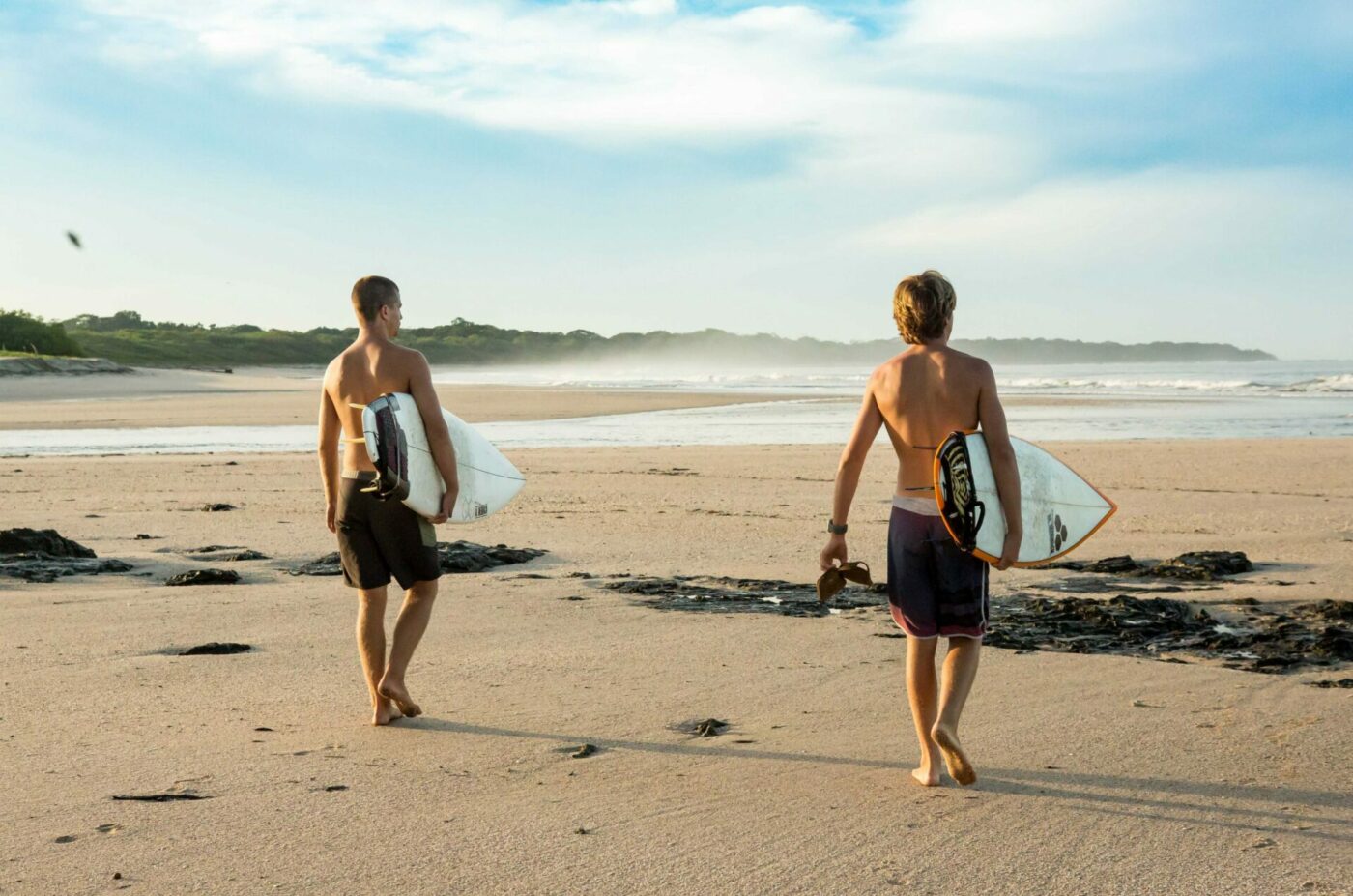
The beach where most Tamarindo surf camp lessons happen, Costa Rica
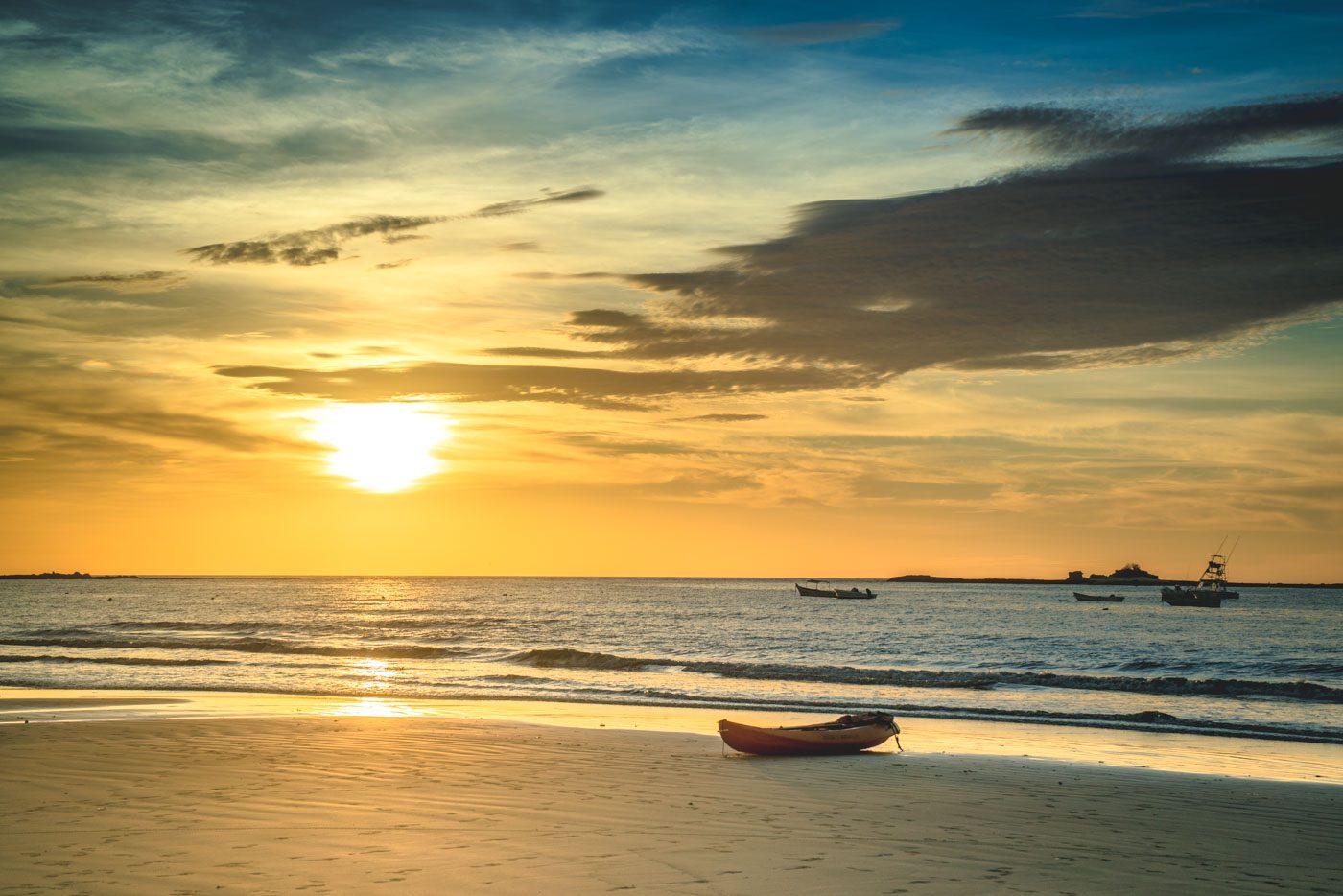
Tamarindo Beach sunset

Every Tamarindo Surf Camp Compared

Every Tamarindo surf camp below was checked as currently operating while we were writing this. Ratings are Google review scores at the time of writing, which are a better guide than anything a camp says about itself.

CampBest forLevelWhat you get
Witch’s Rock Surf CampThe full package, beachfrontBeginner to intermediateAccommodation, lessons, board hire, food, the busiest social scene
Iguana Surf CampLong-established all-rounderBeginner to advancedLessons, rentals, board shop, tours; strongest reviews in town
Dreamsea Surf CampYounger, sociable, backpacker-ishBeginnerWeek packages, shared lodging, group atmosphere
Avellanas Surf SchoolLearning away from the crowdsBeginner to intermediateLessons and board hire on a quieter beach, 25 min south
Playa Grande Surf CampA calmer beach across the estuaryBeginner to intermediateSmall camp, fewer people, turtle-nesting beach
Tidal Wave Surf AcademyLessons rather than a packageBeginner to intermediateInstruction only, book by the session
Tamarindo Surf AcademySmall, low-key instructionBeginnerLessons and rentals, smaller operation

One removal worth explaining. Selina Tamarindo appeared on earlier versions of this list and it is gone: the property closed permanently after the Selina group’s insolvency, and we have replaced it rather than leaving a dead recommendation on the page.

The former Selina surf camp in Tamarindo, which has since closed permanently

Is Tamarindo Good for Beginners?

Yes, and it is genuinely one of the better places in the world to start. The main beach is a long sand bottom with no reef and no rocks to speak of, the waves reform close to shore, and there are more surf schools per kilometre than almost anywhere in Costa Rica. If you fall off, you land in water and sand.

The part the camps do not explain is that which section of beach you learn on matters more than which school you pick. Tamarindo’s beach is long and it does not behave the same way along its length, and a good instructor moves you around based on the day rather than parking the group in the same spot every morning.

Where beginners should actually be

Down at Playa Avellanas, the two beginner spots worth knowing are the main beach break directly in front of Lola’s, which is forgiving on a small day, and the “dead tree” break near the mangrove bridge on the way to Cabinas Las Olas, which is quieter and a better place to make your early mistakes with fewer people watching. Neither is a secret locally, and neither appears in any camp’s marketing.

At the other end of the scale is Little Hawaii, the faster reef break at the southern end of Avellanas. It is not a beginner wave and it is not forgiving. If a school offers to take you there in your first week, find another school.

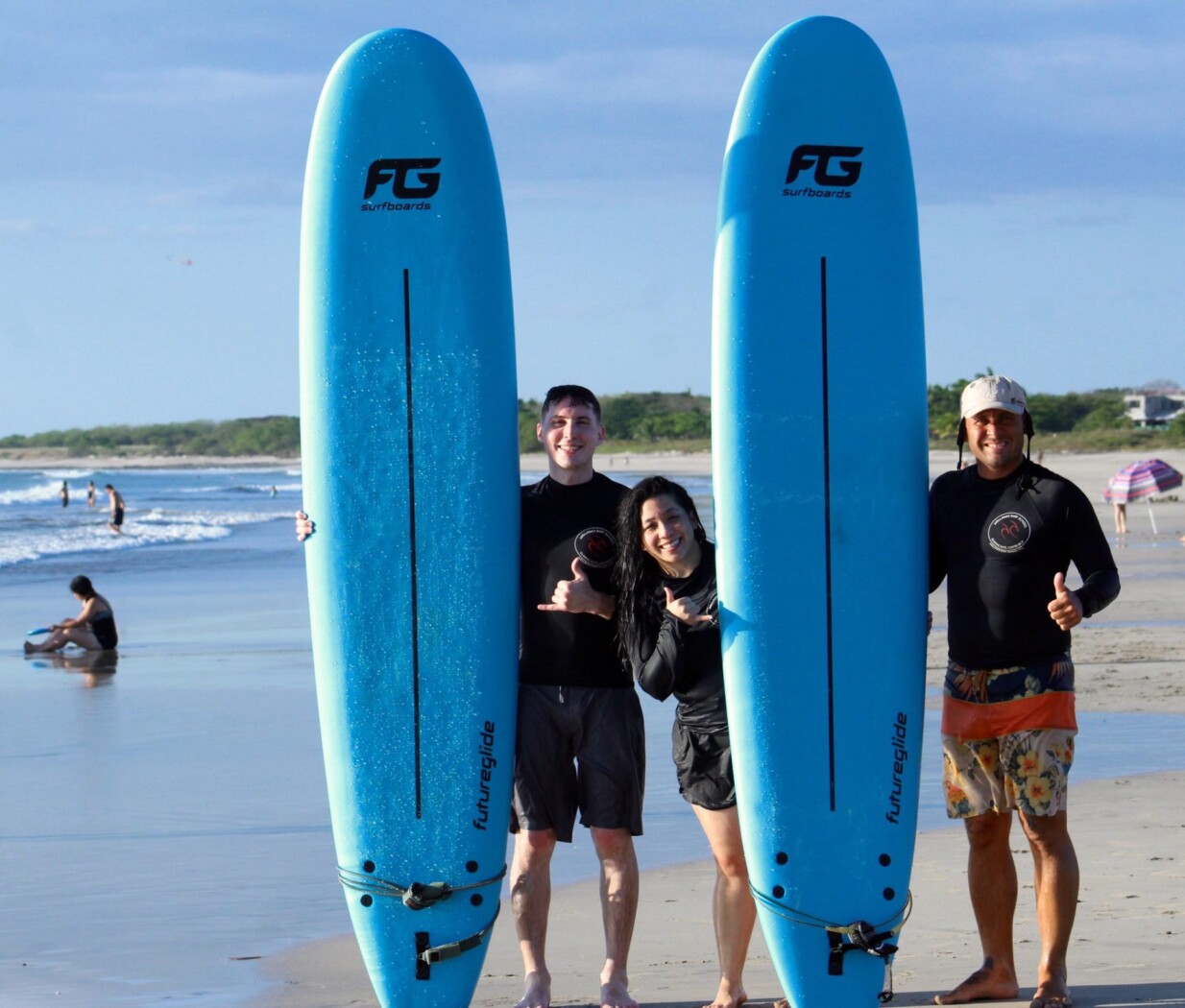
Avellanas Surf School, on the quieter beach south of Tamarindo
Photo via Avellanas Surf School

Intermediate and beyond

Once you can paddle into an unbroken wave and turn, Tamarindo starts to feel small. That is the point at which people move down the coast: Playa Grande across the estuary has more power, Playa Negra has a proper reef break, and Santa Teresa on the Nicoya Peninsula is where surfers go when Tamarindo has stopped being interesting. Our guide to the best surfing in Costa Rica maps the country properly.

Surf Camp or Surf Lessons? What You Actually Need

This is the question the whole category glosses over, and getting it wrong is the most common way people waste money here.

A surf camp is a package: a bed, two sessions a day, board hire, usually some meals, and a group of people doing it with you. It runs for a set number of days, generally a week. A surf school sells you lessons by the session and nothing else, and you sort out your own accommodation and food.

Surf campSurf lessons
Best ifSurfing is the reason for the tripSurfing is one part of a wider trip
Typical commitmentFive to seven daysTwo hours at a time
RoughlyFrom a few hundred dollars for the weekAround $50 to $80 a lesson
Includes a bedYesNo
Social sideBuilt in, you eat with the groupNone, you turn up and leave
ProgressFaster, because it is daily and consistentSlower, but you keep your days free

Our honest read: if you are coming to Costa Rica specifically to learn to surf, take the camp. The daily repetition is what makes it stick, and a week of it will get most people standing and turning. If surfing is one thing on a two-week trip that also involves volcanoes and wildlife, book lessons and stay where you want to stay. Tamarindo accommodation is plentiful and our guide to the best hotels in Tamarindo covers the good ones.

Surf Camps for Families and Kids

Several of these camps take children, and it is worth asking specifically rather than assuming, because the answer varies more than you would expect. Witch’s Rock and Iguana both run family sessions and have the space to handle a group with different abilities in it. The backpacker-leaning camps are set up for a different crowd and will say so if you ask.

Practically, most schools will teach children from around six or seven, in the shallows, on a soft foam board, one instructor per child. Max was about that age when he started here, which is a reasonable illustration that the beach itself is up to it. The limiting factor is almost always attention span rather than ability.

Witch’s Rock Surf Camp, Tamarindo, Costa Rica
Photo via Witch’s Rock Surf Camp

Each Tamarindo Surf Camp in Detail

Witch’s Rock Surf Camp

Witch’s Rock Surf Camp is the best known name in town and has been running for over twenty-five years, which in a place with Tamarindo’s business turnover is worth something on its own. It is beachfront, the packages bundle accommodation, lessons, board hire and food, and the bar is a genuine social hub rather than an afterthought. It is also the busiest and the loudest of the options here. If you want the full immersive surf-camp week with people to eat dinner with, this is the one. If you want quiet, it is not.

Iguana Surf Camp

Iguana Surf has been part of Tamarindo for decades and holds the strongest review record of anything on this list by a wide margin. It runs as a surf shop, rental operation and school together, which means it can handle a complete beginner and someone who just wants a good board for the week equally well. Less of a social bubble than Witch’s Rock, more of a working surf business. Our pick for most people.

Iguana Surf, one of the longest-running surf operations in Tamarindo
Iguana Surf Team in Tamarindo. Photo via

Dreamsea Surf Camp

Dreamsea sits at the younger, more sociable end: shared accommodation, a week-long rhythm, and a crowd that skews toward solo travellers in their twenties. If that is the trip you want, it does it well. If you are travelling as a couple or a family, one of the others will suit you better.

Dreamsea Surf Camp, Tamarindo, Costa Rica
Photo via Dream Sea Costa Rica

Avellanas Surf School

Avellanas Surf School is the one we know first-hand, because it is on our beach and we have surfed with them. It is twenty-five minutes south of Tamarindo on a considerably quieter stretch of sand, which is either a drawback or the entire appeal depending on what you are after. Lessons and board hire rather than a packaged week, and instructors who actually read the day and move you to the right section of beach. If you have a car and would rather learn without an audience, go here.

Playa Grande Surf Camp

Playa Grande Surf Camp is across the estuary from Tamarindo, close enough to see and far enough to feel different. The beach is a protected turtle-nesting site, the waves have a little more push than Tamarindo’s, and there are dramatically fewer people. A small operation and a good middle option between Tamarindo’s convenience and Avellanas’s quiet.

Tidal Wave Surf Academy

Tidal Wave Surf Academy is lessons rather than a package, with a very strong review record. Book by the session, stay wherever you like. This is the right call if you have already sorted accommodation and simply want good instruction.

Tamarindo Surf Academy

Tamarindo Surf Academy is a smaller instruction-led operation offering lessons and rentals. It has fewer reviews than the others here, so there is less of a track record to read, but it is currently trading and well regarded by the people who have used it.

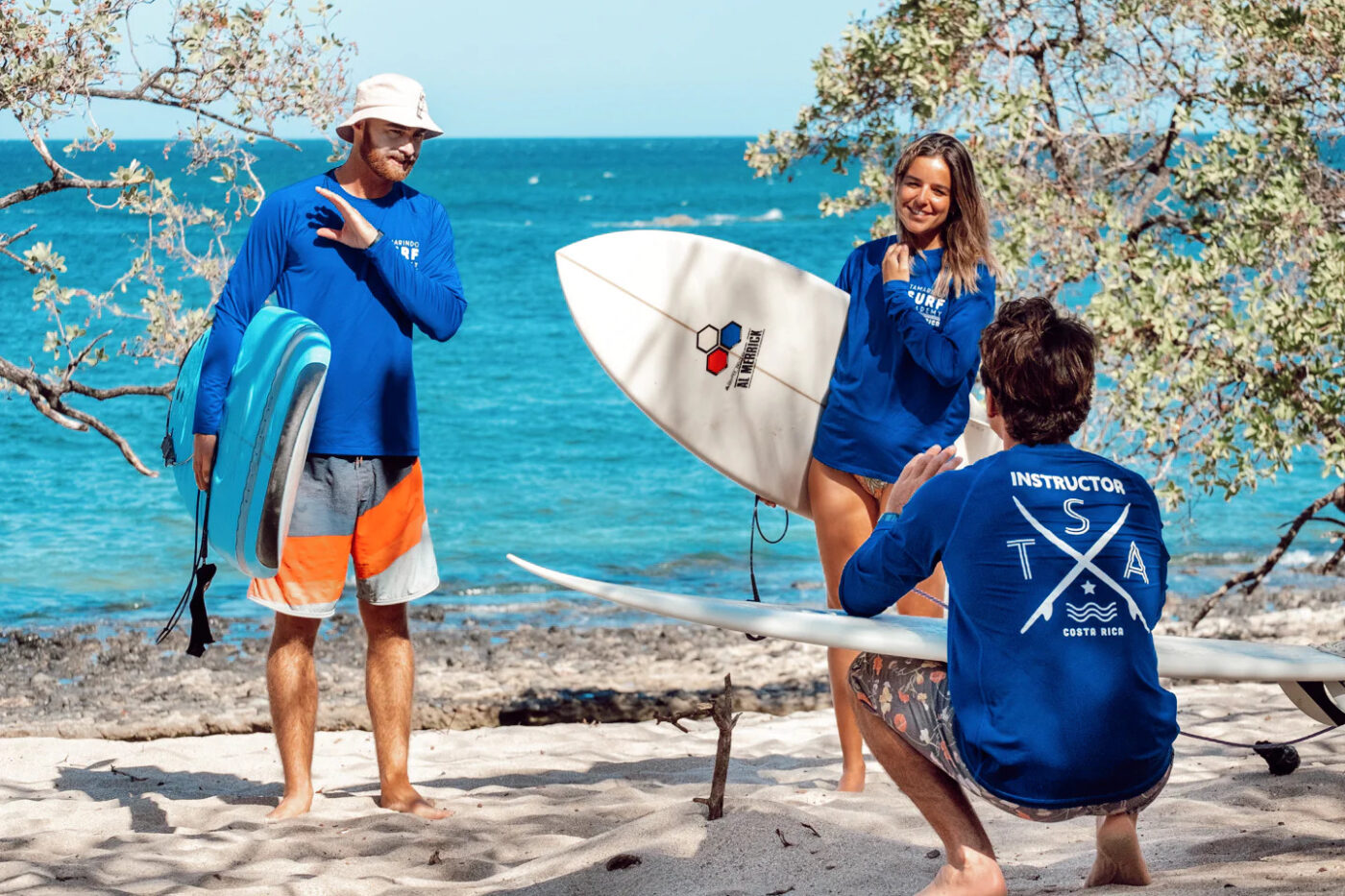
Tamarindo Surf Academy, Costa Rica
Tamarindo Surf Academy. Photo via

Best Time to Surf in Tamarindo

Tamarindo has surfable waves every month of the year, which is a large part of why the surf-camp industry works here. What changes is the size, the crowd and the price.

Surfing Tamarindo Through the Year

December to AprilDry season. Reliable offshore mornings, smaller and cleaner, busiest and most expensive
May to NovemberGreen season. Bigger and more consistent swell, warmer water, far fewer people, afternoon rain
Best for beginnersThe dry season, for calm mornings and predictable conditions
Best for improvingThe green season, for size and consistency without the crowd
Water temperatureWarm all year. Board shorts, no wetsuit
Busiest weeksChristmas through New Year, and Easter

Our own preference is September and October, which is counterintuitive because it is the wettest part of the year. The rain mostly arrives in the afternoon, the mornings are frequently excellent, the town is quiet and everything costs less. Check the Tamarindo surf forecast before you commit to dates, and our month-by-month Costa Rica guide covers the wider trip.

Tamarindo vs the Alternatives

Worth being honest about, since we chose to live twenty-five minutes away rather than in Tamarindo itself.

Tamarindo has the infrastructure: the most schools, the widest choice of accommodation, restaurants, banks, a supermarket, and the easiest transfer from Liberia airport. For a first surf trip it removes a lot of friction, and the beginner beach is genuinely good. It is also busy, developed and considerably louder than the rest of this coast.

Playa Avellanas, where we are, is quieter, prettier and has better waves once you are past the first week, at the cost of needing a car and having almost nowhere to eat after dark. Playa Grande splits the difference. Playa Negra is a reef break and a serious step up. Nosara and Santa Teresa are further south and better once you can genuinely surf.

If you are choosing a town rather than a camp, our national guide to surf camps in Costa Rica compares the regions, and the best beaches in Guanacaste covers the wider coast.

Getting to Tamarindo and around

Liberia airport is about ninety minutes away and the quieter beaches south of town are not reachable without a car. If you want to learn at Avellanas or Playa Grande rather than in Tamarindo itself, you need your own transport.

Book before you fly rather than at the counter, and note that high season runs December to April.

Compare Costa Rica car rental prices

Practical Notes

Getting here. Liberia (LIR) is the practical airport, roughly ninety minutes away, and our Liberia to Tamarindo guide covers shuttles, taxis and driving.

What to bring. Reef-safe sunscreen, a rash guard, and nothing else you would not bring to a beach. Every camp supplies boards. The sun here is stronger than most visitors expect and the classic first-week injury is sunburn on the backs of the legs from lying on a board.

Booking ahead. Necessary for December through April and around Christmas and Easter. In the green season you can usually walk in.

Rest days. Surfing twice a day is more tiring than it sounds. Our day trips from Tamarindo and guide to eating in Tamarindo cover what to do when your shoulders have given up.

Frequently Asked Questions

How much does a surf camp in Tamarindo cost?

Week-long packages typically run from a few hundred dollars for a basic camp with shared accommodation to well over a thousand for a beachfront resort-style programme. Most include lessons, board hire, accommodation and some meals, so compare what is bundled rather than the headline price.

Is Tamarindo good for beginner surfers?

Yes, and it is one of the most common places in Costa Rica to learn. The main beach has a forgiving sandy bottom and consistent small waves for much of the year, plus more surf schools per square kilometre than almost anywhere else in the country.

What is the difference between a surf camp and a surf school?

A surf school sells individual lessons, usually a couple of hours at a time, and you arrange your own accommodation. A surf camp bundles lessons, board hire, a bed and often meals into a multi-day package. If you are in Tamarindo for a week to surf, a camp is usually better value; if surfing is one part of a broader trip, take lessons.

What is the best time of year to surf in Tamarindo?

Tamarindo has surfable waves year-round. The dry season from December to April brings the calmest, most predictable conditions and the biggest crowds. The green season from May to November has bigger swell and far fewer people, at the cost of afternoon rain.

How long does it take to learn to surf?

Most people stand up on a foam board in their first or second lesson on a beach like Tamarindo. Actually surfing an unbroken wave with any control takes considerably longer, which is the argument for a multi-day camp over a single lesson.

Do you need to be fit to do a surf camp?

Not especially, but surfing is more tiring than it looks and the paddling is where beginners struggle. Most camps run two sessions a day with recovery time in between, and a reasonable baseline of swimming ability matters more than strength.

Is Tamarindo or Santa Teresa better for surfing?

Tamarindo is easier to reach, better set up for beginners and has far more infrastructure. Santa Teresa has better waves for intermediate and advanced surfers and a quieter, more remote feel. For a first surf trip, Tamarindo is the more forgiving choice.

Can children learn to surf in Tamarindo?

Yes. Most schools teach from around six or seven years old, in the shallows on a soft board with one instructor per child. Max learned to surf on this coast at about that age. Attention span is usually more of a limit than ability.

Final Thoughts

Every Tamarindo surf camp on this list is decent, which is a slightly boring conclusion but an honest one. Tamarindo has been teaching people to surf for a long time and the weak operators do not last. The real decision is not which Tamarindo surf camp is best, it is what kind of week you want: a sociable beachfront package, quiet instruction on an emptier beach, or lessons slotted around a broader trip.

If we were sending a friend who had never surfed, we would send them to Iguana for the week, and tell them to drive down to Avellanas one morning to see what the coast looks like with nobody on it.

Are you planning a surf trip to this coast, or trying to choose between towns? Tell us in the comments, we answer every one.

READ NEXT: Tamarindo, Costa Rica: A Guide to the Beach Town

About the Authors

2 responses to “7 Tamarindo Surf Camps Compared: Which Is Right for You?”
  1. Michael Avatar
    Michael

    Hey, thanks for all this detail. Any comments on the seasonal factor on the decision to take surf lesson for a beginner (or any level, I guess)?

    Thanks.

    1. Oksana & Max St John Avatar

      The biggest swells and most advanced waves in Tamarindo and the surrounding areas are usually during the rainy season in Sept/Oct, so if you are looking for smaller waves, avoid that time of the year.

Leave a Reply

Your email address will not be published. Required fields are marked *

This site uses Akismet to reduce spam. Learn how your comment data is processed.