
At first glance, Costa Rica may appear to be small and easy to explore, but the truth is the country’s adventure-packed destinations are situated further than they seem.
*This post may contain affiliate links, as a result, we may receive a small commission (at no extra cost to you) on any bookings/purchases you make through the links in this post. As an Amazon Associate, we earn from qualifying purchases. Read our full disclosure
Don’t leave your home without Travel Insurance!
From the US? We recommend Allianz Travel Insurance, a world leader in travel protection and our trusted Travel Insurance partner for the last 5 years. Allianz offers Single Trip and Annual Travel Insurance Policies that include medical coverage, trip cancellation, rental car insurance and more! (Benefits vary by state and by plan, so read your policy carefully!)
Not a US resident? Consider Safety Wing, a budget friendly travel insurance provider with travel insurance plans for Digital Nomads and travelers from all around the world.
Thanks to the country’s well-established tourism industry, travellers have many transportation options in Costa Rica, including buses, shuttles, and taxis. Popular tourist towns are generally small and easy to get around on foot.
However, getting to out-of-town attractions and activities can be challenging. Some tours include transportation, but if you plan to explore a lot while in Costa Rica, the prices of transfers can add up pretty quickly.
Having spent many years travelling all around Costa Rica, we’ve tried and tested many different transportation methods. We’ve travelled on buses, used shuttles, taxis, private drivers and even hopped on a few boats.

Traveling Soon? Here is a list of our favourite travel providers and accessories to help get you ready for your upcoming trip!
Renting a Car in Costa Rica: Our Advice
As sustainable travellers, we’d love to recommend using public transportation in Costa Rica – as it’s the most eco-friendly way to explore the country. But the truth is, the public transport system in Costa Rica is underdeveloped, connecting mostly big population hubs and major cities, and NOT tourist destinations. This makes the journey from Point A to Point B often much more challenging than necessary.
Our extensive experience navigating the country has proven that renting a car is the best way to get around in Costa Rica.
Renting a car in Costa Rica is still the most practical and flexible option, especially if you plan to visit more remote regions and want to travel at your own pace.
However, renting a car in Costa Rica can be a challenging process. Scams, confusion and an abundance of unreliable car rental companies make renting a car in Costa Rica, a big source of frustration for travellers.
To help navigate the process and highlight all the pitfalls, scams and potential mistakes travellers make when renting a car in Costa Rica, we’ve put together this detailed guide.
So, without further ado, let’s dive in and get you ready to visit Costa Rica!
Here is everything you need to know about renting a car in Costa Rica.
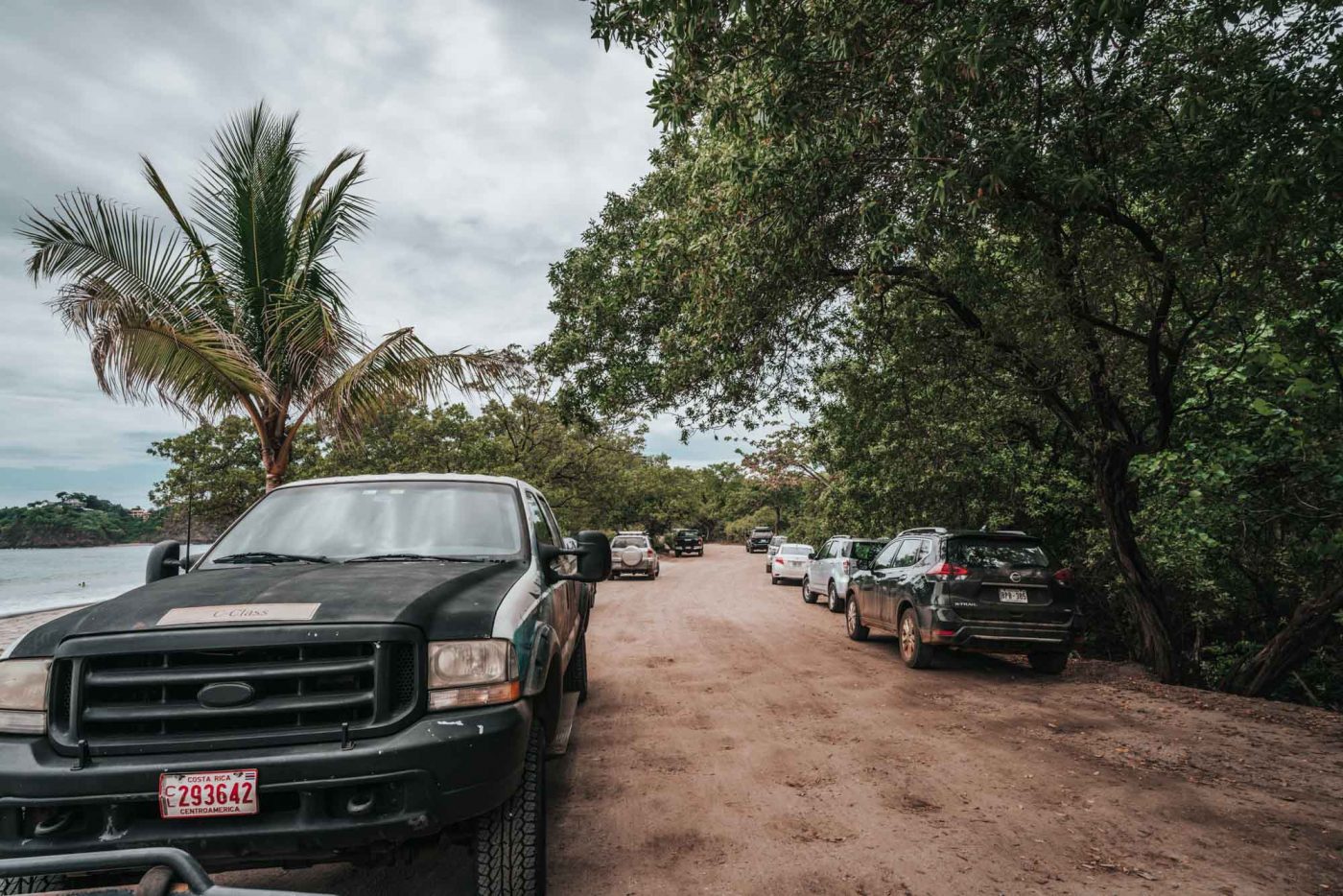
Common Questions About Renting Car in Costa Rica
Do You Need to Rent a Car in Costa Rica?
Technically, no. You can get around by public buses, tours, or a private shuttle.
Buses are cheap and safe but certainly not convenient, especially when it comes to travelling between tourist destinations. Tours and private shuttles are certainly available and convenient, but they are quite costly.
We’ve found that if you book well in advance, you can actually save money on your trip by hiring a car and being your own chauffeur.
Why Should You Rent a Car in Costa Rica?
If you’re planning a trip and wondering, “Should I rent a car in Costa Rica?” The answer is yes!
You’ll be exploring Costa Rica at your own pace and can see more of what the country has to offer. Keep in mind that more than 50% of the country is densely forested and underdeveloped. Roads are often windy and sometimes unpaved, and distances tend to be much farther than you would expect.
With a Costa Rica rental car, you have the freedom to come and go on your own schedule. Spend as much time exploring national parks as you like and enjoy the scenery along the way. It’s way more convenient, and driving yourself usually ends up faster than relying on buses or tours. Plus, you’ll be able to reach remote and off-the-beaten-path Costa Rica destinations—which we all know are the best ones!

Is it Safe to Drive a Car in Costa Rica?
Yes! As long as you drive more cautiously than you would in your home country, driving in Costa Rica is perfectly safe. That said, there are many things to look out for, and local drivers are notoriously bad for signalling. Check out our driving tips at the end of this article for the best experience.
READ NEXT: Driving In Costa Rica – Essential Tips
Do I Need an International Driver’s License to Rent a Car in Costa Rica?
No, as long as your original driver’s license is at least 2 years old and written in Roman script. This means that those who carry a US driver’s license or Canadian driver’s license do not require an international driver’s license.
However, if your license is written in a different alphabet (ex., Cyrillic, Arabic, etc.), you will need an international driver’s license. They’re usually around $20 USD and can be purchased ahead of time in your home country. You’ll need your original license to accompany it.
Remember that while driving around the country, you will need to have your passport or photocopy of your passport on you at all times in case of a traffic stop. The officers will want to check that you have a valid tourist visa.

Are Rental Cars Expensive in Costa Rica?
Prices can vary depending on your vehicle and the time of year. During the 2020 pandemic, many car rental companies have let go of their inventories, causing serious supply/demand issues in the country. This has limited the supply of Costa Rica car rentals and increased the general car rental costs.
In the past, it was possible to rent a car in Costa Rica for as cheap as $1/day (plus $10-15 in mandatory insurance charges), but now the lowest we have seen is closer to $10-20/day (plus $10-20 in mandatory insurance). In the high season, car rentals in Costa Rica cost anywhere between $50-$100/day.
Just like in the US and Canada, any additional features also carry a price tag. Things like GPS, WiFi, car seats, and different drop-off locations will all add to the cost.
And don’t forget to factor in gas prices. Gas prices in Costa Rica are generally higher than in the United States and other countries due to high taxes and transportation costs. In February 2023, the price of gas in Costa Rica was around 730CRC or USD $1.30 per litre.
It’s important to note that gas prices in Costa Rica vary depending on the region, the time of year, and other factors. Additionally, some gas stations in remote areas may have higher prices due to transportation costs.
Reasons Not to Rent a Car in Costa Rica
Don’t rent if you’re saving on costs
If you prefer to keep your costs as low as possible, public transportation is a cheaper alternative. Cross-country buses are available to get you from anywhere in the country. The routes will rarely be direct, but the prices are affordable, and buses are generally in good condition.
The downside is that you’ll have to sacrifice the convenience of having your own wheels and limiting where you can go.
Don’t rent if you’ve booked private tours
Organized activities and private tours to explore Costa Rica often include transportation, so you won’t need to worry about a car rental. This is especially handy if you will mostly stick to popular tourist hubs.
Don’t rent if you’re not a confident driver
Lastly, if you’re not the most confident driver, you might feel a bit uncomfortable driving in a foreign country like Costa Rica. With bumpy, unnamed and sometimes windy roads and very little signage, driving in Costa Rica can be a challenging experience. Skip the car rental in Costa Rica if that doesn’t sound like your cup of tea!
What Kind of Car Should You Rent in Costa Rica?
Costa Rican car rental agencies offer many different options for rental vehicles. Don’t expect huge American-style trucks, but compact and mid-size SUVs are common.
Sedan
For cheap rental cars in Costa Rica, opt for a sedan. You’ll have options like a Hyundai Accent or Toyota Yaris, which are great for zipping around.
SUV
If you want a more equipped adventure mobile, ask the rental car agency for an SUV. Something like a Toyota Rav4, Geely Gx3, or Hyundai Tucson is equally compact and durable.
4×4
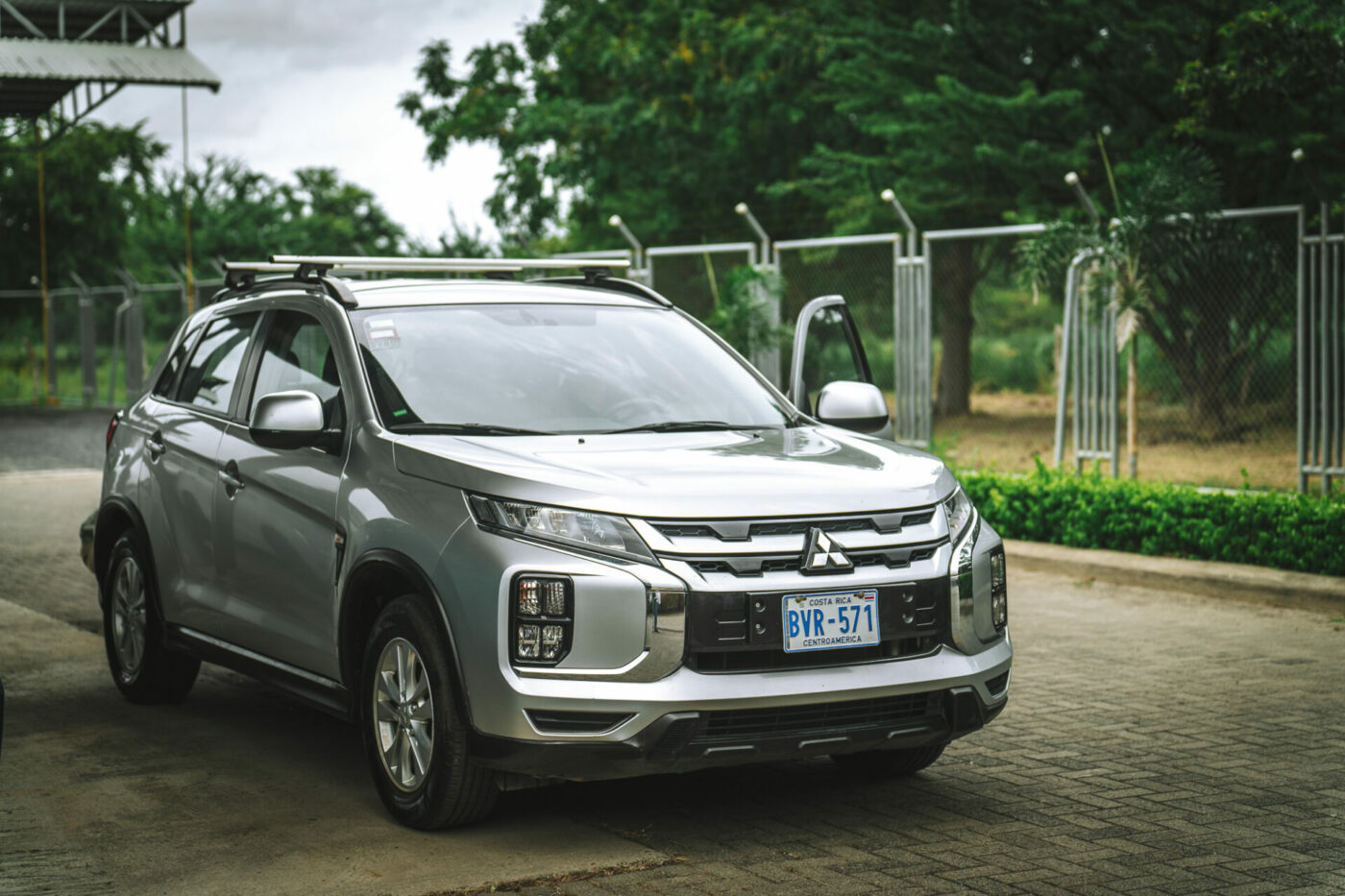
If you want to be able to go off the beaten path, Costa Rica car rental companies offer several 4×4 SUVs. These won’t be cheap, but having a 4×4 comes in handy if you plan to do lots of adventuring. A common Costa Rica 4×4 rental would be a Mitsubishi ASX, Toyota 4Runner or Suzuki Jimmy.
Do You Need a 4×4 in Costa Rica?
While you don’t need to rent a 4×4 in Costa Rica, we do recommend getting a high-clearance vehicle. This way, you’ll feel more comfortable driving over potholes and dirt roads without the extra costs of a 4×4 rental.
If you stick to the main tourist areas and national parks, you won’t need 4×4. But, there are a couple of places along the Guanacaste Coast or in the South Pacific, like Uvita and the Osa Peninsula, where a 4×4 rental car is recommended and even necessary in the rainy season. We recommend you opt for a Costa Rica Jeep rental or similar SUV to tackle these roads.

Automatic vs Manual Costa Rica Car Rentals
Costa Rica rental cars are usually available in both automatic and manual. Choose whatever you’re comfortable with, considering that the roads in Costa Rica will be a little rough, and you are less likely to spend time in traffic on a highway.
A manual rental car in Costa Rica will be cheaper, but make sure you’re confident driving a manual car up hills and down windy roads before you commit to this option.
Costa Rica Rental Car Insurance Explained
This is probably the most confusing and frustrating part of car rental in Costa Rica, so please READ CAREFULLY!
There are several types of Car Insurance you may come across while renting a car in Costa Rica.
Third-Party Liability Insurance
Third-party liability is MANDATORY car rental insurance in Costa Rica and is required by Costa Rican law. It protects drivers in case of an accident or damage brought on by third-party and as well as in the case of injury to bystanders.
Some rental car companies allow you to arrange liability insurance through a third party, but many automatically add it to your bill. It may also be called third-party liability protection or supplemental liability insurance.
Remember, third-party liability insurance in Costa Rica is usually NOT included in the estimated rental price, so prepare to pay an additional daily fee of anywhere between $10-30/day.
If this is the only insurance you opt to get for your car rental in Costa Rica, be prepared to provide proof of additional coverage for Collision Damage (as explained below) and put down a damage deposit of $2000-3000, depending on the vehicle.
Collision Damage Insurance (Liability Damage Waiver)
In case of an accident, other damage, or theft, the renter or authorized driver of the vehicle is responsible for any loss or damage to the rental vehicle. This includes bumps, scratches, windshield cracks, and more severe damage due to an accident.
Collision Damage insurance, also known as Collision Damage Waiver, CDW for short, or Liability Damage Waiver, LDW for short, reduces your liability in case of an accident or damage to the vehicle. This extended protection can either be purchased through the car rental company or obtained through your Credit Card Insurance or Travel Insurance providers.
How do you get a CDW/LDW?
Car protection through Collision Damage Insurance is a frequent perk offered by many premium credit cards; however, when renting a car in Costa Rica, proof of this coverage is often required in writing. It is not enough to simply say, “Liability Insurance is covered by my credit card,” and decline the liability insurance altogether.
Most agencies require proof of Liability Coverage, typically in the form of a letter from your credit card or travel insurance provider. Ensure that this letter shows:
- Full name of the cardholder/renter
- Last 4 digits of the credit card that will be used to rent the vehicle
- Specifically describes the type of liability coverage included and its limitations
If you are going to rely on your credit card to cover Liability Insurance for your car rental in Costa Rica, ensure that it covers the following:
- Selected car class category (Van, SUV, 4×4, etc.)
- Additional drivers
- Rental period – make sure that it is not limited to just 7 or 14 days
- Restrictions on where the vehicle may be driven (off-road, etc.)
- Country-specific restrictions – make sure Costa Rica is covered!
We recommend calling the phone number on the back of your credit card to inquire about the terms and conditions of Rental Auto Protection Plans available with your specific card.
Should you get into an accident or damage your rental car in any way, and a claim becomes necessary, you will be liable for the full amount of the damages, up to the total price of the vehicle upfront.
Your credit card (or travel insurance, if applicable) will be liable for 100% of damages to and/or theft of the vehicle. It will be your responsibility to submit and follow through on the claim. When/if the claim process is successful, the credit card company will reimburse you for all the expenses.
If this sounds like a bit of a scary gamble and you have any doubts that your credit card will cover you for the damages, it may be a good idea to opt for car rental company Collision/Liability Damage Coverage instead.
Collision Damage Waiver reduces this liability in the event of an accident or damage, and most car rental companies in Costa Rica will offer Basic and Full Collision Damage insurance.
Basic Collision Damage Waiver
Basic Collision Damage Waiver usually adds another $10-15/day on top of third-party liability, bringing the total cost of insurance for your car rental to $20-30/day. Basic LDW or CDW reduces your liability to a certain amount (usually under $1000) – so this is the amount of deposit that will be charged to your credit card on the day of rental in addition to the actual price of the rental vehicle.
Full Collision Damage Waiver
Full Collision Damage Waiver frees the renter from financial responsibility caused by accident, theft, or total loss, except in the case of negligence. The typical price of Full LDW or CDW is $30-40 per day in addition to Third Party Liability rate and brings the total insurance price for your car rental to $50-60 per day.
Full CDW reduces your car rental deposit to < $500 on the day of the rental and gives you the ultimate peace of mind when driving in Costa Rica.
NOTE! Many rental companies take advantage of travellers when it comes to insurance plans for their rental. They don’t offer great explanations of the differences between the plans and often scare the renters into purchasing the highest Full CDW coverage for their car rental in Costa Rica. Many of them are actually incentivized on the sale of insurance and thus can be extra aggressive and uncooperative in this matter.
It’s a very unfortunate and often unpleasant way to start a Costa Rica vacation and a situation that many cite as one of the most unpleasant parts of their trip. So be warned! Come prepared with the right documents and information from your credit card company, or allow for room in your budget to purchase the Full CDW from your rental company.
Our Recommended Car Rental Provider
Where’s the best place to rent a car in Costa Rica?
When it comes to car rental providers, our personal recommendation is Vamos Rent-a-Car, the best rental car company we’ve used in Costa Rica. They’re an independently-owned, Costa Rica-based company offering excellent service and no hidden fees policy for car rental in Costa Rica. They’re very highly rated, with 98% customer satisfaction scores and a genuine desire to make the process of car rental in Costa Rica a smooth one.
We’ve recently partnered with Vamos to offer our readers an additional 10% OFF on car rentals! You can take advantage of this offer by booking your car rental with Vamos via THIS LINK.
In addition to great services, Vamos also offers a host of other perks, including an extra private driver, a cooler, a roof rack, free child seats and more! Their rates are final and transparent – what you agree to pay upon checkout if what you will be charged! No hassle, no sales pitches!
Book in advance, especially if you are on a budget and want to secure the cheapest car. Their inventory is limited and can sell out!
Requirements for Renting a Car in Costa Rica
There are 5 major requirements needed in order to rent a car in Costa Rica:
- Valid driver’s license: From your home country with an accompanying international driver’s license if necessary. These must be originals, not photocopies.
- Original passport: Your passport must have a valid tourist visa stamp and not be a photocopy.
- Meet the minimum age: The minimum age for renting a car in Costa Rica is 21. All rental car companies in Costa Rica have their own policies. For example, Adobe Rent a Car is 23 while Hertz and Budget is 25. Budget will allow younger drivers for an additional fee, but others don’t offer this option.
- Money/room on your credit card for deposit: Based on your chosen insurance coverage, your deposit can range from $500-$3000. You’ll need a credit card to pay the deposit, as debit cards aren’t accepted.
- Costa Rica car rental insurance: As noted above, third-party liability insurance is mandatory for Costa Rica rental car companies.

The Process of Renting a Car in Costa Rica
Research
How do you find car rentals in Costa Rica? First, start by doing your research online to find the best car rental in Costa Rica for your needs and budget. Choose your rental car company based on price, availability, and car rental locations.
There are lots of large international car rental companies like Avis, Economy, Budget, Costa Rica, and Alamo, Costa Rica. There are also smaller local companies like Adobe Rent a Car, Hertz Costa Rica, and Vamos Car Rental Costa Rica that offer competitive rates and car selections. If you want to rent a car in San Jose, Costa Rica, you’ll have lots of options, but other locations are more limited.
Compare prices, but don’t get fooled by the rates. Remember that the cheapest price will never include third-party insurance or liability insurance. Be prepared to pay $15-30 per day or more. For the exact car rental price – contact the company directly.
Pick up
Once you’ve booked your rental car, you can pick it up from the arranged location. Most car rental companies in Costa Rica have several pick-up and drop-off points. There are lots of rental cars in San Jose, Costa Rica, along with Tamarindo, Jaco, La Fortuna, and Puerto Viejo.
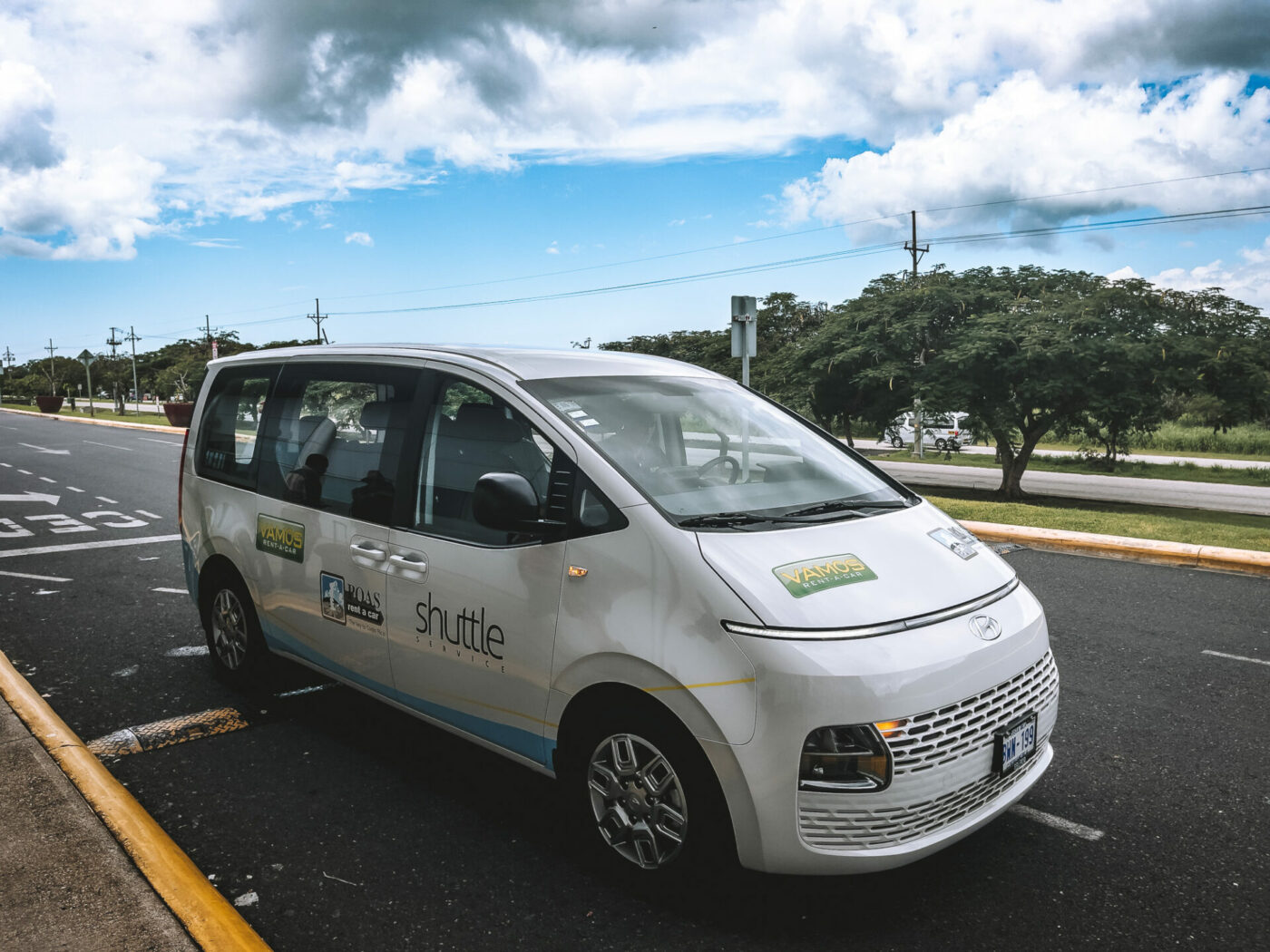
Bear in mind that because San Jose Airport and others are small, the actual rental offices are located a few minutes away. Shuttles are typically available to transfer you to the car rental offices.
Inspection & Fees
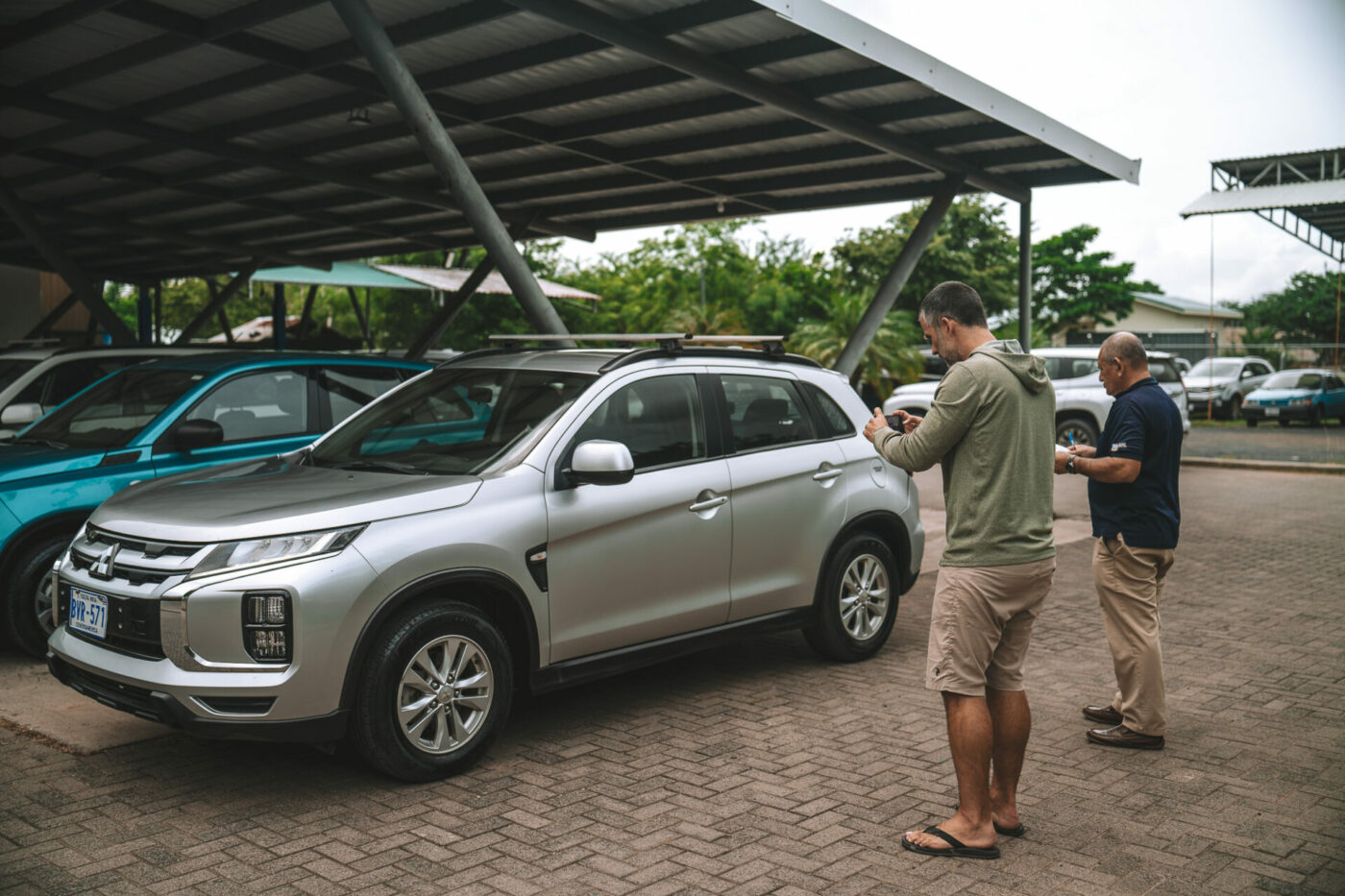
Once you get to the rental office, be sure to do a thorough inspection of the vehicle. Take photos of any damage, even if it’s a brand-new car.
At this point, you’ll go over all the charges and pay your security deposit. Make sure to ask questions about any fine print if you’re unsure of anything.

Returning Your Rental Car in Costa Rica
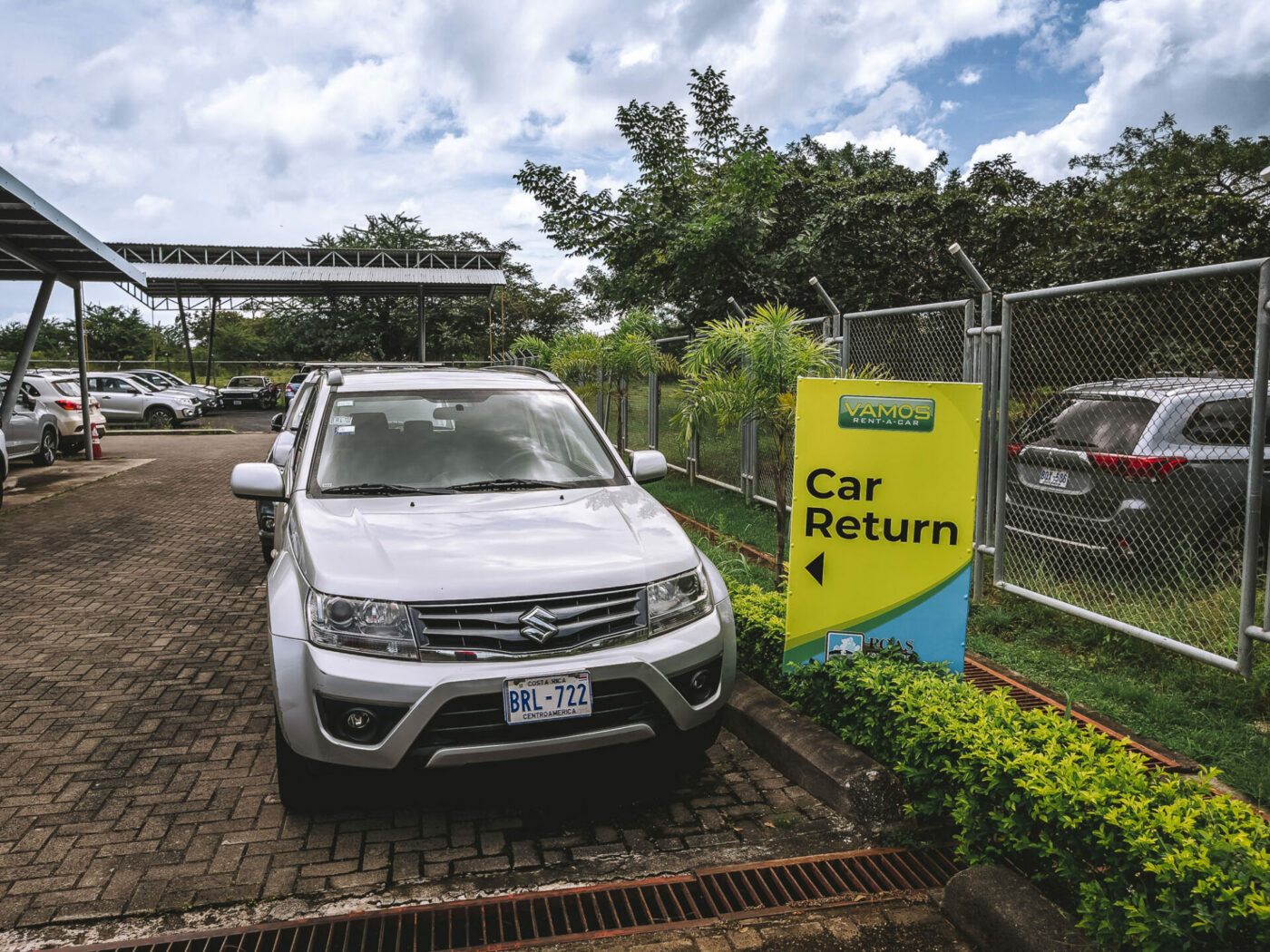
Unless otherwise arranged, return your rental to the same place you picked it up with a full tank of gas. If you have a late-night flight and the office is not available, some companies have a designated drop-off point.
They may allow you to leave the car in the parking lot of San Jose International Airport with keys in the glove box. If you do go the after-hours car rental San Jose International Airport Costa Rica route, just be sure to arrange this ahead of time.
If the company identifies any damage, this is when your photos during the inspection can come in handy.

Tips for Renting a Car in Costa Rica
Do your research
There are pros and cons to both popular rental car companies and smaller providers. While big companies are reliable, they may have higher costs and additional fees. Meanwhile, smaller local companies likely have fewer locations, options, or lower insurance coverage. If you opt for an unknown company, just make sure they’re legit and trustworthy.
Know what your online quote includes
Almost all online quotes do not include mandatory insurance. Remember to budget an additional $15-30 for third-party and Liability insurance per day. If you want to avoid hidden fees, we recommend renting with Vamos Costa Rica.
Confirm pricing with the car rental agency
If you want to be sure about the final price, call the rental company or send a WhatsApp to find out. During the high season, double-check and confirm that your car is reserved. We have heard too many stories of people whose car rentals were booked but not there upon arrival. This is especially important if you booked through a third-party aggregator website.
Be aware of extra or hidden fees
Read the fine print and watch out for things like license plate fee, airport fee, or charges for unlimited mileage. There’s also always a one-way fee if you pick up and drop off from different locations.
Be prepared to put down a security deposit
Your deposit is based on what insurance you selected. This can range from $500-3000 for a few days rental. Be sure your credit card limit will allow for that. Note that it is not possible to pay the deposit (or the rental fee) in cash.
Inspect the rental car as soon as you pick it up
Always take detailed pictures and videos of your car during the walk-through so you don’t get blamed for any damage upon return. Even if you’re using the best car rental company in Costa Rica, this is important to protect yourself.
Report incidents immediately
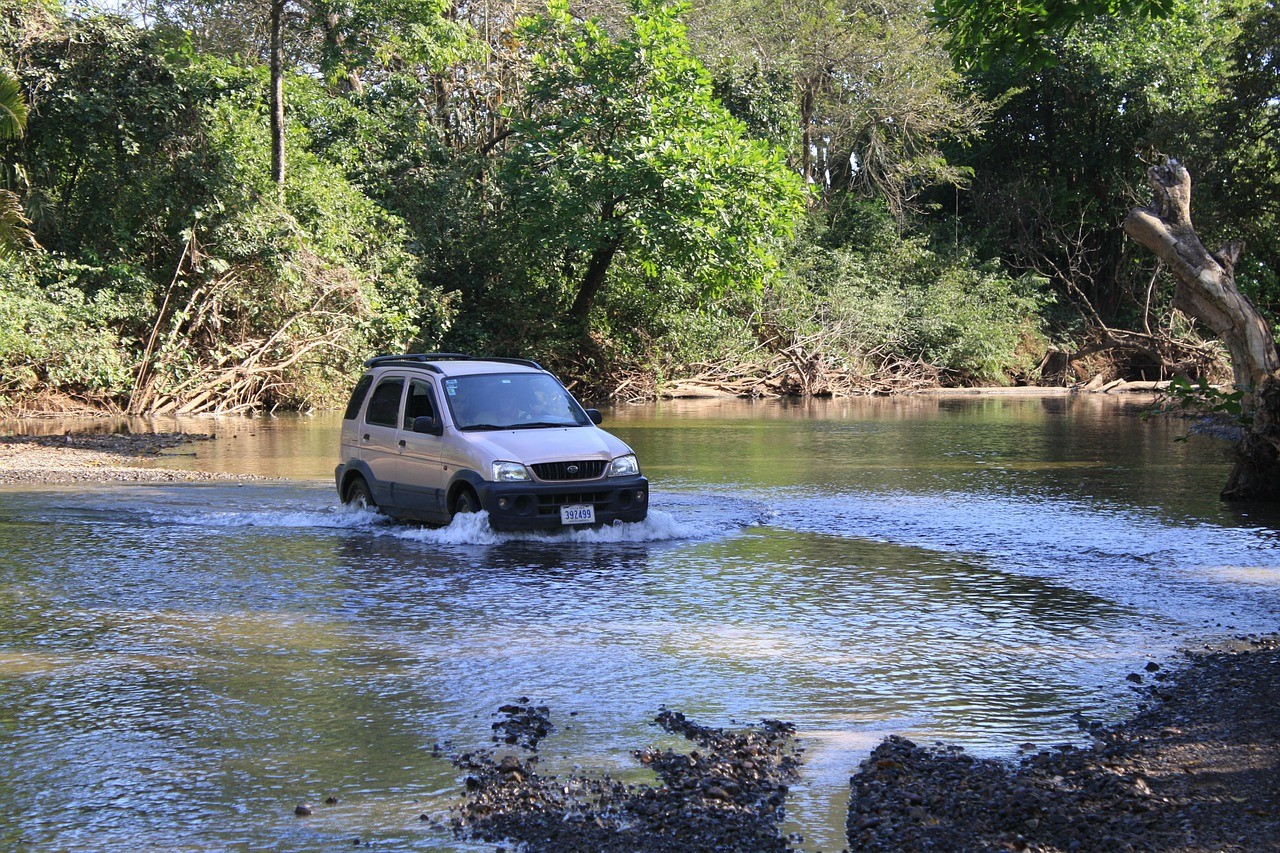
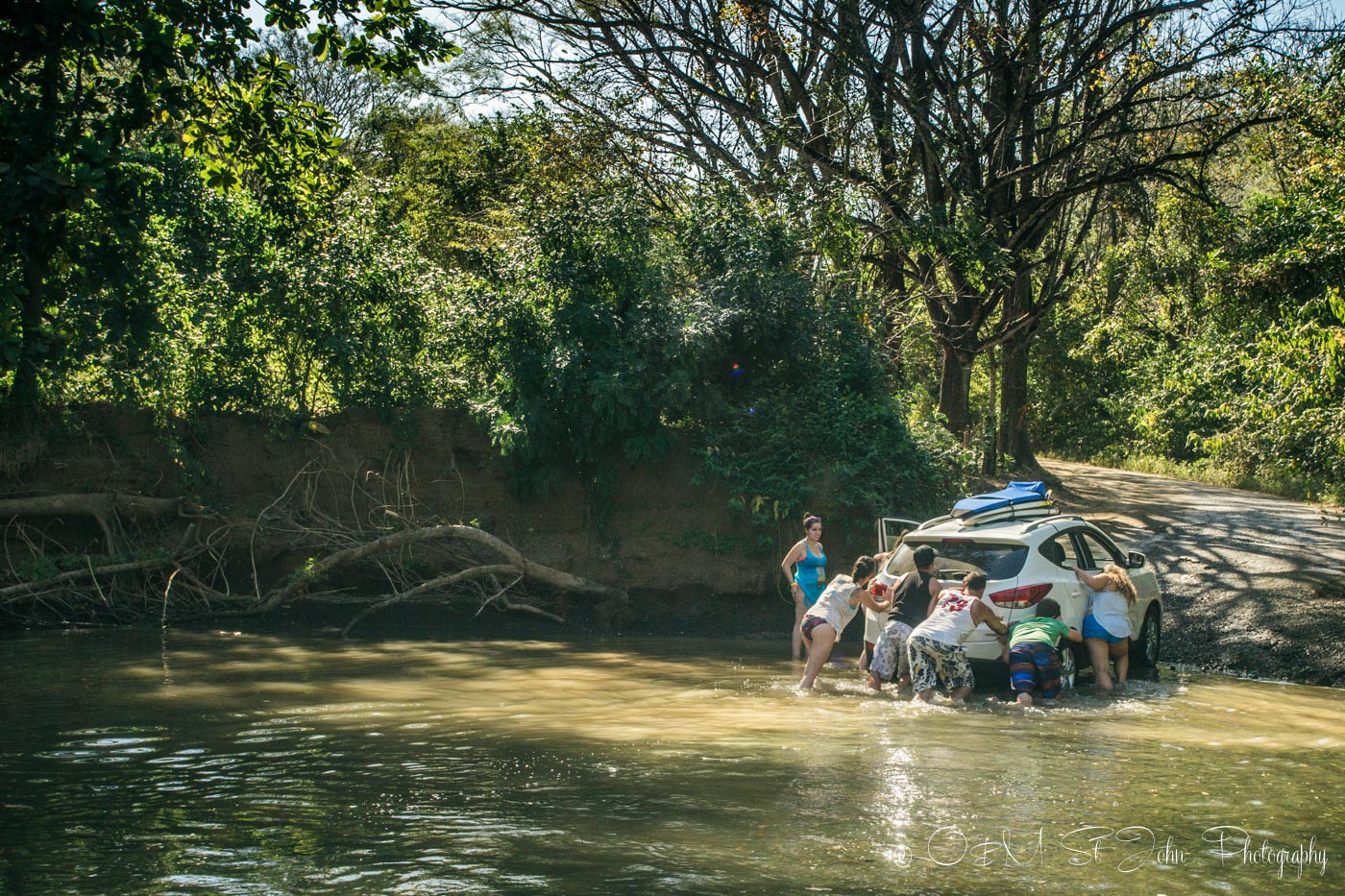
If you get into an accident, report it to the rental car company ASAP. Note that no car rental company will cover any damage associated with crossing rivers.
Don’t smoke in your rental car
This is usually part of your rental agreement and will incur a hefty fine if you do.

Tips for Driving in Costa Rica
Drive carefully
Obey the speed limit. Be aware that the standard of driving in Costa Rica is not great and can be dangerous. People aren’t big fans of using their turn signals or waiting for the light to turn green. Road conditions can also vary, with lots of bumps and potholes. Be especially slow and cautious at river crossings.
Be aware of speed limits (in kilometres per hour, not miles)
Highways have minimum and maximum speed limits, while most secondary roads are 60 km/h (37 mph) or 40 km/h (25 mph) in urban areas.
Download a navigation app
For cell phone apps, we recommend Waze over Google Maps. It’s community-based and updated constantly by locals, which we find better than all the other navigation apps. Just remember that most street names and numbers don’t really exist, so prepare for vague, landmark-based directions.
Obey ceda el paso on bridges
This means “yield” or “give way.” When approaching a one-lane bridge, be sure to yield to oncoming traffic.
Avoid driving at night
With poor road conditions, limited shoulders and few street lights, driving at night can be dangerous. If you must, drive slowly and use your high beams.
Before you hit the road, read our detailed post on Driving in Costa Rica for a full list of tips, warnings and advice.

Final Thoughts
All in all, Costa Rica renting isn’t all that different from that of the US or Canada. The main takeaways are to do your research, buy the correct insurance, and drive carefully. Renting a car while you experience Costa Rica lets you explore the country in the best way possible.


How is Styx car
company?
I live in Canada, Nova Scotia. I checked with Visa Jan 3rd, 2023 and Visa through CIBC bank does provide coverage for CDW. But note this is only applicable for vehicles valued at under 65 K Canadian$. So I was confused regarding your statement about changes dated 2021. That must be a US Visa card?
Excelent informative info here. Thanks for this leg work!
We had a rental car booked with Hertz. We went to the Hertz counter at the Liberia airport, he found my name on his list then told me there was no car for us. I asked how this could happen when I had a reservation with them, he simply said “there’s no car for you“. DO NOT RENT A CAR WITH HERTZ.
We luckily found one with Vamos the next day. They picked us up in Liberia and took us to their office. Service (Rigo) was very professional, not pushy and efficient. No hidden fees, car was perfect and made our trip incredible. We highly recommend VAMOS!