

Montserrat sits about 60 kilometres northwest of Barcelona, a serrated rock massif rising 1,200 metres above the Catalan plain and topped by a Benedictine monastery that has been a Catalonia pilgrimage site for more than a thousand years. The combination of dramatic geology, the Black Madonna basilica, and the Sant Jeroni summit walk makes a Montserrat Barcelona day trip the single most-recommended add-on to any Catalonia itinerary.
During our Catalonia trip we drove out from Barcelona to Montserrat for the day. Max climbed to the Sant Jeroni summit while Oksana explored the monastery and basilica. The guidance below covers the visit and the hike from the first-hand version, plus the transport options, eating logistics, and the best time to visit.
Key Takeaways
- Montserrat is the top day trip from Barcelona: accessible in 60 to 90 minutes by train and cable car, drive, or guided tour.
- The Sant Jeroni summit walk is the marquee hike: moderate difficulty, 2 to 3 hours round-trip from the upper Sant Joan funicular station at 1,000 metres, climbing to 1,236 metres.
- The monastery and Black Madonna (La Moreneta) are the cultural anchor. Catalonia’s most-visited religious site, free to enter the basilica.
- Best time to visit is shoulder season. April to early June and September to October avoid peak summer crowds and the worst Spanish holiday weekends.
- Our take after the Catalonia trip: drive if you can. The road up is part of the experience and gives you the flexibility to leave when the bus tours arrive.

Montserrat at a Glance
Use this quick-reference for the basics before planning the day. The detail follows in the sections below.
| Location | 60 km northwest of Barcelona, in Catalonia, Spain |
| Travel time from Barcelona | 60 to 90 minutes by train and cable car; about 1 hour by car |
| Best time to visit | April to early June and September to October, shoulder season |
| Main attractions | Santa Maria Monastery, Royal Basilica, Black Madonna (La Moreneta), Escolania boys’ choir, Sant Jeroni summit walk |
| Headline hike | Sant Jeroni summit. 1,236 m, 2 to 3 hours round-trip from the upper funicular station |
| Cost | Monastery and basilica are free. Funiculars, cable car, and museum carry separate fees |
| Our take | A full day. Drive if you can, hike Sant Jeroni, eat lunch at the monastery, and leave before the late afternoon crowds. |
Where Is Montserrat?
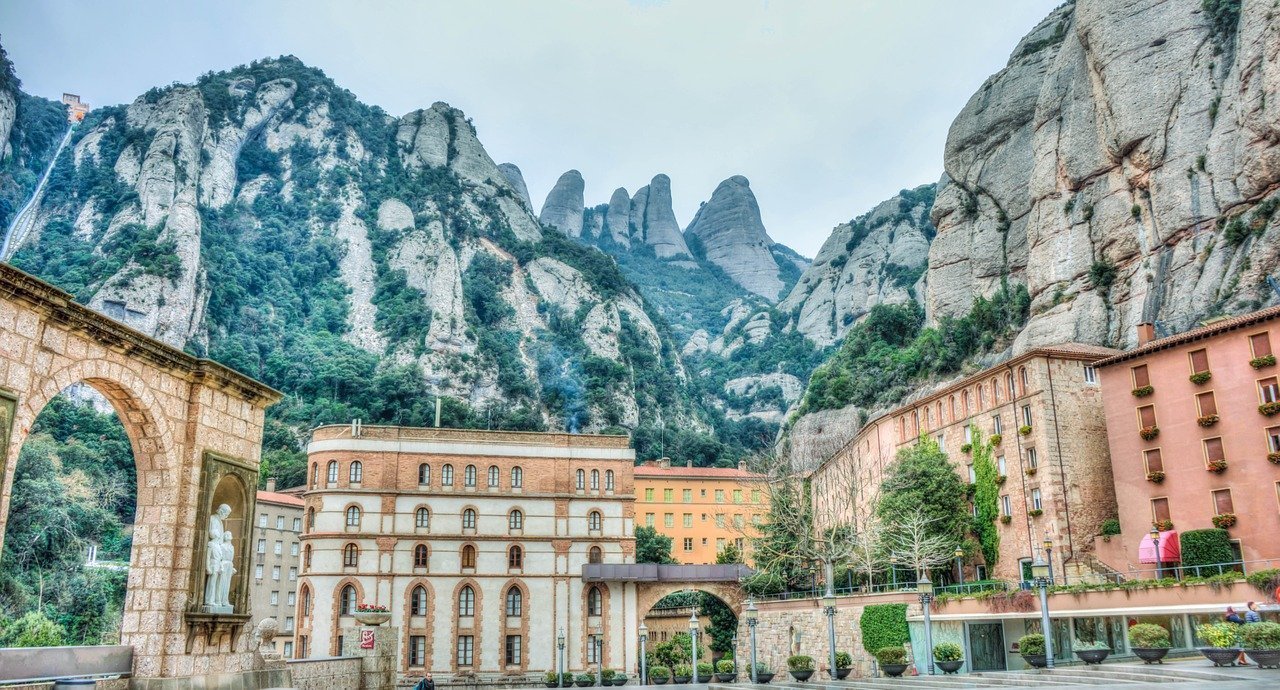
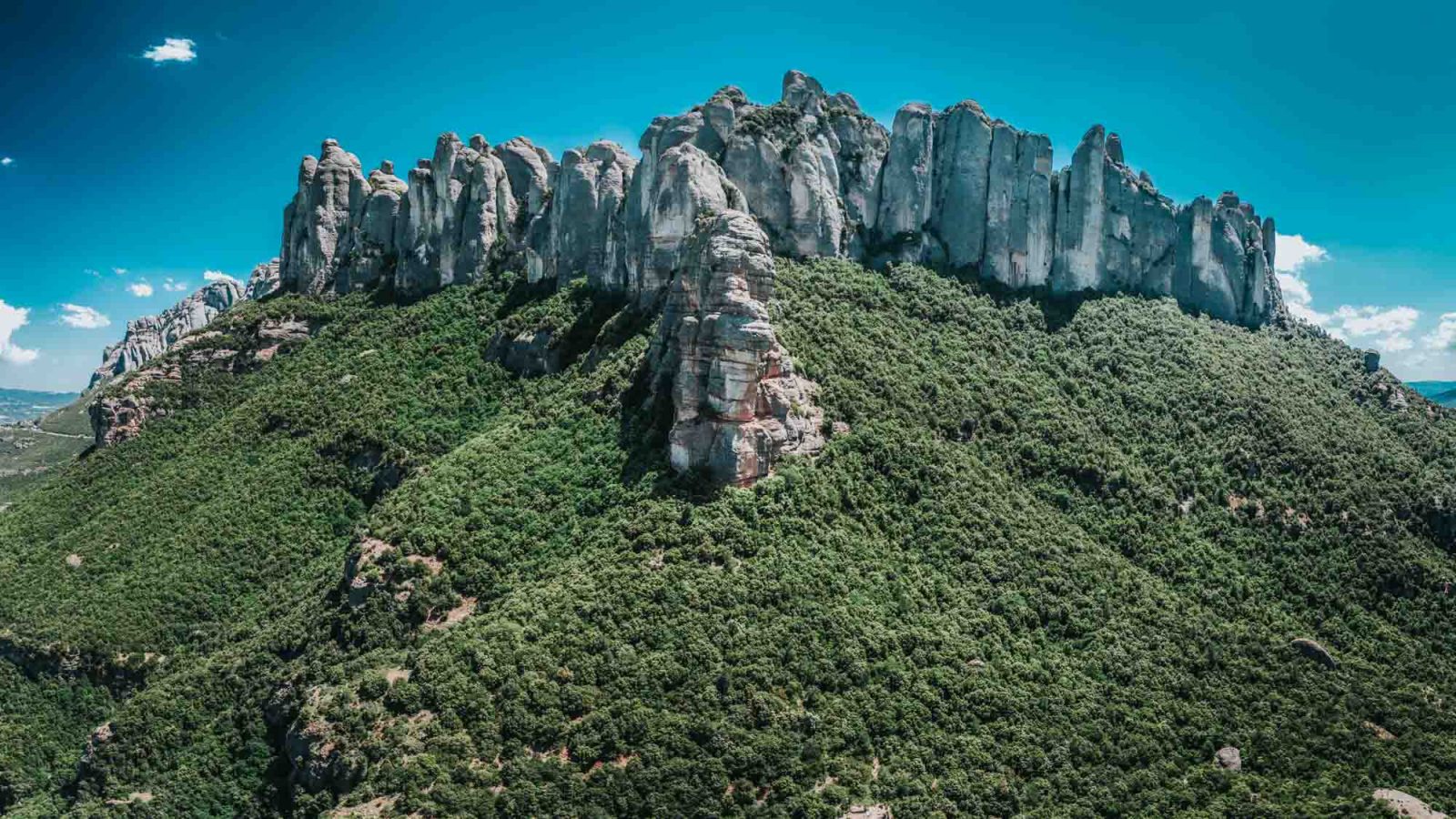
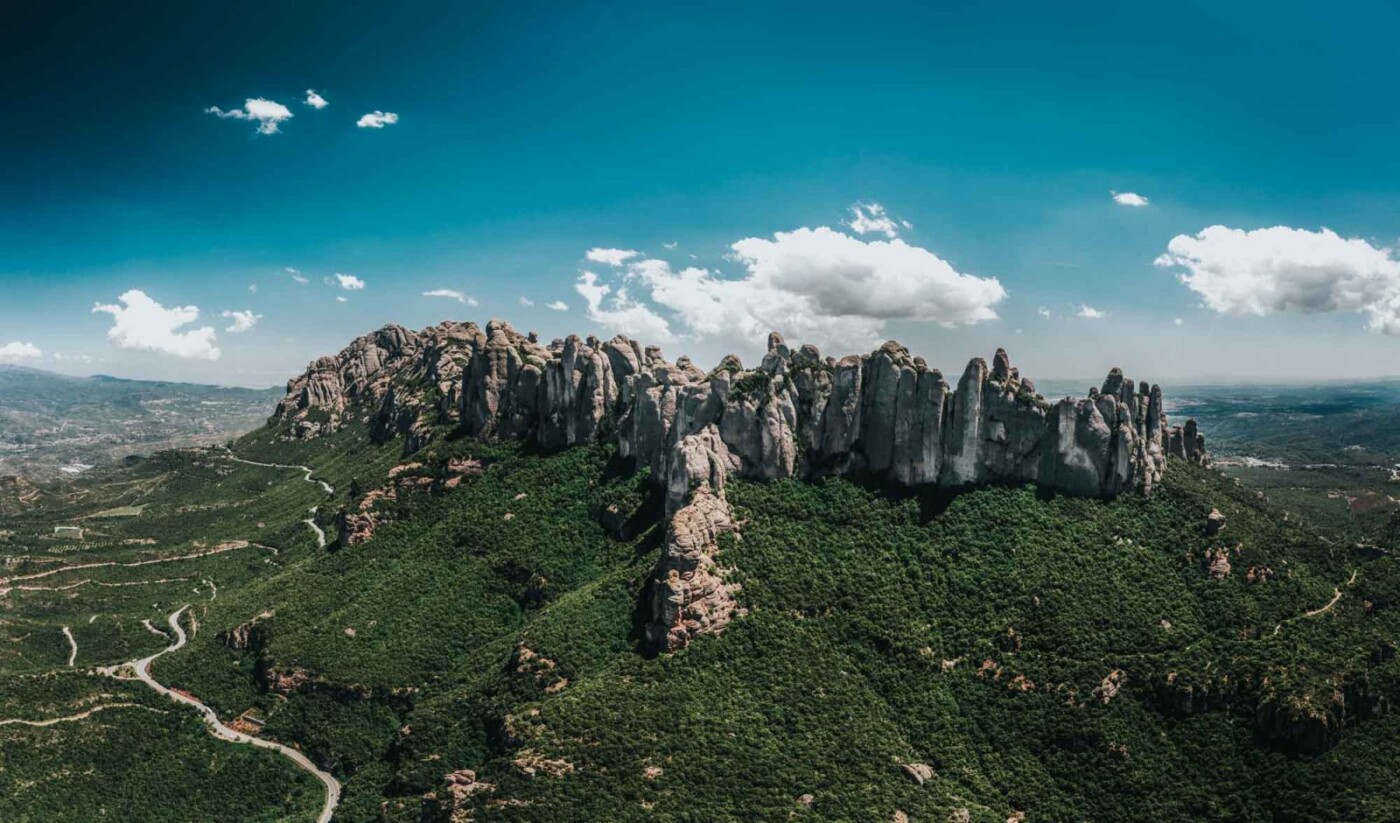
Montserrat sits in central Catalonia, roughly 60 kilometres northwest of Barcelona and 25 kilometres inland from the Mediterranean coast. The massif rises sharply out of the surrounding plain to a high point of 1,236 metres at Sant Jeroni, and the eroded conglomerate rock has weathered into hundreds of vertical pillars and rounded domes that give the mountain its name. Montserrat translates as “serrated mountain” in Catalan.
The Benedictine monastery of Santa Maria de Montserrat sits at about 720 metres on a natural shelf partway up the southern face. The monastery has been here since the year 1025 and houses the Black Madonna of Montserrat (La Moreneta), one of Spain’s most-visited Catholic pilgrimage sites and the patron saint of Catalonia.
How to Get to Montserrat from Barcelona
Four practical options connect Barcelona to Montserrat, the FGC train plus Aeri cable car or Cremallera rack railway, driving, a guided day tour, and the long-distance coach. The comparison table below lays out the trade-offs.
Barcelona to Montserrat: Transport at a Glance
| Option | Travel time | Approx. cost | Best for |
|---|---|---|---|
| FGC train + Aeri cable car | 90 minutes | €25 to €35 return | Iconic ride into the mountain with sweeping views |
| FGC train + Cremallera rack railway | 95 minutes | €25 to €35 return | Less prone to closure in high wind than the cable car |
| Drive (rental car) | 60 minutes | Rental + €7 parking | Flexibility and a scenic mountain road |
| Guided day tour from Barcelona | Full day | €55 to €90 | No logistics, pickup, return, optional winery combo |
| Long-distance coach | 90 minutes | €20 to €30 return | Cheaper than the train + cable car combination |
Drive a Rental Car
We drove out to Montserrat from Barcelona during our Catalonia trip and would do it the same way again. The drive takes about an hour each way, the mountain road up from Monistrol de Montserrat winds through pine forest with view stops, and you arrive on your own schedule rather than running on the cable car timetable. Parking at the monastery costs around €7 for the day.
A rental from Barcelona is straightforward, the main airport (BCN) and city stations have most major rental desks. Discover Cars aggregates the local rental fleet and lets you compare full-cover insurance pricing in one place.
A rental car is the most flexible way to get out to Montserrat from Barcelona, and it opens up the broader Catalonia region. Sitges, the Costa Brava, Girona, and the Penedès wine country are all within a 90-minute drive.
Discover Cars aggregates the major Spanish rental brands at Barcelona airport and the city stations. Full-cover insurance starts at a few euros per day on top of the base rate.
Train Plus Aeri Cable Car or Cremallera Rack Railway
The FGC train line R5 from Plaça Espanya in Barcelona runs every 30 to 60 minutes and takes about an hour to reach the connection station at the foot of the mountain. From there you have two options, the Aeri de Montserrat cable car swings you up to the monastery in five minutes from the Aeri station, while the Cremallera rack railway climbs the mountain on rails from the Monistrol de Montserrat station and takes about 15 minutes.


The cable car is the more iconic ride and gives the dramatic approach views; the rack railway is less prone to weather closures in high winds and rain. FGC sells a Trans Montserrat combined ticket that bundles the train, the choice of cable car or rack railway, the two on-mountain funiculars (Sant Joan and Santa Cova), and the museum.
Guided Day Tour from Barcelona
The standard half-day or full-day Montserrat tour from Barcelona handles the transport and adds a guide for the monastery, with optional combinations that pair Montserrat with a Penedès winery lunch in the afternoon. Compare tour options on GetYourGuide, the half-day tours run about four hours and the combined full-day Montserrat-plus-winery tours run seven to eight hours.


Long-Distance Coach
The coach is the budget option, round-trip fares run noticeably cheaper than the train and cable car combination, and the journey takes about 90 minutes each way from Barcelona’s Sants bus station. Bookaway aggregates the Spanish coach operators serving the Montserrat route and lets you book the return trip in advance with a printable ticket.
What to Do at Montserrat
Plan on a full day. The monastery, basilica, Black Madonna queue, museum, and at least one of the on-mountain walks fill the day comfortably between roughly 10:00 and 16:00. If you are adding the Sant Jeroni summit walk, ride the Sant Joan funicular up first thing in the morning before the midday heat builds.

Visit the Santa Maria de Montserrat Monastery
The Benedictine monastery is the cultural and architectural anchor of the site. The current complex dates mostly from the 19th and 20th centuries, the original medieval monastery was destroyed by Napoleon’s troops in 1811, but the location and the dedication to La Moreneta go back to the 11th century. The main monastery plaza is free to wander, and the monks still live and work in the cloisters on the upper terraces.


Explore the Royal Basilica
The Royal Basilica is free to enter and worth the queue. The Renaissance facade and the gilded interior are striking on their own, and the central altar leads through to the chamber housing La Moreneta. Visiting hours are typically 7:30 to 20:00 with a midday break for the noon mass, when the Escolania boys’ choir sings. Basilica hours shift seasonally and during religious festivals.


See the Black Madonna (La Moreneta)
The Black Madonna of Montserrat, known affectionately as La Moreneta, “the little dark one,” for the dark Romanesque wood of the statue, sits in a small camerin above the basilica’s main altar. Access is through a side stairway behind the main altar; the queue can run 30 to 45 minutes at peak times, and visitors are funnelled past the statue one by one. The orb in her right hand is the only part visitors can touch, and pilgrims have been doing exactly that since the 12th century.

Listen to the Escolania Boys’ Choir
The Escolania de Montserrat is one of the oldest boys’ choirs in Europe, and the school has been operating continuously since the 14th century. The choir sings at the basilica’s noon mass on most days during the school term, and also performs at vespers on certain afternoons. The performance is free, and arriving 30 minutes early gives you a chance at a seat with a clear view of the choir loft. The choir takes summer school holidays off, and performance days shift with the Catalan school calendar.
Tour the Montserrat Museum
The Museum of Montserrat sits on the lower monastery plaza and holds an unexpectedly strong art collection, works by El Greco, Caravaggio, Picasso, Dali, Monet, and Pissarro, alongside the religious art and archaeological collections you would expect from a 1,000-year-old monastery. Entry is around €8 and it takes about an hour to walk the main galleries.
Walk the Santa Cova Path
The Santa Cova (“Holy Cave”) is the spot where local shepherds reportedly found the Black Madonna statue in the 12th century, and the cave now holds a small chapel. The path follows the cliff edge for about 20 minutes from the Santa Cova funicular’s lower station, passing 15 modernist sculpture stations by Antoni Gaudi and Josep Llimona. The Santa Cova funicular runs from the main monastery plaza down to the path’s trailhead.
Sant Jeroni Summit Walk: The Montserrat Hike Guide
The Sant Jeroni summit is the highest point on Montserrat at 1,236 metres, and the walk from the upper Sant Joan funicular station to the top is the marquee hike on the mountain. The full round-trip from the upper funicular station takes 2 to 3 hours at a comfortable pace including time at the summit for photos.
Route Overview
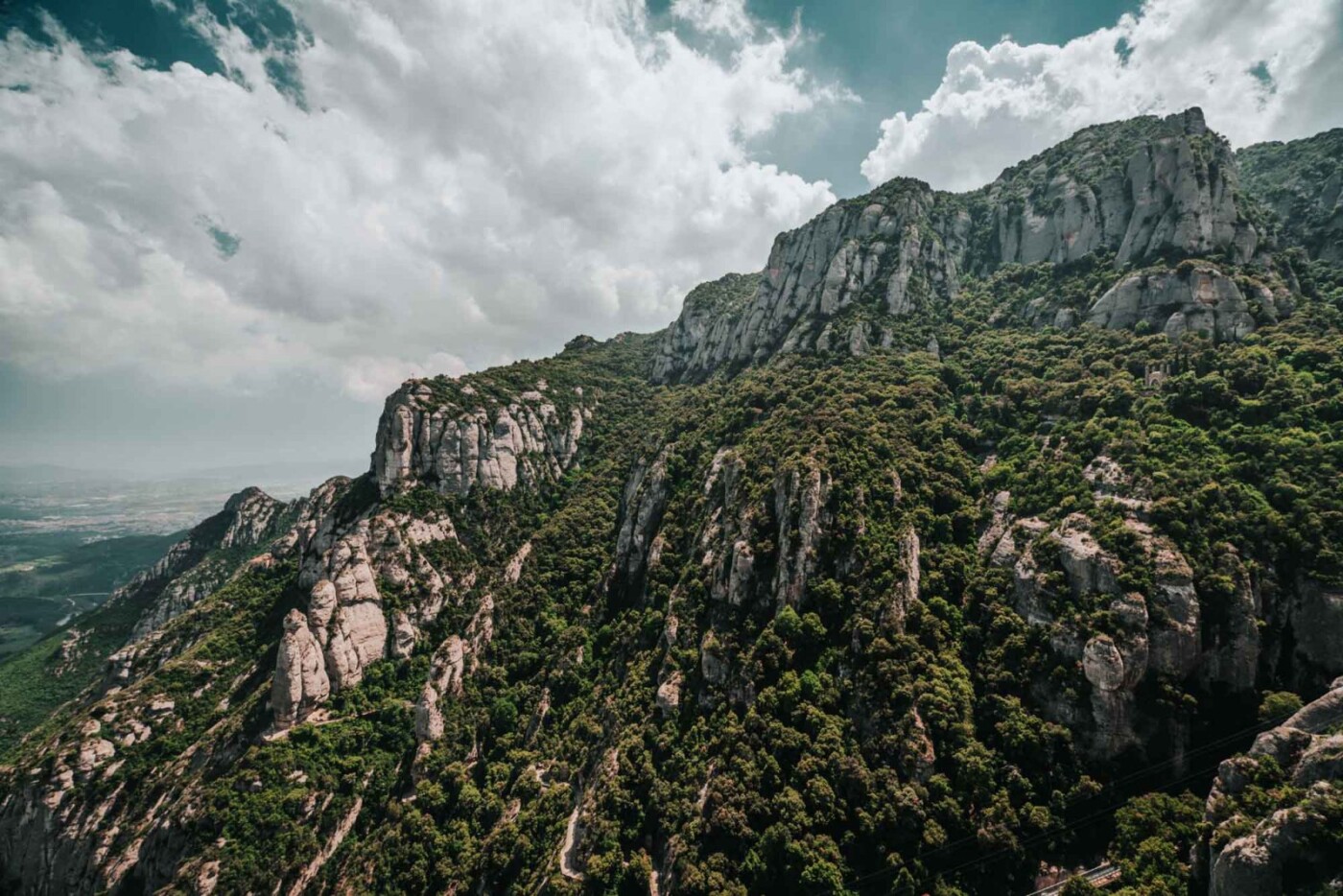
The standard route starts at the upper Sant Joan funicular station at around 1,000 metres. From the station the trail traces the spine of the massif for roughly 2 to 2.5 kilometres, climbing gradually through stone pinnacles and clearings with wide views over central Catalonia. The final approach to the summit is a stone staircase carved into the rock that brings you to a small viewing platform with a 360-degree panorama. On clear days the view stretches to the Pyrenees in the north and the Mediterranean coast to the southeast.

Difficulty Rating, Distance, and Time
The walk is moderately difficult. From the upper Sant Joan funicular station the round-trip is roughly 4 to 5 kilometres with about 250 metres of vertical gain, and casual hikers complete it in 2 to 3 hours including time at the summit. The trail surface is dirt and rock, the gradients are mostly gentle, and the only properly steep section is the final staircase to the summit platform.
The longer route from the monastery floor at 720 metres adds roughly 350 metres of climbing on the way up via either the Sant Joan funicular path or the steeper direct trail. That version turns the round-trip into 4 to 5 hours of hiking with about 600 metres of total vertical gain, a more serious effort for hikers who want the full mountain rather than the funicular-assisted version.
What to Wear and Pack for the Hike
Hiking shoes or trail runners with grip are the main requirement, the rocky sections, especially the summit staircase, are loose and uneven and trainers slip. Pack 1.5 litres of water per person in summer and a packed lunch or snacks (there is no food at the summit and the funicular station kiosk is basic), plus sunscreen and a sunhat for the exposed upper section of the trail.
Catalonia summer temperatures regularly hit the mid-30s Celsius, and the upper sections of the trail have little shade, start the walk before 10:00 in July and August. In winter the summit can drop below freezing and high winds occasionally close the Aeri cable car; a light insulating layer and a windproof shell handle the cold and wind on the summit platform.


Safety Notes
Montserrat is a popular and well-marked hike but it is still a mountain. The summit platform has unprotected drops on three sides, and the rock is slippery when wet, give yourself a grip margin in the final 50 metres and keep small children well back from the edge. Trail markers are good but a paper map or a GPX track on your phone is a sensible backup. Mobile coverage is patchy on the upper trail.
Travel insurance is worth carrying for the Catalonia trip in general and the hike specifically. SafetyWing offers nomad-friendly cover with simple online sign-up and works for short stays in Spain.
Where to Eat at Montserrat
Three meal options exist on the mountain, the monastery’s mid-range buffet at Restaurant Abat Cisneros, the cafeteria style spots in the lower plaza, and bringing a picnic. The comparison below lays out the practical choice for a day visit.
Montserrat Eating Options at a Glance
| Option | What to expect | Best for |
|---|---|---|
| Restaurant Abat Cisneros (monastery hotel) | Sit-down Catalan buffet and à la carte, ~€25 to €35 per person | A proper lunch with table service |
| Self-service cafeteria on the plaza | Quick hot dishes, sandwiches, salads, ~€10 to €15 per person | A fast lunch between activities |
| Take-away kiosks at the funicular stations | Sandwiches, pastries, coffee, ~€5 to €10 per person | Coffee and a snack between rides |
| Pack a picnic | Bring from Barcelona, sandwiches, fruit, water | Sant Jeroni summit lunch with a view |
The practical recommendation: pack a picnic for the Sant Jeroni summit if you want to eat with a view. Book Restaurant Abat Cisneros at the monastery if you want a sit-down meal with the rest of the day spent in the basilica and museum. The cafeteria options are functional rather than memorable.
Best Time to Visit Montserrat
Montserrat is open year-round and each season has its own character. April through early June and September through October are the sweet spots, shoulder season warmth and clear skies, comfortable hiking temperatures, and fewer of the mass tour buses that arrive on summer weekends. July and August are hot and crowded but viable if you arrive early and start the Sant Jeroni walk before 10:00. November through March is colder and quieter, with occasional snow on the upper trail and shorter daylight hours.
Crowd-Avoidance Tips
Spanish public holiday weekends are the worst time to visit. La Diada (11 September), All Saints’ Day (1 November), and the Easter long weekend bring family pilgrim traffic on top of the regular tour-bus inflow. Sundays in summer are also notably busier than weekdays. The best timing pattern is a weekday in shoulder season, arriving on the first train or driving to be at the monastery by 09:30, doing the Sant Jeroni walk in the morning, and being back at the monastery for the noon choir performance ahead of the lunch rush.
Frequently Asked Questions About Montserrat Barcelona
Is the Montserrat hike difficult?
The Sant Jeroni summit walk is moderately difficult, about 4 to 5 km round-trip with around 250 metres of elevation gain from the upper Sant Joan funicular station, taking 2 to 3 hours. Casual hikers complete it without trouble. Some sections have rocky steps. The longer route from the monastery floor adds significant elevation and difficulty.
How long does the Sant Jeroni hike take?
Allow 2 to 3 hours round-trip from the upper Sant Joan funicular station to the Sant Jeroni summit and back at a comfortable pace, including time at the summit for photos. Adding the funicular ride up and down extends the total Montserrat hike experience to about 4 to 5 hours of mountain time.
Can you visit Montserrat without a tour?
Yes. The FGC train from Barcelona’s Plaça Espanya, plus the Aeri cable car or Cremallera rack railway, makes Montserrat fully accessible as an independent day trip. A rental car is also an option and we drove during our Catalonia visit. Guided tours add a guide and remove the logistics, but they are not necessary to visit.
How do you get from Barcelona to Montserrat?
Four main options: (1) FGC train from Plaça Espanya plus Aeri cable car or Cremallera rack railway, around 90 minutes total. (2) Driving from Barcelona, around 1 hour. (3) Guided day tour from Barcelona, half-day Montserrat-only or full-day Montserrat-plus-winery combinations. (4) Long-distance coach via the Sants bus station, around 90 minutes.
Is Montserrat worth visiting from Barcelona?
Yes. Montserrat is the most-recommended day trip from Barcelona, combining a dramatic serrated-rock mountain landscape with the Benedictine monastery, the Royal Basilica, and the Black Madonna pilgrimage history, accessible in 60 to 90 minutes from the city. The Sant Jeroni summit walk adds a strong hike on top of the cultural visit.
How much time do you need at Montserrat?
A full day is comfortable. Most visitors do the monastery, basilica, and Black Madonna in 3 to 4 hours. Adding the Sant Jeroni summit walk via the Sant Joan funicular extends the day to a full visit. Half-day tours from Barcelona compress the cultural visit but skip the hike.
What is the Black Madonna of Montserrat?
The Black Madonna of Montserrat, known locally as La Moreneta, is a 12th-century Romanesque carved-wood statue of the Virgin Mary holding the Christ child, named for the dark wood from which it is carved. The statue is housed in a small chamber above the main altar of the Royal Basilica and is one of Spain’s most-visited Catholic pilgrimage sites, with the orb in her right hand worn smooth by 900 years of pilgrim touches.
When does the Montserrat boys’ choir sing?
The Escolania de Montserrat boys’ choir typically sings at the basilica’s noon mass on most days during the school term, with additional vespers on certain afternoons. The school takes summer and holiday breaks, so performance days shift with the Catalan school calendar.
Final Thoughts on Visiting Montserrat
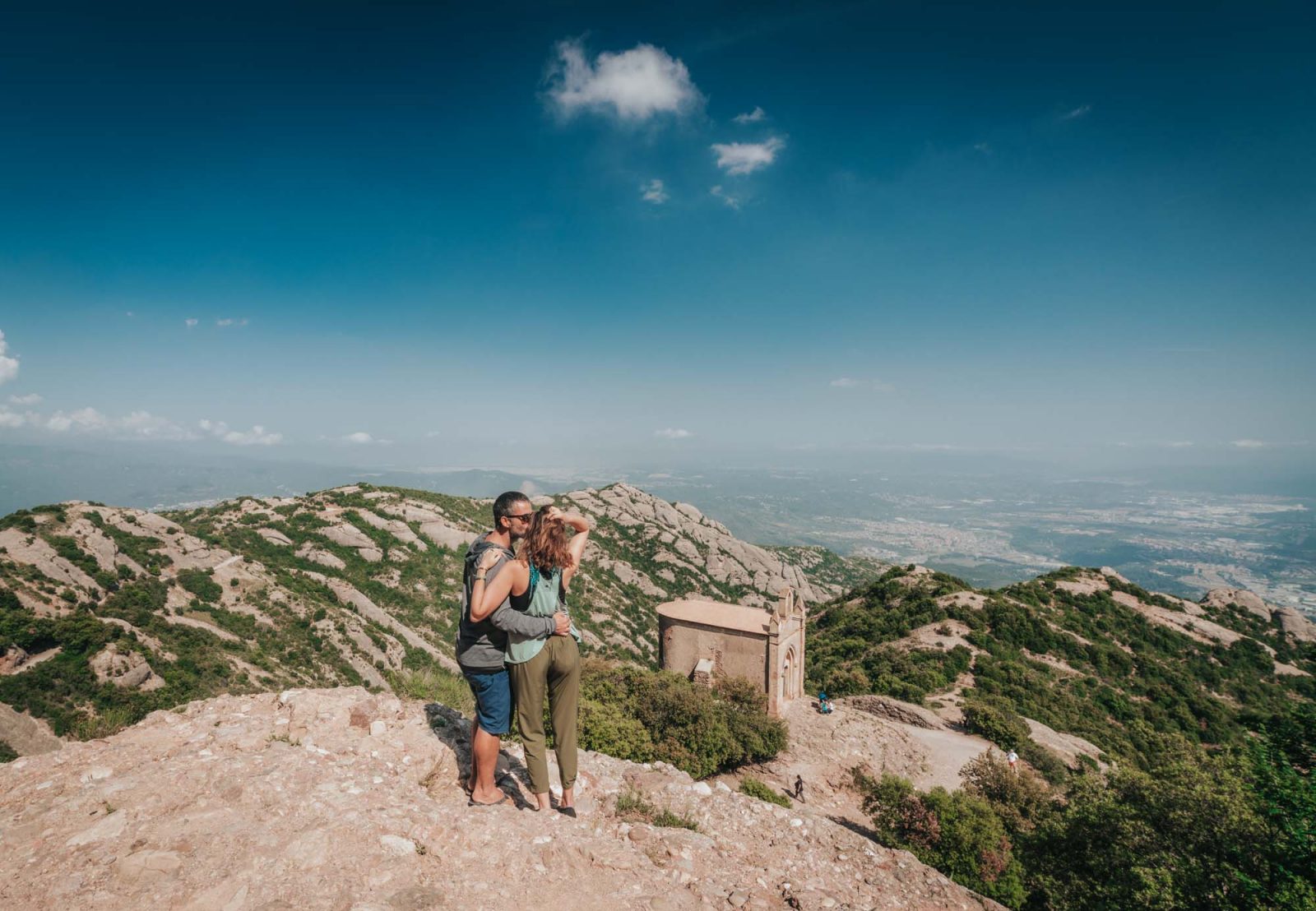
Of every day trip we did from Barcelona during the Catalonia trip, Montserrat was the standout. Max would do the Sant Jeroni walk again the next day. The combination of the mountain, the monastery, and the summit walk packs a remarkable amount into a single day, the kind of visit that works as a cultural pilgrimage, a hike, or both. The drive up the mountain road is part of the experience, and we would rent a car again rather than running on the cable car timetable.
READ NEXT: the broader Barcelona day trips guide ranks Montserrat as the standout pick and gives the practical comparison against Sitges, Girona, and the Costa Brava beaches. The Costa Brava beaches guide covers the coast north of Barcelona, including Cala Sa Tuna and Aigua Blava. For mobile data across the Spanish leg, the European eSIM guide covers the easy way to handle the EU.
Have you climbed Sant Jeroni at sunrise, or planned a Montserrat day around the choir mass? Drop a note in the comments and let us know how the day shaped up. Buen viaje from the DTT team.

Leave a Reply