
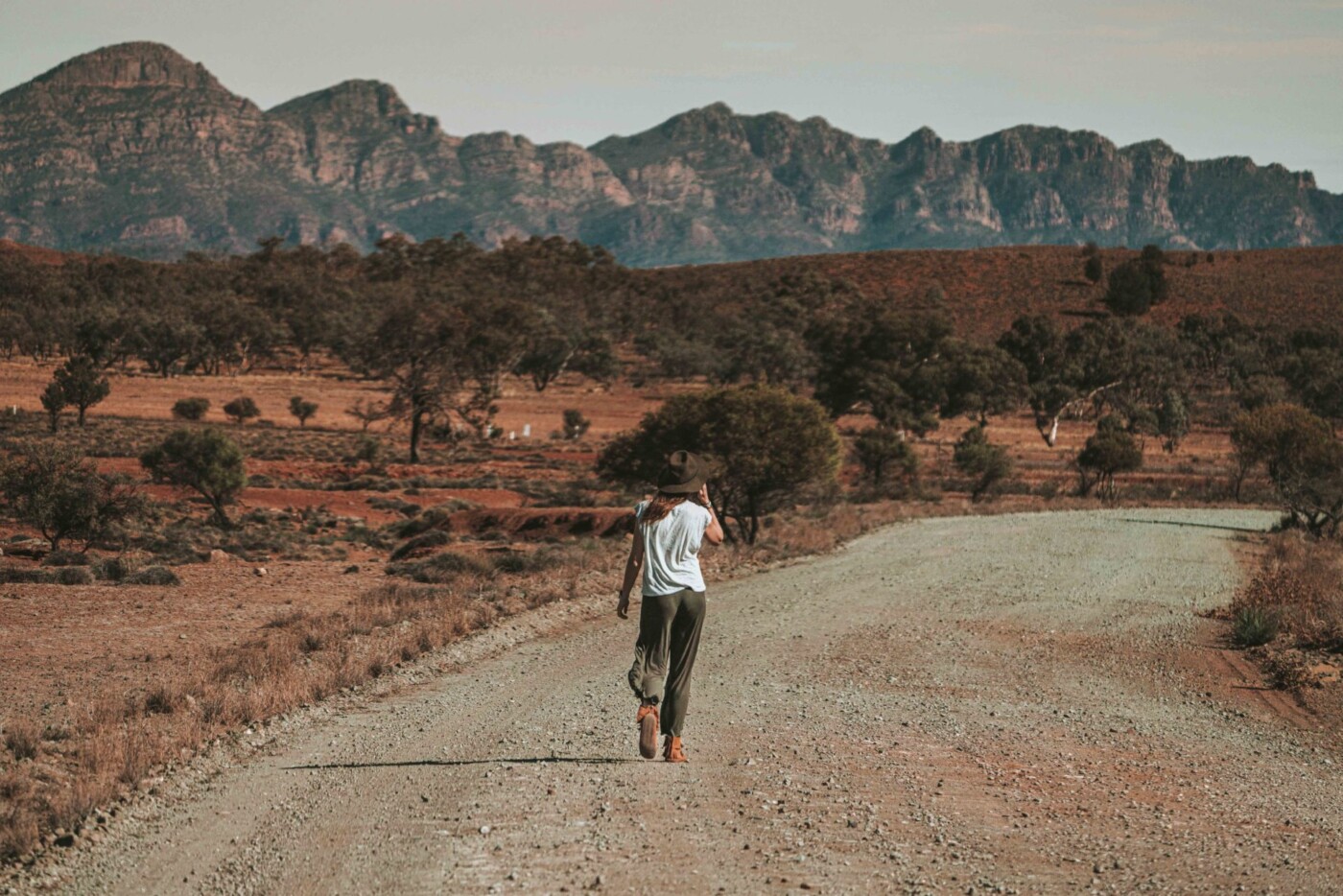
The Flinders Ranges are the largest mountain range in Australia and one of South Australia’s iconic destinations. Along with rugged cliffs and peaceful tree-lined gorges, the area carries a rich cultural heritage dating back thousands of years. Ikara-Flinders Ranges National Park spans 95,000 hectares and begins 400 km north of Adelaide in South Australia. The ancient mountains began forming 800 million years ago and have been home to the Adnyamathanha people for centuries. Today, the park acts as a hotspot for outdoor activities and welcomes park visitors from across the globe.
*This post may contain affiliate links, as a result, we may receive a small commission (at no extra cost to you) on any bookings/purchases you make through the links in this post. As an Amazon Associate, we earn from qualifying purchases. Read our full disclosure
Flinders Ranges National Park has endless mountain landscapes with cliffs and gorges rich with native wildlife and impressive geological features. It’s a popular destination for bushwalking, mountain biking, camping, and photography. After spending a week exploring the Flinders Ranges, we wanted to share the highlights of our experience with others. Below, you’ll find everything you need to know about visiting the park and all of the amazing things to do in Flinders Ranges.
Traveling Soon? Here is a list of our favourite travel providers and accessories to help get you ready for your upcoming trip!
Essential Travel Info For Visiting Flinders Ranges National Park
What Is The Best Time To Visit Flinders Ranges?
The ideal time to visit Flinders Ranges is during the cooler months, from April to October. The temperatures are mild and make for a comfortable bushwalking experience. Meanwhile, the summer months are no stranger to hot weather in this part of South Australia, with temperatures soaring above 40°C. As a result, many of the longer walking trails are closed from December to February or have limited operating hours.
How To Get To The Flinders Ranges
The Flinders Ranges are 500 km north of Adelaide, with two main route options. Whether you come through Port Augusta or Orroroo, the drive from Adelaide to Flinders Ranges takes about 5 hours. If you want to shave off some driving time or if you’re coming from elsewhere, you can take a flight to Port Augusta. Then it’s just a 2-hour drive to the park entrance at Wilpena. Please note that most of the park’s spectacular tourist attractions are easily accessible with a 2WD. However, a 4WD will allow you to explore the park without worry, even in the wet season. All things aside, you do not need a 4WD to explore Flinders Ranges National Park.
Park Fees & Other Costs
Vehicle entry fees are $11 per car or $9 with a valid concession. Note that camping fees are in addition to your vehicle entrance fee. If you’re exploring South Australia and plan to visit other national parks in the area like Coffin Bay or Lincoln National Park, consider a multi-park pass. Multi-park passes are $44 for 2 months or $99 for 12 months and can be purchased here. And don’t forget, you do need a park pass to enter the national park. The $11 entrance fee covers your day pass and if you’re camping, you only need to pay this entrance fee once. You can purchase your entry pass here.
Where To Stay In The Flinders Ranges National Park
Flinders Ranges National Park has 10 Park campgrounds and one privately owned campground at Wilpena Pound Resort. The national park sites are scattered throughout the park with limited facilities like drop toilets and fire pits. Meanwhile, Wilpena Pound Resort offers a range of accommodation options along with showers, laundry facilities, and more.
Wilpena Pound Resort
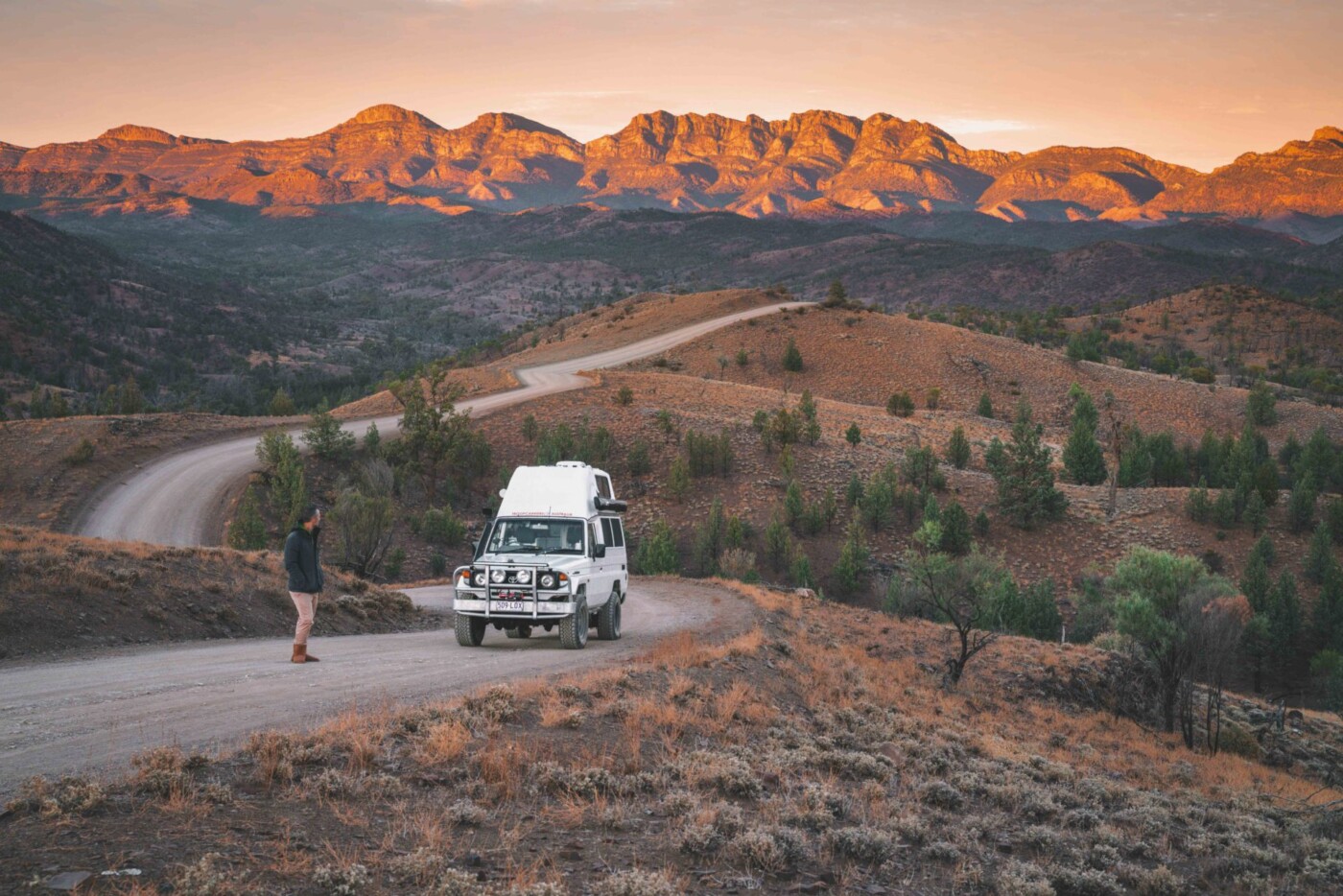
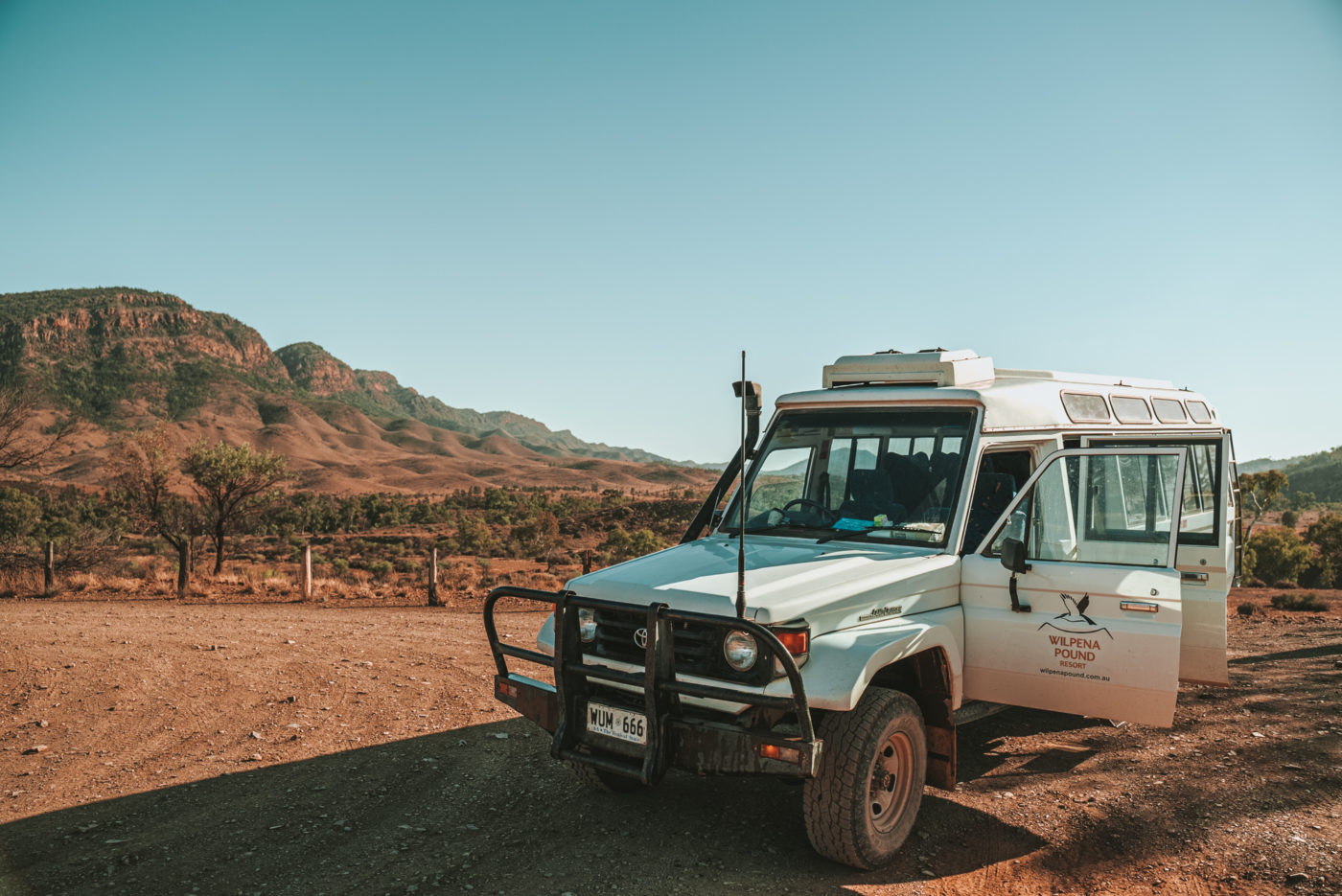
Located directly in Ikara-Flinders Ranges National Park, Wilpena Pound Resort is a rugged outback escape. The resort is situated near Wilpena Pound, a vast amphitheatre called Ikara by the local Aboriginal people. Wilpena Pound Resort is a sustainable resort lined with native pines and has 60 hotel rooms, 15 glamping safari tents, and over 300 campsites. During our visit, we spent 3 nights in our campervan, Tilly, at one of the bush campsites at Wilpena Pound and 2 nights indulging in some Flinders Ranges glamping.
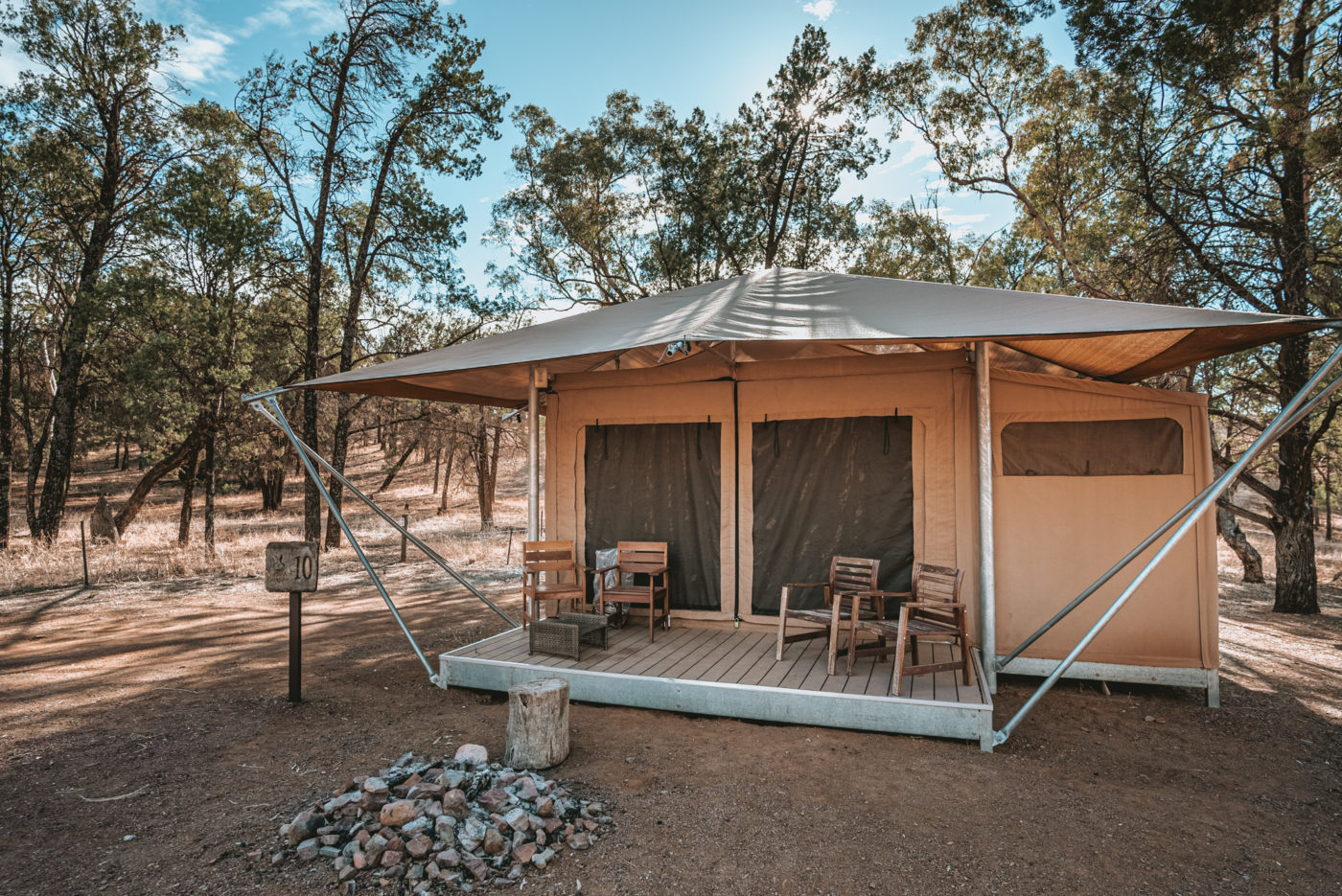
The Ikara glamping safari tents are perfect for couples and feel like total outback luxury. Each tent has a king-size bed, bathroom, private deck, and even air conditioning/heating! Safari tent rates start at $310 per night. Unpowered campsites at Wilpena Pound Campground start at $14 per night and powered sites at $25. Their resort-style rooms have beautiful views and modern styling starting at $193 per night. The facilities on site include to all conveniences like showers, laundry, a swimming pool, a general store, and even a restaurant. Wilpena Pound is also home to the National Park Visitor Information Centre where you can get maps, reserve camping, and book tours. It’s run by local Aboriginal guides who are super knowledgeable and happy to share their excellent park recommendations.
Park Campgrounds
- Aroona Campground, located at the northern tip of the park, has 13 campsites with close access to great bushwalking trails. The campground is on Aroona Creek and is surrounded by rugged mountain landscapes. Drop toilets are the only facility. Camping is $16.50 per night and can be booked online.
- Dingley Dell Campground is nestled along the banks of Oraparinna Creek and offers 7 camping spots with stunning cliff views. The campsites are set right on the river red gum-lined creek and are suitable for tents, caravans, and camper trailers. Dingley Dell is also close to the Perawurtina Cultural Heritage site, where you can check out the incredible Adnyamathanha rock carvings. Camping is $16.50 per night and can be booked online.
- Koolamon Campground is located at the base of the ABC mountain range. This spectacular scenery is what inspired artist Sir Hans Heysen to paint his famous arid landscapes of the Flinders Ranges. There are 6 sites for two-wheel drive vehicles and 8 sites surrounded by river red gums for 4WD. Camping is $16.50 per night and can be booked online.
Rawnsley Park Station
Rawnsley Park, near Wilpena Pound in the southern part of the Flinders Ranges, offers diverse accommodation options. With 43 rooms ranging from Caravan Park to Eco-Luxury Villas featuring king-size beds, bathtubs, and over-bed skylights, ideal for a luxurious outback experience, especially for couples. On-site amenities include three outdoor pools, a restaurant, and a bar/lounge. Each apartment comes equipped with a flat-screen TV, satellite channels, and a kitchen with a fridge, stovetop, and microwave, also Free WiFi in public areas and complimentary self-parking are provided. The facilities also include a seasonal outdoor pool, laundry services, and tour/ticket assistance.
How To Spend A Few Days In Ikara-Flinders Ranges National Park
From scenic flights to cultural tours to four-wheel driving, the Flinders Ranges are a wonderland for outdoor adventure. Here are our top picks for spending a few days in Ikara-Flinders Ranges National Park.
Things To Do In Ikara-Flinders Ranges National Park
Hikes
St Mary Peak Hike/Tanderra Saddle Hike
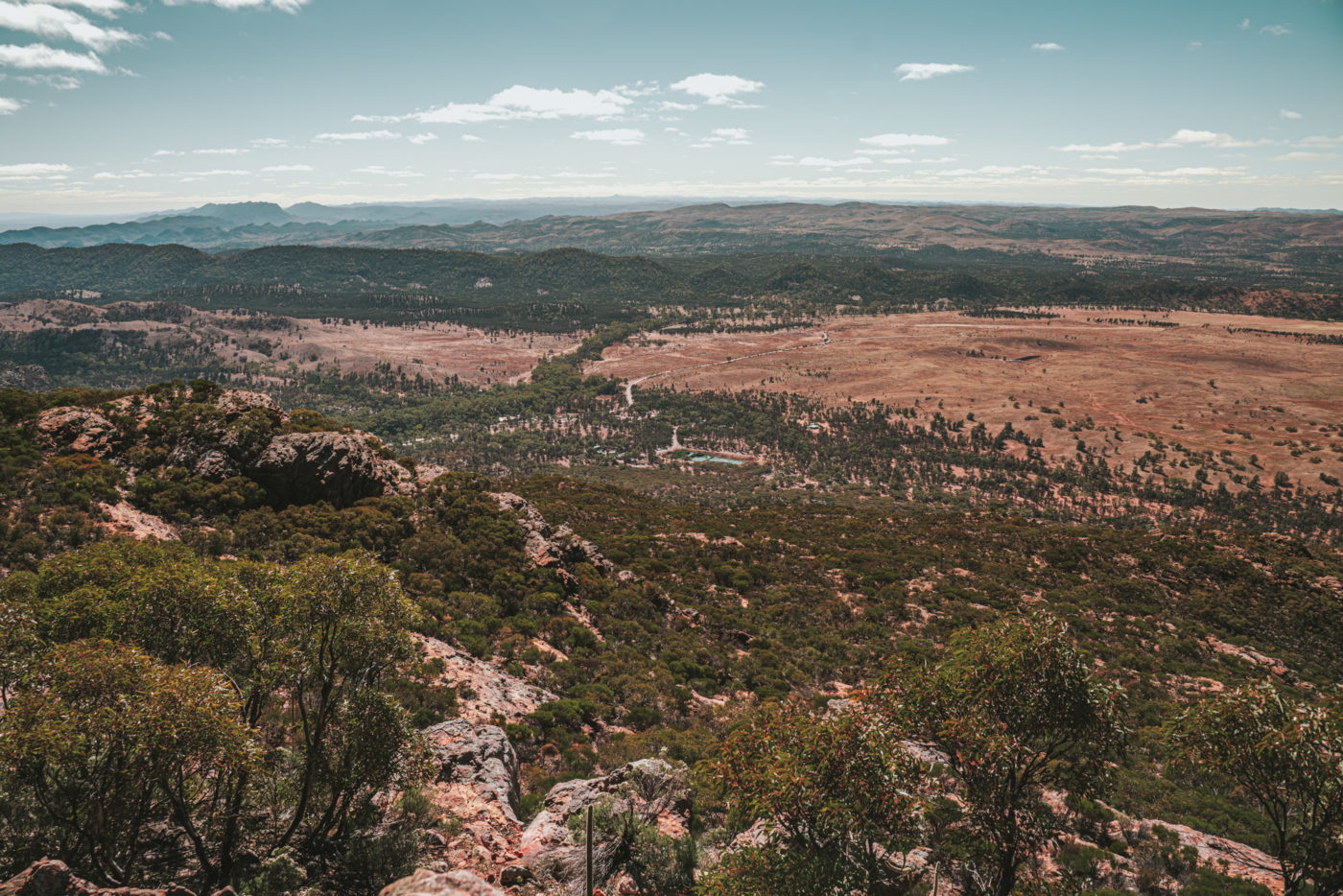
St Mary Peak is the highest peak in the Flinders Ranges sitting 1,171 m above sea level. The peak, however, is at the heart of the Adnyamathanha Dreaming creation story, so the Aboriginal people kindly ask that hikers refrain from sumitting the peak and make Tanderra Saddle their destination instead. From Tanderra Saddle, hikers will be treated to spectacular panoramic views of the mountain range. Please note that for public safety reasons, the loop route (inside and outside trails) will be closed until March 1, 2024, you can always check the details here.
Mount Ohlssen Bagge Hike
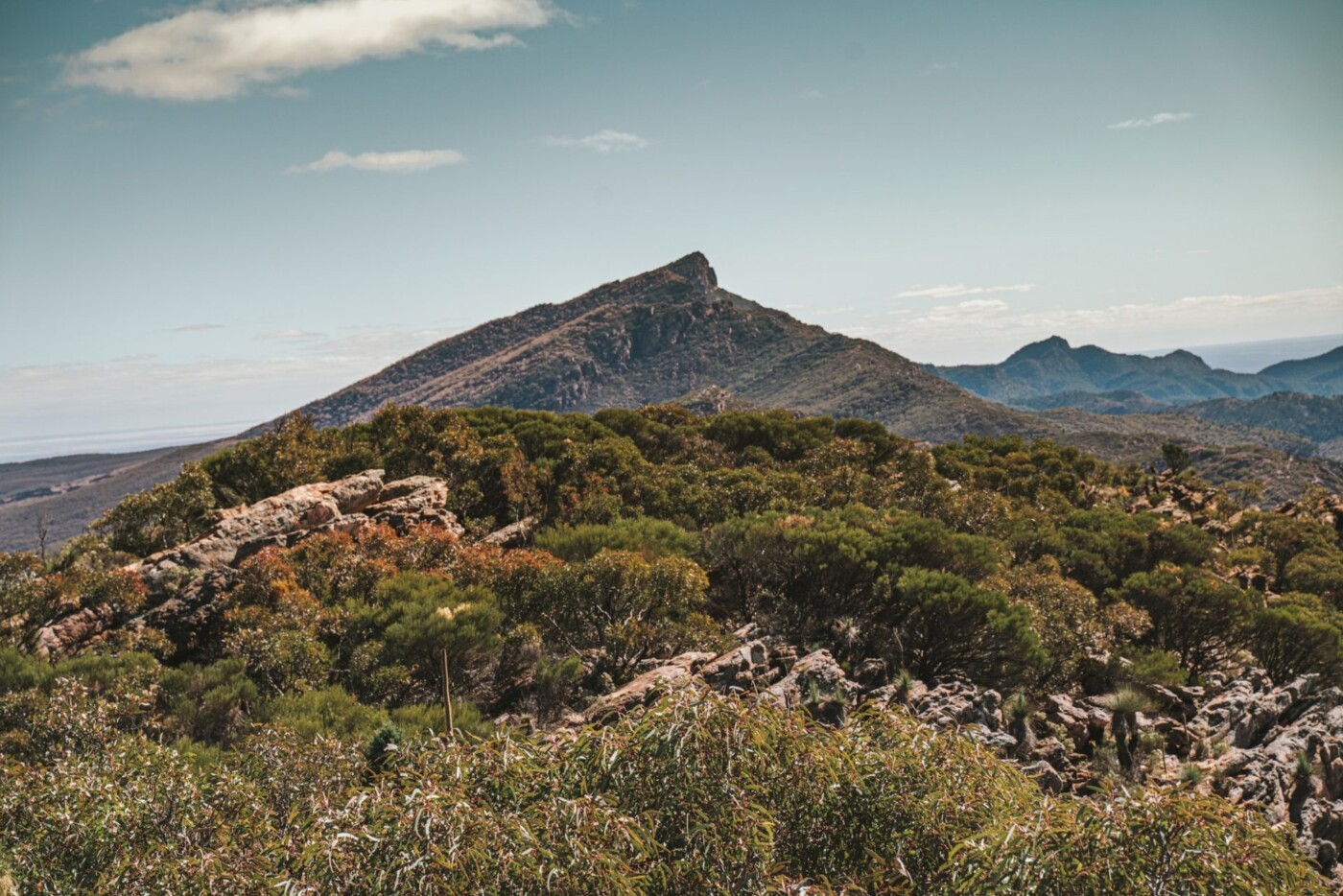
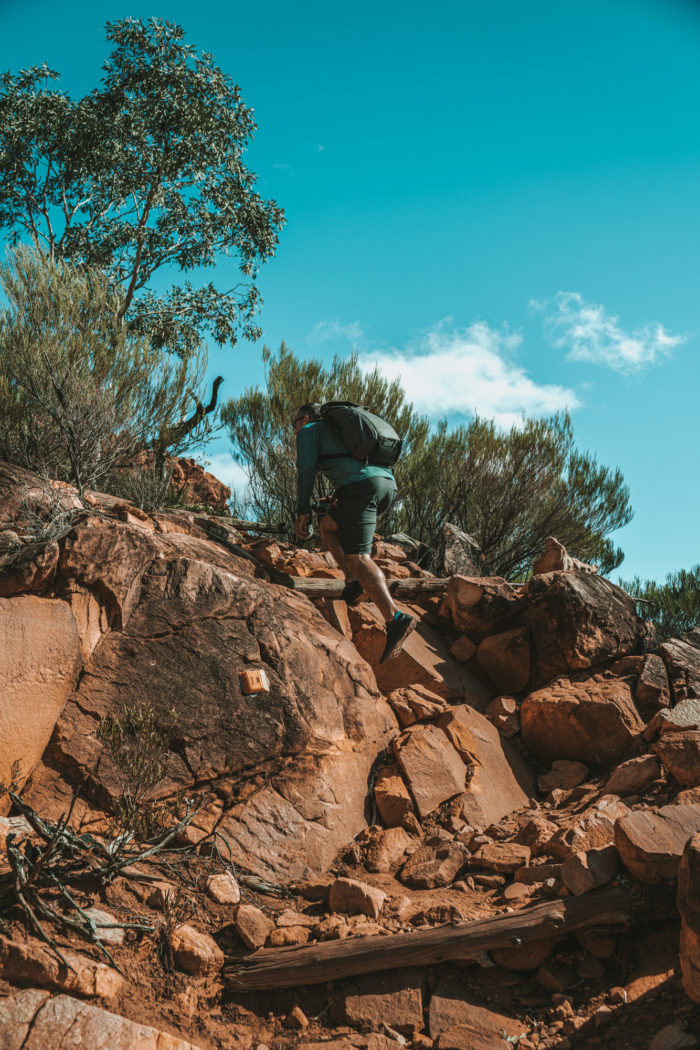
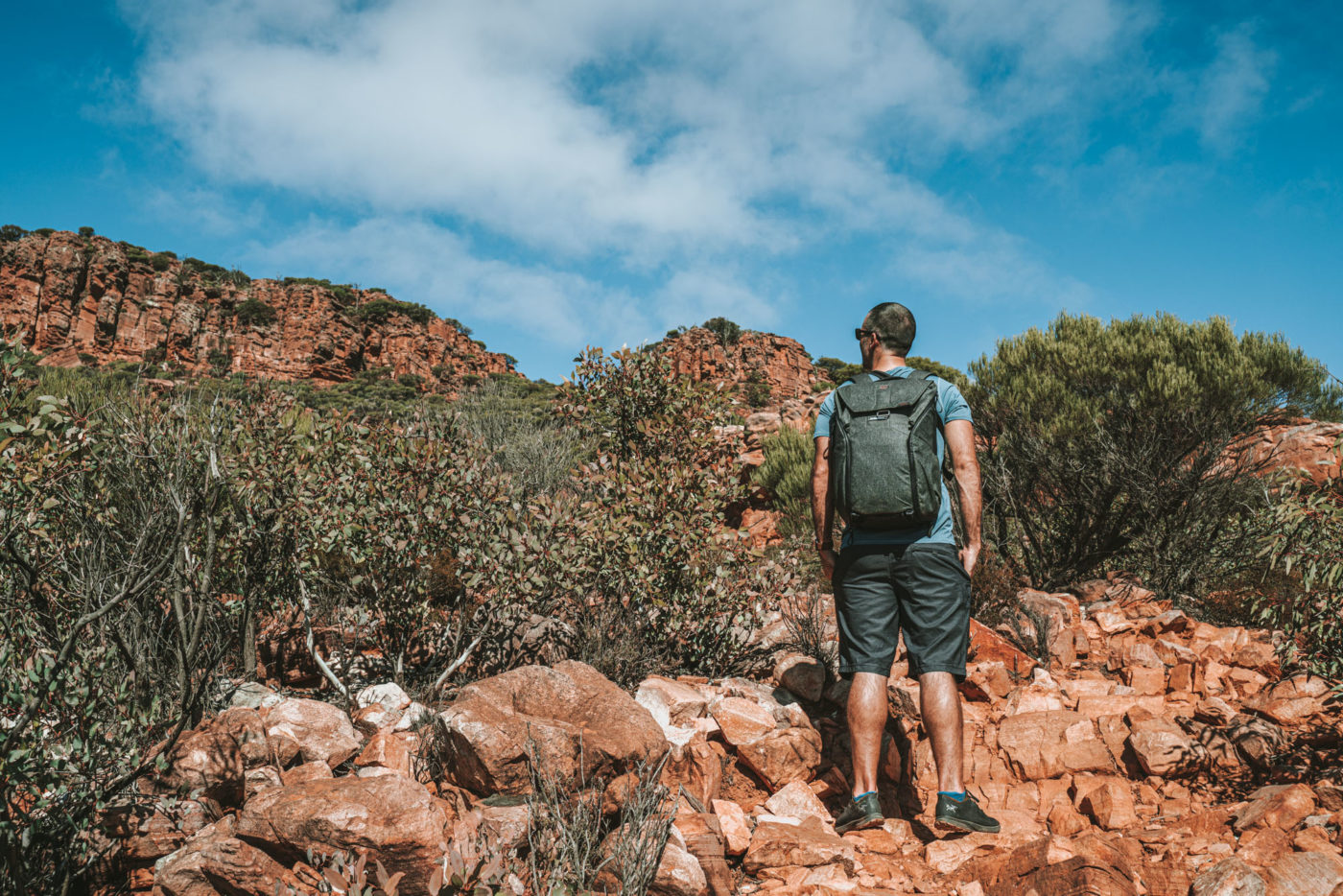
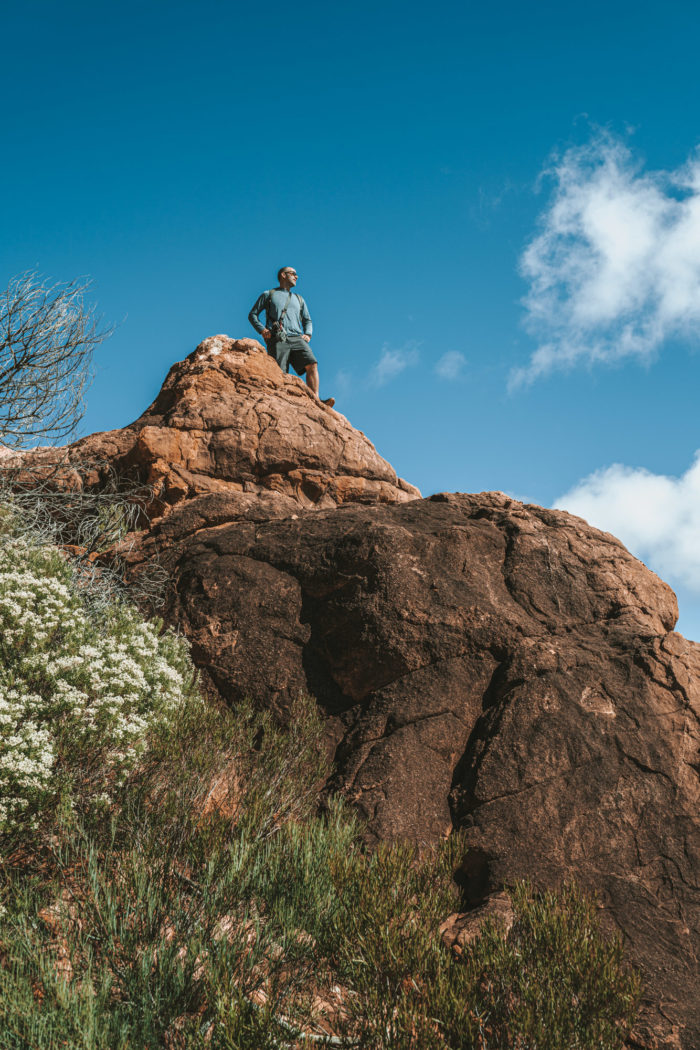
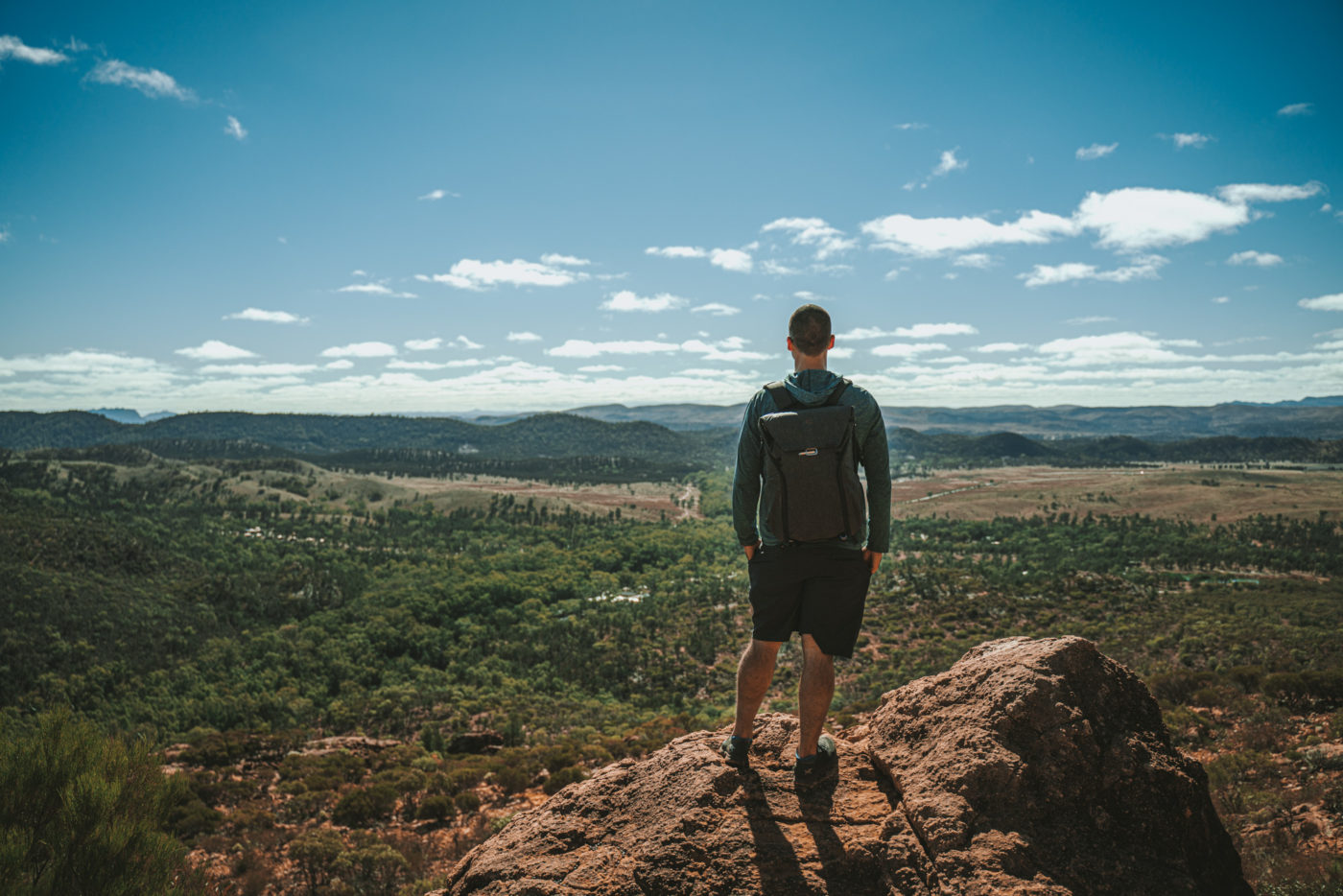
Spend an afternoon traversing steep slopes dotted with reptiles and wildlife on this beautiful The Flinders Ranges hike. The track to Mt Ohlssen Bagge is 6.4 km and takes about 4 hours to complete. From the top, you’ll be rewarded with stunning views of the Wilpena Pound and the surrounding mountains. Unfortunately, the route will also be closed until March 1, 2024, for everyone’s safety. Nonetheless, this was our favourite hike of them all and one we highly recommend!
Drought Busters Hike/Boom and Bust Hike
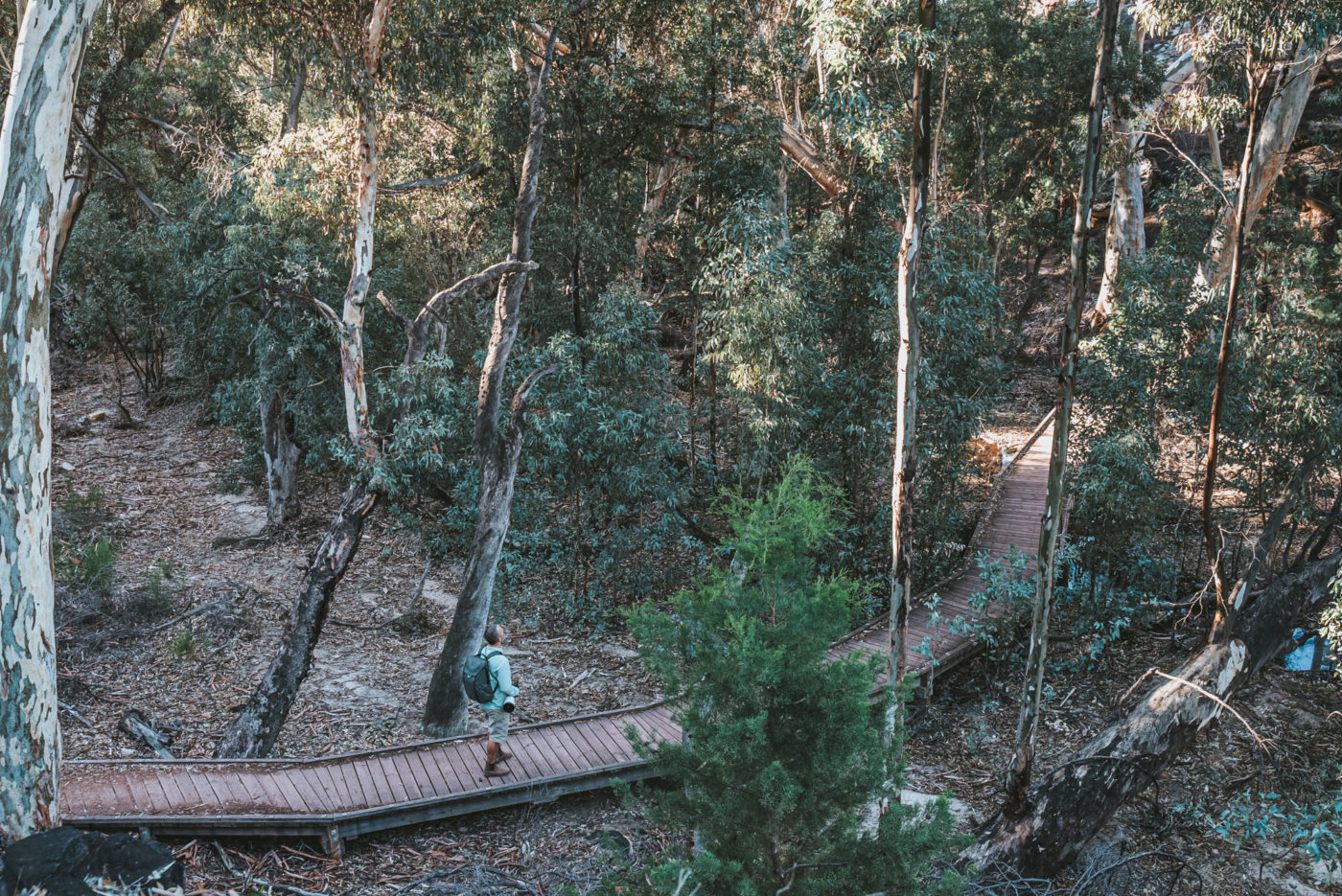
This easy 2 km loop trail gives you an opportunity to admire the unique vegetation in this semi-arid zone. The hike is moderately difficult and winds through bush plants and wildflowers that have adapted to drought conditions.
Wangara Lookout Hike
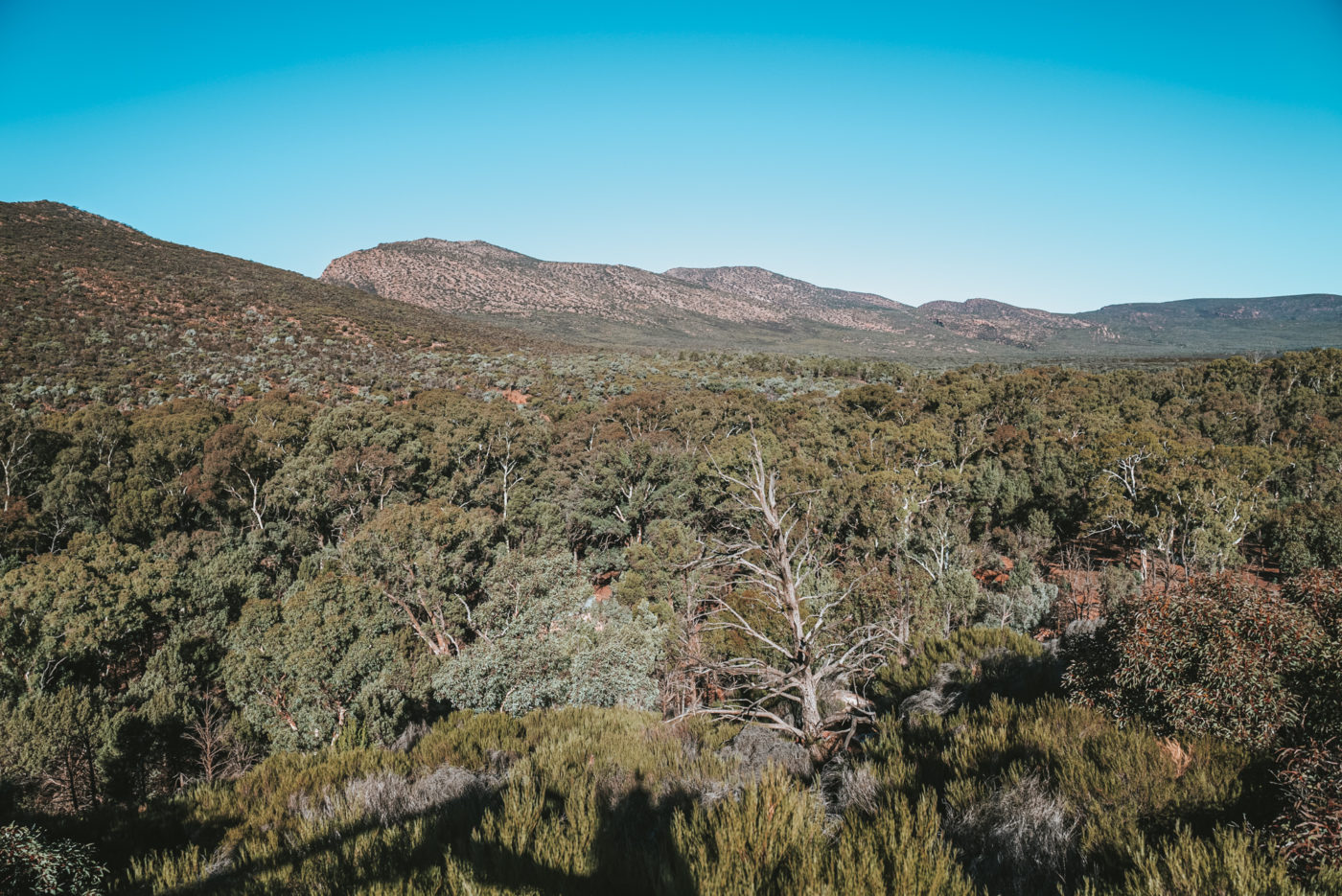
This easy scenic 6.6 km trail inside Wilpena Pound takes about 2 hours and offers gorgeous views over Ikara and Wilpena Pound. The trail includes the Hills Homestead Walk, and continues 300 m after Hills Homestead for the lower lookout and an additional 300 m to the upper lookout. For a map of all hiking trails in Flinders Ranges National Park, click here.

Cultural Tours
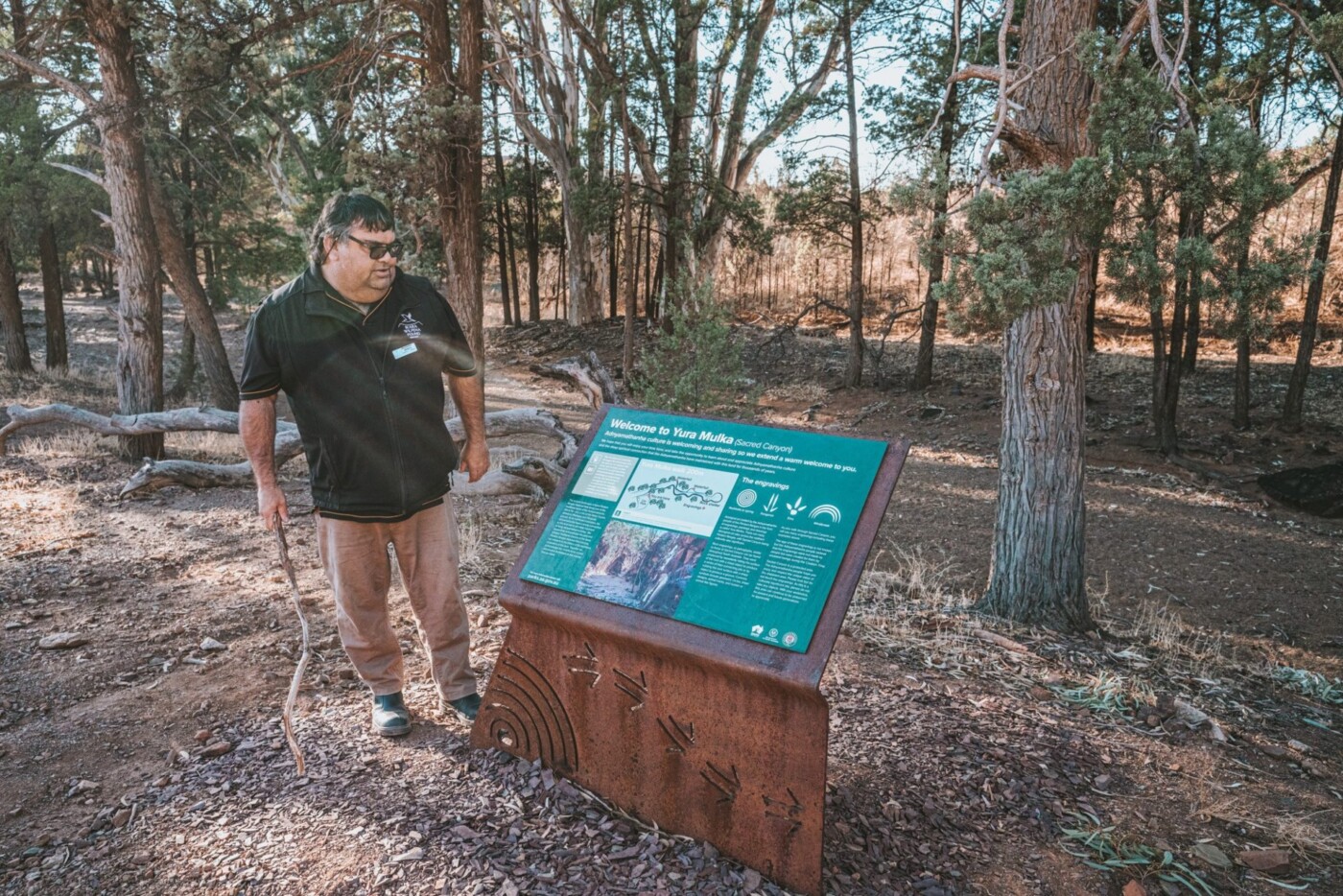
The Flinders Ranges have strong cultural significance to the Adnyamathanha people who have lived in the area for tens of thousands of years. To learn more about the Flinders Ranges from local Aboriginal guides, we highly recommend that you book a cultural tour through Wilpena Pound Resort. The Aboriginal guides, Mick and Jimmy, who we met during our time at Wilpena, were wonderful storytellers who allowed us to immerse ourselves in the history of the Flinders Ranges and get an insight into their culture.
Sacred Canyon Tour
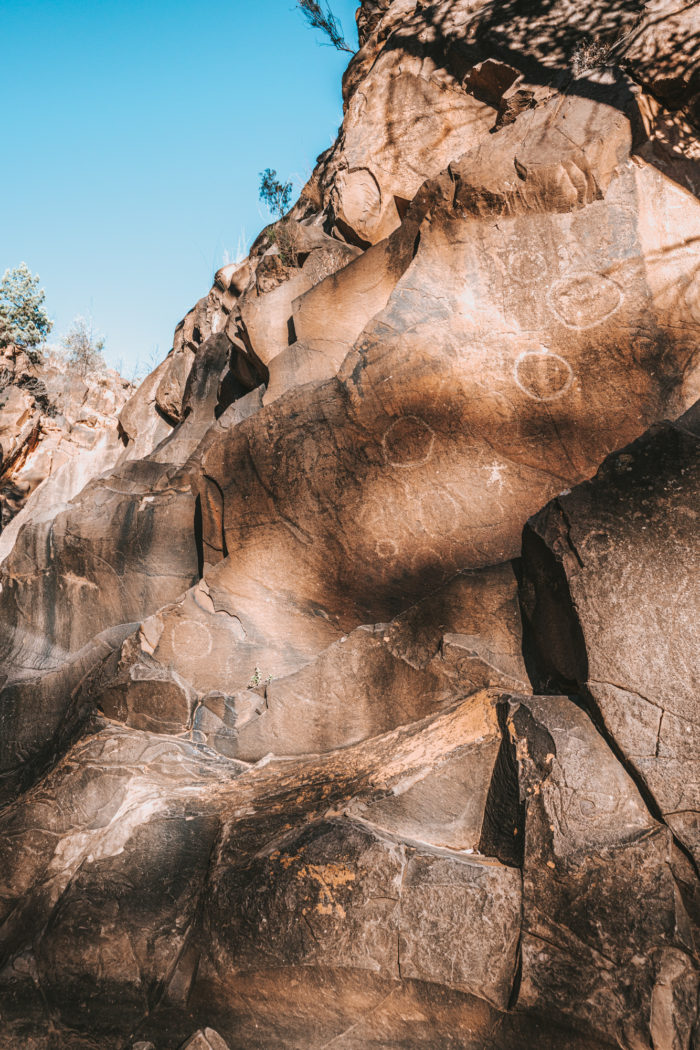
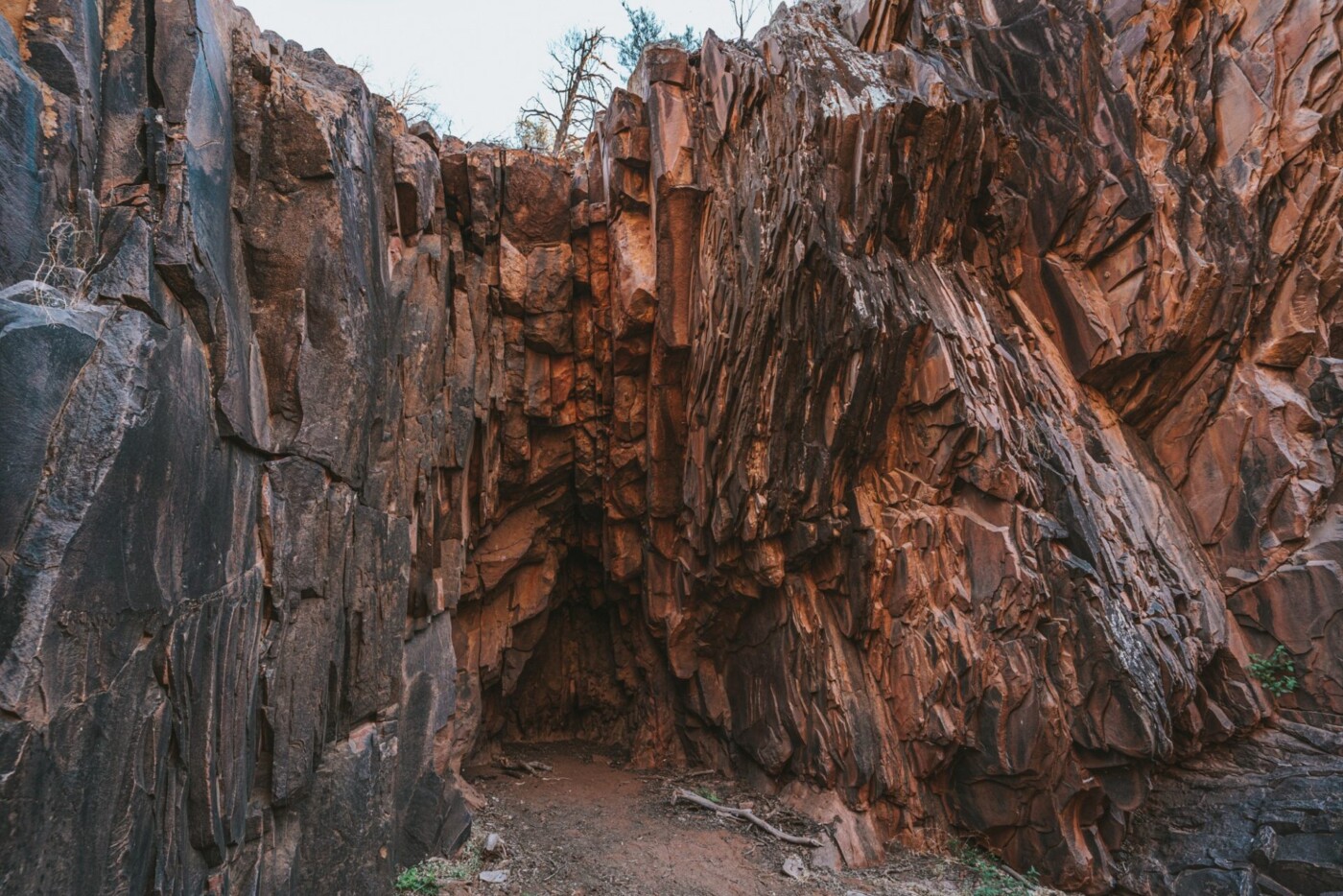
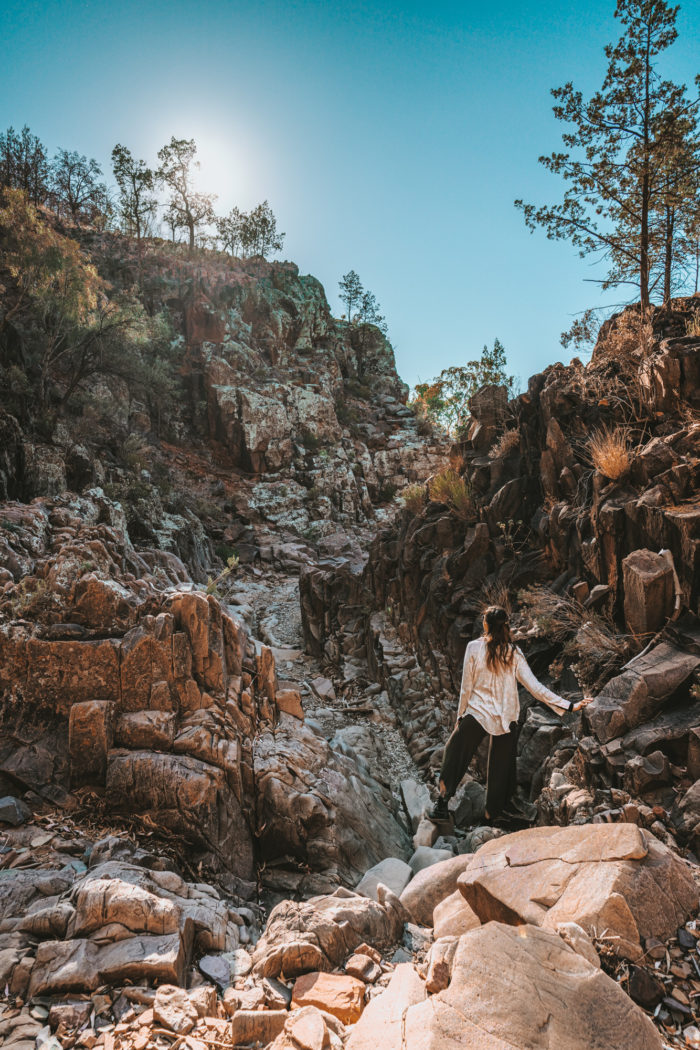
This unique tour allows you to visit an important Aboriginal heritage site, Sacred Canyon, with an Aboriginal Guide from Wilpena Pound. The canyon is closed to the public and can only be visited by an Aboriginal guide, which makes this tour that much more special. The canyon is filled with ancient rock etchings that tell a story of the significance of this area to the local Adnyamathanha people.
Arkaroo Rock
This is another aboriginal site in Flinders ranges, but one that can be visited with or without a guide. The site displays beautiful Adnyamathanha rock paintings telling the story of Ikara (Wilpena Pound). The rock art was created with ochre and charcoal and depicts stories that are central to the area’s heritage.
Scenic Drives
There’s no shortage of spectacular views and stunning scenery in the national park. Whether you choose to experience these with your own 4WD or jump on a 4WD guided tour, these are definitely worth putting on your itinerary.
Brachina Gorge Geological Trail
The Brachina Gorge Geological Trail is the most impressive of them all. This is a 20 km drive with self-guide through 130 million years of geological history. Along the way, trail signage will guide you through the history of the area and how the ranges came to be. Keep on the lookout for yellow-footed rock wallabies and many other birds and reptiles. There are some upgrades in progress along the Brachina Gorge Geological Trail. You can still access the trail during the upgrades, but please be aware that access may be limited or temporarily restricted at times. So always check the details here before planning your visit.
Bunyeroo Gorge
Bunyeroo Gorge is another scenic drive with full of native wildlife and interesting rock formations. This 29 km track follows a peaceful gum-lined gorge that runs through the Heysen Range to Lake Torrens. The drive offers stunning views of the mountains and offers picnic sites along the way and look out for birds and kangaroos.
Aroona Valley
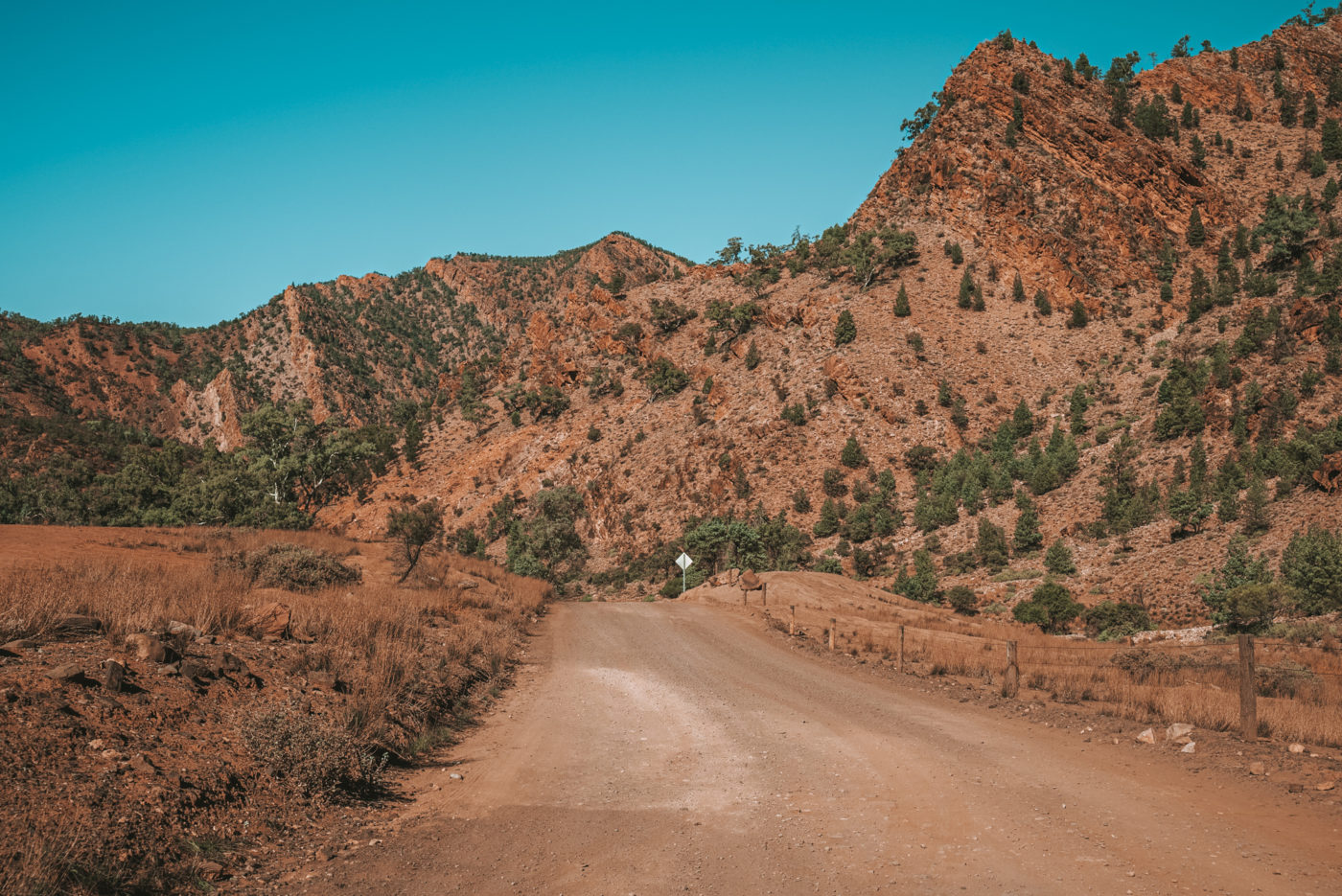
Complete the journey by visiting the picturesque Aroona Valley. You’ll quickly see why many consider it to be the most beautiful place in the Flinders Ranges. The valley is 17 km past Brachina Gorge and set at the foot of the ABC Range and Heysen Range. Here you can have a picnic, link up with nearby walking trails, or just admire the peaceful landscape.
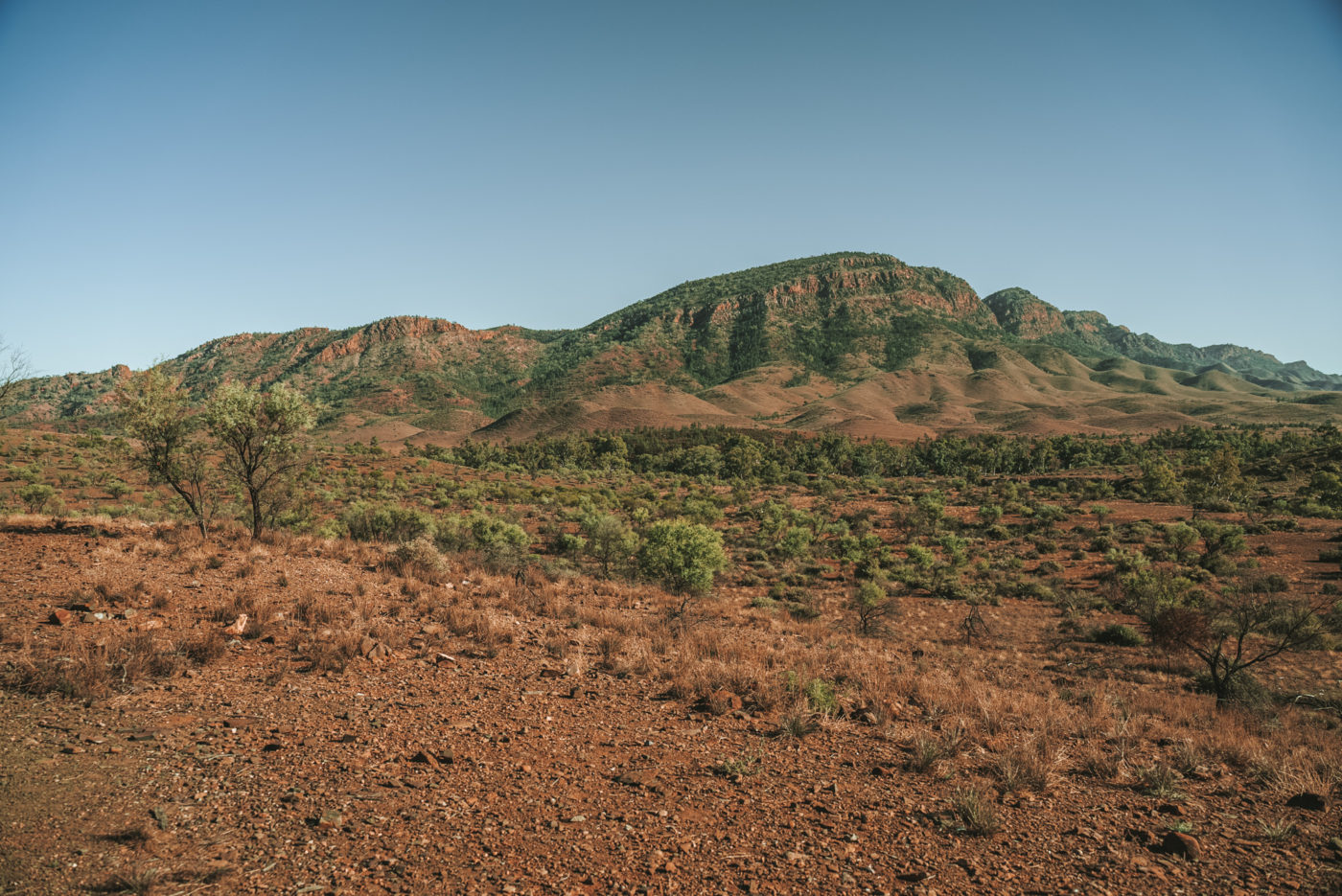
For a more meaninful experience, join the Time Travel & Gorgeous Gorges Tour from Wilpena Pound. This guided 4WD tour through Brachina and Bunyeroo gorges is an amazing way to spend an afternoon. The tour is lead by a local Aboriginal guide and offers a plethora of iformation about the geological marvels and rugged beauty of this region.
Can’t Miss Moments In Ikara-Flinders Ranges
Sunrise At Razorback Lookout
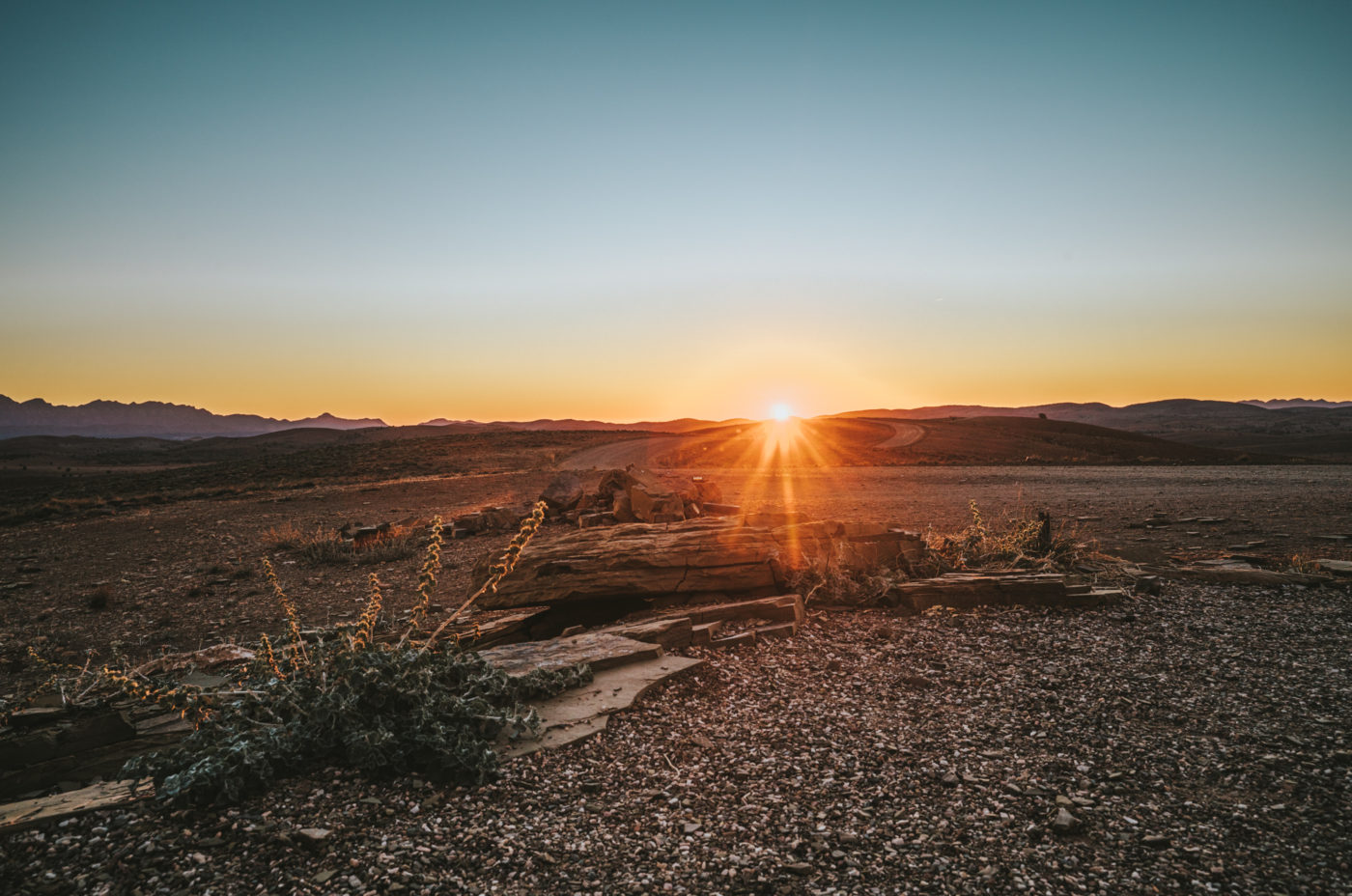
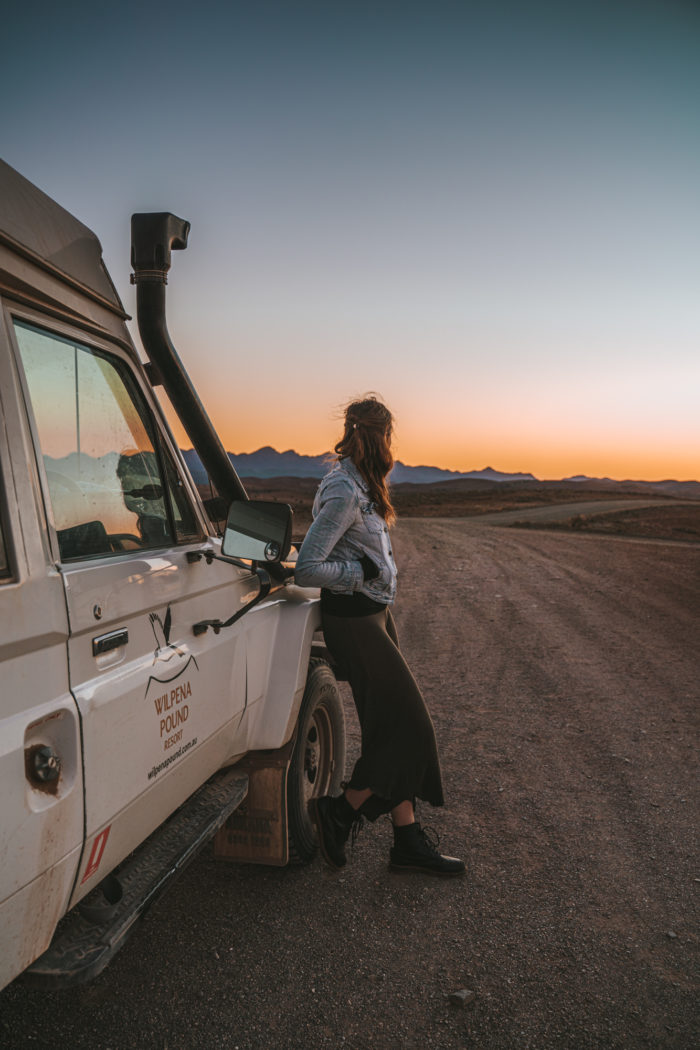
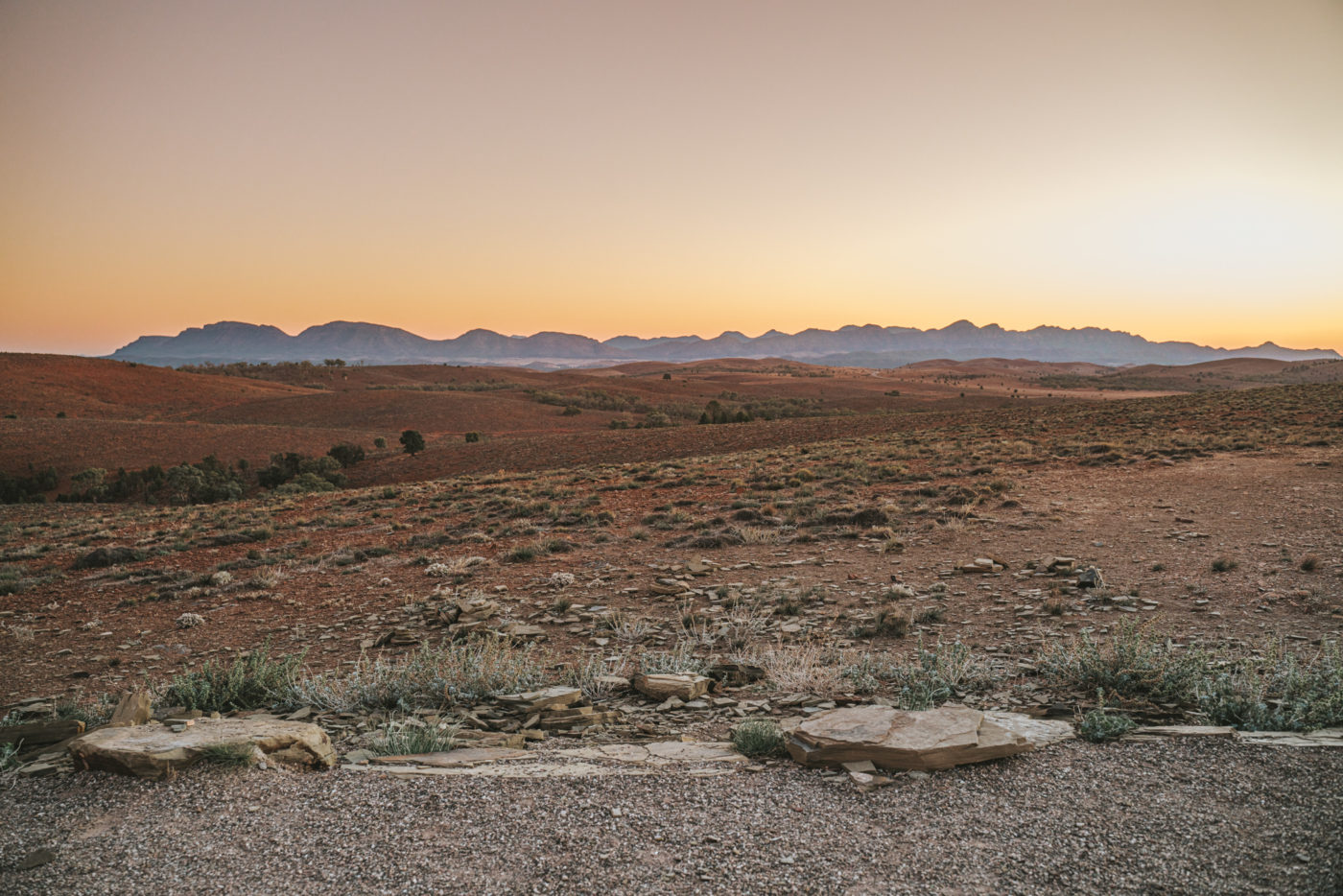
Get up nice and early to catch the postcard-worthy sunrise at Razorback Lookout. We don’t normally wake up for the sunrise, but this one was well worth it! The morning light envelops the Flinders Ranges, creating a breathtaking panorama. Razorback Lookout is in the northern part of the park, not far from the Bunyeroo Valley Lookout.
Sunset At Stokes Hill
If early mornings aren’t your thing, head to Stokes Hill Lookout for a gorgeous golden sunset over the mountains. You’ll see the colours of the mountains change as the sun lowers and lights up the sky. It’s the perfect place to spend an evening with a bottle of wine and an evening bite. Stokes Hill Lookout is located just to the east of the national park on Hawker-Blinman Road.
Other Things To Do In Flinders Ranges
Scenic Flight Over Flinders Ranges
The top activity on most visitors’ bucket lists is a scenic flight over Wilpena Pound. You’ll have a bird’s eye view of the massive rock amphitheatre and the surrounding mountain ranges. Seeing the landscape from a different perspective makes the area seem even more incredible! Wilpena Pound Resort offers 20-minute, 30-minute, and 1-hour long flights starting at $186. It might be a bit of a splurge, but a scenic flight over Wilpena Pound is pretty special.
Mountain Biking
Feeling adventurous? Ikara-Flinders Ranges National Park is also loaded with great mountain biking trails. The Mawson Trail runs through the entire park and has fantastic mountain biking opportunities, with a long-distance cycling trail through the park that takes you on many fire access trails with beautiful views.
Living With The Land Walk
Spend an afternoon learning about the pastoral heritage of the area on the Living with the Land Walk. This short walk is 1 km and takes you around Old Wilpena Station lands where early settlers learned to work with the arid climate. You can also visit the solar power station and see how Wilpena runs on renewable energy.
Star Gazing
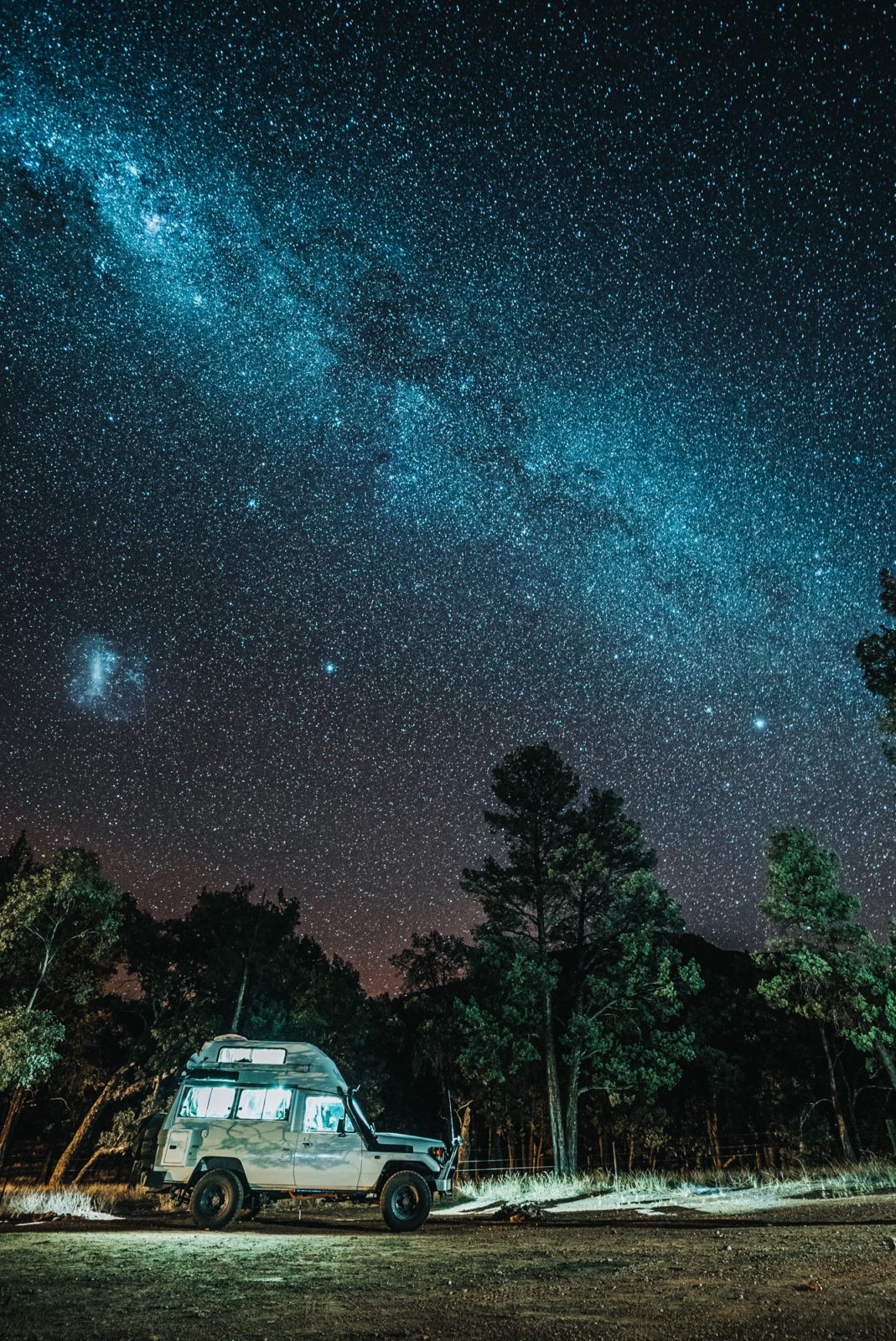
Unwind after a day of hiking or mountain biking by laying under the wide-open sky and star gazing. With city light pollution hundreds of kilometres away, you’ll have the night sky all to yourself. It’s no surprise that many consider the Flinders Ranges to have some of the best outback stargazing in all of Australia.
How Long To Stay In The Flinders Ranges
We spent 5 nights in the park, which set a nice pace for exploring without feeling rushed. You can squeeze it all in 3 days, but we recommend staying longer to enjoy. If you have a few extra days to spare, a week-long stay would be ideal.
Have you visited Flinders Ranges National Park in South Australia? What was your favourite part of your visit?
Disclaimer: We visited the Flinders Ranges as guests of Wilpena Pound, but, as always, all opinions expressed in this article are our own.

