
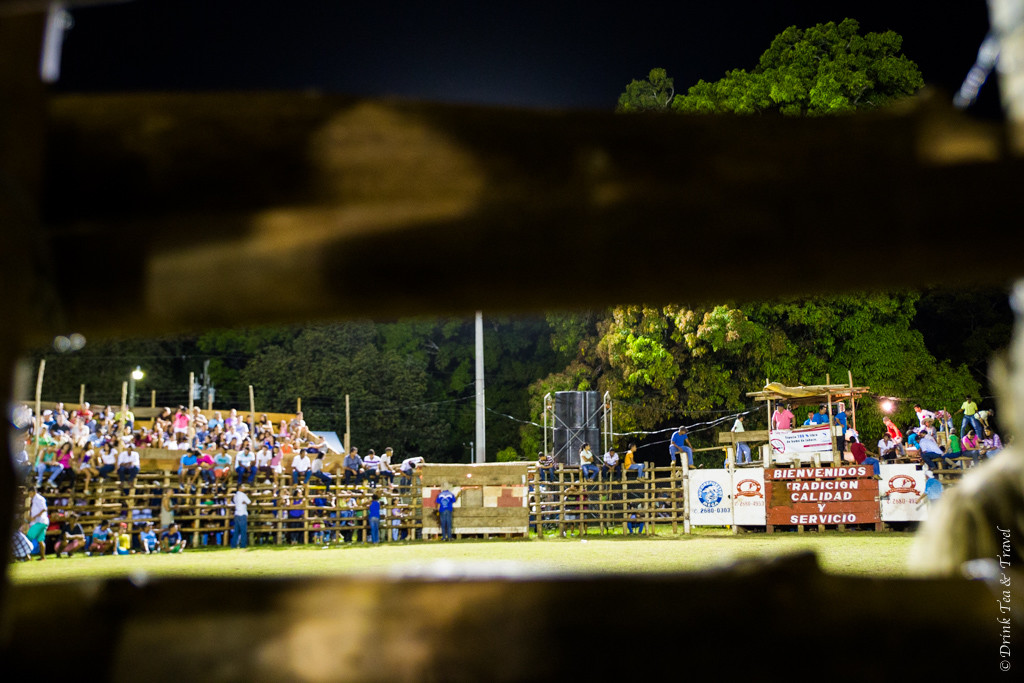
I exhaled a sigh of relief as I finally found my balance on top of the fence surrounding a bull riding ring. It’s been years since I last climbed a fence, let alone found myself perched up on one for a better view. But as I looked around, spotting dozens of locals, young and old, seated on the fence all around the ring, my hesitations melted away. I quickly realized that these were THE BEST seats in the house!
*This post may contain affiliate links, as a result, we may receive a small commission (at no extra cost to you) on any bookings/purchases you make through the links in this post. As an Amazon Associate, we earn from qualifying purchases. Read our full disclosure
Traveling Soon? Here is a list of our favourite travel providers and accessories to help get you ready for your upcoming trip!
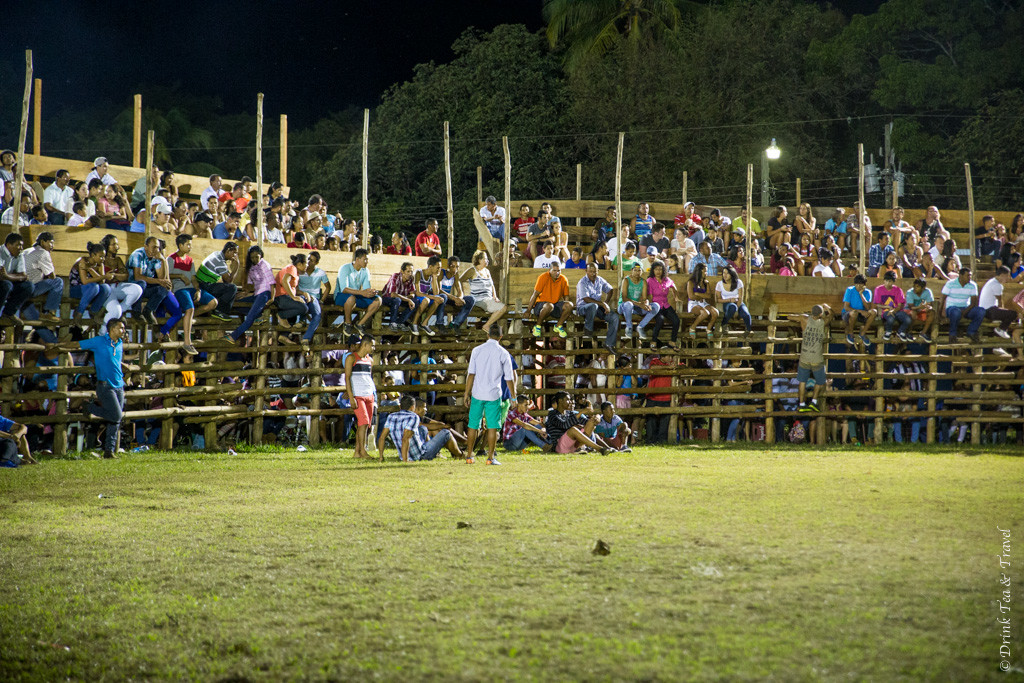
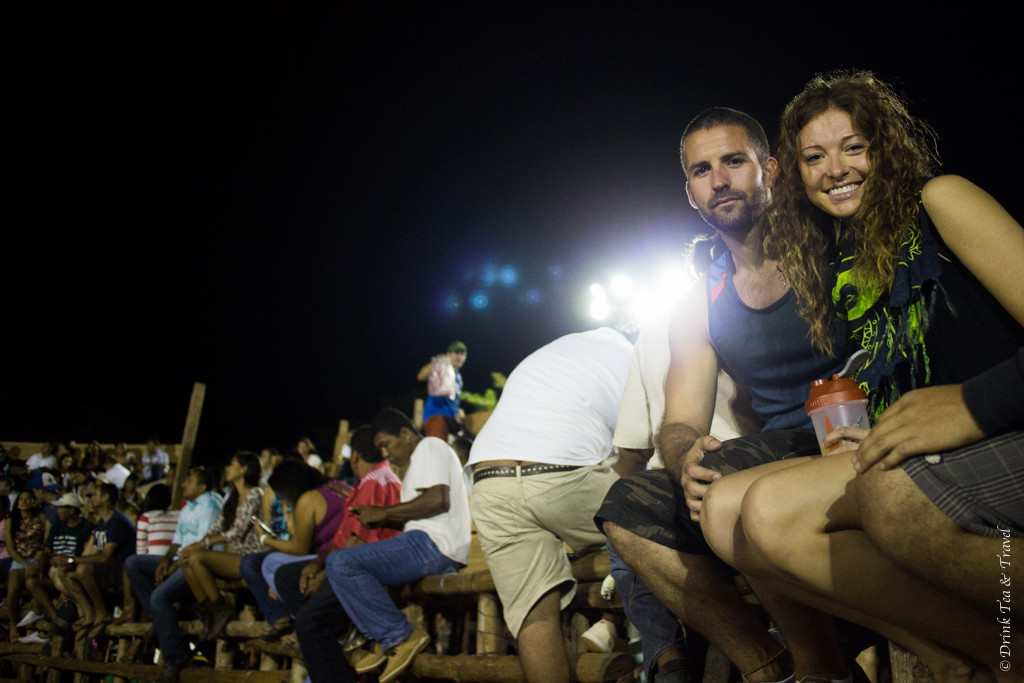
“I love fiestas!” said my future sister-in-law, Jessica, as she took a seat beside me at the top of the fence. “So much has changed in Costa Rica over time. It is much more touristy now than it was 25 years ago when I was growing up here. But despite all the development and all the changes, sitting here, I feel like I’m 6 years old again. It’s the same town, the same people, and the same fiesta experience I know and love!”
Her enthusiasm was contagious. I was excited, I was nervous, but more than anything, I felt incredibly privileged. Aside from a few expats, myself, and a few of our friends, there were no other “gringos” at the fiestas that night. I was about to take part in the most authentic Costa Rican experience!
Every year between the months of December and January, towns all around Costa Rica host fiesta carnivals. Some, like ours, are small, featuring a small bull riding competition, a few rides, games, and food stalls, along with a bar and dance area. But others, like the ones in San Jose, Zapote, and Palmares, often span for a full 2 weeks and feature concerts, parades, and football games, attracting millions of locals from all over Costa Rica.
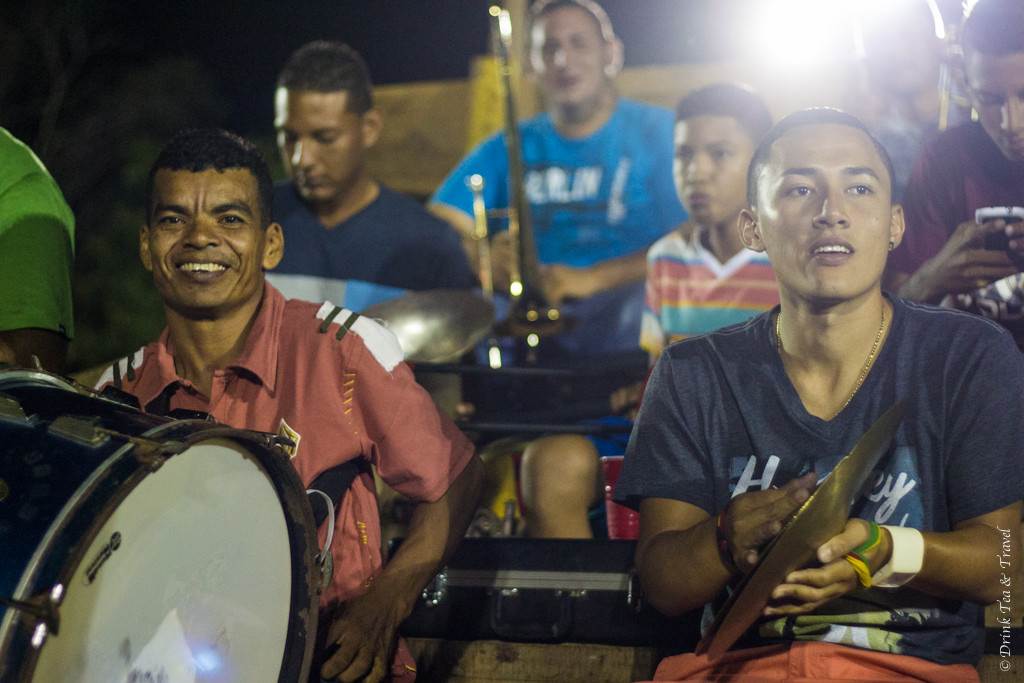
“TORRO NUMERO UNO!”- shouted a male voice over the PA, just as the 5 person Mariachi band behind us broke into a loud drum roll. The gate swung open, and the first bull leaped out from behind the door. He jerked and jolted in an attempt to shake off the visibly amateur rider on top of him. After a few seconds of ooo’ing and aah’ing from the audience, the rider lost his balance and fell off the bull. The crowd erupted in a loud cheer, overpowered only by the loud tunes of the Mariachi band. The bull, distracted by the local matadors, was now searching for a new target.
Suddenly, a dozen young boys and men jumped off the fence and rushed towards the bull, trying to strike the perfect balance between attracting the bull’s attention and staying in close proximity to the fence. This game of cat and mouse lasted for a few minutes before 3 horse riders appeared on the field to reign in the bull. A few skillful moves and the bull was lassoed and led back into the stables. Act numero uno was complete.
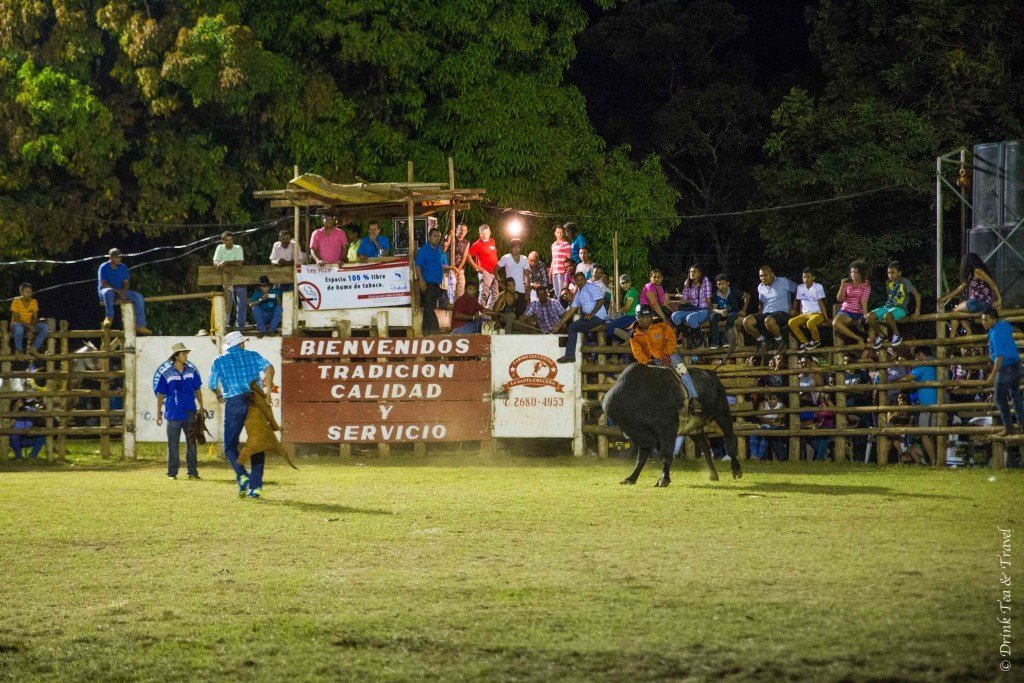
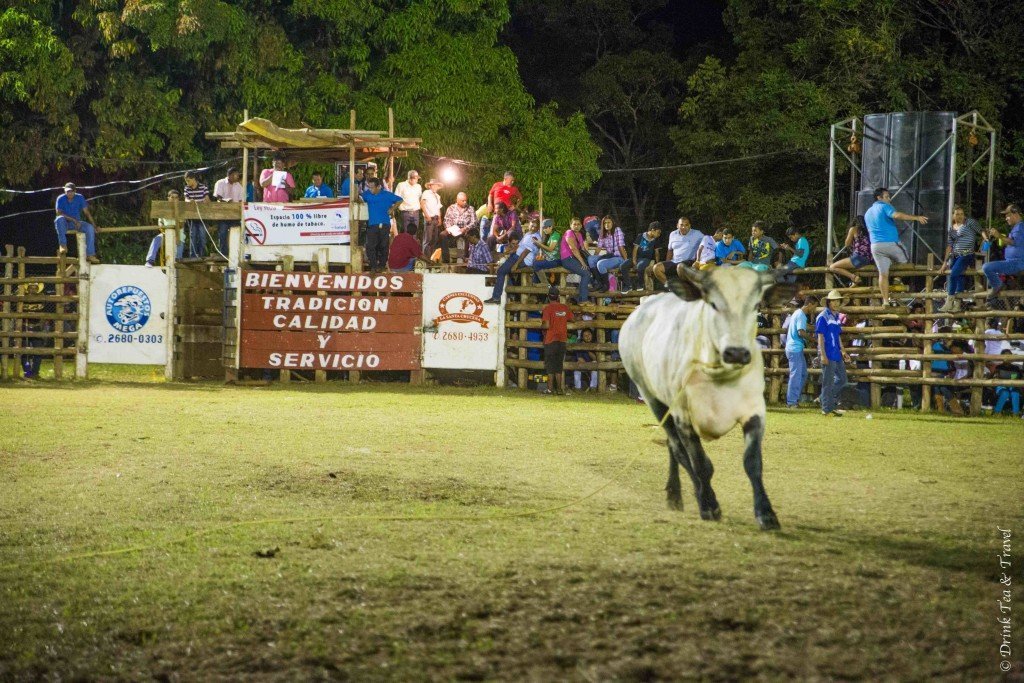
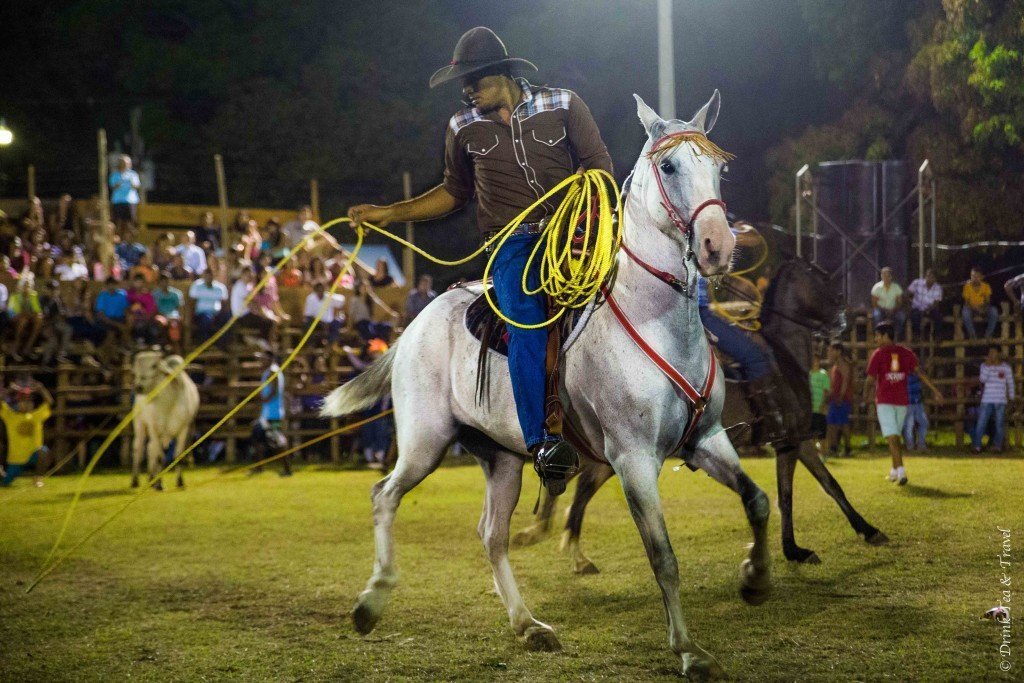
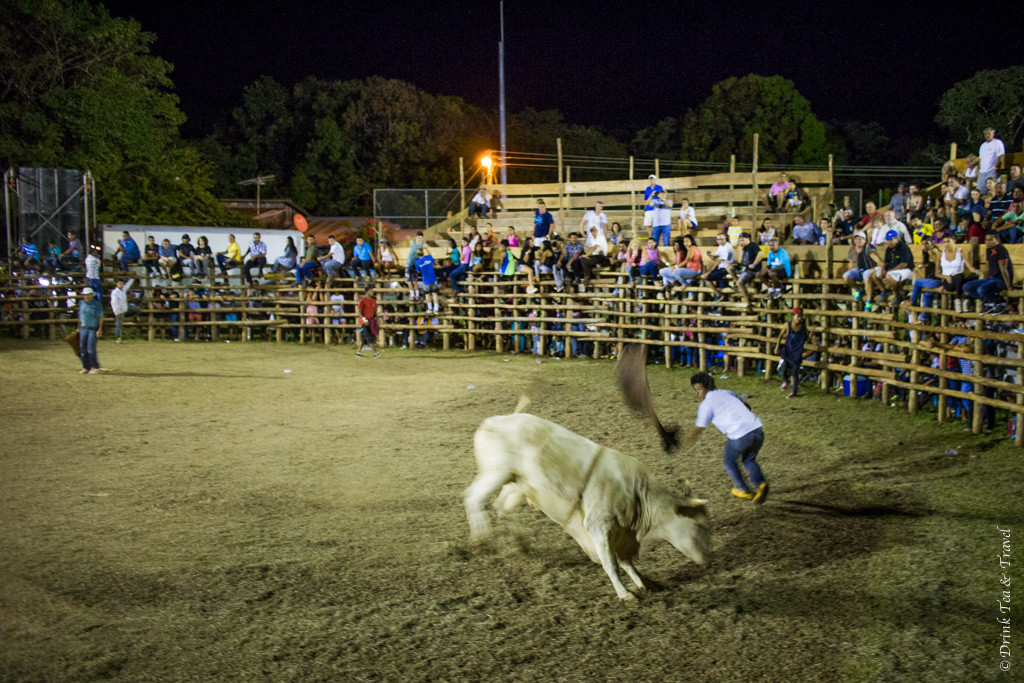
Each night, we watched between 10-15 bulls in the ring; some were entertaining and harmless, others aggressive, smart, and downright scary! There’s been a few too many incidents at these bull riding competitions over the years. Riders, runners, and matadors have been seriously injured, and some have even lost their lives as a result of the wrong step, a bad fall, or a fatal mistake.
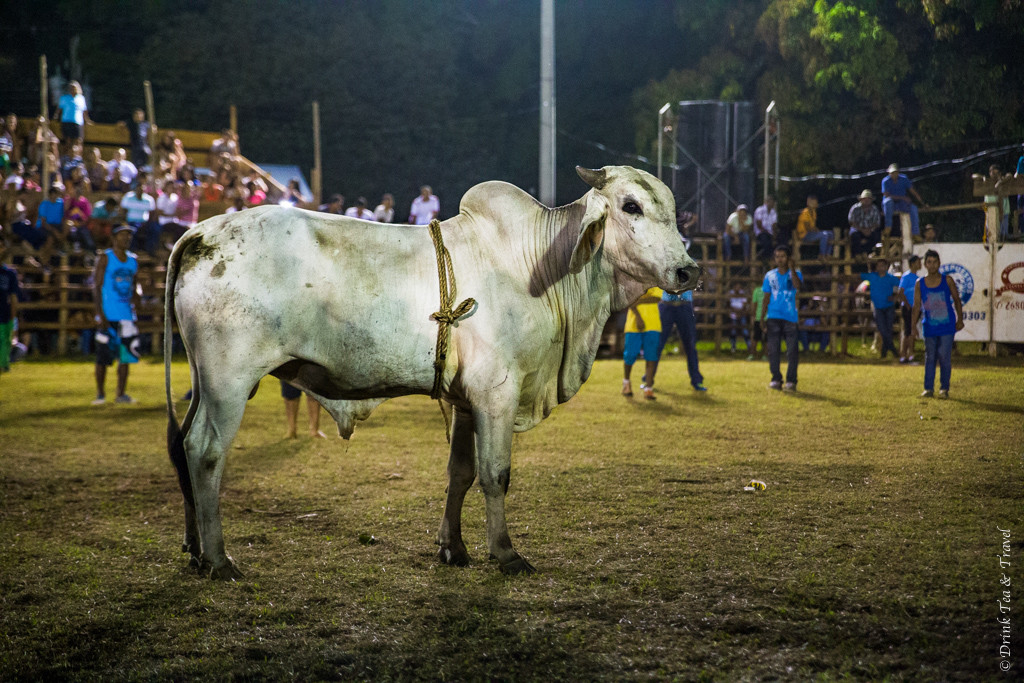
Yet, despite the stories and numerous close calls we all witnessed on the field that day, some spectators craved that adrenaline feeling. Unfortunately for me, Max was one of them.
“I was 6 years old when I first sat in the middle of the bull riding field” – he told me days before the fiestas. “ I know you are worried about me getting hurt, but trust me, I know what I’m doing. I’ve been doing it all my life!”.
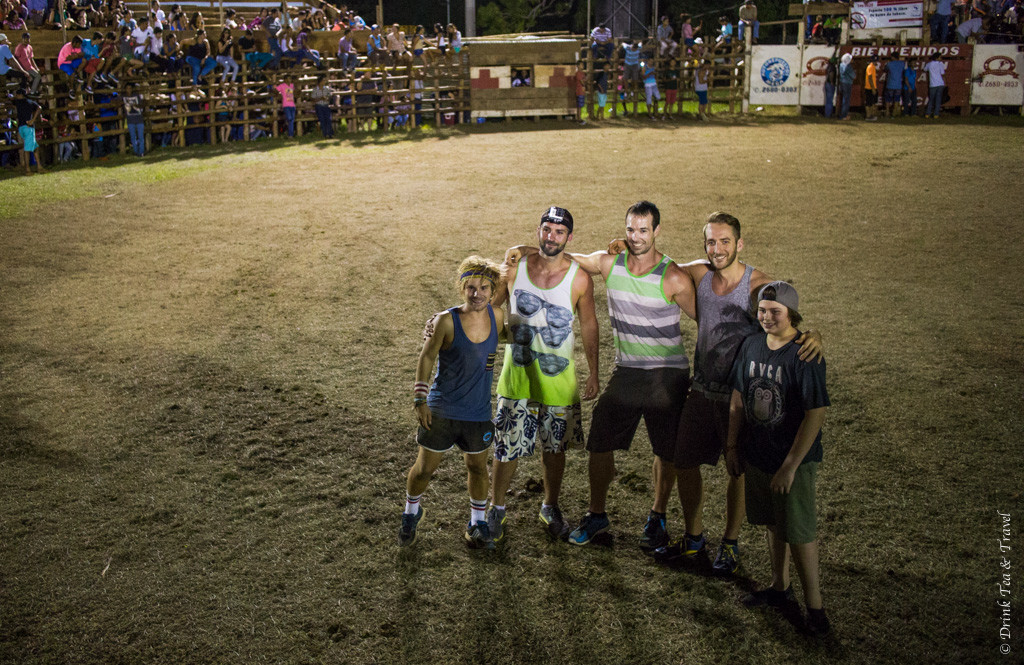
And for the first 8 bulls that night, he really did. He stood close to the fence, he climbed back up as soon as the bull charged in his direction, and he was cautious. But by bull number 9, (too many), a few rum and cokes later, he felt braver than ever. He and a few of his friends decided to play a game called “blind chicken.” The idea was for the boys to sit on the grass in the middle of the field with their backs facing the stable door. They would rely on the signs of other spectators to know when the bull was close, and it was time to get up and run for their lives. It all sounded good….in theory. Except the game had a big flaw. The guys didn’t realize that by the time someone signaled for them to get up and run, it could already be too late.
This bull was angry. He knocked off his rider in a few seconds and charged at Max and his friends. Seeing the faces of the spectators, they jumped up and rushed towards the fence, two of them veering to the left and Max to the right.
Max was a millisecond too slow, and a second later, the bull was at his back, with his horns right up his back. He pushed him, knocking Max off his feet.
“MAX!!!” – I screamed at the top of my lungs as my heart sank.
The bull jumped over Max’s flat body, charging at another group by the fence. The next second felt like an eternity. I didn’t know how hard of a fall he’s taken, I didn’t know if the bull’s horn seriously hurt his back, I didn’t know if he had stepped on Max or if he had broken Max’s back. I waited for a sign, afraid to breathe, to think, and to say anything.
“He’s ok! He’s ok!” – Jessica’s voice jolted me out of shock. She gave me a hug. Max was off the ground, making his way towards the fence. I was shaking, I was angry, but I was so relieved.
“I’m ok,” – he said a few minutes later as he reached over for a kiss. “Nothing more than a scratch.”
He knew he was lucky. I knew he was lucky. Everyone around us knew he was lucky.
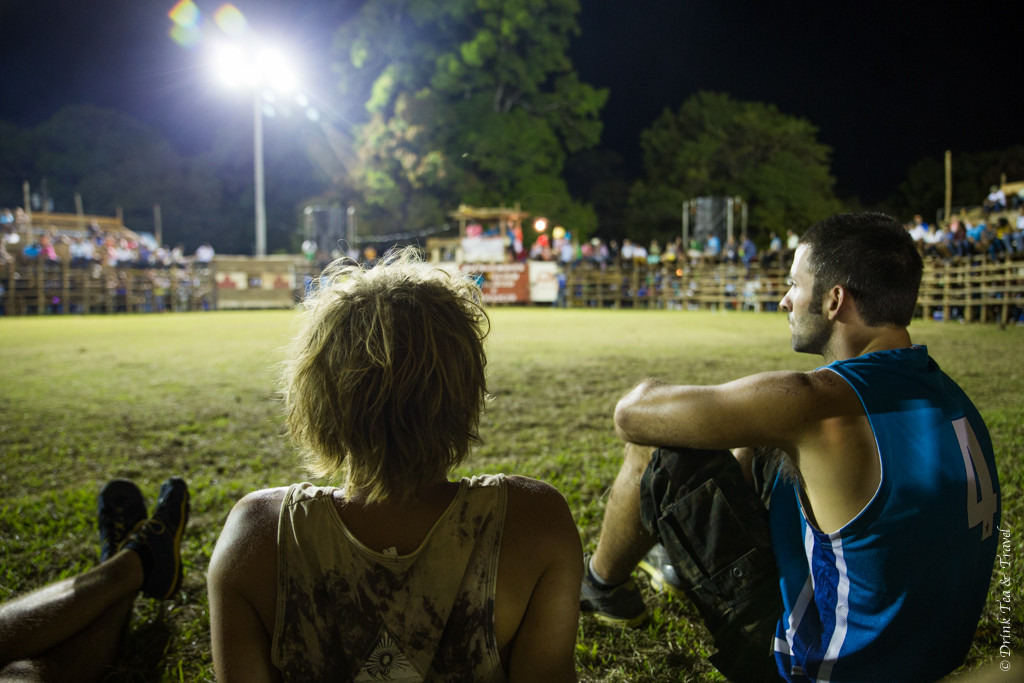
Crowds of locals rushed towards Max, trying to get the full story of what happened. He was shaken up, but he reveled in attention. I was still shaking. I hugged him tightly as he came out of the ring, refusing to let go of his hand for the rest of the night. That evening, I was in no mood to experience the rest of the fiesta.
Luckily, it was day 1, and the festivities were just getting started. We went back to the fiestas the next evening and again a few days later. Max went back inside the ring, playing a lot less games and taking a lot less risks. There were no other incidents. Just good fun, laughter, and entertainment. On our last night at the fiesta, when the bull riding competition came to an end, we stayed behind to enjoy the carnival games, the rides, and of course, the dancing!
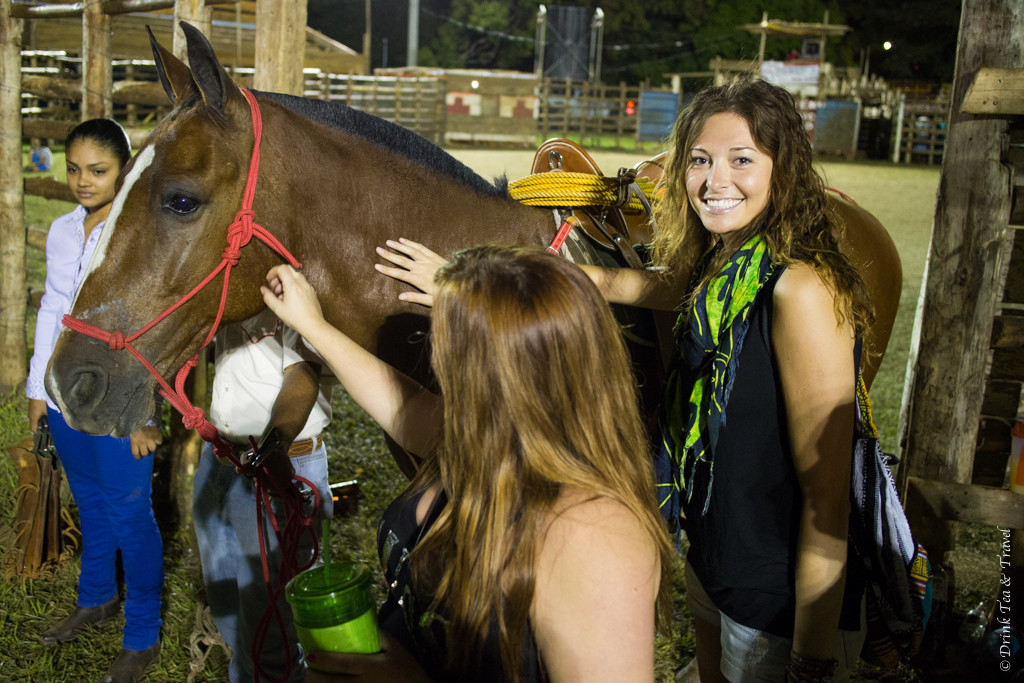
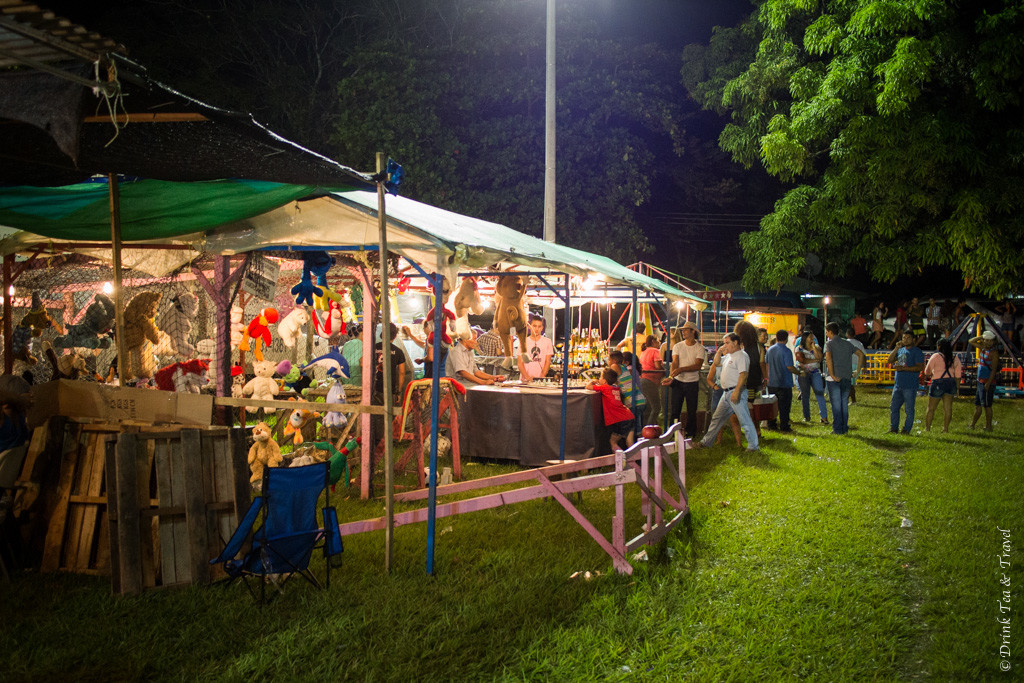
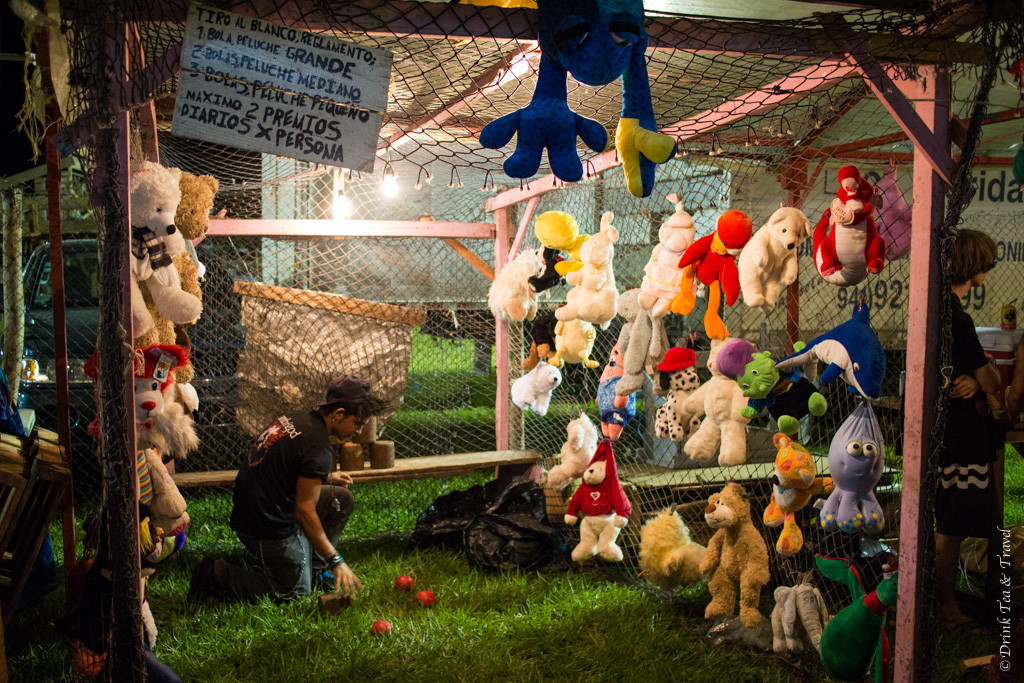
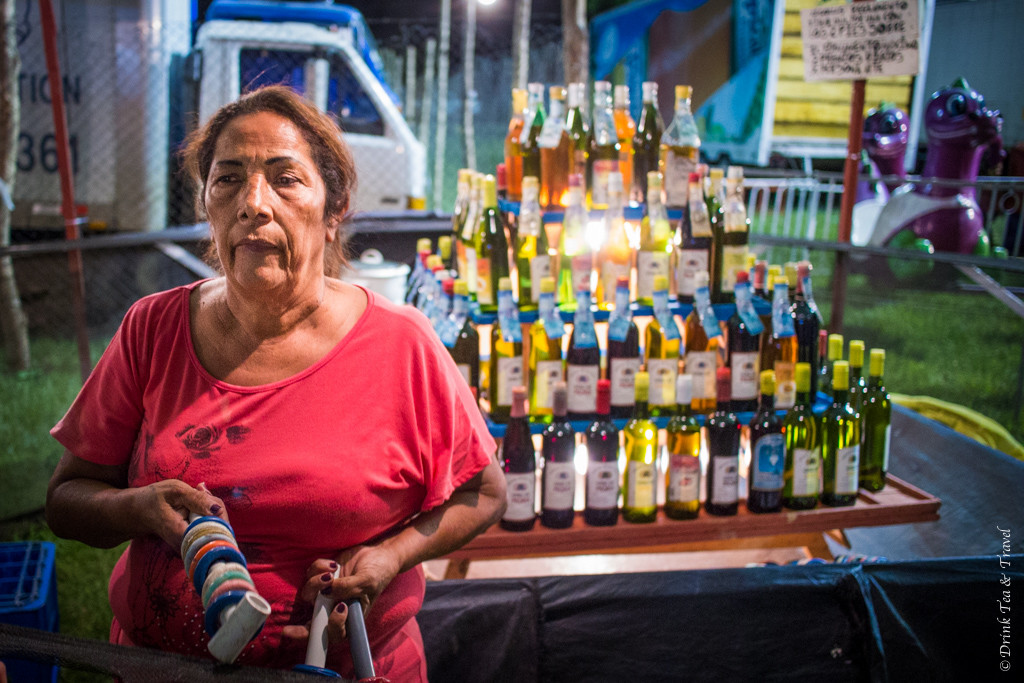
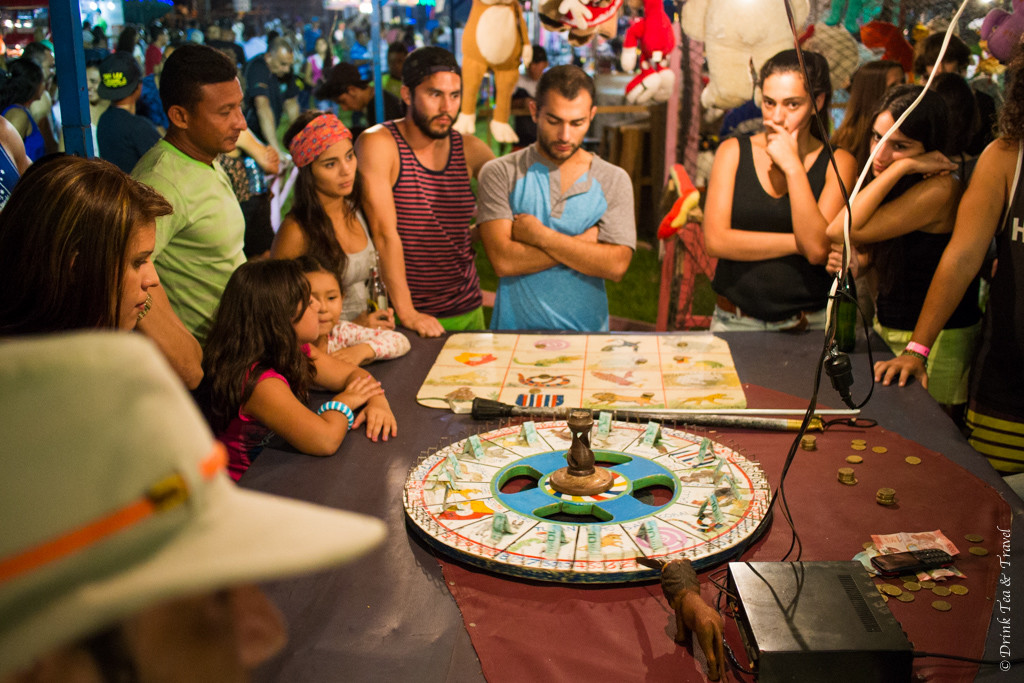
The fiestas typically feature a great array of great Costa Rican dishes, so I made sure to try as many as I could: chicharrones, chop suey, fried chicken, green mango, and the local’s favourite – “copos” (shaved ice dessert). The food is incredibly cheap, the cheapest we have seen, priced clearly for the locals without the tourist markups.
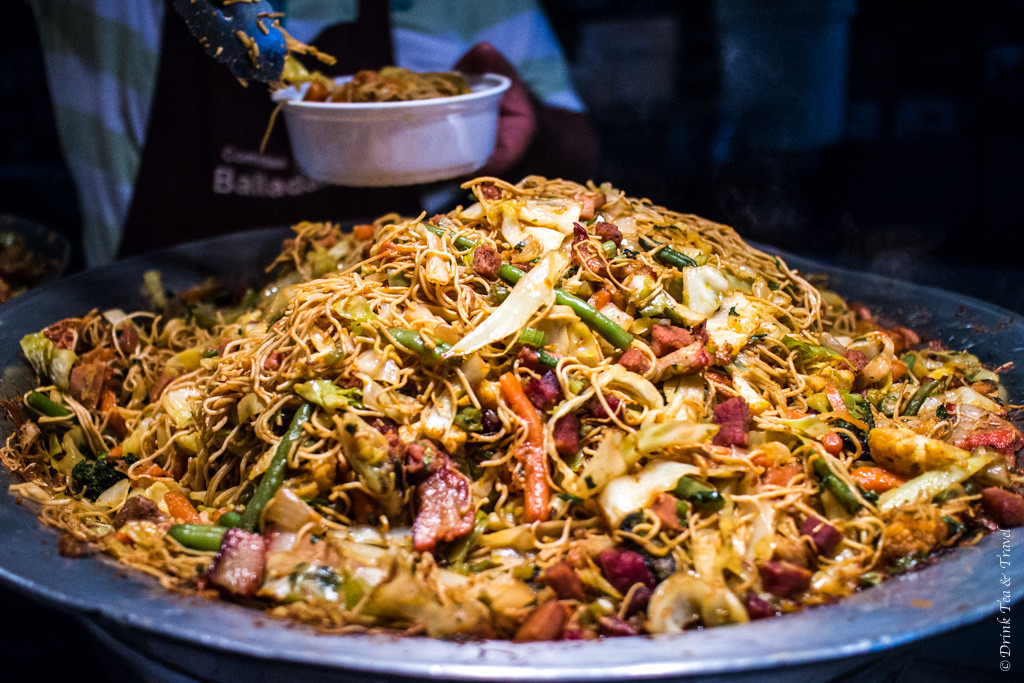
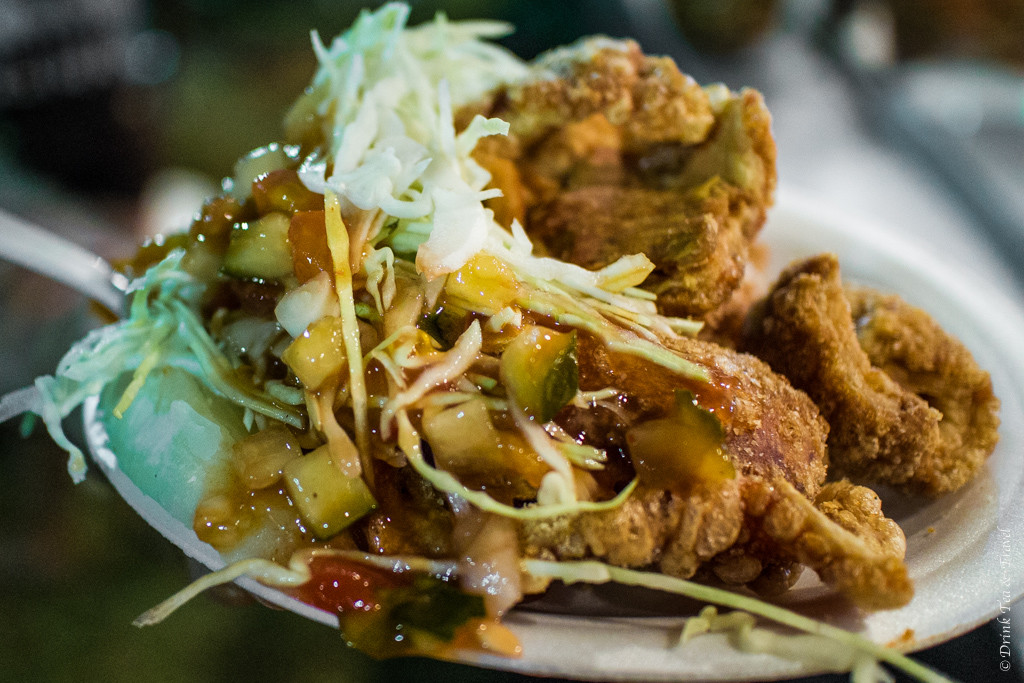
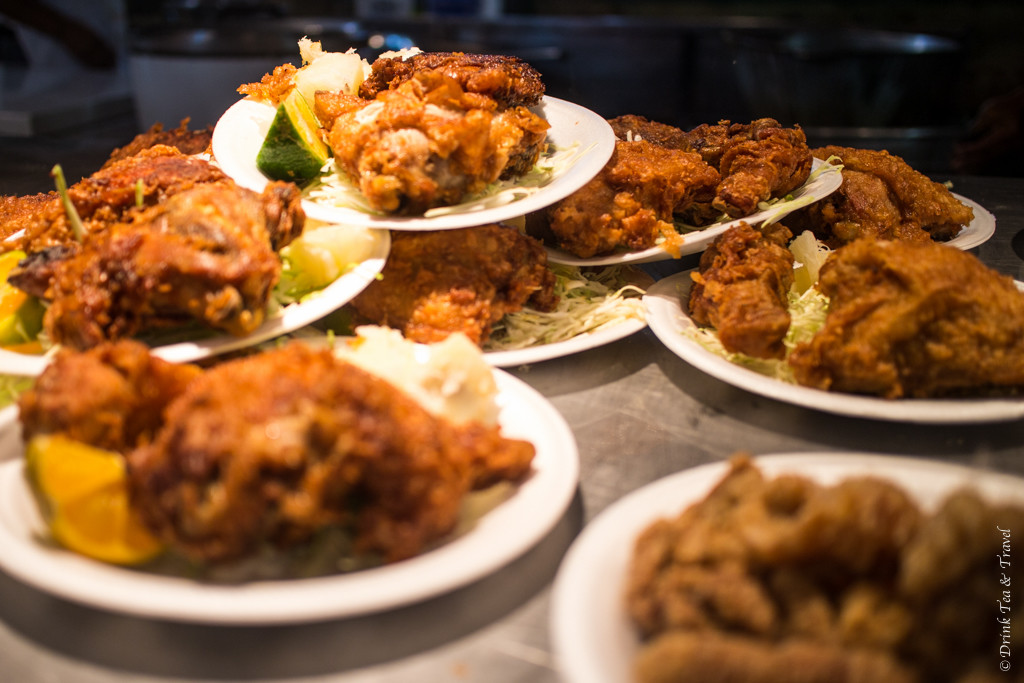
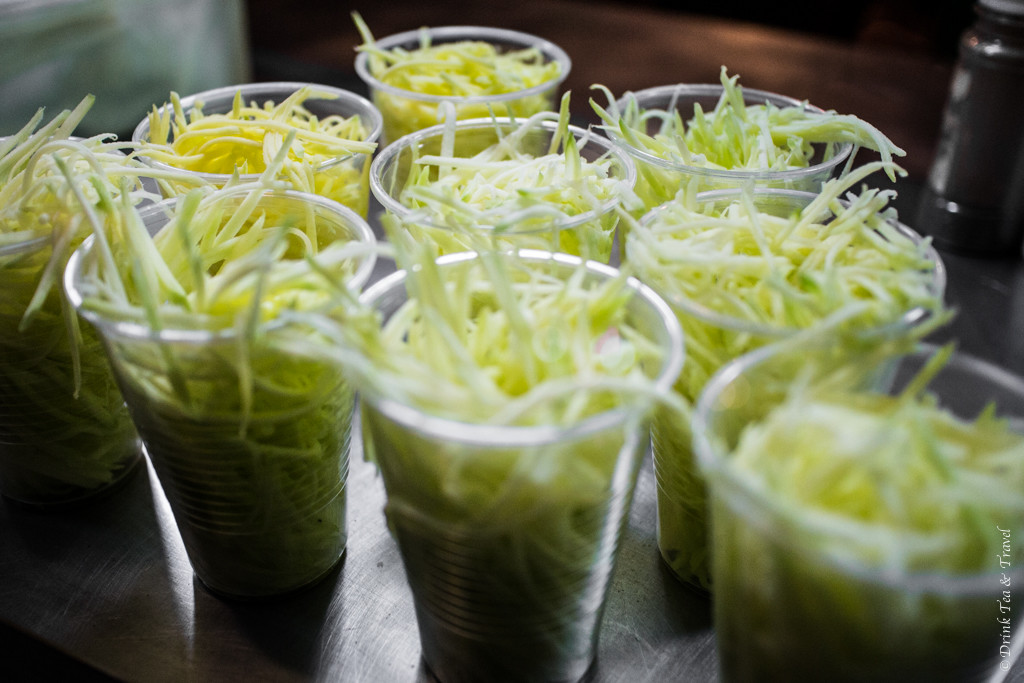
Beers were only 800 colonies, just over USD $1.5. It’s still expensive compared to 500-600 colonies in the grocery stores, but very acceptable by locals’ standards. That night, the beers were flowing and with every sip I felt more and more comfortable among the locals. Eventually, Max and I hit the dance floor, hoping that we would blend right in. And we did, or at least we felt like we did…
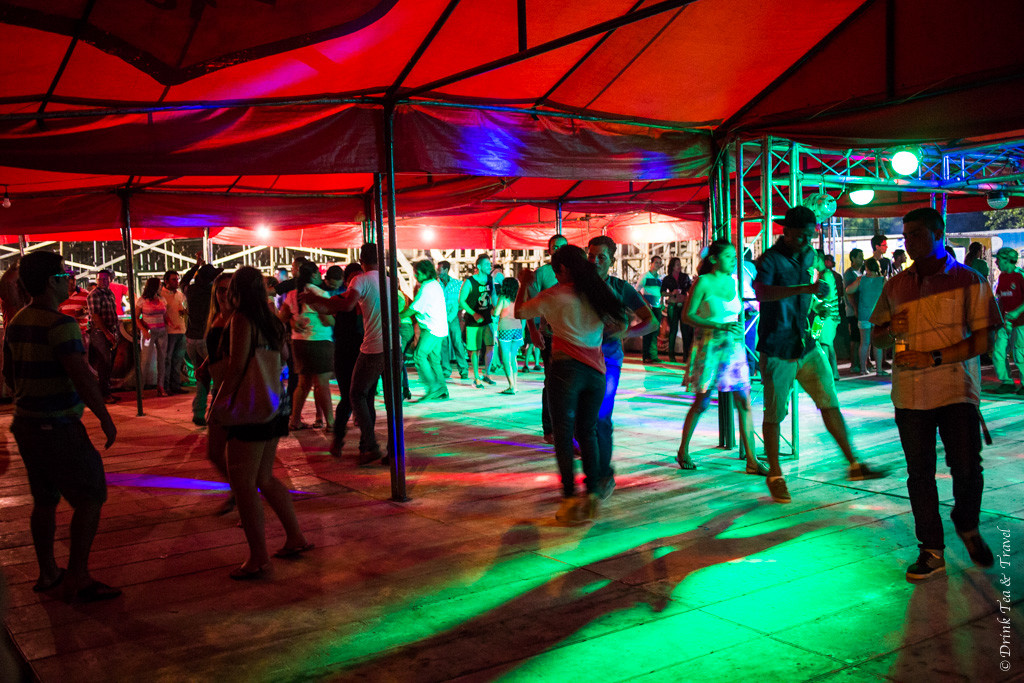
The fiesta was shut down at 11pm, but we continued on with the night, following the local crowd to a nearby hole-in-the-wall bar. The air in the bar was infused with Latin heat (literally), the room was filled with sounds of merengue and the smell of rum. It was intoxicating…in the best way possible.
I think it was that day and that night that I really fell in love with the Costa Rican culture…
READ NEXT: The Real Cost of Living in Costa Rica
Costa Rica Fiestas: Everything You Need to Know
Celebrating life and tradition is an essential part of the Pura Vida way. All throughout the year, there are fiestas and other events that do exactly this – Costa Rican communities get together to celebrate their rich cultural history and lifeways. During these cultural celebrations, you can experience colourful parades, exhilarating carnival rides, exciting bullfights, and some wonderful traditional food.
Like other countries in Central America, Costa Rica is predominantly Catholic, so you’ll probably see religious elements in many celebrations. While Ticos pay respect to religious holidays, they also love to party! Schools, banks, and a lot of businesses are closed during national holidays so that folks can take part in these celebrations.
Fiestas occur year-round, rain or shine. Here’s some of the most popular Costa Rican festivals you can enjoy during your visit.
Fiesta de la Luz: (second Saturday in December)
San Jose’s Festival de la luz celebrates the end of the year with dazzling light displays, parades, live music, and lots of dancing. The parade starts at 6pm, when colourful floats will start on a route through downtown San Jose. This is just one of the many festivals during the holiday season-the capital city knows how to party!
Fiesta de los Diablitos: (December 31-January 2, first week of February)
This three-day festival is a traditional indigenous celebration held in the Boruca and Rey Curre communities. Participants don masks and costumes in a representation of the battle between the indigenous Boruca people and the Spanish troops. Afterwards, the community gathers for food, fireworks, and homemade chicha, an alcoholic drink made of fermented corn. The Boruca and Rey Curre indigenous communities host this festival in late December, and early February, respectively.
Fiestas de Palmares: (mid-January)
This two-week festival is one of the most popular in the country and takes place in Palmares, a small town in the Alajuela province. During the second half of January, the town hosts a massive horse parade, bullfights, and live concerts. Tent bars pop up everywhere, serving local beer and spirits all through the night. This small town, home to just a few thousand people, hosts Costa Ricans from all over the country as well as tourists during this time, so it’s best to reserve accommodations well in advance.
Fiesta Santa Cruz: (mid-January)
For over two centuries, the people of Santa Cruz have been honouring its patron saint Santo Cristo de Esquipulas with street parties, dances, and delicious local cuisine. Included is a religious procession where the townspeople give thanks to the saint, and there is also an indigenous dance that is performed during the festival.
Día de la Independencia: (15th of September)
Every year, festivals are held all throughout the country, where Costa Ricans celebrate the country’s independence from Spain. Every town has its own street party and parade, where participants will be in traditional dress. The highlight of this celebration is the arrival of the symbolic Freedom Torch, which is brought by relay runners all the way from Guatemala. When the torch arrives, the flag is raised, everyone sings the national anthem, and the party continues late into the night with folk dancing and a street party.
Semana Santa (Holy Week):
During the Easter Festival of the Holy Week, much of the country is shut down out of respect for this religious holiday. Holy Week parades are organized by local churches, and families gather to celebrate with traditional foods. A lot of businesses are closed from Ash Wednesday through Easter Sunday, and no alcoholic beverages are sold during this time, so make sure to plan ahead if you visit Costa Rica around this religious festival.
Guanacaste Day: (July 25)
This annual festival marks the day that the Guanacaste province was annexed from Nicaragua. Not just celebrated in Guanacaste, this is a national holiday that is observed all over Costa Rica. On Guanacaste Day, there are street fiestas, amusement park rides, bullfights, rodeos and more. You’re likely to see more festivities in the Guanacaste province, especially in Liberia. If you’re lucky enough to be in Guanacaste during this festival, make sure to pop into food stalls to try traditional foods and watch El Tope – the famous horseback riding parade.
Virgen de Los Angeles Day (August 2)
This annual holiday is one of the biggest religious festivities in Costa Rica, after Christmas and Easter. The celebrations surround the legend of the statuette of the saint, also known as the Black Virgin. According to local legend, a little girl found the statuette and brought it home, only to discover that it mysteriously reappeared where she found it. The statuette is now housed in a basilica in Cartago, and draws millions of locals and visitors on an annual pilgrimage.
Viva el Café Festival (February or March)
While this might not be as lively as some other festivals in Costa Rica, coffee lovers will delight in sampling high-quality products from small farmers coming from all over the country. The venue varies, as there are several events, including a national barista competition!
Limon Carnival: (October 12)
This week-long festival commemorates the arrival of Christopher Columbus to Costa Rica’s Caribbean coast in 1502 and celebrates the vibrant culture of this region. Probably the biggest street festival in the country, the Limon Carnival is characterized by colourful costumes, Caribbean music, and dancing. This festival is a wonderful way to experience the many layers of Costa Rican culture.

