

Rio Celeste is a sky-blue river and waterfall in Tenorio Volcano National Park, in northern Costa Rica, about two hours from La Fortuna, Liberia or the Arenal area. Tickets are sold online only through SINAC, the park is open from 8 am (last entry 2 pm), and the 6.4 km (4 mi) return hike takes three to four hours, past the Rio Celeste waterfall, the Blue Lagoon, bubbling hot springs and the spot where two clear rivers meet and turn blue. Swimming isn’t allowed inside the park. Below you’ll find directions from each base, ticket details, the trail, the best time to visit, and where to stay and eat in Bijagua.
Key Takeaways
- Rio Celeste is in Tenorio Volcano National Park, about two hours from La Fortuna or Liberia; Bijagua is the nearest town.
- Tickets are online only through SINAC: about US$13.56 for foreign adults, with entry from 8 am to 2 pm.
- The hike is 6.4 km (4 mi) return and takes 3–4 hours; the waterfall alone is 30 minutes in, plus a steep staircase.
- You can’t swim in the park, but there’s a free swimming spot on the river just outside it.
- The river is bluest in the dry season (December to April); heavy rain can turn it milky brown for a day or two.

Where Is Rio Celeste?
| Location | Tenorio Volcano National Park, northern Costa Rica |
| Nearest town | Bijagua de Upala, about 15 minutes away |
| From La Fortuna | About 2 hours by car |
| From Liberia | About 1.5–2 hours by car |
| Park hours | Daily 8 am to 4 pm; last entry 2 pm |
| Entry | US$12 plus tax for foreign adults (about US$13.56), online only |
| Trail | 6.4 km (4 mi) return, 3–4 hours |
| Swimming | Not allowed inside the park |
Tenorio Volcano National Park protects the 1,916 m (6,286 ft) Tenorio Volcano and the rainforest around it, on the border of Guanacaste and Alajuela provinces. It was created in 1995, and it’s one of Costa Rica’s younger national parks. The main entrance, the one for Rio Celeste, is on the eastern side, reached from the small farming town of Bijagua. The SINAC park page has the official details.
How to Get to Rio Celeste
| From | Drive time | Route notes |
|---|---|---|
| La Fortuna | About 2 hours | Via Upala and Bijagua; paved, then a gravel stretch near the park |
| Liberia | About 1.5–2 hours | South on Route 1, then north through Bijagua |
| Tamarindo | About 3 hours | Via Liberia; an early start makes it a day trip |
| San Jose | About 4 hours | Via Route 1 and Canas; better as an overnight |
The easiest way to get there is by car. Head for Bijagua, then follow the signs to the park entrance; the last few kilometres are gravel and can be rough and muddy in the rainy season, when a car with some clearance helps. We drove in the rain on slow gravel roads and arrived in Bijagua after dark. There’s no public transport to the park and few taxis in Bijagua, so without a car, join a tour from La Fortuna or Guanacaste. Our tips for renting a car in Costa Rica and guide to Costa Rica’s roads will help.
The Costa Rican rental company we use ourselves, with all mandatory insurance included in the price, and SUVs that handle the park road.
Pickup at Liberia and San Jose airports · insurance included in the quote
Here’s the drive from La Fortuna, the most common starting point:
Bijagua itself is a small, friendly farming town with a supermarket, a few sodas and a fuel station, the last services before the park.

Rio Celeste Tickets and Hours
Since August 2023, tickets are sold only online, through SINAC’s reservation system; there are no sales at the gate. Choose a date and one of the timed entry slots, create an account and pay by card. Foreign adults pay US$12 plus tax (about US$13.56), and children aged 2 to 12 pay about US$5. Bring your passport and the ticket barcode on your phone. Parking by the entrance costs a few dollars. The park opens at 8 am and the last entry is at 2 pm, and everyone must be out by 4 pm. Book the 8 am slot: the trail gets busy by mid-morning, especially on weekends and in the dry season.
Rio Celeste, Costa Rica: Our Rainy-Day Hike
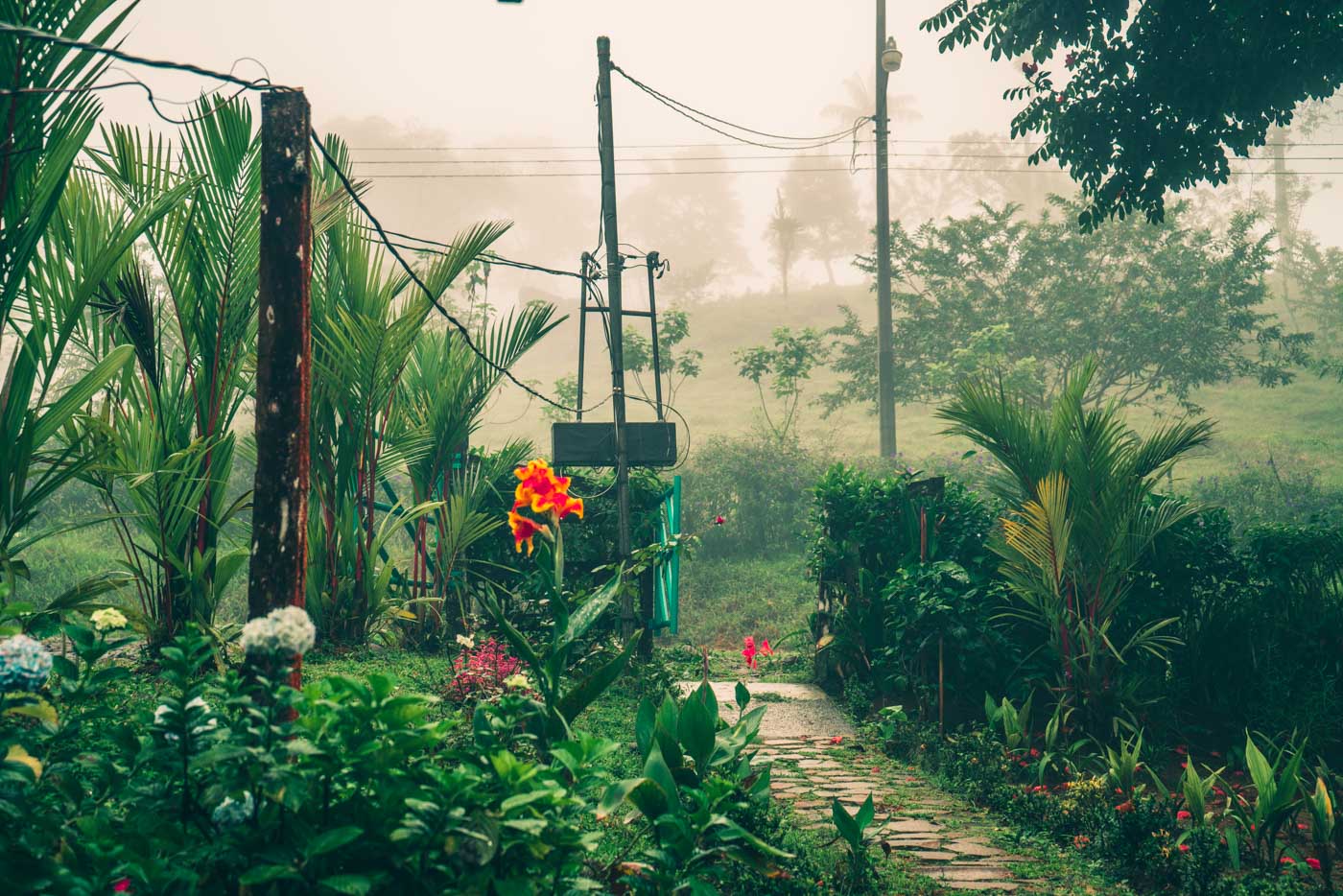
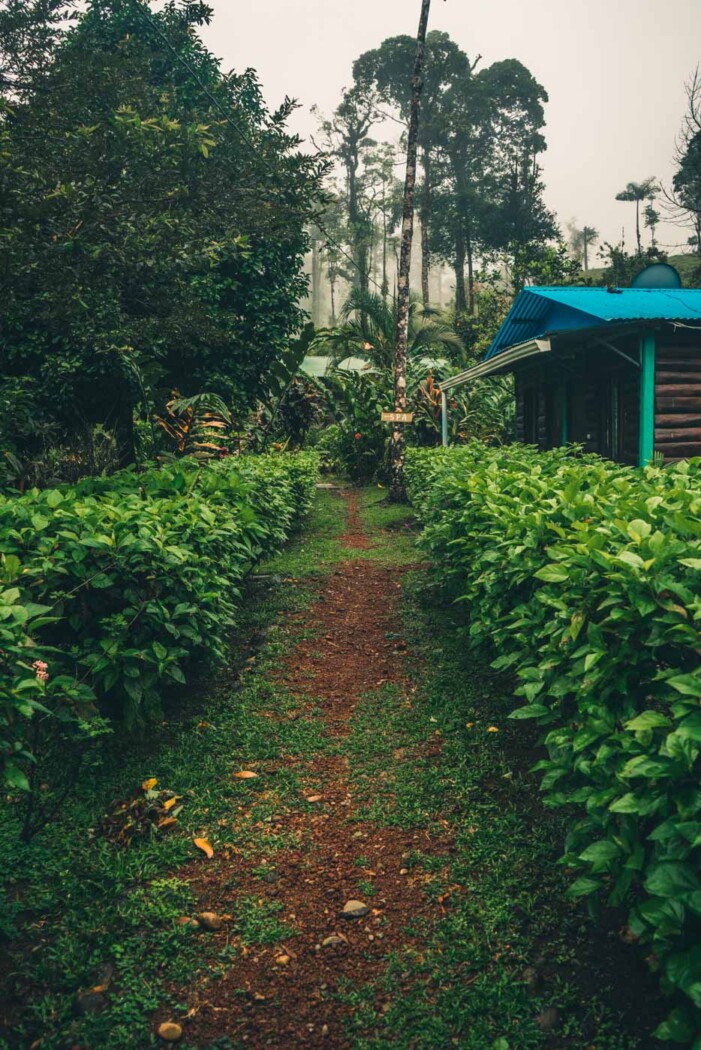
We arrived late at night and couldn’t see much, but in the morning we woke up in a lush garden surrounded by cloud. It rained all night on the tin roof of our cabin at Posada Rio Celeste, a family-run hotel a kilometre from the park that we stayed at in 2016 (it no longer appears to be operating). We were determined to make the most of a wet day, so we dug out our rain gear and headed for the park, expecting it to be empty. Instead, we found busloads of Costa Rican families waiting at the entrance.
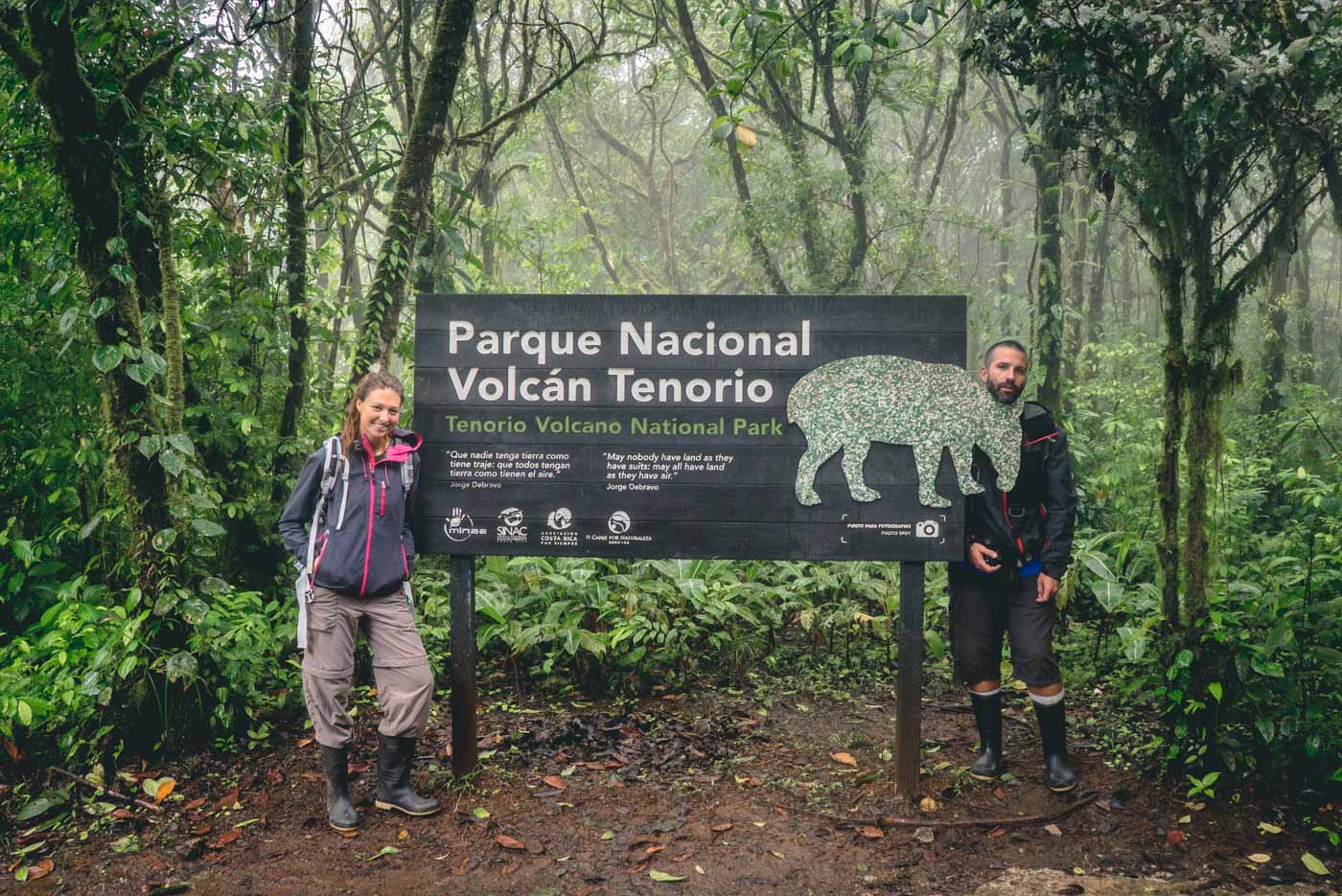
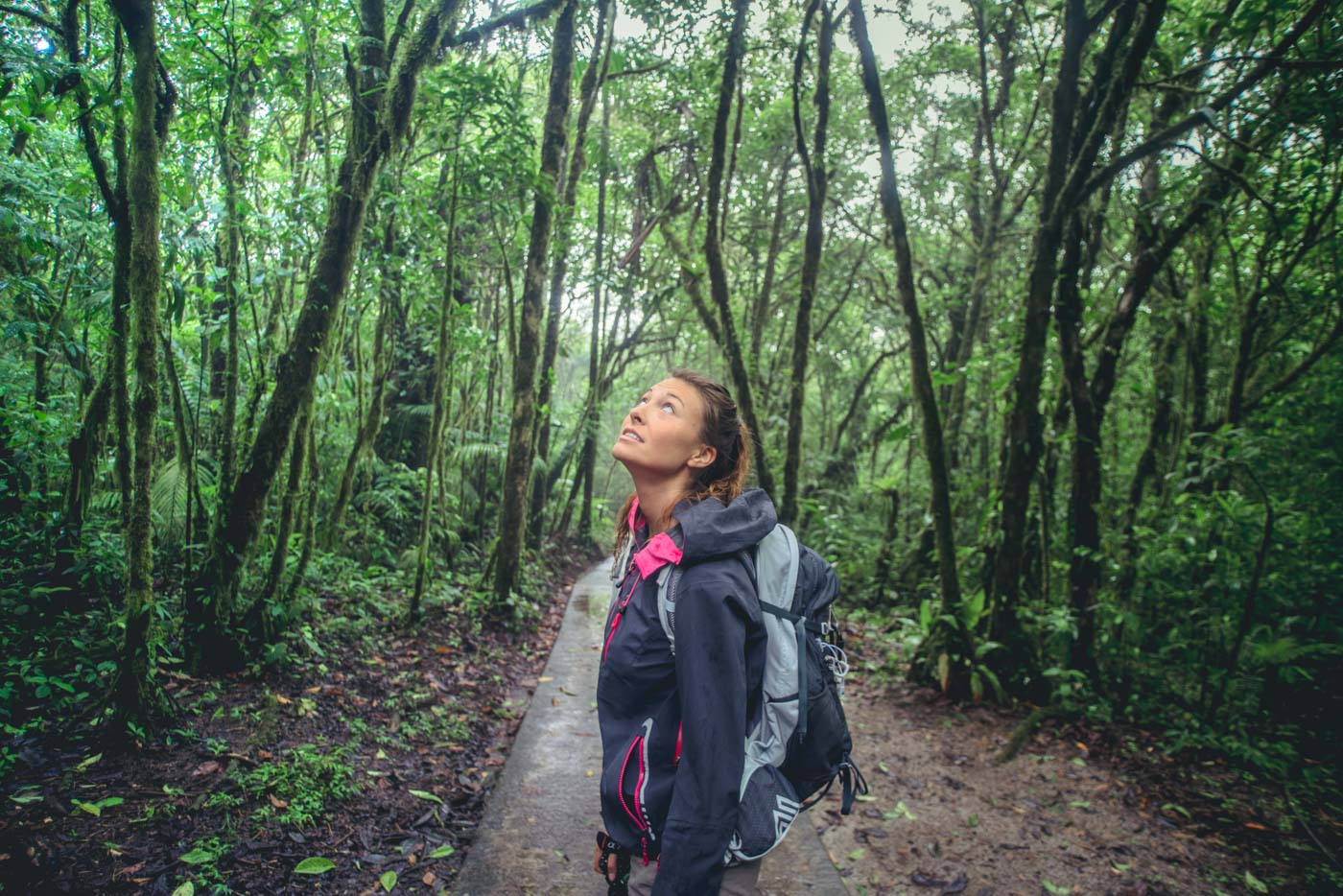
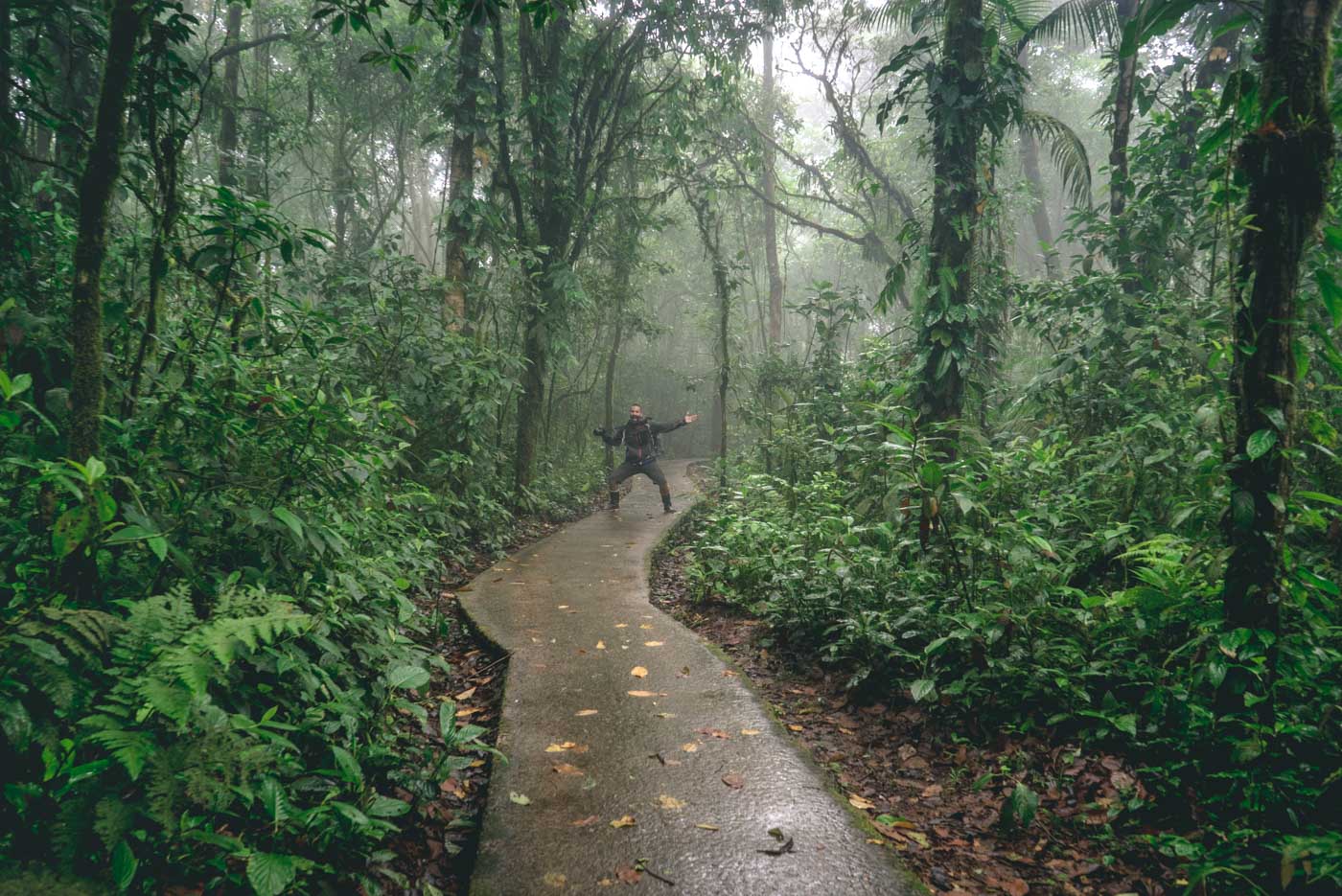
Our hotel owner had insisted we rent gumboots at the gate, and we were sure it was a waste of money, until the paved path ended and the mud began. We spent three hours completely drenched, the lookout showed nothing but cloud, and we still loved it. Here’s the day, filmed for our YouTube channel.

Hiking Rio Celeste: The Trail
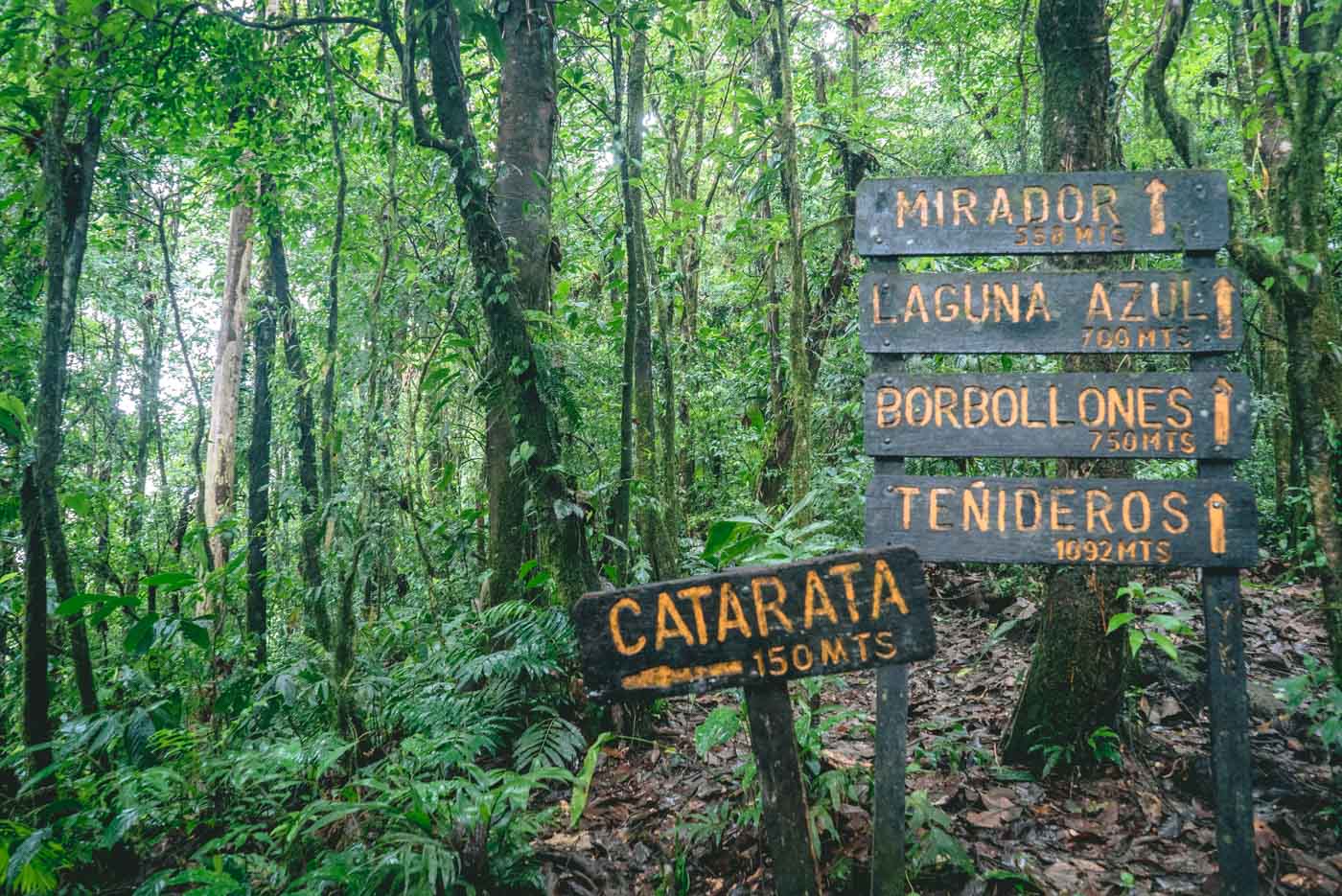
There’s one main trail, the Misterios del Tenorio, which runs 3.2 km (2 mi) each way from the entrance past the park’s highlights and back the same way, about 6.4 km (4 mi) in all. It’s rated moderate: the first stretch is paved, but most of it is muddy, rooty and uneven, with steep sections. Allow three to four hours, and download the trail map at the entrance.
The Rio Celeste Waterfall
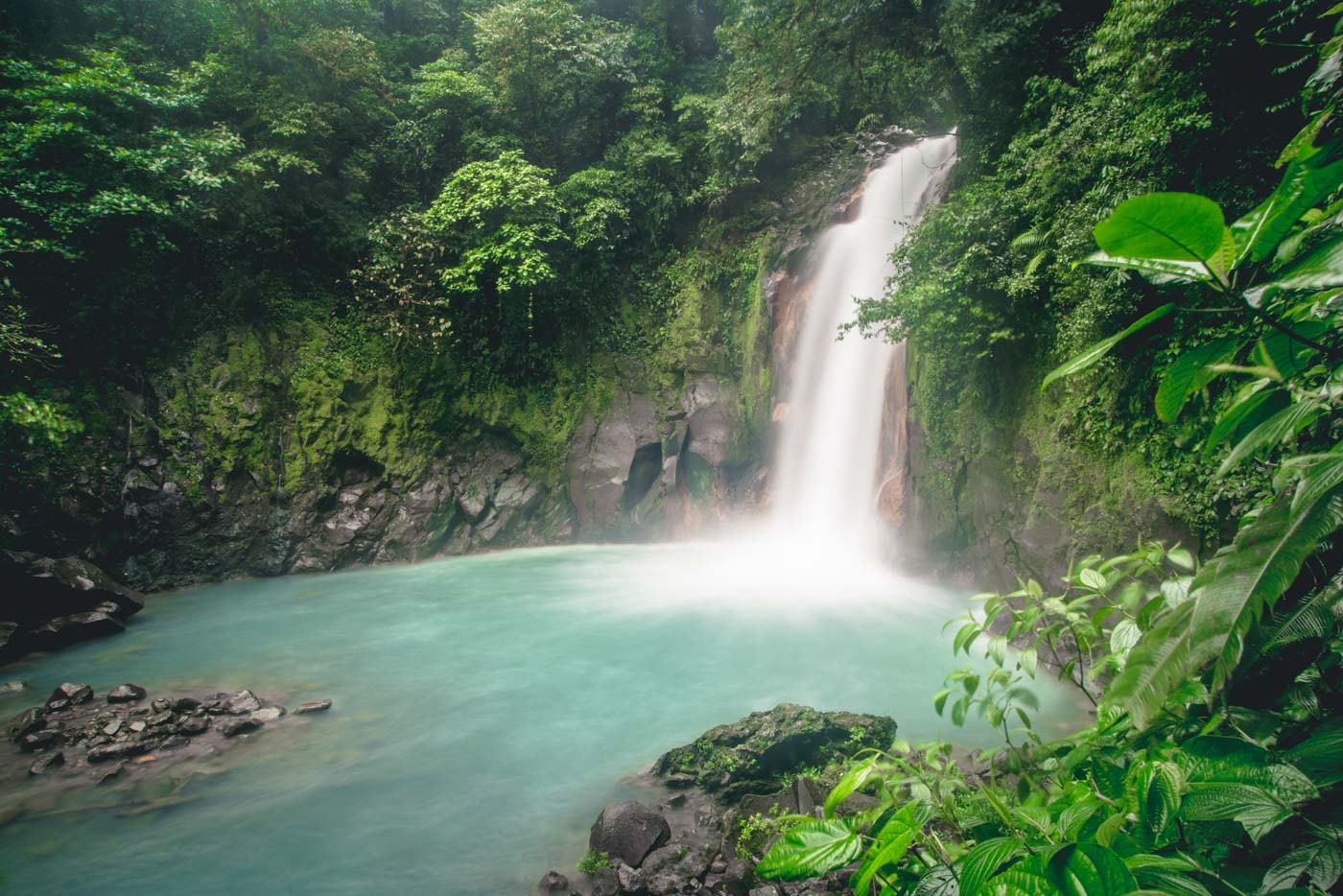
About 30 minutes from the entrance, a side trail leads down a long, steep staircase to the Catarata Rio Celeste, a 30 m (98 ft) waterfall that pours into a pool of bright turquoise water. It’s one of the most photographed spots in Costa Rica, and the climb back up is a workout. Many visitors stop here and turn back, but the rest of the trail is worth it if you don’t mind mud.


The Mirador
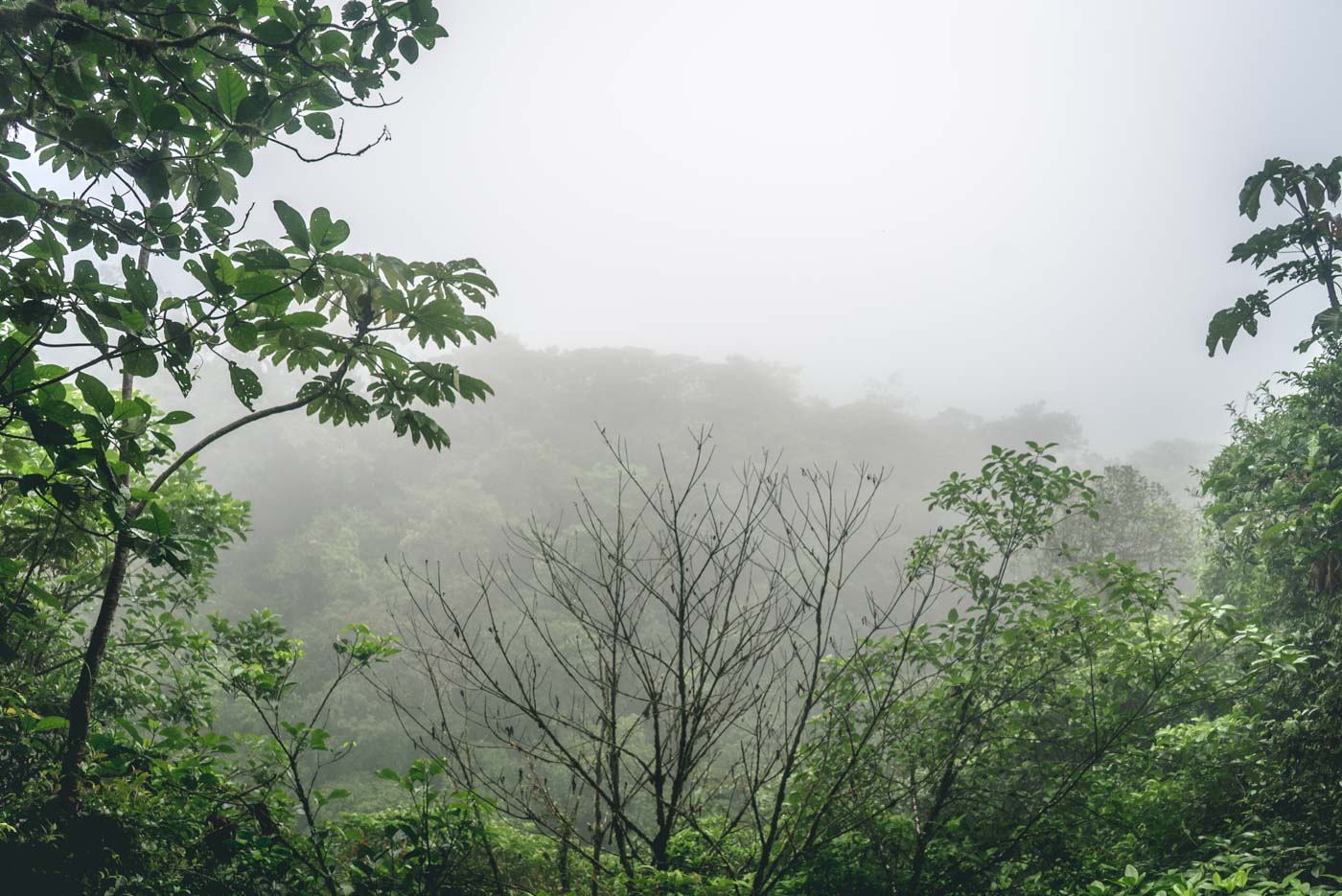
Further along, a lookout tower gives views across the rainforest canopy to the volcano and, on clear days, the plains of Guanacaste and Lake Arenal. When we reached it, it was all cloud.
La Laguna Azul and Los Borbollones
The Blue Lagoon is a small, intensely blue pool you view from the trail, and just beyond it, Los Borbollones are hot springs where volcanic gas bubbles up through the riverbed and you can smell the sulphur. Neither is for swimming.
Los Tenideros
At the end of the trail, past two bridges, is the most extraordinary sight of all: Los Tenideros, where two clear rivers, the Buenavista and the Quebrada Agria, meet and turn blue at the point where they join. The colour comes from aluminosilicate particles that form when the rivers’ different minerals mix, and scatter sunlight so the water looks sky blue.



Wildlife on the Rio Celeste Trail
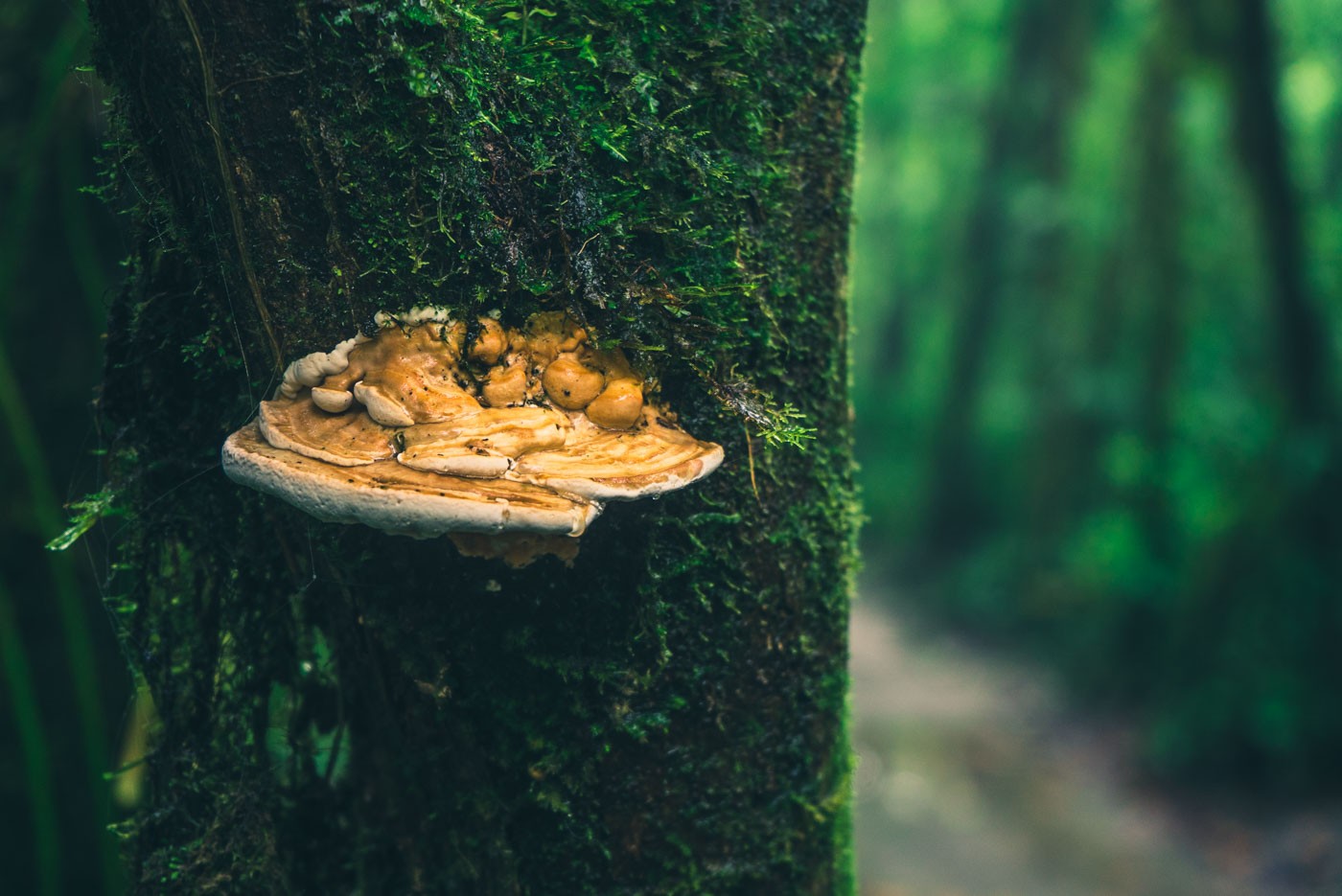
The park’s rainforest shelters howler and white-faced monkeys, coatis, tapirs, peccaries and even pumas, though you’re unlikely to see the big mammals. Birds are easier: we spotted a mealy Amazon parrot, and trogons, toucans and bellbirds live here too. The wet forest is also full of fungi, ferns, bromeliads and orchids. Compared with Monteverde or Manuel Antonio it’s quieter for wildlife, but the forest itself is beautiful.

Is Rio Celeste Blue Today? The Best Time to Visit
The dry season, December to April, gives the most reliable blue water, drier trails and clearer views from the lookout, and it’s also the busiest time. In the green season, May to November, the rainforest is lush and crowds are thinner, but trails turn to mud and heavy rain upstream can turn the river a milky brown for a day or two. We went in the green season, and the water was still blue despite the downpour. If it has rained hard the day before, ask at your hotel before you go. For more on planning around the weather, see our guides to the rainy season and the best time to visit Costa Rica.
What to Wear and Bring
Waterproof hiking boots or rubber boots: gumboots rent for about US$5 before the entrance. After our muddy day, we’d rent them again. A rain jacket, even in the dry season. Quick-dry clothes and a change for the car. A reusable water bottle, since single-use plastics aren’t allowed in the park. Insect repellent, snacks and your passport.
How Long to Spend at Rio Celeste
The hike itself takes three to four hours, so it’s an easy half day if you’re staying nearby, or a long full day as a round trip from La Fortuna or Liberia. We’d recommend a night in Bijagua: arrive the afternoon before, hike on the first slot, and use the afternoon for a swim outside the park or one of the activities below. Two nights lets you add a night walk or a second volcano.
Other Things to Do Near Rio Celeste
Bijagua sits in a quiet valley between the Tenorio and Miravalles volcanoes, and there’s more to do than the river. Several lodges and local guides run night walks to find frogs, sloths and tarantulas, and the town’s farms offer cacao and chocolate tours. Tubing trips float the Rio Celeste outside the national park, where swimming is allowed. To the west, Miravalles Volcano has hot springs and mud baths on its slopes, and the Llanos de Cortes waterfall near Bagaces, a wide, swimmable curtain of water, makes a good stop on the drive back to Guanacaste.
Tips for Visiting Rio Celeste
Book the 8 am slot and arrive 15 minutes early with your passport. Check the weather the day before, and ask your hotel whether the river is blue after heavy rain. Don’t feed or touch wildlife and stay on the trail, since the park’s bans on swimming and single-use plastics protect the river. Leave nothing visible in your car at the parking lot. Carry cash for parking, boot rental and the sodas in Bijagua. Pace yourself on the staircase to the waterfall: it’s steep and slippery, and the climb back up is the hardest part of the hike.
Can You Swim at Rio Celeste?
Not inside the park: swimming is banned to protect the river and for safety, since the pools are deep and the currents strong. Outside the park, the Rio Celeste Free Pool is a free roadside swimming spot on the river, and several operators run tubing trips on the Rio Celeste outside the national park. Some day tours also stop at a private farm where you can swim.
Rio Celeste Tours
If you don’t have a car, a guided tour is the easiest way to visit. Most tours start from La Fortuna and include pickup, the park ticket, a naturalist guide and lunch; others run from Guanacaste and combine Rio Celeste with the Llanos de Cortes waterfall.
Hotel pickup, the park ticket and a naturalist guide for the whole Rio Celeste trail, in a small group.
8 hours · pickup included · rated 4.7/5 from 700+ reviews
Where to Stay Near Rio Celeste
Staying near the park lets you be at the gate for the 8 am slot. Most hotels in Bijagua and along the park road are small, family-run and close to nature. When we visited in 2016 we stayed at Posada Rio Celeste, which no longer appears to be operating; these are the best-reviewed options today.
| Hotel | Area | Price | Best For |
|---|---|---|---|
| Hideaway Rio Celeste Hotel | Near the park | $$$$ | Luxury casitas, river access |
| Tenorio Lodge | Bijagua | $$$ | Bungalows with volcano views |
| Sueno Rio Celeste Boutique B&B | Bijagua | $$$ | Small B&B, pool, great breakfasts |
| Mei Tai Cacao Lodge | Near Bijagua | $$ | Cacao farm, pool |
| Cabinas Cascada Rio Celeste | Near the park | $ | Budget, 800 m (2,600 ft) from the park |
| Heliconias Rainforest Lodge | Near Bijagua | $$ | Hanging bridges, rainforest trails |
Hideaway Rio Celeste Hotel
Hideaway Rio Celeste Hotel is the area’s luxury option, with casitas, a pool, a spa and private access to the river, just a few minutes from the park entrance. It also works on water conservation and chemical-free gardens.
Tenorio Lodge
Tenorio Lodge has bungalows with volcano views, a hot tub and gardens, a short drive from Bijagua.
Sueno Rio Celeste Boutique B&B
Sueno Rio Celeste Boutique B&B is a small, top-rated B&B with a pool and a cooked breakfast.
Mei Tai Cacao Lodge
Mei Tai Cacao Lodge sits on a working cacao farm outside Bijagua, with a pool and rainforest views.
Cabinas Cascada Rio Celeste
Cabinas Cascada Rio Celeste is a simple, great-value choice just 800 m (2,600 ft) from the park entrance, ideal for the first entry slot.
Heliconias Rainforest Lodge
Heliconias Rainforest Lodge sits in 70 hectares (173 acres) of rainforest with its own trails and hanging bridges, 10 minutes from Bijagua.
Where to Eat in Bijagua
There are no restaurants in the park, but Bijagua’s sodas serve good, filling Costa Rican food, and some lodges have restaurants open to non-guests.
| Restaurant | Style | Known for |
|---|---|---|
| Soda Dona Eli | Soda | Casados and fresh juices |
| Rest. y Marisqueria Poro | Seafood and Costa Rican | Ceviche and fish |
| Tilapiera Los Laguitos | Farm restaurant | Fresh-caught tilapia |
| La Terraza Bijagua | Pizzeria | Pizza after a long hike |
Frequently Asked Questions
Why is Rio Celeste blue?
Two clear rivers meet at Los Tenideros; the minerals they carry form aluminosilicate particles that scatter sunlight, so the water looks sky blue.
Is Rio Celeste worth it?
Yes, especially in the dry season; the waterfall and the Tenideros are unique, and the hike is manageable for most people.
How long is the Rio Celeste hike?
About 6.4 km (4 mi) return on the Misterios del Tenorio trail, taking 3–4 hours; the waterfall alone is about 30 minutes in, plus a steep staircase.
Can you swim in Rio Celeste?
No, not inside the park; swim at the free roadside pool outside it or on a tubing tour.
How do you buy Rio Celeste tickets?
Online only, through SINAC’s reservation system; foreign adults pay US$12 plus tax (about US$13.56), and entry runs from 8 am to 2 pm.
How do you get to Rio Celeste from La Fortuna?
Drive about 2 hours via Upala to Bijagua, then the park road; a car with some clearance helps in the rainy season.
Is Rio Celeste always blue?
Usually, but heavy rain can turn the water milky brown for a day or two, most often in the wet season (May–November).
Is Rio Celeste a good day trip for a family with young kids staying in La Fortuna?
Yes, if the kids can manage 6 km (4 mi) of muddy trail and a long staircase; otherwise stop at the waterfall and turn back.
Final Thoughts
The blue river lives up to its photos, rain or shine. Our soggy day there in 2016 was still a highlight, and the colour of the water at Los Tenideros is something photos can’t quite capture. Book the first slot, rent the gumboots, and stay a night in Bijagua so you’re not rushing. It pairs well with Arenal and La Fortuna Waterfall to the east, or Rincon de la Vieja and the Guanacaste coast to the west; our Costa Rica waterfalls guide, national parks guide and hot springs guide have more ideas, and if you’re based at the beach, see our day trips from Tamarindo. Have you seen the blue river yet?


Leave a Reply