


A honeymoon in Australia comes down to three decisions: which of the country’s very different regions you want, when you can travel, and how much of the budget goes on flights before you have booked a single night. Two weeks is the realistic minimum, roughly 8,000 to 20,000 US dollars for two is the realistic range depending on how you travel, and the best months for most of the country are the shoulder seasons, September to November or March to May.
Below are twelve destinations that genuinely suit a honeymoon, compared by season, style and rough cost, so you can narrow it before you start pricing flights. We have travelled most of these places ourselves, which is where the recommendations come from.
Key Takeaways
- Australia is not one destination. The tropical north and the temperate south have opposite seasons, so the month decides the region.
- Two weeks minimum, three is better. Domestic flights eat days, and the distances are larger than they look.
- Budget 8,000 to 20,000 USD for two excluding international flights, depending on whether you self-drive or fly between regions.
- Shoulder seasons are the sweet spot for the south. The tropical north wants the dry season, May to October.
- Pick two regions, not five. The most common mistake is trying to see the whole country in a fortnight.

12 Australian Honeymoon Destinations, Compared
Season and style matter more than ranking here, because the right answer depends almost entirely on when you can travel. Costs are per couple per night for accommodation of the standard most couples book for a honeymoon.
| Destination | Best months | Style | Rough nightly cost |
|---|---|---|---|
| Whitsundays, QLD | May to Oct | Islands, sailing, reef | $250–600 |
| Great Barrier Reef / Port Douglas | Jun to Oct | Reef and rainforest | $250–700 |
| Ningaloo Reef, WA | Apr to Oct | Reef without the crowds | $200–450 |
| Uluru, NT | May to Sep | Desert, dark skies, culture | $300–900 |
| Tasmania | Nov to Mar | Wilderness, food, cool climate | $200–500 |
| Lord Howe Island, NSW | Sep to May | Remote, capped visitor numbers | $400–900 |
| Byron Bay, NSW | Mar to May, Sep to Nov | Beach and hinterland | $250–600 |
| Margaret River, WA | Sep to Nov, Mar to May | Wine, surf, forest | $200–500 |
| Kangaroo Island, SA | Sep to Nov, Mar to May | Wildlife, coastline | $250–600 |
| Barossa or Hunter Valley | Mar to May, Sep to Nov | Wine country | $200–450 |
| Blue Mountains, NSW | Sep to Nov, Mar to May | Escarpment, easy from Sydney | $200–500 |
| Great Ocean Road, VIC | Nov to Mar | Coastal drive | $180–400 |
Australia’s north and south run on opposite schedules, and that single fact decides more about when to go than anything else. May to October is dry-season perfection in Queensland, the Top End and Ningaloo, and the same months are winter in Tasmania and Victoria. Plan the south for the other half of the year.
The Tropical North: Reef and Rainforest
The Whitsundays
Seventy-four islands off the Queensland coast, most of them uninhabited, with Whitehaven Beach as the set piece. It is one of the most classically honeymoon-shaped destinations in the country: sailing, snorkelling, and beaches you have already seen in photographs.
Most couples either sail or stay on an island. Daydream Island Resort is the accessible island option, though its Booking rating currently sits lower than we would normally recommend, so read recent reviews before committing. Our guides to sailing the Whitsundays and sleeping on the reef at Reefsleep cover the two experiences worth building the trip around.


Port Douglas and the Great Barrier Reef
The advantage of the far north is that the reef and the Daintree rainforest are an hour apart, so a single base gives you two completely different days. Port Douglas is the more romantic base; Cairns is cheaper and better connected.
Crystalbrook Riley in Cairns is the property we have stayed at and would return to, and it is genuinely sustainable rather than decoratively so. Our guides to Port Douglas and Cairns cover the area properly.

Ningaloo Reef, Western Australia
The reef most people have not heard of, and the one we would choose. Ningaloo comes almost to the beach, so you snorkel a genuine coral reef by walking into the sea rather than boarding a boat for two hours. Whale sharks are there roughly March to July.
It is remote, which is the point and the drawback. Our Ningaloo Reef guide and our whale shark write-up cover it in detail, and the Western Australia planning guide covers getting there.

The Desert and the Islands
Uluru
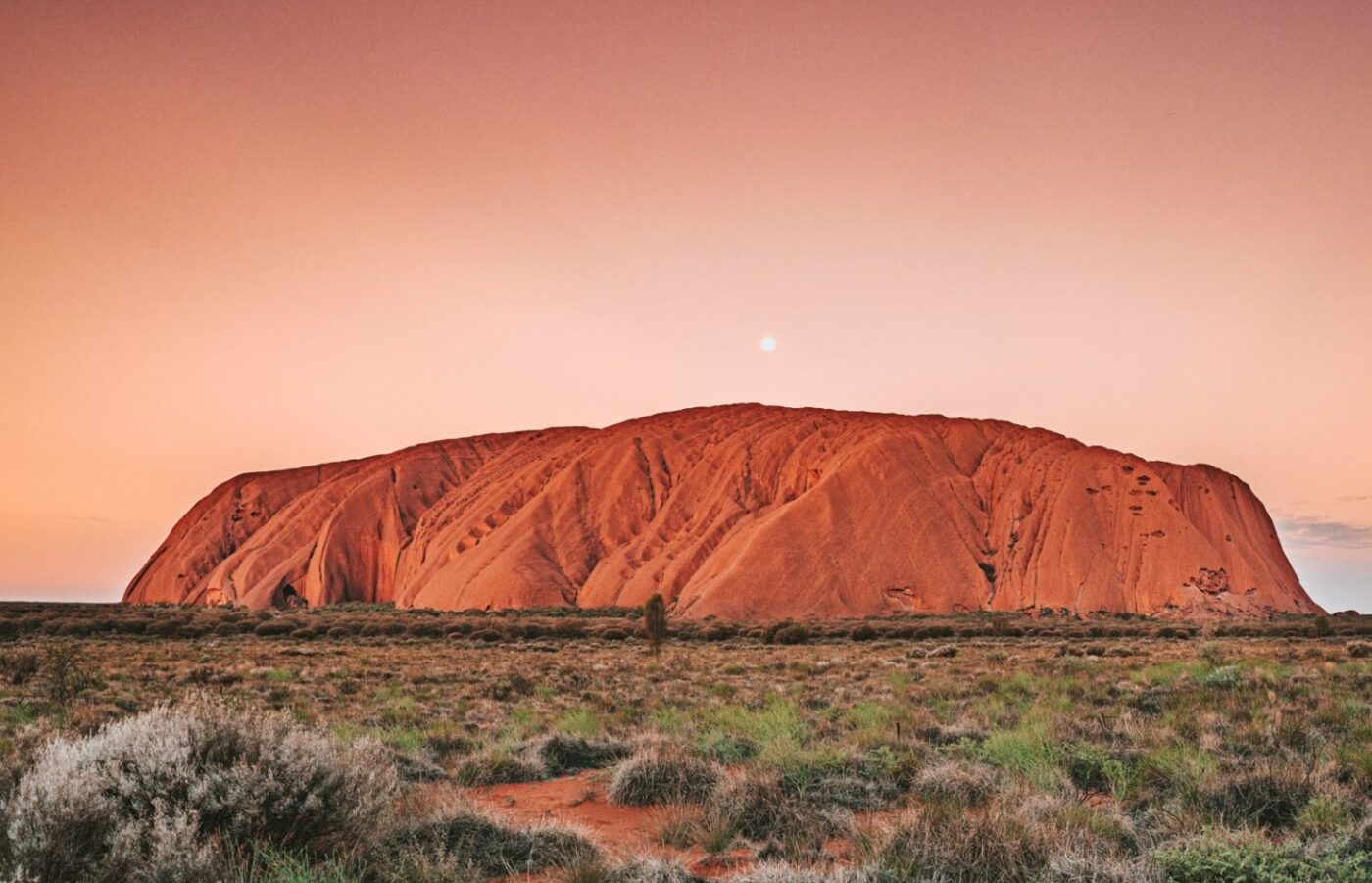
Not an obvious honeymoon destination until you have been. The appeal is the scale and the silence, the dark skies, and dinners under them. It is also the most culturally significant place most visitors will go in Australia, and worth understanding as more than scenery. Parks Australia covers the Anangu guidance on how to visit respectfully.
Go May to September. Summer is genuinely dangerous heat. Our Uluru guide covers what to do there.
Lord Howe Island
Two hours from Sydney and capped at 400 visitors at a time, which is why it works. No crowds, no chains, and a lagoon you can snorkel straight off the beach. Ardour Lilianfels is not here. Lord Howe has its own small lodges, of which Arajilla Retreat is the best known.

Getting there is part of why it stays quiet: a two-hour flight from Sydney or Brisbane on a small aircraft, with strict baggage limits. There are no chain hotels and very little nightlife. If your idea of a honeymoon involves walking, snorkelling and eating well without seeing many other people, it is hard to beat.
Kangaroo Island
Wildlife without a zoo. Sea lions, kangaroos, koalas and an empty coastline, an hour from Adelaide by ferry or a short flight. Ecopia Retreat is the off-grid luxury option and it is genuinely secluded. Our Kangaroo Island guide covers the rest.


The Temperate South: Wine, Coast and Wilderness
Tasmania
The best food and wilderness combination in the country, and the one region where summer is unambiguously the right time to go. Cradle Mountain, the east coast beaches, and a food scene disproportionate to the population. Our Tasmania guide covers the highlights.


Margaret River
Wine, surf and tall-timber forest within a three-hour drive of Perth, and one of the easier regions to combine into a Western Australia trip. COMO The Treasury in Perth is the standout city property either side of it.


Perth is worth a night or two either side rather than being skipped, and it is the natural gateway for both Margaret River to the south and Ningaloo to the north. Very few honeymoon itineraries include Western Australia at all, which is precisely why it is the region we would pick.

Further inland, Karijini’s gorges are the least-visited landscape on this list and a genuine alternative to Uluru for a desert leg, though it is a long drive from anywhere and suits couples who want the remoteness rather than the resort.
Byron Bay
Beach town with a hinterland, and one of the most reliably romantic short breaks on the east coast. It has become expensive and busy, so shoulder season matters more here than most places. Byron Bay Rainforest Resort sits back from the town. Our Byron Bay guide covers what to do.


Wine country: Barossa and Hunter Valley
The Barossa in South Australia and the Hunter Valley in New South Wales are the two easiest wine regions to reach, and both work as a three or four night add-on rather than a whole trip. Our guide to Australian wine regions covers the full set.


The Blue Mountains
Ninety minutes from Sydney and a complete change of landscape. Ardour Lilianfels, recently rebranded from Lilianfels, sits on the escarpment at Katoomba with the Three Sisters view.

The Great Ocean Road
The best self-drive honeymoon leg in the country: three or four days from Melbourne with the Twelve Apostles at the far end. Great Ocean Road Resort at Anglesea and RACV Torquay Resort at the start of the road are both solid bases. Our Great Ocean Road guide has the route.


What an Australian Honeymoon Costs
Travel agencies quote packages, which bundle everything and hide the components, so a self-planned figure is hard to come by. These are self-planned ranges, per couple, excluding international flights, and they are indicative rather than quotes, because Australian pricing moves considerably by season.
Australian Honeymoon Costs, Per Couple
| Two weeks, mid-range, one region | Roughly $6,000 to $9,000 USD |
| Two weeks, mid-range, two regions | Roughly $8,000 to $13,000 USD |
| Three weeks, upper-mid, two to three regions | Roughly $14,000 to $20,000 USD |
| Luxury lodges and private transfers | $25,000 and upwards |
| Domestic flights | $150 to $400 per person per leg |
| Car hire | $60 to $110 per day; campervans $150 to $200 |
| Accommodation, honeymoon standard | $200 to $600 per night, higher on islands |
| Biggest saving available | Self-drive one region rather than flying between three |
The single largest controllable cost is not accommodation, it is internal travel. Flying between Cairns, Uluru and Tasmania in a fortnight can add several thousand dollars and three days of airports. Picking two regions and driving one of them is how most couples get the trip they actually wanted for materially less. Our guide to travelling Australia on a budget scales down further, and the Australia itinerary guide covers how to sequence regions sensibly.
Choosing Between Regions
Most couples land on one of four shapes, and it is worth knowing which one you are before you start booking.
The classic: tropical Queensland. Reef, rainforest and islands, based around Port Douglas or the Whitsundays, May to October. It is the easiest to organise, the most photographed and the busiest.
The quiet one: Western Australia. Ningaloo, Margaret River and Perth, April to October. Fewer people, a better reef for snorkelling from shore, and considerably more driving.
The cool-climate one: Tasmania, November to March. Wilderness, food and wine, short distances, and no need for a wetsuit.
The contrast one: one coastal region plus Uluru. The desert leg is only two or three nights but it is the part people remember, and it pairs well with either Queensland or South Australia.
When to Go
The country spans the tropics and the temperate zone, so there is no single best month.
May to October is the dry season in the north: Queensland, the Top End, Ningaloo and the Kimberley. Warm days, low humidity, no cyclones. This is when the reef and the desert are at their best.
November to March is summer in the south: Tasmania, Victoria, the Great Ocean Road and the southern wine regions are at their warmest and greenest. It is also cyclone season up north.
September to November and March to May are the shoulder seasons and the sweet spot for most itineraries, because they work reasonably well almost everywhere and avoid both the northern wet and the southern winter. If your wedding date is flexible, aim here.
One practical caution: Australian school holidays, particularly the December to January break, push prices sharply up and book out island properties months ahead.


How Long Do You Need?
Two weeks is the working minimum for a country this size, and it buys you one region properly or two at a push. Three weeks is where an Australian honeymoon stops feeling rushed.
The mistake we see most often is a fortnight split across Sydney, the reef, Uluru and Melbourne. That is four internal flights, four hotel changes and perhaps five days of actual holiday. Two regions, connected by one flight or one drive, is a better trip by a wide margin.
If you only have ten days, pick a single region and go deep. Queensland’s tropical north or Western Australia’s Coral Coast both fill ten days comfortably without a single internal flight after the first.
Internal travel is the largest controllable cost on an Australian honeymoon and the biggest consumer of days. A self-drive leg is almost always cheaper and better than a third domestic flight.
Book well ahead for the September to November and March to May shoulder seasons, and check one-way fees before committing to a route.
Frequently Asked Questions
Where is the best place to honeymoon in Australia?
For a first Australian honeymoon, the Whitsundays or the tropical north around Port Douglas, between May and October. For something quieter, Ningaloo Reef in Western Australia or Lord Howe Island. For a cooler-climate trip, Tasmania between November and March.
How much does an Australian honeymoon cost?
Self-planned, roughly 6,000 to 9,000 US dollars per couple for two weeks in one region at a mid-range standard, and 8,000 to 13,000 for two regions, excluding international flights. Luxury lodges and private transfers take it past 25,000.
When is the best time for a honeymoon in Australia?
September to November or March to May for most itineraries. The tropical north is best May to October; Tasmania and the southern states are best November to March. The seasons are opposite, so the month decides the region.
How long should an Australia honeymoon be?
Two weeks minimum, three weeks ideally. Two weeks covers one region properly or two at a stretch. Attempting three or four regions in a fortnight spends most of the trip in airports.
Which Australian island is best for a honeymoon?
Lord Howe Island for remoteness and capped visitor numbers, the Whitsundays for classic island-and-reef, and Kangaroo Island for wildlife and coastline. All three are very different trips.
Should you do the Great Barrier Reef or Uluru on a honeymoon?
If you only do one, the reef, because you can combine it with rainforest and beaches in the same week. Uluru is extraordinary but it is a two to three night stop rather than a base, and it works best added to a longer trip.
Is Australia expensive for a honeymoon?
Yes, relative to Southeast Asia or Latin America, and the international flights are a large fixed cost before you start. The controllable savings are in internal travel and season rather than in accommodation standard.
What is the most romantic place in Australia?
Lord Howe Island for seclusion, Uluru for the dark skies and scale, and the Whitsundays for the classic version. Which is most romantic depends entirely on whether you want quiet or spectacle.
Final Thoughts
The honest summary is that Australia rewards restraint. The couples who come back happiest are the ones who picked two regions, drove one of them, and spent the saved money on staying somewhere good rather than on another internal flight.
We have travelled most of these places over several years of living in and returning to Australia, and the ones we would go back to first are Ningaloo for the water and Tasmania for everything else. If you want more ideas beyond a honeymoon specifically, our guide to romantic getaways in Australia covers shorter trips, and the best beaches in Australia covers the coastline properly.
If you are still deciding whether Australia is the right honeymoon at all, the packing list gives a sense of how varied the conditions are across a single trip.
Which regions are you weighing up, and how long have you got? Tell us in the comments, we answer every one.


Leave a Reply